Health Care Professional Information
Clinical Summary
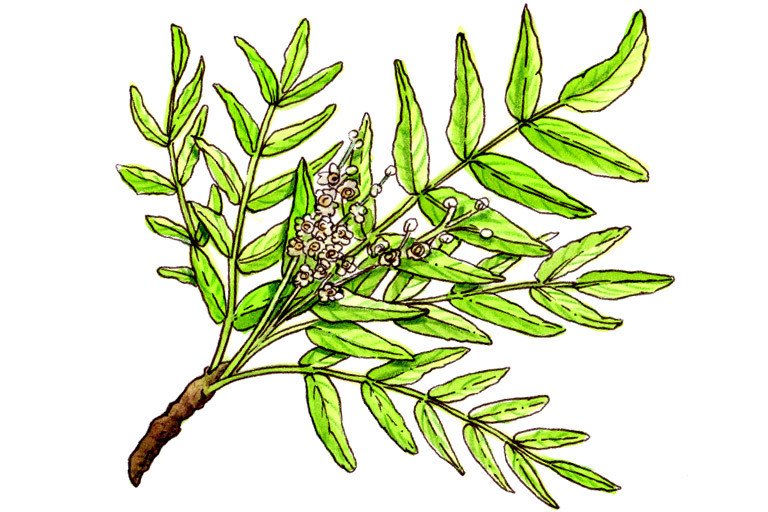
Boswellia or Indian frankincense is an ayurvedic herb that is derived from the resin of the plant. It is used traditionally to treat arthritis, ulcerative colitis, coughs, sores, snakebite, and asthma. The major component is boswellic acid (1), which was shown in animal studies to be a potent 5-lipoxygenase inhibitor with anti-inflammatory and antiarthritic effects (1) (2) (3). Other studies suggest that it has cytotoxic properties (4) (5) (6) (7).
Data from clinical trials indicate effectiveness of Boswellia for bronchial asthma (8) and ulcerative colitis (9). However, evidence is mixed for its benefits for osteoarthritis (10) (11) and collagenous colitis (12) (13) (14). Boswellia was also investigated for its role in maintenance of Crohn's disease remission, but it demonstrated no significant benefit (15). Preliminary findings suggest boswellia's effectiveness in reducing cerebral edema in patients with brain tumors following radiotherapy (23).
Boswellic acid has fewer adverse effects than steroids and non-steroidal anti-inflammatory drugs. However, its long-term effects on humans are unknown. Although similar in many functions, boswellia should not be confused with guggul or myrrh.
Purported Uses
- Arthritis
- Asthma
- Colitis
- Inflammation
- Menstrual cramps
Constituents
Triterpene Acids: Boswellic acid and its isomers
Essential oils: Mainly alpha-thujene and p-cymene
(24) (25)
Mechanism of Action
Boswellic acid, the major constituent of boswellia, is thought to contribute to most of the herb's pharmacological activities. In vitro studies and animal models show that boswellic acid inhibits 5-lipoxygenase selectively (1) (3) and has anti-inflammatory (13), antiarthritic, and anti-proliferative effects (2). Boswellia reduces chemically-induced edema and inflammation in rodents. Boswellic acid was also shown to inhibit NF-KB signaling pathways in macrophages in mouse model of psoriasis, markedly decreasing the production of the proinflammatory key cytokine TNF-alpha and the chemokine MCP-1. This effect was accompanied by the resolution of inflammatory infiltrates and normalization of hyperkeratosis (17). Unlike other non-steroidal anti-inflammatory drugs, however, boswellic acid fails to show analgesic or antipyretic effects (16). In addition, it does not cause gastric ulcers in animals. This suggests that the action of boswellic acid is through other mechanisms than the inhibition of prostaglandin synthesis.
Research on the cytotoxic effects of boswellic acid indicates that it induces p21 expression through a p53-independent pathway and causes apoptosis in glioma (4) (6) and leukemia (5) cell lines. In addition, a Boswellia extract induced apoptosis in a cervical cancer cell line by inducing endoplasmic reticulum (ER) stress (18); another apoptotic mechanism exhibited by Boswellia is via oxidative stress by early generation of nitric oxide and reactive oxygen species that up regulate time-dependent expression of p53/p21/PUMA (19). One study suggests that acetyl-boswellic acids can inhibit topoisomerases by competing with DNA for binding sites (20). Another study found that acetyl-11-keto-beta-boswellic acid (AKBA) inhibits the activation of signal transducers and activators of transcription-3 (STAT-3), which has been linked with survival, proliferation, chemoresistance, and angiogenesis of tumor cells (21). Further, AKBA inhibits human prostate tumor growth via inhibition of angiogenesis induced by VEGFR2 signaling pathways (22).
Pharmacokinetics
Two to three hours after an oral dose of 1.2 g dry extract boswellia gum resin, plasma concentrations were measured at 10 to 32 micromolar of 11-keto-beta-boswellic acid and 18 to 20 micromolar of acetyl-11-keto-beta-boswellic acid. (8)
Literature Summary and Critique
Holtmeier W, et al. Randomized, placebo-controlled, double-blind trial of Boswellia serrata in maintaining remission of Crohn's disease: Inflamm Bowel Dis. 2010;May 19.
In this randomized, placebo-controlled, double-blind trial, patients with Crohn's disease (CD) were treated with two oral capsules of 400 mg Boswellia serrata extract (n=42) or placebo (n=40) three times daily for 12 months. Enrolled patients were currently in remission from CD but had experienced at least two documented relapses during the last 4 years. This study found that 59.9% of the Boswellia-treated and 55.3% of the placebo-treated patients maintained remission from Crohn's disease, indicating no statistically significant difference in efficacy between the active and control groups (p=0.085). Time to remission was 171 days for the active group and 185 days for placebo (p=0.69). There was also no statistically significant difference in tolerability between the active and placebo groups (p=0.087). The investigators concluded that Boswellia serrata demonstrated good tolerability in the long-term treatment of CD. However, the superiority of this treatment to placebo in the maintenance of CD remission could not be established.
Dosage (Inside MSKCC Only)
This field is only visible to only Inside MSKCC users.
References
- Dahmen U, Gu YL, Dirsch O, et al. Boswellic acid, a potent antiinflammatory drug, inhibits rejection to the same extent as high dose steroids. Transplant Proc. Feb-Mar 2001;33(1-2):539-541.
- Safayhi H, Boden SE, Schweizer S, et al. Concentration-dependent potentiating and inhibitory effects of Boswellia extracts on 5-lipoxygenase product formation in stimulated PMNL. Planta Med. Mar 2000;66(2):110-113.
- Safayhi H, Mack T, Sabieraj J, et al. Boswellic acids: novel, specific, nonredox inhibitors of 5-lipoxygenase. J Pharmacol Exp Ther. Jun 1992;261(3):1143-1146.
- Glaser T, Winter S, Groscurth P, et al. Boswellic acids and malignant glioma: induction of apoptosis but no modulation of drug sensitivity. Br J Cancer. May 1999;80(5-6):756-765.
- Jing Y, Nakajo S, Xia L, et al. Boswellic acid acetate induces differentiation and apoptosis in leukemia cell lines. Leuk Res. Jan 1999;23(1):43-50.
- Winking M, Sarikaya S, Rahmanian A, et al. Boswellic acids inhibit glioma growth: a new treatment option? J Neurooncol. 2000;46(2):97-103.
- Frank MB, Yang Q, Osban J, et al. Frankincense oil derived from Boswellia carteri induces tumor cell specific cytotoxicity. BMC Complement Altern Med. 2009 Mar 18;9:6.
- Gupta I, Gupta V, Parihar A, et al. Effects of Boswellia serrata gum resin in patients with bronchial asthma: results of a double-blind, placebo-controlled, 6-week clinical study. Eur J Med Res. Nov 17 1998;3(11):511-514.
- Gupta I, Parihar A, Malhotra P, et al. Effects of Boswellia serrata gum resin in patients with ulcerative colitis. Eur J Med Res. Jan 1997;2(1):37-43.
- Chrubasik JE, Roufogalis BD, Chrubasik S. Evidence of effectiveness of herbal antiinflammatory drugs in the treatment of painful osteoarthritis and chronic low back pain. Phytother Res. Jul 2007;21(7):675-683.
- Sengupta K, Alluri KV, Satish AR, et al. A double blind, randomized, placebo controlled study of the efficacy and safety of 5-Loxin(R) for treatment of osteoarthritis of the knee. Arthritis Res Ther. Jul 30 2008;10(4):R85.
- Chande N, McDonald JW, MacDonald JK. Interventions for treating collagenous colitis. Cochrane Database Syst Rev. 2006(4):CD003575.
- Madisch A, Miehlke S, Eichele O, et al. Boswellia serrata extract for the treatment of collagenous colitis. A double-blind, randomized, placebo-controlled, multicenter trial. Int J Colorectal Dis. Dec 2007;22(12):1445-1451.
- Chande N, MacDonald JK, McDonald JW. Interventions for treating microscopic colitis: a Cochrane Inflammatory Bowel Disease and Functional Bowel Disorders Review Group systematic review of randomized trials. Am J Gastroenterol. 2009 Jan;104(1):235-41.
- Holtmeier W, Zeuzem S, PreiB, J, et al. Randomized, placebo-controlled, double-blind trial of Boswellia serrata in maintaining remission of Crohn's disease. Inflamm Bowel Dis. 2010 May 19.
- Singh GB, Atal CK. Pharmacology of an extract of salai guggal ex-Boswellia serrata, a new non-steroidal anti-inflammatory agent. Agents Actions. Jun 1986;18(3-4):407-412.
- Wang H, Syrovets T, Kess D, et al. Targeting NF-KB with a natural triterpenoid alleviates skin inflammation in a mouse model of psoriasis. J Immunol. Oct 2009;183(7):4755-63.
- Kim HR, Kim MS, Kwon DY, et al. Boswellia serrata-induced apoptosis is related with ER stress and calcium release. Genes Nutr. Feb 2008;2(4):371-374.
- Bhushan S, Malik F, Kumar A, et al. Activation of p53/p21/PUMA alliance and disruption of PI-3/Akt in multimodal targeting of apoptotic signaling cascades in cervical cancer cells by a pentacyclic triterpenediol from Boswellia serrata. Mol Carcinog. 2009 Jun 18.
- Syrovets T, Buchele B, Gedig E, et al. Acetyl-boswellic acids are novel catalytic inhibitors of human topoisomerases I and IIalpha. Mol Pharmacol. Jul 2000;58(1):71-81.
- Kunnumakkara AB, Nair AS, Sung B, et al. Boswellic acid blocks signal transducers and activators of transcription 3 signaling, proliferation, and survival of multiple myeloma via the protein tyrosine phosphatase SHP-1. Mol Cancer Res. 2009 Jan;7(1):118-28.
- Pang X, Yi Z, Zhang X, et al. Acetyl-11-keto-beta-boswellic acid inhibits prostate tumor growth by suppressing vascular endothelial growth factor receptor 2-mediated angiogenesis. Cancer Res. 2009 Jul 15;69(14):5893-900.
-
Kirste S, Treier M, Wehrle SJ, et al. Boswellia serrata acts on cerebral edema in patients irradiated for brain tumors: A prospective, randomized, placebo-controlled, double-blind pilot trial. Cancer. 2011; 117(16):3788-95.
- Camarda L, Dayton T, Di Stefano V, Pitonzo R, Schillaci D. Chemical composition and antimicrobial activity of some oleogum resin essential oils from Boswellia spp. (Burseraceae). Ann Chim. 2007 Sep;97(9):837-44.
- Mikhaeil BR, Maatooq GT, Badria FA, Amer MM. Chemistry and immunomodulatory activity of frankincense oil. Z Naturforsch C. 2003 Mar-Apr;58(3-4):230-8.
Consumer Information
How It Works
Bottom Line: Boswellia is effective for inflammatory conditions, such as arthritis. Its anticancer effects have not been demonstrated in humans.
Boswellia, a tree gum resin often used in Ayurvedic medicine, was analyzed in the laboratory and found to contain boswellic acid, which scientists think accounts for its biological activity. In lab animals, boswellic acid inhibited an enzyme that is important in the process of inflammation, and it therefore reduces swelling caused by chemicals or arthritis. It also slowed down the replication of cancer cells and caused cell death of some cancer cells in the laboratory. Unlike other anti-inflammatory drugs , boswellic acid does not appear to reduce pain or fever, in lab animals. Boswellia's anti-inflammatory effects were supported in a few clinical trials of patients with colitis and osteoarthritis. But larger studies are needed. Boswellia was also studied in the maintenance of Crohn's disease remission, but showed no significant benefit.
Purported Uses
- To treat osteoarthritis
A randomized controlled trial demonstrated that Boswellia serrata extract is better than a placebo for osteoarthritis, but other studies do not find a benefit.
- To treat asthma
Results from a clinical trial showed that boswellia may reduce symptoms of bronchial asthma, but more studies are needed to draw a conclusion.
- To treat colitis
Studies in laboratory animals suggest that boswellia can reduce inflammation, and clinical trials support this use in humans, but further research is needed.
- To reduce inflammation
Studies in laboratory animals and from clinical trials show that this herb can reduce certain inflammatory conditions.
- To relieve menstrual cramps
No scientific evidence supports this use.
- To treat cancer
No evidence supports the idea that boswellia has a role in cancer treatment.
Research Evidence
Crohn's Disease:
In a clinical trial of patients with Crohn's disease (CD) in remission, 42 patients were given two oral capsules of 400 mg Boswellia serrata extract and 40 patients received two capsules of placebo three times a day for 12 months. This study found that 59.9% of the Boswellia-treated and 55.3% of the placebo-treated patients maintained remission from Crohn's disease. The investigators concluded that Boswellia serrata demonstrated good tolerability in the long-term treatment of CD. However, the superiority of Boswellia treatment to placebo in the maintenance of CD remission could not be established.
Last updated: November 5, 2012
acid (A-sid)
A chemical that gives off hydrogen ions in water and forms salts by combining with certain metals. Acids have a sour taste and turn certain dyes red. Some acids made by the body, such as gastric acid, can help organs work the way they should. An example of an acid is hydrochloric acid. Acidity is measured on a scale called the pH scale. On this scale, a value of 7 is neutral, and a pH value of less than 7 to 0 shows increasing acidity.
Source: The National Cancer Institute's Dictionary of Cancer Terms
(http://www.cancer.gov/dictionary)
analgesic (A-nul-JEE-zik)
A drug that reduces pain. Analgesics include aspirin, acetaminophen, and ibuprofen.
Source: The National Cancer Institute's Dictionary of Cancer Terms
(http://www.cancer.gov/dictionary)
angiogenesis (AN-jee-oh-JEH-neh-sis)
Blood vessel formation. Tumor angiogenesis is the growth of new blood vessels that tumors need to grow. This is caused by the release of chemicals by the tumor.
Source: The National Cancer Institute's Dictionary of Cancer Terms
(http://www.cancer.gov/dictionary)
anti-inflammatory (AN-tee-in-FLA-muh-TOR-ee)
Having to do with reducing inflammation.
Source: The National Cancer Institute's Dictionary of Cancer Terms
(http://www.cancer.gov/dictionary)
apoptosis (A-pop-TOH-sis)
A type of cell death in which a series of molecular steps in a cell leads to its death. This is the body’s normal way of getting rid of unneeded or abnormal cells. The process of apoptosis may be blocked in cancer cells. Also called programmed cell death.
Source: The National Cancer Institute's Dictionary of Cancer Terms
(http://www.cancer.gov/dictionary)
arthritis (ar-THRY-tis)
A disease that causes inflammation and pain in the joints.
Source: The National Cancer Institute's Dictionary of Cancer Terms
(http://www.cancer.gov/dictionary)
asthma (AZ-muh)
A chronic disease in which the bronchial airways in the lungs become narrowed and swollen, making it difficult to breathe. Symptoms include wheezing, coughing, tightness in the chest, shortness of breath, and rapid breathing. An attack may be brought on by pet hair, dust, smoke, pollen, mold, exercise, cold air, or stress.
Source: The National Cancer Institute's Dictionary of Cancer Terms
(http://www.cancer.gov/dictionary)
biological (BY-oh-LAH-jih-kul)
Pertaining to biology or to life and living things. In medicine, refers to a substance made from a living organism or its products. Biologicals may be used to prevent, diagnose, treat or relieve of symptoms of a disease. For example, antibodies, interleukins, and vaccines are biologicals. Biological also refers to parents and children who are related by blood.
Source: The National Cancer Institute's Dictionary of Cancer Terms
(http://www.cancer.gov/dictionary)
bronchial (BRON-kee-ul)
Having to do with the bronchi, which are the larger air passages of the lungs, including those that lead from the trachea (windpipe) to the lungs and those within the lungs.
Source: The National Cancer Institute's Dictionary of Cancer Terms
(http://www.cancer.gov/dictionary)
cancer (KAN-ser)
A term for diseases in which abnormal cells divide without control and can invade nearby tissues. Cancer cells can also spread to other parts of the body through the blood and lymph systems. There are several main types of cancer. Carcinoma is a cancer that begins in the skin or in tissues that line or cover internal organs. Sarcoma is a cancer that begins in bone, cartilage, fat, muscle, blood vessels, or other connective or supportive tissue. Leukemia is a cancer that starts in blood-forming tissue such as the bone marrow, and causes large numbers of abnormal blood cells to be produced and enter the blood. Lymphoma and multiple myeloma are cancers that begin in the cells of the immune system. Central nervous system cancers are cancers that begin in the tissues of the brain and spinal cord. Also called malignancy.
Source: The National Cancer Institute's Dictionary of Cancer Terms
(http://www.cancer.gov/dictionary)
cell (sel)
The individual unit that makes up the tissues of the body. All living things are made up of one or more cells.
Source: The National Cancer Institute's Dictionary of Cancer Terms
(http://www.cancer.gov/dictionary)
cervical (SER-vih-kul)
Relating to the neck, or to the neck of any organ or structure. Cervical lymph nodes are located in the neck. Cervical cancer refers to cancer of the uterine cervix, which is the lower, narrow end (the “neck”) of the uterus.
Source: The National Cancer Institute's Dictionary of Cancer Terms
(http://www.cancer.gov/dictionary)
clinical (KLIH-nih-kul)
Having to do with the examination and treatment of patients.
Source: The National Cancer Institute's Dictionary of Cancer Terms
(http://www.cancer.gov/dictionary)
clinical trial (KLIH-nih-kul TRY-ul)
A type of research study that tests how well new medical approaches work in people. These studies test new methods of screening, prevention, diagnosis, or treatment of a disease. Also called clinical study.
Source: The National Cancer Institute's Dictionary of Cancer Terms
(http://www.cancer.gov/dictionary)
colitis (koh-LY-tis)
Inflammation of the colon.
Source: The National Cancer Institute's Dictionary of Cancer Terms
(http://www.cancer.gov/dictionary)
cytokine (SY-toh-kine)
A substance that is made by cells of the immune system. Some cytokines can boost the immune response and others can suppress it. Cytokines can also be made in the laboratory by recombinant DNA technology and used in the treatment of various diseases, including cancer.
Source: The National Cancer Institute's Dictionary of Cancer Terms
(http://www.cancer.gov/dictionary)
cytotoxic (SY-toh-TOK-sik)
Cell-killing.
Source: The National Cancer Institute's Dictionary of Cancer Terms
(http://www.cancer.gov/dictionary)
DNA
The molecules inside cells that carry genetic information and pass it from one generation to the next. Also called deoxyribonucleic acid.
Source: The National Cancer Institute's Dictionary of Cancer Terms
(http://www.cancer.gov/dictionary)
dose (dose)
The amount of medicine taken, or radiation given, at one time.
Source: The National Cancer Institute's Dictionary of Cancer Terms
(http://www.cancer.gov/dictionary)
edema (eh-DEE-muh)
Swelling caused by excess fluid in body tissues.
Source: The National Cancer Institute's Dictionary of Cancer Terms
(http://www.cancer.gov/dictionary)
efficacy (EH-fih-kuh-see)
Effectiveness. In medicine, the ability of an intervention (for example, a drug or surgery) to produce the desired beneficial effect.
Source: The National Cancer Institute's Dictionary of Cancer Terms
(http://www.cancer.gov/dictionary)
enzyme (EN-zime)
A protein that speeds up chemical reactions in the body.
Source: The National Cancer Institute's Dictionary of Cancer Terms
(http://www.cancer.gov/dictionary)
extract (EK-strakt)
In medicine, a preparation of a substance obtained from plants, animals, or bacteria and used as a drug or in drugs.
Source: The National Cancer Institute's Dictionary of Cancer Terms
(http://www.cancer.gov/dictionary)
fever (FEE-ver)
An increase in body temperature above normal (98.6 degrees F), usually caused by disease.
Source: The National Cancer Institute's Dictionary of Cancer Terms
(http://www.cancer.gov/dictionary)
gastric (GAS-trik)
Having to do with the stomach.
Source: The National Cancer Institute's Dictionary of Cancer Terms
(http://www.cancer.gov/dictionary)
glioma (glee-OH-muh)
A cancer of the brain that begins in glial cells (cells that surround and support nerve cells).
Source: The National Cancer Institute's Dictionary of Cancer Terms
(http://www.cancer.gov/dictionary)
hyperkeratosis (HY-per-KAYR-uh-TOH-sis)
A condition marked by thickening of the outer layer of the skin, which is made of keratin (a tough, protective protein). It can result from normal use (corns, calluses), chronic inflammation (eczema), or genetic disorders (X-linked ichthyosis, ichthyosis vulgaris).
Source: The National Cancer Institute's Dictionary of Cancer Terms
(http://www.cancer.gov/dictionary)
in vitro (in VEE-troh)
In the laboratory (outside the body). The opposite of in vivo (in the body).
Source: The National Cancer Institute's Dictionary of Cancer Terms
(http://www.cancer.gov/dictionary)
inflammation (IN-fluh-MAY-shun)
Redness, swelling, pain, and/or a feeling of heat in an area of the body. This is a protective reaction to injury, disease, or irritation of the tissues.
Source: The National Cancer Institute's Dictionary of Cancer Terms
(http://www.cancer.gov/dictionary)
inflammatory (in-FLA-muh-TOR-ee)
Having to do with inflammation (redness, swelling, pain, and a feeling of heat that helps protect tissues affected by injury or disease).
Source: The National Cancer Institute's Dictionary of Cancer Terms
(http://www.cancer.gov/dictionary)
leukemia (loo-KEE-mee-uh)
Cancer that starts in blood-forming tissue such as the bone marrow and causes large numbers of blood cells to be produced and enter the bloodstream.
Source: The National Cancer Institute's Dictionary of Cancer Terms
(http://www.cancer.gov/dictionary)
medicine (MEH-dih-sin)
Refers to the practices and procedures used for the prevention, treatment, or relief of symptoms of a diseases or abnormal conditions. This term may also refer to a legal drug used for the same purpose.
Source: The National Cancer Institute's Dictionary of Cancer Terms
(http://www.cancer.gov/dictionary)
micromolar (MY-kroh-MOH-ler)
A concentration of 1/1,000,000 (one millionth) molecular weight per liter (mol/L).
Source: The National Cancer Institute's Dictionary of Cancer Terms
(http://www.cancer.gov/dictionary)
mouse model (... MAH-dul)
The use of special strains of mice to study a human disease or condition, and how to prevent and treat it.
Source: The National Cancer Institute's Dictionary of Cancer Terms
(http://www.cancer.gov/dictionary)
oral (OR-ul)
By or having to do with the mouth.
Source: The National Cancer Institute's Dictionary of Cancer Terms
(http://www.cancer.gov/dictionary)
oxidative stress (OK-sih-DAY-tiv ...)
A condition in which antioxidant levels are lower than normal. Antioxidant levels are usually measured in blood plasma.
Source: The National Cancer Institute's Dictionary of Cancer Terms
(http://www.cancer.gov/dictionary)
oxide (OK-side)
A type of chemical substance that is a combination of oxygen and another substance. Oxides are found in essential oils.
Source: The National Cancer Institute's Dictionary of Cancer Terms
(http://www.cancer.gov/dictionary)
oxygen (OK-sih-jen)
A colorless, odorless gas. It is needed for animal and plant life. Oxygen that is breathed in enters the blood from the lungs and travels to the tissues.
Source: The National Cancer Institute's Dictionary of Cancer Terms
(http://www.cancer.gov/dictionary)
placebo (pluh-SEE-boh)
An inactive substance or treatment that looks the same as, and is given the same way as, an active drug or treatment being tested. The effects of the active drug or treatment are compared to the effects of the placebo.
Source: The National Cancer Institute's Dictionary of Cancer Terms
(http://www.cancer.gov/dictionary)
placebo-controlled (pluh-SEE-boh-kun-TROLD)
Refers to a clinical study in which the control patients receive a placebo.
Source: The National Cancer Institute's Dictionary of Cancer Terms
(http://www.cancer.gov/dictionary)
plasma (PLAZ-muh)
The clear, yellowish, fluid part of the blood that carries the blood cells. The proteins that form blood clots are in plasma.
Source: The National Cancer Institute's Dictionary of Cancer Terms
(http://www.cancer.gov/dictionary)
prostaglandin (PROS-tuh-GLAN-din)
One of several hormone-like substances made by the body. Different prostaglandins control blood pressure, contraction of smooth muscles, and other processes within tissues where they are made. Certain prostaglandins are being studied as cancer biomarkers. Also called PG.
Source: The National Cancer Institute's Dictionary of Cancer Terms
(http://www.cancer.gov/dictionary)
prostate (PROS-tayt)
A gland in the male reproductive system. The prostate surrounds the part of the urethra (the tube that empties the bladder) just below the bladder, and produces a fluid that forms part of the semen.
Source: The National Cancer Institute's Dictionary of Cancer Terms
(http://www.cancer.gov/dictionary)
psoriasis (suh-RY-uh-sis)
A chronic disease of the skin marked by red patches covered with white scales.
Source: The National Cancer Institute's Dictionary of Cancer Terms
(http://www.cancer.gov/dictionary)
radiotherapy (RAY-dee-oh-THAYR-uh-pee)
The use of high-energy radiation from x-rays, gamma rays, neutrons, protons, and other sources to kill cancer cells and shrink tumors. Radiation may come from a machine outside the body (external-beam radiation therapy), or it may come from radioactive material placed in the body near cancer cells (internal radiation therapy). Systemic radiotherapy uses a radioactive substance, such as a radiolabeled monoclonal antibody, that travels in the blood to tissues throughout the body. Also called irradiation and radiation therapy.
Source: The National Cancer Institute's Dictionary of Cancer Terms
(http://www.cancer.gov/dictionary)
randomized
Describes an experiment or clinical trial in which animal or human subjects are assigned by chance to separate groups that compare different treatments.
Source: The National Cancer Institute's Dictionary of Cancer Terms
(http://www.cancer.gov/dictionary)
remission (reh-MIH-shun)
A decrease in or disappearance of signs and symptoms of cancer. In partial remission, some, but not all, signs and symptoms of cancer have disappeared. In complete remission, all signs and symptoms of cancer have disappeared, although cancer still may be in the body.
Source: The National Cancer Institute's Dictionary of Cancer Terms
(http://www.cancer.gov/dictionary)
resin (REH-zin)
A thick substance that comes from plants or can be made in the laboratory from certain chemicals. Resins do not dissolve in water, and are used in plastics, varnishes, printing inks, medicine, and to make fabrics stiff.
Source: The National Cancer Institute's Dictionary of Cancer Terms
(http://www.cancer.gov/dictionary)
significant (sig-NIH-fih-kunt)
In statistics, describes a mathematical measure of difference between groups. The difference is said to be significant if it is greater than what might be expected to happen by chance alone. Also called statistically significant.
Source: The National Cancer Institute's Dictionary of Cancer Terms
(http://www.cancer.gov/dictionary)
statistically significant (stuh-TIS-tih-kuh-lee sig-NIH-fih-kunt)
Describes a mathematical measure of difference between groups. The difference is said to be statistically significant if it is greater than what might be expected to happen by chance alone. Also called significant.
Source: The National Cancer Institute's Dictionary of Cancer Terms
(http://www.cancer.gov/dictionary)
stress (stres)
The response of the body to physical, mental, or emotional pressure. This may make a person feel frustrated, angry, or anxious, and may cause unhealthy chemical changes in the body. Untreated, long-term stress may lead to many types of mental and physical health problems.
Source: The National Cancer Institute's Dictionary of Cancer Terms
(http://www.cancer.gov/dictionary)
tumor (TOO-mer)
An abnormal mass of tissue that results when cells divide more than they should or do not die when they should. Tumors may be benign (not cancer), or malignant (cancer). Also called neoplasm.
Source: The National Cancer Institute's Dictionary of Cancer Terms
(http://www.cancer.gov/dictionary)
ulcerative colitis (UL-seh-RUH-tiv koh-LY-tis)
Chronic inflammation of the colon that produces ulcers in its lining. This condition is marked by abdominal pain, cramps, and loose discharges of pus, blood, and mucus from the bowel.
Source: The National Cancer Institute's Dictionary of Cancer Terms
(http://www.cancer.gov/dictionary)