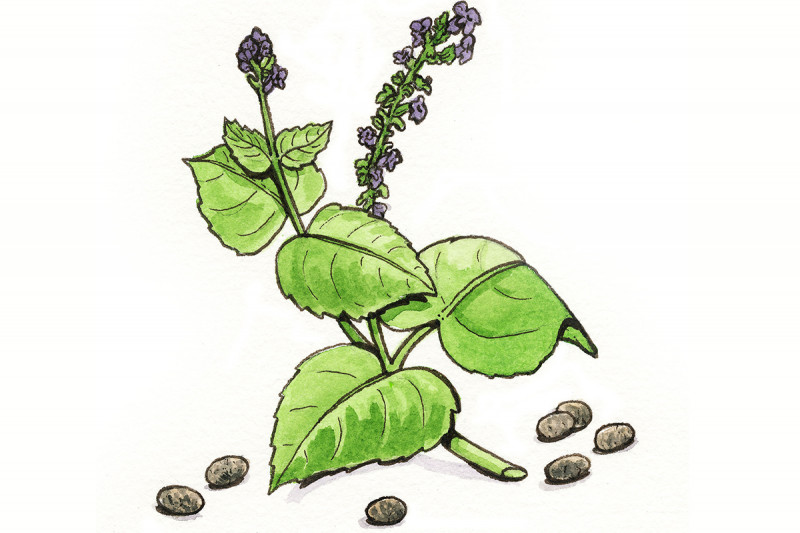
Common Names
- Chia
- Salba
- Salba-chia
For Patients & Caregivers
Tell your healthcare providers about any dietary supplements you’re taking, such as herbs, vitamins, minerals, and natural or home remedies. This will help them manage your care and keep you safe.
What is it?
Chia may have some nutritional benefits, but evidence on specific clinical benefits is very limited.
The seeds of the chia plant are rich in fiber, polyunsaturated fatty acids, and alpha-linolenic acid, a type of essential fatty acid. They are thought to be useful for reducing risk of heart disease and as an aid in weight management. Data from a few small studies suggest that chia seeds may be helpful for patients with diabetes or help contribute to feelings of fullness, but chia did not appear to affect weight loss. In addition, reviews of the current evidence do not adequately support these claims. Larger well-designed trials are needed.
What are the potential uses and benefits?
- Heart health
Most studies of chia’s effects on heart disease risk have not shown meaningful results. - Weight loss
Results from a clinical trial showed that chia did not affect weight loss. More studies are needed.
What are the side effects?
Small studies suggest chia is well tolerated when properly used.
Case reports
Throat blockage: In a 39-year-old man who received emergency treatment to remove chia seeds that had expanded in his throat.
Allergic reaction: In a 54-year-old man with previous history of rhinitis and asthma. He experienced rapid facial swelling, rash, shortness of breath, and dizziness that required emergency treatment after a few days of eating chia seeds to lower cholesterol levels.
Allergic skin reaction: In a 46-year-old man with a history of other allergies. Eczema and itchy lesions on his hands occurred after starting to add chia seeds to his morning yogurt, and disappeared when he stopped eating them.
What else do I need to know?
Patient Warnings:
Never consume dry chia seeds on their own, as they can absorb up to 27 times their weight in water. This may cause them to expand and become lodged in the throat. Chia seeds should be prepared or mixed with enough liquid to allow them to expand before eating.
Do Not Take if:
- You are taking blood pressure medications: Chia seeds may increase the adverse effects of these drugs.
- You have swallowing problems: Use chia seeds with caution, and never use dry chia seeds alone which may expand once in contact with a liquid, such as saliva or water.
- You are allergen-sensitive: Use chia seeds with caution, as there have been case reports of allergic reactions.
For Healthcare Professionals
Scientific Name
Clinical Summary
The chia plant is native to Central and South America and the seeds it produces have been consumed as food since ancient times. They are high in dietary fiber, n-3 polyunsaturated fatty acids (PUFAs), and alpha-linolenic acid, and are marketed as a functional food or dietary supplement for cardiovascular health and weight loss. The seeds can expand and turn into a gel-like substance when mixed with water, and are often found in a variety of packaged goods touted as superfoods.
Various laboratory analyses suggest that chia constituents have antioxidant, anti-inflammatory, anticancer, and antithrombotic activities (8). In vivo experiments suggest that dietary consumption of chia seeds may improve animal intestinal health (21). In animal studies, chia prevented onset of dyslipidemia (1) (6), reversed insulin resistance (1) (9) (10), and conferred cardio- and hepatoprotective effects (7) (22). However, it did not reduce body weight gain or abdominal fat accumulation (10), or have preventive effects in animal tumor models (23).
In preliminary clinical studies, chia did not benefit overweight adults (3), but appeared to improve cardiovascular and obesity-related risk factors in patients with type 2 diabetes (4) (24). Other small studies suggest chia supplementation may increase short-term satiety (25), perhaps to a greater extent than flax (26), and has positive effects on blood glucose levels (11) (12). Chia flour supplementation was found to reduce blood pressure in both treated and untreated hypertensive subjects (13). However, a systematic review determined that most studies on chia for CVD risk factors did not demonstrate statistically significant results (14). In addition, a meta-analysis of trials evaluating chia for various metabolic parameters determined that results were largely nonsignificant and modest at best for a few subgroup measures, while citing low quality of evidence (27).
More research is needed to elucidate and validate health benefits with chia supplementation. Rare adverse or allergic reactions have been reported.
Purported Uses and Benefits
- Cardiovascular health
- Weight loss
Mechanism of Action
Active compounds in chia include essential fatty acids, flavonols, and phenolic compounds, some of which have antioxidant, anti-inflammatory, anticancer, and antithrombotic activities (8) (17). Protein content of chia is higher than that of most traditional grains (18). The main protein fractions extracted from chia seed flour were globulins, with globulin peptides demonstrating homology to sesame proteins, and essential amino acids, especially methionine and cysteine (19).
In animal models, chia seed reversed impaired insulin stimulated glycogen synthase activity, glycogen, glucose-6-phosphate and GLUT-4 protein levels as well as insulin resistance and dyslipidemia (9).
Decreases in postprandial glycemia with chia supplementation may explain improvements in blood pressure, coagulation, and inflammatory markers observed in patients with type II diabetes (4) (11).
IgE-mediated anaphylaxis by chia seeds appeared to be caused by water- and lipo-soluble allergens including a lectin, an elongation factor, and an 11S globulin (18).
Warnings
Never consume dry chia seeds on their own, as they can absorb up to 27 times their weight in water. This may cause them to expand and become lodged in the esophagus. Chia seeds should be prepared or mixed with sufficient amounts of liquid to allow them to expand before consumption (20).
Contraindications
Patients with any history of swallowing problems should use chia seeds with caution due to absorption interactions with liquid, causing them to expand (20).
Adverse Reactions
Small studies suggest chia is well tolerated when properly used (4).
Case reports
Blocked esophagus: In a 39-year-old man who received emergency treatment to remove chia seeds from the esophagus. The cause of the blockage was the ingestion of no more than 1 tablespoon of dry chia seeds followed by a glass of water (20).
Anaphylactic reaction: In a 54-year-old man with previous diagnosis of rhinitis and asthma, after a few days of consuming chia seeds to lower cholesterol levels. Symptoms included pruritus in his mouth, generalized urticaria, facial angioedema, shortness of breath, and dizziness, requiring emergency treatment (18).
IgE-mediated allergic dermatitis: In a 46-year-old man with a history of allergic rhinitis and sensitization to mites/pollens. The appearance of eczema and itchy lesions on his hands coincided with the addition of chia seeds in his daily morning yogurt, and disappeared spontaneously when he stopped eating them (28).
Herb-Drug Interactions
- Antihypertensive medications: Chia supplementation may have additive effects, as the use of chia flour reduced blood pressure in both treated and untreated hypertensive individuals (13) .