Common Names
- Genistein Combined Polysaccharide
For Patients & Caregivers
Tell your healthcare providers about any dietary supplements you’re taking, such as herbs, vitamins, minerals, and natural or home remedies. This will help them manage your care and keep you safe.
There are no clinical data to support use of GCP for cancer prevention or treatment.
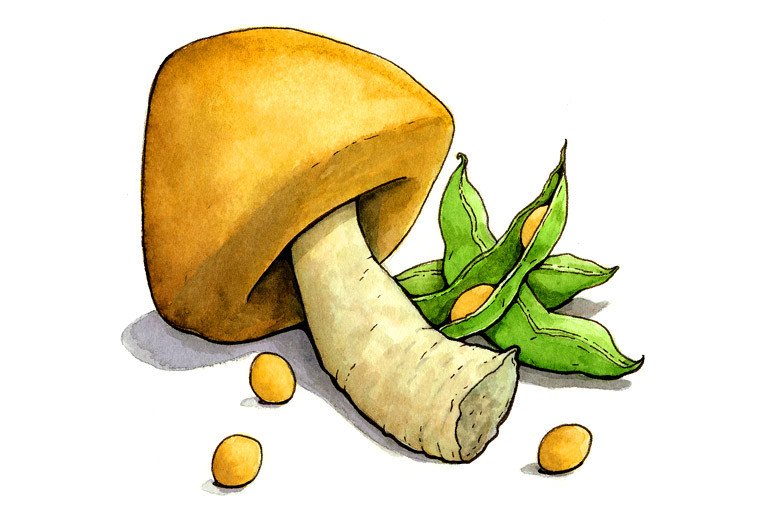
Genistein Combined Polysaccharide (GCP) is composed of genistein, a soy isoflavone, and polysaccharides derived from Basidiomycetes mushrooms. Genistein has been studied extensively in laboratory experiments. When directly applied to several types of cancer cells (including estrogen receptor (ER+) and (ER-) breast cancer, prostate cancer, neuroblastoma and sarcoma), genistein inhibits their growth and replication. Genistein also competes with the body's own estrogen and inhibits the ability of a growth factor called EGF to stimulate its receptor and cause downstream cellular effects. Estrogen and EGF can enhance the growth of certain tumors (such as ER+ breast cancer), so it is thought that genistein may act against them to slow tumor growth.
Laboratory research suggests that the polysaccharides in Basidiomycetes mushrooms can slow the growth of tumors, enhance certain activities of immune cells, and kill some bacteria and viruses on contact.
Case reports showed complete regression of T3 prostate cancer following treatment with GCP; and supplementation with GCP prevented recurrence of transitional cell carcinoma (TCC) of the bladder. But GCP was not effective in lowering PSA levels in men with low-volume prostate cancer. Large scale clinical trials are needed to verify its anticancer potential.
- To prevent and treat cancer
Genistein shows anti-tumor activity in the laboratory setting, but the same has not been shown for GCP. - To treat prostate and bladder cancer
Case reports show benefit of GCP, but clinical trials are lacking.
Do Not Take if:
- You are undergoing chemotherapy with tamoxifen (Studies in animals suggest that genistein may lessen its effects). Clinical relevance is not known.
For Healthcare Professionals
A nutritional supplement prepared by fermenting soy extract with medicinal mushrooms, genistein combined polysaccharide (GCP) is composed of genistein, a soy isoflavone; and polysaccharides obtained from mushrooms. Studies have shown that isoflavones influence hormone-dependent cancers due to their estrogenic activity. Basidiomycetes, which include mushrooms, express immune-stimulant (1) and antitumor (2) (3) activity.
GCP was found to reduce androgen receptor and prostate specific antigen (PSA) levels, induce cell growth arrest, and modestly increase apoptosis in prostate cancer cells, (4). It also inhibited cell growth along with inducing apoptosis in androgen-dependent and -independent human prostate cancer cell lines (5); as well as potentiated the cytostatic and cytotoxic activities of docetaxel, bicalutamide, and the sRC kinase inhibitor, pp2 (5). Another study found that GCP treatment resulted in significant inhibition of cell proliferation and arrested the cell cycle in the G2/M phase in three human lymphoid cell lines (6).
Case reports show complete regression of T3 prostate cancer following treatment with GCP (7); and supplementation with GCP prevented recurrence of transitional cell carcinoma (TCC) of the bladder (10). But GCP was not effective in lowering PSA levels in men with low-volume prostate cancer (11). Large scale clinical trials are needed to verify its anticancer potential.
- Cancer prevention
- Prostate cancer
In vitro experiments show that genistein inhibits tyrosine-specific protein kinase activity of EGF receptors. Inhibition is competitive with respect to ATP and noncompetitive to a phosphate acceptor, histone H2B. Genistein bears no structural relationship with ATP, so inhibition may not be due to true competition for the same active site as that utilized by ATP (8). Basidiomycete polysaccharides possess antitumor, antiviral, antibacterial and immune-modulating activities. The fermentation of soy extract with basidiomycetes deglycosylates the soy isoflavones which renders them in a highly absorbable form (7).
In prostate cancer cells, GCP was found to inhibit mammalian target of rapamycin (MTOR) activity (4). MTOR is a downstream effector of Akt, an enzyme which plays an important role in cancer cell proliferation and survival (4). (For more information on the mechanism of genistein action, see our monograph on soy.)
Tamoxifen: Animal studies suggest that genistein, a soy isoflavone, may antagonize the effects of tamoxifen on estrogen-dependent breast cancer (9). Clinical relevance is not known.