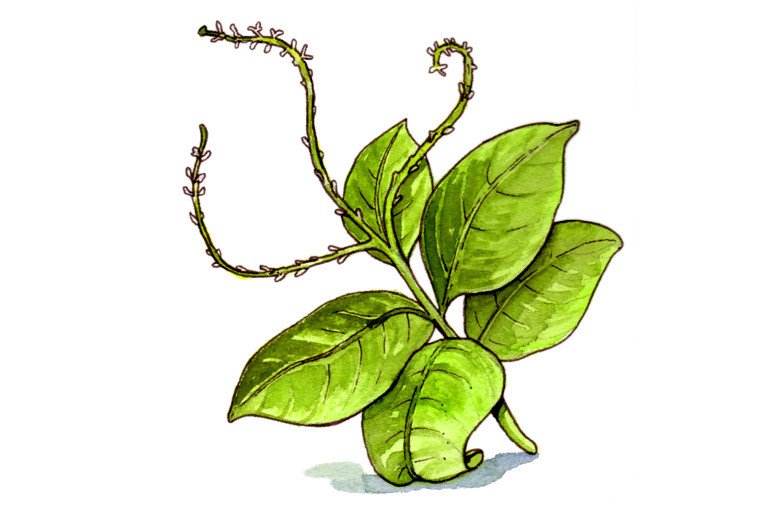
Common Names
- Anamu
- Mucura
- Apacina
- Guinea henweed
- Tipi
For Patients & Caregivers
Tell your healthcare providers about any dietary supplements you’re taking, such as herbs, vitamins, minerals, and natural or home remedies. This will help them manage your care and keep you safe.
Petiveria alliacea has not been shown to treat cancer in humans.
Petiveria alliacea (Anamu) is an herb found in South and Central America, and in some areas of Africa and the southeastern United States. It has been widely used in folk medicine. Studies done in laboratories and in animals have shown that P. alliacea can prevent certain infections, reduce inflammation and pain, and regulate cancer cell growth. However, this has not been confirmed in humans. A small study done in patients with osteoarthritis did not show benefits of P. alliacea compared with placebo.
- To treat cancer
Laboratory studies showed that P. alliacea can be toxic to some cancer cells but more data is needed. It has not been studied in humans. - To reduce swelling and pain
One small clinical trial found that P. alliacea is no more effective than a placebo in arthritic patients with hip and knee pain. - To treat infections
Laboratory studies showed that P. alliacea can inhibit viral, bacterial, and other microbial growth. This has not been studied in humans. - To treat diabetes
An animal study suggests P. alliacea extract may reduce blood sugar in mice. However, human data are lacking.
For Healthcare Professionals
Petiveria alliacea, commonly known as Anamu, is a perennial shrub prevalent in South and Central America, and in some areas of Africa and the southeastern United States. It has been widely used in folk medicine to treat inflammation, infection, and as an anticancer agent. In vitro, extracts of this herb demonstrated antimicrobial, antifungal (1) (2), antiviral (3), antiprotozoal (4), and immunomodulatory (5) (17) properties. Data on its cytotoxic effects are conflicting (6) (7) (14).
The whole plant extracts have anxiolytic effects, whereas an extract of aerial parts showed anxiogenic properties (15), and root extracts showed anticonvulsant effects in mice (16). Although petiveria extract exhibited anti-inflammatory and analgesic effects in animals (8), it did not show any benefits in patients with osteoarthritis compared with placebo (9).
In vitro and in vivo assays showed that petiveria has mutagenic effects (11). More studies are needed to evaluate its traditional uses.
- Cancer
- Diabetes
- Inflammation
- Pain
- Infection
Dibenzyl trisulphide, one of the active ingredients of Petiveria alliacea, causes disassembly of microtubules in neuroblastoma cells resulting in inhibition of cell proliferation (12). Oral administration of P. alliacea root extract to rats resulted in reduced migration of neutrophils, mononuclear cells and eosinophils to the site of inflammation, thereby exerting an anti-inflammatory effect (8). P. alliacea root extract exhibited antimitotic effects in vivo (13) and extracts from its leaves and stems showed hypoglycemic effects in mice (10). The polysulphides of P. alliacea were shown to have antifungal and antibacterial activities (1) (2). Methanolic extracts of P. alliacea showed active inhibition of bovine viral diarrhea virus replication in vitro (3).
Laboratory studies suggest P. alliacea may have anticancer effects. In one study, it was shown to mediate changes in glycolytic enzyme expression causing a decrease in glucose uptake and lactate production, thereby inducing apoptosis in breast adenocarcinoma cells (18).
- Antidiabetic drugs: An older animal study suggests P. alliacea may have additive hypoglycemic effects (10). Clinical relevance has yet to be determined.
- Cytochrome P450 1A2, 2C19 and 3A4 substrates: Dibenzyl trisulfide (DTS) isolated from Petiveria alliacea inhibits CYP1A2, CYP2C19, and CYP3A4 and may affect the blood levels of drugs metabolized by these enzymes (19). Clinical relevance has yet to be determined.