For Patients & Caregivers
Tell your healthcare providers about any dietary supplements you’re taking, such as herbs, vitamins, minerals, and natural or home remedies. This will help them manage your care and keep you safe.
What is it?
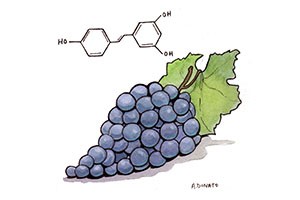
Resveratrol is a chemical found in grapes, red wine, peanuts, pistachios, blueberries, and cranberries.
Resveratrol supplements come as tablets, softgels, capsules, and powders.
What are the potential uses and benefits?
Resveratrol is used to:
- Prevent or treat heart disease.
- Prevent or treat diabetes (wear and tear arthritis).
- Improve memory.
- Relieve joint pain due to osteoarthritis.
Resveratrol also has other uses that haven’t been studied by doctors to see if they work.
It’s generally safe to eat foods with resveratrol. Talk with your healthcare provider before taking resveratrol supplements. Herbal supplements are stronger than the herbs you would use in cooking.
Supplements can also interact with some medications and affect how they work. For more information, read the “What else do I need to know?” section below.
What are the side effects?
Side effects of high doses of resveratrol may include:
- Nausea (feeling like you’re going to throw up).
- Passing gas.
- Abdominal (stomach) pain.
- Diarrhea (loose or watery bowel movements).
What else do I need to know?
- Talk with your healthcare provider if you’re taking blood thinners such as warfarin (Coumadin®, Jantoven®). Resveratrol may increase your risk of bleeding.
For Healthcare Professionals
Scientific Name
Clinical Summary
Resveratrol is a polyphenolic compound found in many botanical products. Red wine is a natural source of resveratrol as it is rich in grape skin and seeds. However, resveratrol is usually consumed as a dietary supplement for its purported antioxidant and anti-inflammatory properties. It is also marketed as an anti-aging supplement based on findings that it prolongs the life span of yeast cells (1) (2). This effect has not yet been demonstrated in humans.
A long-term randomized double-blind trial indicates that resveratrol and its major metabolites penetrate the blood-brain barrier to have effects on some biomarkers associated with Alzheimer’s disease (45), but a meta-analysis did not find any significant effect on memory or cognitive performance (47). Recent double-blind trials have also not found benefit with resveratrol on cognitive function in older adults (52) (53). In a long-term trial in postmenopausal women, resveratrol improved chronic pain, somatic menopausal symptoms, circulatory function, and well-being (72). Additional data suggest potential bone-protective effects (73) (74). But resveratrol was ineffective in reducing hormonal migrane burden in premenopausal women (80).
Resveratrol has also been evaluated for cardioprotective effects. Earlier studies found it reduces low density lipoprotein oxidation, inhibits platelet aggregation, and may protect against atherogenesis (3) (4). Consumption of wine or a resveratrol-rich grape supplement is associated with reduced risk of cardiovascular disease (5) (6) and may help promote circulatory system health (7) (8) (9). However, a meta-analysis did not find benefit with resveratrol supplementation on cardiovascular risk factors (79), it does not decrease risk of all-cause mortality in older adults (42), and higher doses may increase biomarker levels for cardiovascular disease risk (75). Resveratrol did not increase exercise capacity in patients with fatty acid oxidation (FAO) disorders (81) and data on its effectiveness against non-alcoholic fatty liver disease are conflicting (44) (48). But a formulation containing resveratrol may lower the risk of cardiovascular diseases in overweight and obese pediatric cases (82).
Studies on resveratrol for diabetic patients are mixed (10) (43) (46) (50), and a Cochrane review determined there is currently insufficient evidence for its use in diabetes (76). Data on whether it controls metabolic syndrome in obese subjects are also inconclusive (12) (13), and resveratrol had no effect on insulin sensitivity (77) or on hepatic or cardiovascular indices (83) in overweight adults. Other studies suggest benefit with resveratrol in diabetic patients on bone density and levels of SIRT-1, a key protein in metabolism and inflammation (54) (55). It may also help as adjunctive therapy to improve symptoms in rheumatoid and osteoarthritis (56) (57).
Preclinical experiments suggest that resveratrol has antiproliferative (14) (15) (16) (17) (18) (19) and antioxidant effects (58). In combination with radiation exposure, it exhibited dose-dependent radioprotective (59) (60) (61), radiomodulatory (62), radiosensitizing (63), cytotoxic (64), and neuroprotective (65) effects. Other experiments suggest effects including chemotherapeutic potentiation (66) (67) and protection against chemo-induced cardiotoxicity (20).
However, data on use of resveratrol in cancer patients are quite limited. In phase 1 pilots of colorectal cancer patients, one study suggests resveratrol may decrease tumor cell proliferation (41) while another suggests utility may be limited to prevention rather than established cancers (68). Study of a high-dose micronized formula in multiple myeloma patients was stopped due to serious adverse events that included renal failure (69). In addition, resveratrol exhibits estrogen-like properties and activates transcription by both estrogen and androgen receptors that can lead to the stimulation of cancer cell proliferation (18). Therefore, larger well-designed trials are needed to determine the circumstances under which resveratrol might demonstrate safety and utility.
Whereas resveratrol appears to be well tolerated in some studies, high doses can cause gastrointestinal side effects such as diarrhea (27) (33). It also inhibits CYP450 enzymes (22) (23) and may increase the risk of adverse effects of certain drugs. Given its phytoestrogenic properties and potential for interactions, use of this supplement should be discussed with the treating physician.
Food Sources
- Grape skins and seeds
- Peanuts, pistachios
- Mulberries, blueberries, cranberries
- Polygonum cuspidatum or Japanese knotweed
Purported Uses and Benefits
- Heart disease
- Diabetes
- Memory
- Osteoarthritis
Mechanism of Action
Resveratrol acts as an antioxidant and inhibits LDL oxidation (21), platelet aggregation, and eicosanoid synthesis (4). It also induces nitric oxide production (24) (25) and increases arterial blood flow (8). These actions may contribute to its purported cardiovascular health benefits. Resveratrol acts as an anti-inflammatory agent by inhibiting cyclooxygenase activity (26). It has been shown to decrease C-reactive protein and tumor necrosis factor, and increase anti-inflammatory IL-10 and intercellular adhesion molecule-1 in humans (5). Decreases in oxidative stress and improved insulin sensitivity may occur via increased protein kinase activities (10). Resveratrol also decreased circulating insulin-like growth factor-1 and IGF-binding protein-3 levels (27) which may account for its antidiabetic effects observed in some studies. Preliminary data suggest that it increases the life span of yeast cells by activating sirtuins (1) (2), and inhibiting human Sirt3 along with stimulating Sirt5 and Sirt1 (28). Neuroprotective effects may occur via regulating autophagy and apoptosis mediated by the Akt/mTOR pathway (51).
Resveratrol has also been investigated for its anticancer potential. It inhibited cancer cell proliferation via apoptosis and antiestrogenic effects (14) (15) (16) (17). Trans-resveratrol appears to decrease methylation of the tumor suppressor gene RASSF-1alpha in women at increased of risk breast cancer (29). Reductions in breast cancer cell migration and invasion have been observed (30) (31), and resveratrol growth factor heregulin-beta1 mediated MMP9 expression (30). However, contradictory data show that resveratrol mimics phytoestrogens and could activate genes that are normally regulated by estrogens or androgens (18) (19). In other studies resveratrol helped reduce prostate tumorigenesis through reduced prostatic levels of mTOR complex 1 activity and increased expression of SIRT1 (32). It modulates steroid hormone-dependent pathways to inhibit prostate cancer cell growth; however it also increases angiogenesis and inhibits apoptosis in vivo (19).
Additional findings show that resveratrol downregulates p21 and upregulates cyclin E leading to S-phase accumulation and apoptosis in neuroblastoma cells (14). It also inhibits CYP1A1, 1A2, and 1B1 enzymes in tumor cells, perhaps exerting antitumor effects as some of these enzymes are known to be involved in the activation of procarcinogens and toxins (22) (23). Protective effects of resveratrol against doxorubicin-induced cardiotoxicity are due to upregulation of SIRT1-mediated p53 deacetylation (20). Also, it protects against cisplatin-induced cardiotoxicity by suppressing oxidative stress (19).
Contraindications
Patients with hormone-sensitive cancers should use caution as resveratrol at concentrations between 3 and 10 μM, similar to those needed for its other biological effects, exhibits estrogen-like properties and activates transcription by both estrogen and androgen receptors that may lead to the stimulation of cancer cell proliferation (18).
Adverse Reactions
Herb-Drug Interactions
- Antiplatelets: Although clinical relevance is yet to be determined, resveratrol inhibits platelet aggregation in vitro, so concurrent use with antiplatelet drugs may increase bleeding risk (70) (71). Therefore, use of this supplement should be discussed with the treating physician.
- CYP450 substrates: Resveratrol inhibited CYP3A4, 2D6, and 2C9, and induced 1A2 in healthy volunteers following daily intake of 1 gram for 4 weeks. Therefore, it can affect the levels of drugs that are metabolized by these enzymes (39).
- Carbamazepine: In a murine model, Polygonum cuspidatum, an herbal supplement rich in resveratrol, increased carbamazepine blood levels due to CYP3A inhibition and multidrug resistance-associated protein 2 (40). Clinical relevance has yet to be determined.