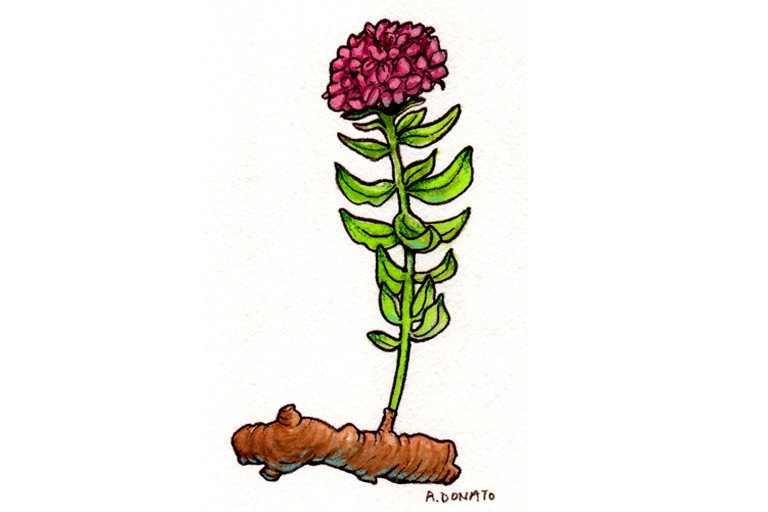
Health Care Professional Information
Common Name
Golden root, Rose root, Hong Jing Tian, Rose root extract, Rosenroot, SHR-5
Clinical Summary
Rhodiola is a plant used in traditional medicine in Eastern Europe and Asia to enhance physical and mental performance, stimulate the nervous system, and fight depression. Rhodiola rosea extract and its key constituent salidroside are most often studied, although studies in humans are limited. Supplementation with rhodiola has improved physical endurance (1), mental performance (2) (3), and reduced stress-induced fatigue in humans (4) (5). Preliminary data also suggest that it may be effective for generalized anxiety disorder (GAD) (6), and the treatment of mild to moderate depression (7). In vitro studies indicate that salidroside from rhodiola may have neuroprotective (8) (9) and anticancer effects (10). A small study also indicates that salidroside may have cardioprotective effects in patients with breast cancer receiving treatment with epirubicin (11), but more studies are needed. In vitro studies show Rhodiola can inhibit cytochrome P450 enzymes, p-glycoproteins (12), and monoamine oxidase (13). As such, it can potentially interact with many drugs. Adverse reactions in humans have been reported.
Purported Uses
- Depression
- Fatigue
- Enhanced mental and physical performance
Constituents
- Flavonoids: proanthocyanidins
- Monoterpene glycoside: rosiridin
- Phenylpropanoid glycosides: rosin, rosavin, and rosarin
- Triterpenes
- Phenolic acids: gallic acid
- Phenylethanol derivatives: salidroside (rhodioloside) and tyrosol
(13) (14) (15)
Mechanism of Action
In animal models, rhodiola exhibits dose- and time-dependent Th1 and Th2 cytokine modulation effects (16). Salidroside confers neuroprotective effects via nitric oxide (NO) pathway inhibition in vitro (9) and through induction of antioxidant enzymes thioredoxin, heme oxygenase-1, and peroxiredoxin-I; downregulation of proapoptotic Bax protein; and upregulation of antiapoptotic Bcl-XL proteins (8). Another study shows the constituents of rhodiola have synergistic antioxidant activity (17). In vitro, rhodiola inhibits monoamine oxidases (MAOs) A and B suggesting that it has antidepressant effects (13). In human breast cancer cells, salidroside induces cell-cycle arrest and apoptosis via mechanisms as yet unidentified, but independent of the estrogen receptor (10).
Contraindications
Patients being treated with prescription antidepressants should use rhodiola with caution, as tachyarrhythmia with concurrent use has been reported (18).
Adverse Reactions
Case Report
Supraventricular tachycardia: A 26-year-old Chinese female presented to the emergency department with significant tachyarrhythmia following ingestion of rhodiola along with her antidepressant for 3 days (18).
Herb-Drug Interactions
- Cytochrome P450 3A4 substrates: Rhodiola inhibits CYP3A4 and can affect the intracellular concentration of drugs metabolized by this enzyme (12).
- P-glycoprotein substrates: Rhodiola was shown to inhibit P-gp activity and can interfere with the metabolism of certain drugs (12).
- Antidepressants: Rhodiola has MAO inhibition activity and may increase the serotonergic side effects (13).
- Antihypertensives: Rhodiola has MAO inhibition activity and may increase the hypotensive side effects (13).
- CNS Stimulants: Rhodiola has MAO inhibition activity and may enhance the hypertensive effect (13).
Literature Summary and Critique
Zhang H, et al. Protective effects of salidroside on epirubicin-induced early left ventricular regional systolic dysfunction in patients with breast cancer. Drugs R D. Jun 1 2012;12(2):101-106.
The cardioprotective effects of salidroside were evaluated in 60 patients with breast cancer randomized to receive salidroside 600 mg/day or placebo (n=30 each) starting 1 week before and throughout chemotherapy. Evaluation measures included echocardiography, strain rate (SR) imaging, and plasma concentrations of reactive oxygen species (ROS) assessed at baseline and 7 days after each new epirubicin dose of 100 mg/m2. Although no differences in SR peak were observed at an epirubicin dose of 200 mg/m2, SR significantly normalized with salidroside vs placebo at 300 mg/m2 and 400mg/m2 of epirubicin. In addition, plasma concentrations of ROS were unchanged with salidroside, but significantly increased with placebo. The investigators concluded that salidroside may be protective against epirubicin-induced early left ventricular regional systolic dysfunction in patients with breast cancer.
Darbinyan V, et al. Clinical trial of Rhodiola rosea L. extract SHR-5 in the treatment of mild to moderate depression. Nord J Psychiatry. 2007;61(5):343-348.
Rhodiola rosea rhizome standardized extract SHR-5 was evaluated in 89 patients suffering from a current episode of mild to moderate depression in this double-blind placebo-controlled trial. Men and women aged 18-70 years with Hamilton Depression (HAMD) scores between 21 and 31 were randomized to receive either two 170-mg tablets daily (Group A: 340 mg/day total, n=31), two 170-mg tablets twice daily (Group B: 680 mg/day total, n=29), or placebo (Group C: n=29) for a 6-week period. Efficacy from total and specific subgroup HAMD scores with respect to depressive complaints was assessed on days 0 and 42 of the study period. In Groups A and B, overall depression, insomnia, emotional instability, and somatization, but not self-esteem, improved significantly following treatment compared with placebo. No serious side-effects were reported in any treatment group.
Shevtsov VA, et al. A randomized trial of two different doses of a SHR-5 Rhodiola rosea extract versus placebo and control of capacity for mental work. Phytomedicine. Mar 2003;10(2-3):95-105.
In this study 161 cadets, ages 19 to 21 years, were randomized to receive either a single dose of standardized rhodiola extract, a single dose that was 50% stronger than the standardized dose, or placebo. Researchers found that the cadets who received rhodiola extract showed significant lowering of fatigue as measured by an antifatigue index compared with those on placebo. There was no difference in the index between the two dosage groups. However, these results cannot be generalized. More well-designed studies are warranted.
Dosage (Inside MSKCC Only)
This field is only visible to only Inside MSKCC users.
References
- De Bock K, Eijnde BO, Ramaekers M, et al. Acute Rhodiola rosea intake can improve endurance exercise performance. Int J Sport Nutr Exerc Metab. Jun 2004;14(3):298-307.
- Darbinyan V, Kteyan A, Panossian A, et al. Rhodiola rosea in stress induced fatigue—a double blind cross-over study of a standardized extract SHR-5 with a repeated low-dose regimen on the mental performance of healthy physicians during night duty. Phytomedicine. Oct 2000;7(5):365-371.
- Shevtsov VA, Zholus BI, Shervarly VI, et al. A randomized trial of two different doses of a SHR-5 Rhodiola rosea extract versus placebo and control of capacity for mental work. Phytomedicine. Mar 2003;10(2-3):95-105.
- Spasov AA, Wikman GK, Mandrikov VB, et al. A double-blind, placebo-controlled pilot study of the stimulating and adaptogenic effect of Rhodiola rosea SHR-5 extract on the fatigue of students caused by stress during an examination period with a repeated low-dose regimen. Phytomedicine. Apr 2000;7(2):85-89.
- Olsson EM, von Scheele B, Panossian AG. A randomised, double-blind, placebo-controlled, parallel-group study of the standardised extract shr-5 of the roots of Rhodiola rosea in the treatment of subjects with stress-related fatigue. Planta Med. Feb 2009;75(2):105-112.
- Bystritsky A, Kerwin L, Feusner JD. A pilot study of Rhodiola rosea (Rhodax) for generalized anxiety disorder (GAD). J Altern Complement Med. Mar 2008;14(2):175-180.
- Darbinyan V, Aslanyan G, Amroyan E, et al. Clinical trial of Rhodiola rosea L. extract SHR-5 in the treatment of mild to moderate depression. Nord J Psychiatry. 2007;61(5):343-348.
- Zhang L, Yu H, Zhao X, et al. Neuroprotective effects of salidroside against beta-amyloid-induced oxidative stress in SH-SY5Y human neuroblastoma cells. Neurochem Int. Nov 2010;57(5):547-555.
- Li X, Ye X, Sun X, et al. Salidroside protects against MPP(+)-induced apoptosis in PC12 cells by inhibiting the NO pathway. Brain Res. Mar 25 2011;1382:9-18.
- Hu X, Zhang X, Qiu S, et al. Salidroside induces cell-cycle arrest and apoptosis in human breast cancer cells. Biochem Biophys Res Commun. Jul 16 2010;398(1):62-67.
- Zhang H, Shen WS, Gao CH, et al. Protective effects of salidroside on epirubicin-induced early left ventricular regional systolic dysfunction in patients with breast cancer. Drugs R D. Jun 1 2012;12(2):101-106.
- Hellum BH, Tosse A, Hoybakk K, et al. Potent in vitro inhibition of CYP3A4 and P-glycoprotein by Rhodiola rosea. Planta Med. Mar 2010;76(4):331-338.
- van Diermen D, Marston A, Bravo J, et al. Monoamine oxidase inhibition by Rhodiola rosea L. roots. J Ethnopharmacol. Mar 18 2009;122(2):397-401.
- Mao Y, Li Y, Yao N. Simultaneous determination of salidroside and tyrosol in extracts of Rhodiola L. by microwave assisted extraction and high-performance liquid chromatography. J Pharm Biomed Anal. Nov 5 2007;45(3):510-515.
- Panossian A, Wikman G, Sarris J. Rosenroot (Rhodiola rosea): traditional use, chemical composition, pharmacology and clinical efficacy. Phytomedicine. Jun 2010;17(7):481-493.
- Lin SS, Chin LW, Chao PC, et al. In vivo Th1 and Th2 cytokine modulation effects of Rhodiola rosea standardised solution and its major constituent, salidroside. Phytother Res. Nov 2011;25(11):1604-1611.
- Palumbo DR, Occhiuto F, Spadaro F, et al. Rhodiola rosea Extract Protects Human Cortical Neurons against Glutamate and Hydrogen Peroxide-induced Cell Death Through Reduction in the Accumulation of Intracellular Calcium. Phytother Res. Jun 2012;26(6):878-883.
- McGovern E, McDonnell TJ. Herbal medicine—sets the heart racing! Ir Med J. Jul-Aug 2010;103(7):219.
Consumer Information
How It Works
Bottom Line: Rhodiola was shown to improve physical and mental performance by reducing fatigue caused by stress.
Rhodiola is used in traditional medicine in Eastern Europe and Asia as a stimulant, to improve performance, and to reduce fatigue and depression. Some pilot studies in humans do support these claims, but more studies are needed. Because it may interact through pathways the body uses to metabolize prescription medications, patients should ask their doctor before taking rhodiola supplements.
Purported Uses
- Depression
Human studies showed that rhodiola may improve anxiety or mild to moderate depression. Further research is needed.
- Fatigue
Several studies found that rhodiola can reduce fatigue under stressful conditions.
- Performance
Rhodiola improved exercise capacity and mental performance in human studies.
Research Evidence
Depression
This study was done to determine whether rhodiola extract was effective in treating men and women with mild to moderate depression. Eight-nine patients were divided into three groups receiving either different doses of rhodiola or a placebo. The study found that depression improved in both groups receiving rhodiola compared with placebo, without any serious side-effects being reported.
Fatigue
This study was done to determine the effects of rhodiola extract on mental performance under stress and fatigue. One hundred and sixty-one cadets were divided into groups that received either different doses of rhodiola or a placebo. The study found that the groups who received rhodiola had lower fatigue and performed better compared with those on placebo.
Do Not Take If
- You are taking drugs that are substrates of Cytochrome P450 3A4 (Rhodiola may increase the risk of side effects of these drugs).
- You are taking drugs that are substrates of P-glycoprotein (Rhodiola may increase the risk of side effects of these drugs).
- You are taking antidepressants (Rhodiola may increase the risk of side effects of these drugs).
- You are taking drugs for high blood pressure (Rhodiola may increase the risk of side effects of these drugs).
- You are taking drugs that stimulate the central nervous system (Rhodiola may increase the risk of side effects of these drugs).
Side Effects
- Dizziness
- Dry mouth
- Case report of fast and irregular heart beat
Last updated: July 20, 2012
antiapoptotic (AN-tee-A-pop-TAH-tik)
Something that prevents apoptosis. Apoptosis is a type of cell death in which a series of molecular steps in a cell leads to its death.
Source: The National Cancer Institute's Dictionary of Cancer Terms
(http://www.cancer.gov/dictionary)
antidepressant (AN-tee-dee-PREH-sunt)
A drug used to treat depression.
Source: The National Cancer Institute's Dictionary of Cancer Terms
(http://www.cancer.gov/dictionary)
antioxidant (AN-tee-OK-sih-dent)
A substance that protects cells from the damage caused by free radicals (unstable molecules made by the process of oxidation during normal metabolism). Free radicals may play a part in cancer, heart disease, stroke, and other diseases of aging. Antioxidants include beta-carotene, lycopene, vitamins A, C, and E, and other natural and manufactured substances.
Source: The National Cancer Institute's Dictionary of Cancer Terms
(http://www.cancer.gov/dictionary)
anxiety (ang-ZY-eh-tee)
Feelings of fear, dread, and uneasiness that may occur as a reaction to stress. A person with anxiety may sweat, feel restless and tense, and have a rapid heart beat. Extreme anxiety that happens often over time may be a sign of an anxiety disorder.
Source: The National Cancer Institute's Dictionary of Cancer Terms
(http://www.cancer.gov/dictionary)
apoptosis (A-pop-TOH-sis)
A type of cell death in which a series of molecular steps in a cell leads to its death. This is the body’s normal way of getting rid of unneeded or abnormal cells. The process of apoptosis may be blocked in cancer cells. Also called programmed cell death.
Source: The National Cancer Institute's Dictionary of Cancer Terms
(http://www.cancer.gov/dictionary)
baseline (BAYS-line)
An initial measurement that is taken at an early time point to represent a beginning condition, and is used for comparison over time to look for changes. For example, the size of a tumor will be measured before treatment (baseline) and then afterwards to see if the treatment had an effect.
Source: The National Cancer Institute's Dictionary of Cancer Terms
(http://www.cancer.gov/dictionary)
breast (brest)
Glandular organ located on the chest. The breast is made up of connective tissue, fat, and breast tissue that contains the glands that can make milk. Also called mammary gland.
Source: The National Cancer Institute's Dictionary of Cancer Terms
(http://www.cancer.gov/dictionary)
breast cancer (brest KAN-ser)
Cancer that forms in tissues of the breast, usually the ducts (tubes that carry milk to the nipple) and lobules (glands that make milk). It occurs in both men and women, although male breast cancer is rare.
Source: The National Cancer Institute's Dictionary of Cancer Terms
(http://www.cancer.gov/dictionary)
cancer (KAN-ser)
A term for diseases in which abnormal cells divide without control and can invade nearby tissues. Cancer cells can also spread to other parts of the body through the blood and lymph systems. There are several main types of cancer. Carcinoma is a cancer that begins in the skin or in tissues that line or cover internal organs. Sarcoma is a cancer that begins in bone, cartilage, fat, muscle, blood vessels, or other connective or supportive tissue. Leukemia is a cancer that starts in blood-forming tissue such as the bone marrow, and causes large numbers of abnormal blood cells to be produced and enter the blood. Lymphoma and multiple myeloma are cancers that begin in the cells of the immune system. Central nervous system cancers are cancers that begin in the tissues of the brain and spinal cord. Also called malignancy.
Source: The National Cancer Institute's Dictionary of Cancer Terms
(http://www.cancer.gov/dictionary)
case report (kays reh-PORT)
A detailed report of the diagnosis, treatment, and follow-up of an individual patient. Case reports also contain some demographic information about the patient (for example, age, gender, ethnic origin).
Source: The National Cancer Institute's Dictionary of Cancer Terms
(http://www.cancer.gov/dictionary)
chemotherapy (KEE-moh-THAYR-uh-pee)
Treatment with drugs that kill cancer cells.
Source: The National Cancer Institute's Dictionary of Cancer Terms
(http://www.cancer.gov/dictionary)
concentration (KON-sen-TRAY-shun)
In science, the amount of a substance, such as a salt, that is in a certain amount of tissue or liquid, such as blood. A substance becomes more concentrated when less water is present. For example, the salt in urine may become more concentrated when a person doesn’t drink enough water.
Source: The National Cancer Institute's Dictionary of Cancer Terms
(http://www.cancer.gov/dictionary)
depression (dee-PREH-shun)
A mental condition marked by ongoing feelings of sadness, despair, loss of energy, and difficulty dealing with normal daily life. Other symptoms of depression include feelings of worthlessness and hopelessness, loss of pleasure in activities, changes in eating or sleeping habits, and thoughts of death or suicide. Depression can affect anyone, and can be successfully treated. Depression affects 15-25% of cancer patients.
Source: The National Cancer Institute's Dictionary of Cancer Terms
(http://www.cancer.gov/dictionary)
disorder (dis-OR-der)
In medicine, a disturbance of normal functioning of the mind or body. Disorders may be caused by genetic factors, disease, or trauma.
Source: The National Cancer Institute's Dictionary of Cancer Terms
(http://www.cancer.gov/dictionary)
dose (dose)
The amount of medicine taken, or radiation given, at one time.
Source: The National Cancer Institute's Dictionary of Cancer Terms
(http://www.cancer.gov/dictionary)
dysfunction (dis-FUNK-shun)
A state of not functioning normally.
Source: The National Cancer Institute's Dictionary of Cancer Terms
(http://www.cancer.gov/dictionary)
echocardiography (EH-koh-KAR-dee-AH-gruh-fee)
A procedure that uses ultrasonic waves directed over the chest wall to obtain a graphic record of the heart's position, motion of the walls, or internal parts such as the valves.
Source: The National Cancer Institute's Dictionary of Cancer Terms
(http://www.cancer.gov/dictionary)
efficacy (EH-fih-kuh-see)
Effectiveness. In medicine, the ability of an intervention (for example, a drug or surgery) to produce the desired beneficial effect.
Source: The National Cancer Institute's Dictionary of Cancer Terms
(http://www.cancer.gov/dictionary)
enzyme (EN-zime)
A protein that speeds up chemical reactions in the body.
Source: The National Cancer Institute's Dictionary of Cancer Terms
(http://www.cancer.gov/dictionary)
epirubicin (EH-pih-ROO-bih-sin)
A drug used together with other drugs to treat early breast cancer that has spread to lymph nodes. It is also being studied in the treatment of other types of cancer. Epirubicin is a type of anthracycline antibiotic. Also called Ellence and epirubicin hydrochloride.
Source: The National Cancer Institute's Dictionary of Cancer Terms
(http://www.cancer.gov/dictionary)
estrogen (ES-truh-jin)
A type of hormone made by the body that helps develop and maintain female sex characteristics and the growth of long bones. Estrogens can also be made in the laboratory. They may be used as a type of birth control and to treat symptoms of menopause, menstrual disorders, osteoporosis, and other conditions.
Source: The National Cancer Institute's Dictionary of Cancer Terms
(http://www.cancer.gov/dictionary)
extract (EK-strakt)
In medicine, a preparation of a substance obtained from plants, animals, or bacteria and used as a drug or in drugs.
Source: The National Cancer Institute's Dictionary of Cancer Terms
(http://www.cancer.gov/dictionary)
fatigue (fuh-TEEG)
A condition marked by extreme tiredness and inability to function due lack of energy. Fatigue may be acute or chronic.
Source: The National Cancer Institute's Dictionary of Cancer Terms
(http://www.cancer.gov/dictionary)
heme (heem)
The part of certain molecules that contains iron. The heme part of hemoglobin is the substance inside red blood cells that binds to oxygen in the lungs and carries it to the tissues.
Source: The National Cancer Institute's Dictionary of Cancer Terms
(http://www.cancer.gov/dictionary)
imaging (IH-muh-jing)
In medicine, a process that makes pictures of areas inside the body. Imaging uses methods such as x-rays (high-energy radiation), ultrasound (high-energy sound waves), and radio waves.
Source: The National Cancer Institute's Dictionary of Cancer Terms
(http://www.cancer.gov/dictionary)
in vitro (in VEE-troh)
In the laboratory (outside the body). The opposite of in vivo (in the body).
Source: The National Cancer Institute's Dictionary of Cancer Terms
(http://www.cancer.gov/dictionary)
ingestion (in-JES-chun)
Taking into the body by mouth.
Source: The National Cancer Institute's Dictionary of Cancer Terms
(http://www.cancer.gov/dictionary)
insomnia (in-SOM-nee-uh)
Difficulty in going to sleep or getting enough sleep.
Source: The National Cancer Institute's Dictionary of Cancer Terms
(http://www.cancer.gov/dictionary)
intracellular (IN-truh-SEL-yoo-ler)
Inside a cell.
Source: The National Cancer Institute's Dictionary of Cancer Terms
(http://www.cancer.gov/dictionary)
M
In chemistry, M is the amount of a substance that has 6.023 x 10(23) atoms or molecules of that substance. Also called mole (chemical).
Source: The National Cancer Institute's Dictionary of Cancer Terms
(http://www.cancer.gov/dictionary)
medicine (MEH-dih-sin)
Refers to the practices and procedures used for the prevention, treatment, or relief of symptoms of a diseases or abnormal conditions. This term may also refer to a legal drug used for the same purpose.
Source: The National Cancer Institute's Dictionary of Cancer Terms
(http://www.cancer.gov/dictionary)
metabolism (meh-TA-buh-lih-zum)
The chemical changes that take place in a cell or an organism. These changes make energy and the materials cells and organisms need to grow, reproduce, and stay healthy. Metabolism also helps get rid of toxic substances.
Source: The National Cancer Institute's Dictionary of Cancer Terms
(http://www.cancer.gov/dictionary)
oxide (OK-side)
A type of chemical substance that is a combination of oxygen and another substance. Oxides are found in essential oils.
Source: The National Cancer Institute's Dictionary of Cancer Terms
(http://www.cancer.gov/dictionary)
oxygen (OK-sih-jen)
A colorless, odorless gas. It is needed for animal and plant life. Oxygen that is breathed in enters the blood from the lungs and travels to the tissues.
Source: The National Cancer Institute's Dictionary of Cancer Terms
(http://www.cancer.gov/dictionary)
placebo (pluh-SEE-boh)
An inactive substance or treatment that looks the same as, and is given the same way as, an active drug or treatment being tested. The effects of the active drug or treatment are compared to the effects of the placebo.
Source: The National Cancer Institute's Dictionary of Cancer Terms
(http://www.cancer.gov/dictionary)
placebo-controlled (pluh-SEE-boh-kun-TROLD)
Refers to a clinical study in which the control patients receive a placebo.
Source: The National Cancer Institute's Dictionary of Cancer Terms
(http://www.cancer.gov/dictionary)
plasma (PLAZ-muh)
The clear, yellowish, fluid part of the blood that carries the blood cells. The proteins that form blood clots are in plasma.
Source: The National Cancer Institute's Dictionary of Cancer Terms
(http://www.cancer.gov/dictionary)
prescription (prih-SKRIP-shun)
A doctor's order for medicine or another intervention.
Source: The National Cancer Institute's Dictionary of Cancer Terms
(http://www.cancer.gov/dictionary)
randomized
Describes an experiment or clinical trial in which animal or human subjects are assigned by chance to separate groups that compare different treatments.
Source: The National Cancer Institute's Dictionary of Cancer Terms
(http://www.cancer.gov/dictionary)
receptor (reh-SEP-ter)
A molecule inside or on the surface of a cell that binds to a specific substance and causes a specific physiologic effect in the cell.
Source: The National Cancer Institute's Dictionary of Cancer Terms
(http://www.cancer.gov/dictionary)
regional (REE-juh-nul)
In oncology, describes the body area right around a tumor.
Source: The National Cancer Institute's Dictionary of Cancer Terms
(http://www.cancer.gov/dictionary)
self-esteem (self-eh-STEEM)
A feeling of self-worth, self-confidence, and self-respect.
Source: The National Cancer Institute's Dictionary of Cancer Terms
(http://www.cancer.gov/dictionary)
significant (sig-NIH-fih-kunt)
In statistics, describes a mathematical measure of difference between groups. The difference is said to be significant if it is greater than what might be expected to happen by chance alone. Also called statistically significant.
Source: The National Cancer Institute's Dictionary of Cancer Terms
(http://www.cancer.gov/dictionary)
stimulant (STIM-yoo-lunt)
In medicine, a family of drugs used to treat depression, attention-deficit disorder (a common disorder in which children are inattentive, impulsive, and/or over-active), and narcolepsy (a sleep disorder that causes uncontrollable sleepiness). Stimulants increase brain activity, alertness, attention, and energy. They also raise blood pressure and increase heart rate and breathing rate.
Source: The National Cancer Institute's Dictionary of Cancer Terms
(http://www.cancer.gov/dictionary)
stress (stres)
The response of the body to physical, mental, or emotional pressure. This may make a person feel frustrated, angry, or anxious, and may cause unhealthy chemical changes in the body. Untreated, long-term stress may lead to many types of mental and physical health problems.
Source: The National Cancer Institute's Dictionary of Cancer Terms
(http://www.cancer.gov/dictionary)
synergistic (SIH-ner-JIS-tik)
In medicine, describes the interaction of two or more drugs when their combined effect is greater than the sum of the effects seen when each drug is given alone.
Source: The National Cancer Institute's Dictionary of Cancer Terms
(http://www.cancer.gov/dictionary)