Health Care Professional Information
Common Name
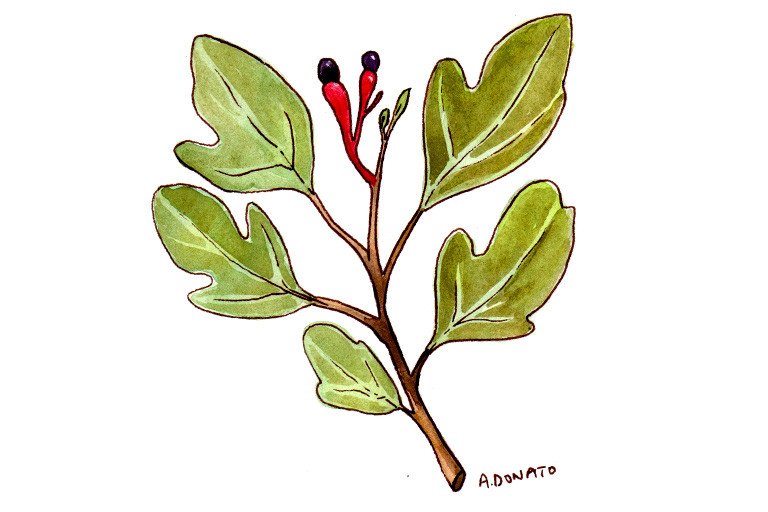
Ague tree, saxifrax, cinnamonwood, saloop, smelling-stick
Clinical Summary
Derived primarily from the roots of the tree. There are no clinical data to support the use of sassafras, which contains safrole, a volatile oil that was shown to be carcinogenic in animal models. Diaphoresis, hot flashes, and sedation have been reported following administration of small doses.
Excessive doses can cause hallucinations, hypertension, and tachycardia.
Food Sources
Once used as flavoring agent in root beer and candies. Its use as food additive is now prohibited by the FDA due to its carcinogenic effect.
(6)
Purported Uses
- Detoxification
- Health maintenance
- Inflammation
- Mucositis
- Rheumatoid arthritis
- Sprains
- Syphilis
- Urinary tract disorders
Constituents
- Volatile oils: Safrole, myristicin, L-hydroxy safrole
- Alkaloids: Boldine, cinnamolaurine
- Other constituents: Sitosterol, tannins, and lignans
(1)
Mechanism of Action
Unknown at this time. Safrole, a volatile oil, is a known carcinogen. L-hydroxy safrole can cause neurotoxicity and is believed to be carcinogenic as well.
(6)
Warnings
Sassafras, containing safrole, has caused liver cancer in animal models and is classified as a carcinogenic substance. Risk increases with length of exposure and amount consumed. (5)
Herb-Drug Interactions
Barbiturates: Sassafras may have an additive effect.
(3)
References
- Newall C, et al. Herbal Medicines: A Guide for Health-Care Professionals. London: Pharmaceutical Press; 1996.
- De Smet PA, et al. Adverse Effects of Herbal Drugs, Vol 3. New York: Springer; 1997.
- Brinker F, Herb Contraindications and Drug Interactions, 2nd ed. Sandy (OR): Eclectic Medical Publications; 1998.
- Haines JD. Sassafras tea and diaphoresis. Postgrad Med 1991;90;75-6.
- Safrole. Report on Carcinogens. http://ntp.niehs.nih.gov/ntp/roc/twelfth/profiles/Safrole.pdf. Accessed September 26, 2011.
- Foster S, et al. Tyler's Honest Herbal: A Sensible Guide to the Use of Herbs and Related Remedies. New York: Haworth Herbal Press; 1999.
Consumer Information
How It Works
Bottom Line: Because there is no evidence that it works, sassafras should not be used to treat rheumatoid arthritis, infections, or any other medical condition.
Sassafras is a root extract. Scientists do not know of any positive biological effects sassafras might have. Some compounds found in sassafras have harmful effects: Safrole, a volatile oil, is a known carcinogen (cancer-causing agent), while L-hydroxy safrole can damage the nerves.
Purported Uses
There is no scientific evidence to support the claims below:
- To detoxify
- For general health maintenance
- To reduce inflammation
- To treat mucositis (inflammation of the mucous membranes of the mouth and throat)
- To treat rheumatoid arthritis
- To treat sprains
- To treat syphilis
- To treat urinary tract disorders
Research Evidence
Clinical trials have not been conducted to test the effects of sassafras.
Patient Warnings
- Sassafras is classified as a carcinogenic substance. It caused liver cancer in laboratory animals; the risk of developing cancer increases with the amount consumed and duration of consumption.
Do Not Take If
- You are taking barbiturates such as phenobarbital (Sassafras can have an additive effect).
Side Effects
- Hot flashes
- Profuse perspiration
- At toxic doses or with prolonged use, sassafras can cause hallucinations, high blood pressure, fast heart rate, liver cancer, and death.
Special Point
- Sassafras was once used as flavoring agent in root beer and candies. The Food and Drug Administration has since prohibited the use of sassafras as a food additive due to its carcinogenic (cancer-causing) effects.
Last updated: September 29, 2012
administration (ad-MIH-nih-STRAY-shun)
In medicine, the act of giving a treatment, such as a drug, to a patient. It can also refer to the way it is given, the dose, or how often it is given.
Source: The National Cancer Institute's Dictionary of Cancer Terms
(http://www.cancer.gov/dictionary)
biological (BY-oh-LAH-jih-kul)
Pertaining to biology or to life and living things. In medicine, refers to a substance made from a living organism or its products. Biologicals may be used to prevent, diagnose, treat or relieve of symptoms of a disease. For example, antibodies, interleukins, and vaccines are biologicals. Biological also refers to parents and children who are related by blood.
Source: The National Cancer Institute's Dictionary of Cancer Terms
(http://www.cancer.gov/dictionary)
blood (blud)
A tissue with red blood cells, white blood cells, platelets, and other substances suspended in fluid called plasma. Blood takes oxygen and nutrients to the tissues, and carries away wastes.
Source: The National Cancer Institute's Dictionary of Cancer Terms
(http://www.cancer.gov/dictionary)
cancer (KAN-ser)
A term for diseases in which abnormal cells divide without control and can invade nearby tissues. Cancer cells can also spread to other parts of the body through the blood and lymph systems. There are several main types of cancer. Carcinoma is a cancer that begins in the skin or in tissues that line or cover internal organs. Sarcoma is a cancer that begins in bone, cartilage, fat, muscle, blood vessels, or other connective or supportive tissue. Leukemia is a cancer that starts in blood-forming tissue such as the bone marrow, and causes large numbers of abnormal blood cells to be produced and enter the blood. Lymphoma and multiple myeloma are cancers that begin in the cells of the immune system. Central nervous system cancers are cancers that begin in the tissues of the brain and spinal cord. Also called malignancy.
Source: The National Cancer Institute's Dictionary of Cancer Terms
(http://www.cancer.gov/dictionary)
carcinogen (kar-SIH-noh-jin)
Any substance that causes cancer.
Source: The National Cancer Institute's Dictionary of Cancer Terms
(http://www.cancer.gov/dictionary)
clinical (KLIH-nih-kul)
Having to do with the examination and treatment of patients.
Source: The National Cancer Institute's Dictionary of Cancer Terms
(http://www.cancer.gov/dictionary)
drug (drug)
Any substance, other than food, that is used to prevent, diagnose, treat or relieve symptoms of a disease or abnormal condition. Also refers to a substance that alters mood or body function, or that can be habit-forming or addictive, especially a narcotic.
Source: The National Cancer Institute's Dictionary of Cancer Terms
(http://www.cancer.gov/dictionary)
extract (EK-strakt)
In medicine, a preparation of a substance obtained from plants, animals, or bacteria and used as a drug or in drugs.
Source: The National Cancer Institute's Dictionary of Cancer Terms
(http://www.cancer.gov/dictionary)
herbal (ER-bul)
Having to do with plants.
Source: The National Cancer Institute's Dictionary of Cancer Terms
(http://www.cancer.gov/dictionary)
hypertension (HY-per-TEN-shun)
A blood pressure of 140/90 or higher. Hypertension usually has no symptoms. It can harm the arteries and cause an increase in the risk of stroke, heart attack, kidney failure, and blindness. Also called high blood pressure.
Source: The National Cancer Institute's Dictionary of Cancer Terms
(http://www.cancer.gov/dictionary)
liver (LIH-ver)
A large organ located in the upper abdomen. The liver cleanses the blood and aids in digestion by secreting bile.
Source: The National Cancer Institute's Dictionary of Cancer Terms
(http://www.cancer.gov/dictionary)
liver cancer (LIH-ver KAN-ser)
Primary liver cancer is cancer that forms in the tissues of the liver. Secondary liver cancer is cancer that spreads to the liver from another part of the body.
Source: The National Cancer Institute's Dictionary of Cancer Terms
(http://www.cancer.gov/dictionary)
tachycardia (TA-kih-KAR-dee-uh)
Rapid beating of the heart, usually defined as greater than 100 beats per minute.
Source: The National Cancer Institute's Dictionary of Cancer Terms
(http://www.cancer.gov/dictionary)
toxic (TOK-sik)
Having to do with poison or something harmful to the body. Toxic substances usually cause unwanted side effects.
Source: The National Cancer Institute's Dictionary of Cancer Terms
(http://www.cancer.gov/dictionary)
urinary (YOOR-ih-NAYR-ee)
Having to do with urine or the organs of the body that produce and get rid of urine.
Source: The National Cancer Institute's Dictionary of Cancer Terms
(http://www.cancer.gov/dictionary)