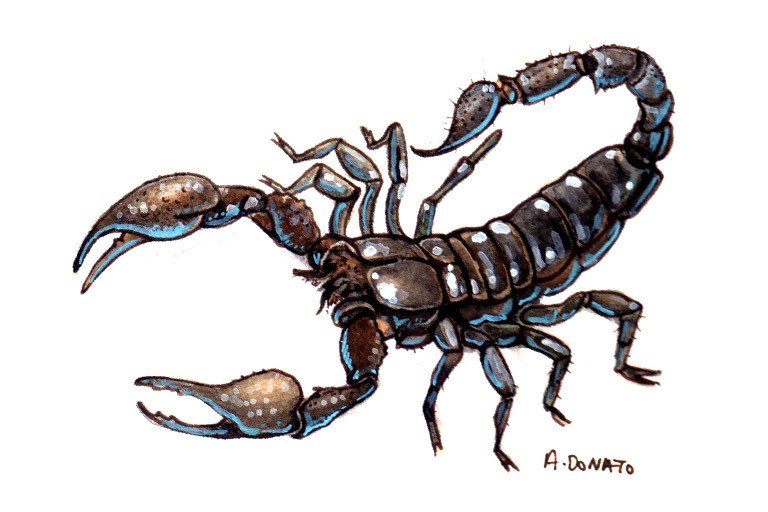
Common Names
- Blue scorpion
For Patients & Caregivers
Tell your healthcare providers about any dietary supplements you’re taking, such as herbs, vitamins, minerals, and natural or home remedies. This will help them manage your care and keep you safe.
What is it?
Although components of scorpion venom from various species show anticancer effects in laboratory and animal studies, the scorpion venom marketed to cancer patients has not been scientifically proven to treat cancer in humans.
The claims made for blue scorpion venom marketed to cancer patients as Escozine, Escozul, and Vidatox (a homeopathic version) are mostly based on anecdotes, testimonials, and experiments which may or may not have been properly carried out. In Cuba where these products originated, the government rejected the use of Escozul in 2009 because there was not enough data. The homeopathic version, which uses very dilute solutions of the active ingredient, has not been shown to treat or prevent cancer. The properties of blue scorpion venom are just starting to be described more thoroughly in scientific research. Therefore, like venoms from other scorpion species, blue scorpion venom compounds one day may be isolated and properly developed to create cancer therapies, but much more research is needed.
What are the potential uses and benefits?
- Pain relief
A few lab studies suggest that scorpion venom may be helpful in relieving pain, but human studies are lacking. - Anti-inflammatory
No scientific evidence currently supports this use. - Cancer treatment
No scientific evidence supports this use. The “scientific” papers published online about scorpion venom products have not been properly evaluated by the scientific community. - Chemotherapy or radiation side effects
No scientific evidence currently supports this use.
What are the side effects?
The venoms marketed to cancer patients are untested and unregulated. Therefore side effects are currently unknown.
What else do I need to know?
Patient Warnings:
Scorpion venom products marketed to cancer patients including Escozine and Vidatox have not been studied in clinical trials. There is no evidence for their use to prevent or treat cancer in humans, and they have not been reviewed or approved by the FDA.
For Healthcare Professionals
Brand Name
Scientific Name
Clinical Summary
The scorpion is a predatory arthropod represented by more than 1500 different species worldwide (1). As part of the diverse arachnid class, scorpions possess a venomous stinger at the end of their tails used to paralyze prey or for self-defense. Although the venom is generally considered poisonous, there are varying degrees of pathogenicity and only a small fraction of scorpion species are deadly to humans (2).
The belief that scorpions have medicinal properties has existed for centuries, and many instances of their use have been recorded in both indigenous and folk medicine. In Traditional Chinese Medicine, the entire scorpion of the Buthus martensii Karsch (BmK) species is used to treat convulsions, spasms, and pain (3), and some laboratory studies confirm that scorpion venoms do contain antinociceptive properties (4) (5).
Scorpion venom has also been evaluated for other applications. It appears useful in killing intraerythrocytic malarial pathogens without harming the erythrocyte (6), and some species contain antimicrobial peptides that appear effective against yeast, fungi, bacteria, and viruses (7) (8). Scorpion venom could also be a source for the isolation of anticancer molecules. Preliminary assessments indicate that Tityus discrepans, Androctonus crassicauda, and Odontobuthus doriae venoms are inducers of apoptosis in breast cancer cell lines (9) (10) (11) . A component in BmK venom inhibits proliferation of human leukemia cells suggesting therapeutic potential in hematopoietic malignancies (12). Because the general composition and expression level of scorpion venom depends on genetic variations and geographical environments, research to identify the active components that have therapeutic potential across the various species continues (12) (13) (14).
Rhopalurus junceus, or blue scorpion venom, originated from Cuba, and is often marketed as having anticancer, anti-inflammatory, and analgesic properties. Claims for these products, known as Escozine and Escozul, are largely based on anecdotal information, testimonials, and preclinical experiments on laboratory animals. However, the manufacturers’ research cannot be corroborated and has not been published in any peer-reviewed journal (15) (16). In 2009, the Cuban government formally rejected the use of Escozul due to insufficient clinical data (17). Only recently has there been a functional characterization of R. junceus in the literature, but without any clinical evidence presented for R. junceus-derived products (18). A homeopathic version, Vidatox, has since been developed and has also not been evaluated in peer-reviewed journals.
The more likely scenario for future benefits with scorpion venom in cancer therapy may come from clinical trials involving chlorotoxin (CTX), a scorpion venom-derived peptide. CTX may facilitate the entry of chemotherapeutic compounds into tumor cells to target drug delivery and improve efficacy (19) (20) (21). In addition, it holds the potential for reducing side effects and can be synthesized in the laboratory (22). A synthetic CTX that selectively binds to glioma and other tumors cells is being evaluated as a radiopharmaceutical to deliver therapeutic levels of radiation directly to disease sites (23) (24). A CTX/near-infrared fluorescent molecule combination is under investigation as a cancer imaging agent, a kind of “tumor paint” that may help surgeons more clearly identify tumor margins and micrometastases, and spare normal tissue (25) (26) (27).
Continued research on the complex characteristics of scorpion venom among the various species is needed to both isolate the properties of therapeutic importance and develop their application in cancer research.
Purported Uses and Benefits
- Pain
- Inflammation
- Cancer
- Treatment side effects
Mechanism of Action
The sheer number of compounds and their diverse pharmacologic properties among different scorpion species leaves their mechanisms poorly understood (12) (31). Most scorpion venoms are known to contain peptide toxins that mainly act on ion channels (29). These biologically active peptides are classified as either disulfide-bridged peptides (DBPs) which are mostly responsible for neurotoxic effects, and non-disulfide-bridged (NDBPs) which have been an attractive area of research for their spectrum of biological activities (36).
Hp1036 and Hp1239 peptides are antiviral and exert inhibitory effects throughout the Herpes simplex virus type 1 (HSV-1) life cycle (37). TsAP-1 and TsAP-2 peptides possess antimicrobial and anticancer activity that can be substantially improved with increased cationicity (38). AcrAP1 and AcrAP2 analogues have also displayed enhanced antimicrobial activity and growth modulation effects on a range of human cancer cell lines (39). Peptides are also being engineered to produce selective therapeutic ion channel inhibitors which may have potential against autoimmune diseases (40). A fusion protein generated from chlorotoxin inhibited matrix metalloproteinase-2 release from pancreatic cancer cells, which require their activation during invasion and migration (41).
The venom from R. junceus was shown to have reversible beta and alpha activities. It enabled sodium channels to open at more negative potentials, delayed inactivation of potassium channels, and rapidly blocked ERG potassium channels in neuroblastoma cells (18). Proteins found in T. discrepans venom bind to FasL and Bcl-2 on the surface of breast cancer cells inducing apoptosis (9). Buthus matensii Karsch (BmK) scorpion venom extracts inhibited human breast cancer cells by inducing apoptosis and blocking cell cycle in G0/G1 phase (42). BmK venom also induces apoptosis in human lymphoma cells by upregulating PTEN, and decreases levels of Akt and Bad phosphorylation, resulting in increased p27 expression (32). Another component of BmK venom inhibits cell proliferation by modulating NF-κB activation in human leukemia cells (12). Bengalin, a high molecular weight protein from the Indian black scorpion induced autophagy in human leukemic cells through ERK-MAPK pathway (43). A. crassicauda and O. doriae venoms induce apoptosis via caspase-3 activity and nuclear DNA fragmentation in neuroblastoma and breast cancer cells (10) (11). Further, the proteolytic enzymes in scorpion venom are likely responsible for its necrotic activity (11). Leiurus quinquestriatus venom contains a chlorotoxin (CTX) associated with MMP2 that increases its affinity for primary brain tumors and reduces the potential for tumor invasion of healthy tissue (20) (21). CTX, which functions as a paralytic in nature, has a molecular structure with a single tyrosine residue available for radioiodination (33). Synthetic CTX has shown antiangiogenic properties and a synergistic effect with bevacizumab in animal models (24) and specifically binds with the protein annexin A2 in diverse tumor cell lines (34).
An array of other components in scorpion venoms may have therapeutic uses. BmK venom has sympathomimetic and analgesic properties (30) (35). It contains a peptide that modulates G-protein-coupled receptor activity, and has a primary structure similar to enkephalin-like peptides (31). Other venoms also exhibit antinociceptive properties which appear to be activated by an endogenous opioid system partly triggered by counterirritation (5).
Adverse Reactions
The venoms marketed to cancer patients currently remain untested and unregulated. A lack of documentation on side effects does not preclude the potential for adverse events.
Adverse events with respect to isolated substances being developed for clinical studies are also yet to be determined.
Case report
Fatality: In an 86-year-old male lung cancer patient after using scorpion venom extract as cancer therapy (44).
Herb Lab Interactions
Scorpion venom could potentially alter prothrombin time, partial prothrombin time, and international normalized ratio values due to presence of phospholipase A2 (11).