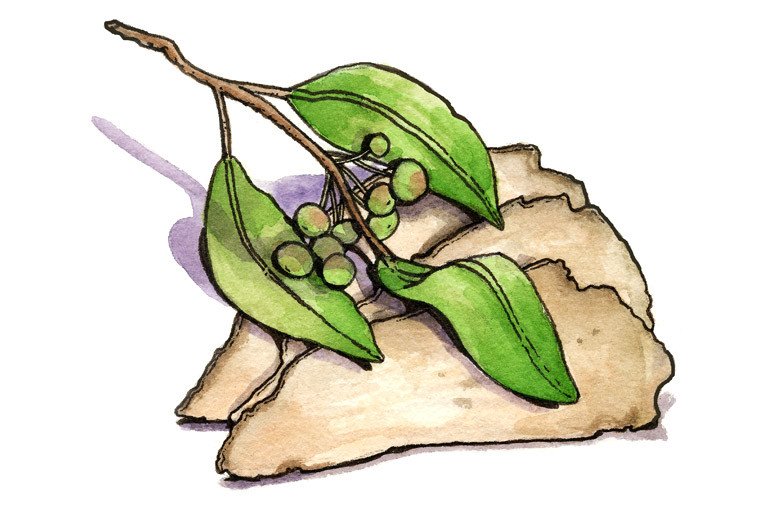
Health Care Professional Information
Common Name
Glabrous greenbrier rhizome, Tu Fu Ling, China root
Clinical Summary
Smilax glabra is a plant prevalent in South Asia, the rhizome of which is used in traditional Chinese medicine to treat skin infections, inflammation, urinary disorders, and cancer. In vitro and animal studies have shown that this botanical has antioxidant (1) (2), antiviral (3), renoprotective (4), immunostimulatory (5), anti-inflammatory (6) (7), and anticancer properties (8) (9) (10) (11) (12). But it has not been studied in clinical trials.
Smilax glabra should not be confused with Smilax officinalis, another species commonly known as sarsaparilla.
Food Sources
Smilax glabra is used in traditional Chinese foods (2).
Purported Uses
- Arthritis
- Dermatitis
- Dysentery
- Nephritis
- Liver disease
- Antibacterial
- Antiviral
- Urinary Tract Infections
- Cancer
Constituents
- Phenylpropanoids
- Flavonoids : Astilibin
- Saponins: Smilagenin
(5) (10) (13) (14)
Mechanism of Action
The anticancer effects of smilax may be due to its ability to induce apoptosis (9) by upregulating Bax and downregulating Bcl2 genes respectively. Another possible antiproliferative mechanism is via cell cycle arrest. Studies have shown a decrease in mRNA expression of Cyclin B1 and Cdk1 (G2 regulations proteins) in carcinoma cells following administration of Smilax glabra (9).
The anti-inflammatory effects of smilax may be due to its inhibition of T-lymphocyte adhesion thereby causing a decrease in T-cell ability to express CD44 and produce TNF alpha(6).
The possible renoprotective activity of astilbin, a constituent of smilax, has been observed in a study with rat models of diabetic nephropathy (4). Inhibition of transforming factor-Beta (TGF-Beta) and connective tissue growth factor (CTGF) (both thought to induce the fibrotic process in diabetic nephropathy) was observed in HK-2 cells after astilbin exposure (4). Administration of astilbin also improved renal function (seen by significant reduction in urinary volume, urinary albumin, serum creatinine, blood urea nitrogen and creatinine clearance) and mortality in experimental rats.
Adverse Reactions
May cause allergic reactions (15).
References
- Ban JY, Cho SO, Koh SB, et al. Protection of amyloid beta protein (25-35)-induced neurotoxicity by methanol extract of Smilacis chinae rhizome in cultured rat cortical neurons. J Ethnopharmacol. Jun 30 2006;106(2):230-237.
- Zhang Q-F, Zhang Z-R, Cheung H. Antioxidant activity of Rhizoma Smilacis Glabrae extracts and its key constituent-astilbin. Food Chemistry. 2009;115(1):297-303.
- Ooi LS, Wong EY, Chiu LC, et al. Antiviral and anti-proliferative glycoproteins from the rhizome of Smilax glabra Roxb (Liliaceae).Am J Chin Med. 2008;36(1):185-195.
- Li GS, Jiang WL, Yue XD, et al. Effect of Astilbin on Experimental Diabetic Nephropathy in vivo and in vitro. Planta Med. Jun 16 2009.
- Chu KT, Ng TB. Smilaxin, a novel protein with immunostimulatory, antiproliferative, and HIV-1-reverse transcriptase inhibitory activities from fresh Smilax glabra rhizomes. Biochem Biophys Res Commun. Feb 3 2006;340(1):118-124.
- Yi HW, Lu XM, Fang F, et al. Astilbin inhibits the adhesion of T lymphocytes via decreasing TNF-alpha and its associated MMP-9 activity and CD44 expression. Int Immunopharmacol. Oct 2008;8(10):1467-1474.
- Man MQ, Shi Y, Man M, et al. Chinese herbal medicine (Tuhuai extract) exhibits topical anti-proliferative and anti-inflammatory activity in murine disease models. Exp Dermatol. Aug 2008;17(8):681-687.
- Kuo YH, Hsu YW, Liaw CC, et al. Cytotoxic phenylpropanoid glycosides from the stems of Smilax china. J Nat Prod. Oct 2005;68(10):1475-1478.
- Xu W, Liu J, Li C, et al. Kaempferol-7-O-beta-D-glucoside (KG) isolated from Smilax china L. rhizome induces G2/M phase arrest and apoptosis on HeLa cells in a p53-independent manner. Cancer Lett. Jun 18 2008;264(2):229-240.
- Sa F, Gao JL, Fung KP, et al. Anti-proliferative and pro-apoptotic effect of Smilax glabra Roxb. extract on hepatoma cell lines. Chem Biol Interact. Jan 10 2008;171(1):1-14.
- Thabrew MI, Mitry RR, Morsy MA, Hughes RD. Cytotoxic effects of a decoction of Nigella sativa, Hemidesmus indicus and Smilax glabra on human hepatoma HepG2 cells. Life Sci. Aug 5 2005;77(12):1319-1330.
- Iddamaldeniya SS, Thabrew MI, Wickramasinghe S, et al. A long-term investigation of the anti-hepatocarcinogenic potential of an indigenous medicine comprised of Nigella sativa, Hemidesmus indicus and Smilax glabra. J Carcinog. 2006;5:11.
- Chen T, Li JX, Xu Q. Phenylpropanoid glycosides from Smilax glabra. Phytochemistry. Apr 2000;53(8):1051-1055.
- Zhou X, Xu Q, Li JX, Chen T. Structural revision of two flavanonol glycosides from Smilax glabra. Planta Med. May 2009;75(6):654-655.
- Chen JK, Chen TT. Chinese Medical Herbology and Pharmacology, 2nd ed. California: Art of Medicine Press; 2004.
Consumer Information
How It Works
Bottom Line: Smilax glabra has not been shown to treat or prevent cancer.
Smilax glabra is known as Tufuling in traditional Chinese medicine. The root has been used in combination with other herbs to treat diabetes, infection, and other skin and urinary disorders. Laboratory studies have shown that this plant has anti-inflammatory and anticancer properties. However, clinical studies have not been conducted and it is not known if the same effects would occur in humans.
Purported Uses
- Arthritis
Anti-inflammatory activity has been observed in rat models.
- Viral infections
Smilax glabra demonstrated antiviral activity in vitro.
- Inflammation
Smilax glabra can reduce inflammation in animal models.
- Cancer
Antioxidant and anti-tumor effects were observed in vitro studies. However, clinical trials have not been conducted.
- Nephropathy
Astilbin, a compound present in Smilax glabra, has been studied in rats with diabetic nephropathy. However, clinical trials are lacking.
- Diabetes
An increase in glucose uptake by rat fatty tissue was observed after exposure to smilaxin, a protein isolated from Smilax glabra.
- Immunostimulation
Smilaxin, a protein isolated from Smilax glabra, was found to stimulate immune activity as seen by an increase in white blood cells in mice.
- Dermatitis and Psoriasis
An herbal mixture containing Smilax glabra can reduce skin inflammation in animals.
Side Effects
May cause allergic reactions.
Last updated: September 29, 2012
administration (ad-MIH-nih-STRAY-shun)
In medicine, the act of giving a treatment, such as a drug, to a patient. It can also refer to the way it is given, the dose, or how often it is given.
Source: The National Cancer Institute's Dictionary of Cancer Terms
(http://www.cancer.gov/dictionary)
albumin
A protein manufactured by the liver.
Source: The National Cancer Institute's Dictionary of Cancer Terms
(http://www.cancer.gov/dictionary)
anti-inflammatory (AN-tee-in-FLA-muh-TOR-ee)
Having to do with reducing inflammation.
Source: The National Cancer Institute's Dictionary of Cancer Terms
(http://www.cancer.gov/dictionary)
antioxidant (AN-tee-OK-sih-dent)
A substance that protects cells from the damage caused by free radicals (unstable molecules made by the process of oxidation during normal metabolism). Free radicals may play a part in cancer, heart disease, stroke, and other diseases of aging. Antioxidants include beta-carotene, lycopene, vitamins A, C, and E, and other natural and manufactured substances.
Source: The National Cancer Institute's Dictionary of Cancer Terms
(http://www.cancer.gov/dictionary)
antiviral (AN-tee-VY-rul)
A drug used to treat infections caused by viruses.
Source: The National Cancer Institute's Dictionary of Cancer Terms
(http://www.cancer.gov/dictionary)
apoptosis (A-pop-TOH-sis)
A type of cell death in which a series of molecular steps in a cell leads to its death. This is the body’s normal way of getting rid of unneeded or abnormal cells. The process of apoptosis may be blocked in cancer cells. Also called programmed cell death.
Source: The National Cancer Institute's Dictionary of Cancer Terms
(http://www.cancer.gov/dictionary)
blood (blud)
A tissue with red blood cells, white blood cells, platelets, and other substances suspended in fluid called plasma. Blood takes oxygen and nutrients to the tissues, and carries away wastes.
Source: The National Cancer Institute's Dictionary of Cancer Terms
(http://www.cancer.gov/dictionary)
cancer (KAN-ser)
A term for diseases in which abnormal cells divide without control and can invade nearby tissues. Cancer cells can also spread to other parts of the body through the blood and lymph systems. There are several main types of cancer. Carcinoma is a cancer that begins in the skin or in tissues that line or cover internal organs. Sarcoma is a cancer that begins in bone, cartilage, fat, muscle, blood vessels, or other connective or supportive tissue. Leukemia is a cancer that starts in blood-forming tissue such as the bone marrow, and causes large numbers of abnormal blood cells to be produced and enter the blood. Lymphoma and multiple myeloma are cancers that begin in the cells of the immune system. Central nervous system cancers are cancers that begin in the tissues of the brain and spinal cord. Also called malignancy.
Source: The National Cancer Institute's Dictionary of Cancer Terms
(http://www.cancer.gov/dictionary)
carcinoma (KAR-sih-NOH-muh)
Cancer that begins in the skin or in tissues that line or cover internal organs.
Source: The National Cancer Institute's Dictionary of Cancer Terms
(http://www.cancer.gov/dictionary)
cell (sel)
The individual unit that makes up the tissues of the body. All living things are made up of one or more cells.
Source: The National Cancer Institute's Dictionary of Cancer Terms
(http://www.cancer.gov/dictionary)
clinical (KLIH-nih-kul)
Having to do with the examination and treatment of patients.
Source: The National Cancer Institute's Dictionary of Cancer Terms
(http://www.cancer.gov/dictionary)
compound (KOM-pownd)
In science, a substance that is made up of more than one ingredient.
Source: The National Cancer Institute's Dictionary of Cancer Terms
(http://www.cancer.gov/dictionary)
connective tissue (kuh-NEK-tiv TIH-shoo)
Supporting tissue that surrounds other tissues and organs. Specialized connective tissue includes bone, cartilage, blood, and fat.
Source: The National Cancer Institute's Dictionary of Cancer Terms
(http://www.cancer.gov/dictionary)
creatinine (kree-A-tih-neen)
A compound that is excreted from the body in urine. Creatinine levels are measured to monitor kidney function.
Source: The National Cancer Institute's Dictionary of Cancer Terms
(http://www.cancer.gov/dictionary)
diabetes (dy-uh-BEE-teez)
Any of several diseases in which the kidneys make a large amount of urine. Diabetes usually refers to diabetes mellitus in which there is also a high level of glucose (a type of sugar) in the blood because the body does not make enough insulin or use it the way it should.
Source: The National Cancer Institute's Dictionary of Cancer Terms
(http://www.cancer.gov/dictionary)
experimental (ek-SPAYR-ih-men-tul)
In clinical trials, refers to a drug (including a new drug, dose, combination, or route of administration) or procedure that has undergone basic laboratory testing and received approval from the U.S. Food and Drug Administration (FDA) to be tested in human subjects. A drug or procedure may be approved by the FDA for use in one disease or condition, but be considered experimental in other diseases or conditions. Also called investigational.
Source: The National Cancer Institute's Dictionary of Cancer Terms
(http://www.cancer.gov/dictionary)
glucose (GLOO-kose)
A type of sugar; the chief source of energy for living organisms.
Source: The National Cancer Institute's Dictionary of Cancer Terms
(http://www.cancer.gov/dictionary)
growth factor (grothe FAK-ter)
A substance made by the body that functions to regulate cell division and cell survival. Some growth factors are also produced in the laboratory and used in biological therapy.
Source: The National Cancer Institute's Dictionary of Cancer Terms
(http://www.cancer.gov/dictionary)
herbal (ER-bul)
Having to do with plants.
Source: The National Cancer Institute's Dictionary of Cancer Terms
(http://www.cancer.gov/dictionary)
in vitro (in VEE-troh)
In the laboratory (outside the body). The opposite of in vivo (in the body).
Source: The National Cancer Institute's Dictionary of Cancer Terms
(http://www.cancer.gov/dictionary)
infection (in-FEK-shun)
Invasion and multiplication of germs in the body. Infections can occur in any part of the body and can spread throughout the body. The germs may be bacteria, viruses, yeast, or fungi. They can cause a fever and other problems, depending on where the infection occurs. When the body’s natural defense system is strong, it can often fight the germs and prevent infection. Some cancer treatments can weaken the natural defense system.
Source: The National Cancer Institute's Dictionary of Cancer Terms
(http://www.cancer.gov/dictionary)
inflammation (IN-fluh-MAY-shun)
Redness, swelling, pain, and/or a feeling of heat in an area of the body. This is a protective reaction to injury, disease, or irritation of the tissues.
Source: The National Cancer Institute's Dictionary of Cancer Terms
(http://www.cancer.gov/dictionary)
liver (LIH-ver)
A large organ located in the upper abdomen. The liver cleanses the blood and aids in digestion by secreting bile.
Source: The National Cancer Institute's Dictionary of Cancer Terms
(http://www.cancer.gov/dictionary)
medicine (MEH-dih-sin)
Refers to the practices and procedures used for the prevention, treatment, or relief of symptoms of a diseases or abnormal conditions. This term may also refer to a legal drug used for the same purpose.
Source: The National Cancer Institute's Dictionary of Cancer Terms
(http://www.cancer.gov/dictionary)
mortality (mor-TA-lih-tee)
The state of being mortal (destined to die). Mortality also refers to the death rate, or the number of deaths in a certain group of people in a certain period of time. Mortality may be reported for people who have a certain disease, live in one area of the country, or who are of a certain gender, age, or ethnic group.
Source: The National Cancer Institute's Dictionary of Cancer Terms
(http://www.cancer.gov/dictionary)
mRNA
A type of RNA found in cells. mRNA molecules carry the genetic information needed to make proteins. They carry the information from the DNA in the nucleus of the cell to the cytoplasm where the proteins are made. Also called messenger RNA.
Source: The National Cancer Institute's Dictionary of Cancer Terms
(http://www.cancer.gov/dictionary)
pharmacology (FAR-muh-KAH-loh-jee)
The study of the origin, chemistry, and uses of drugs and their effects on the body.
Source: The National Cancer Institute's Dictionary of Cancer Terms
(http://www.cancer.gov/dictionary)
protein (PROH-teen)
A molecule made up of amino acids that are needed for the body to function properly. Proteins are the basis of body structures such as skin and hair and of substances such as enzymes, cytokines, and antibodies.
Source: The National Cancer Institute's Dictionary of Cancer Terms
(http://www.cancer.gov/dictionary)
reduction (ree-DUK-shun)
A chemical reaction that takes place when a substance comes into contact with hydrogen or another reducing substance.
Source: The National Cancer Institute's Dictionary of Cancer Terms
(http://www.cancer.gov/dictionary)
serum (SEER-um)
The clear liquid part of the blood that remains after blood cells and clotting proteins have been removed.
Source: The National Cancer Institute's Dictionary of Cancer Terms
(http://www.cancer.gov/dictionary)
significant (sig-NIH-fih-kunt)
In statistics, describes a mathematical measure of difference between groups. The difference is said to be significant if it is greater than what might be expected to happen by chance alone. Also called statistically significant.
Source: The National Cancer Institute's Dictionary of Cancer Terms
(http://www.cancer.gov/dictionary)
tissue (TIH-shoo)
A group or layer of cells that work together to perform a specific function.
Source: The National Cancer Institute's Dictionary of Cancer Terms
(http://www.cancer.gov/dictionary)
TNF
A protein made by white blood cells in response to an antigen (substance that causes the immune system to make a specific immune response) or infection. TNF can also be made in the laboratory. It may boost a person’s immune response, and also may cause necrosis (cell death) of some types of tumor cells. TNF is being studied in the treatment of some types of cancer. It is a type of cytokine. Also called tumor necrosis factor.
Source: The National Cancer Institute's Dictionary of Cancer Terms
(http://www.cancer.gov/dictionary)
traditional Chinese medicine (truh-DIH-shuh-nul chy-NEEZ MEH-dih-sin)
A medical system that has been used for thousands of years to prevent, diagnose, and treat disease. It is based on the belief that qi (the body's vital energy) flows along meridians (channels) in the body and keeps a person’s spiritual, emotional, mental, and physical health in balance. Traditional Chinese medicine aims to restore the body’s balance and harmony between the natural opposing forces of yin and yang, which can block qi and cause disease. Traditional Chinese medicine includes acupuncture, diet, herbal therapy, meditation, physical exercise, and massage. Also called Oriental medicine and TCM.
Source: The National Cancer Institute's Dictionary of Cancer Terms
(http://www.cancer.gov/dictionary)
urea (yoo-REE-uh)
A substance formed by the breakdown of protein in the liver. The kidneys filter urea out of the blood and into the urine. Urea can also be made in the laboratory. A topical form of urea is being studied in the treatment of hand-foot syndrome (pain, swelling, numbness, tingling, or redness of the hands or feet that may occur as a side effect of certain anticancer drugs). Also called carbamide.
Source: The National Cancer Institute's Dictionary of Cancer Terms
(http://www.cancer.gov/dictionary)
urinary (YOOR-ih-NAYR-ee)
Having to do with urine or the organs of the body that produce and get rid of urine.
Source: The National Cancer Institute's Dictionary of Cancer Terms
(http://www.cancer.gov/dictionary)