Health Care Professional Information
Common Name
Melaleuca oil from Australia
Purported Uses
- Acne
- Burns
- Cold sores
- Eczema
- Fungal infections
- Inflammation
- Insect bites and stings
- Mucositis
- Skin infections
- Wound healing
Constituents
- Monoterpenes: alpha-Terpinene, para-Cymene, (+)-Limonene, gamma-Terpinene, alpha-Terpinolene, Sabinene
- Sesquiterpenes: Aromadendrene, gamme-Cadenene
- Alcohols: Terpinen-4-ol, 1,8-Cineole, alpha-Terpineol, Globulol
(1)
Mechanism of Action
Tea tree oil, especially terpinen-4-ol, appears to have antimicrobial activity against Candida albicans, Escherichia coli, Staphylococcus aureus and Pseudomonas aeruginosa. In addition, terpin-4-ol, alpha-terpineol, and alpha-pinene were found to possess antimicrobial effects against Staphylococcus epidermidis and Propionibacterium acnes (2). Terpinen-4-ol has also been shown to suppress inflammatory mediator production by activated human monocytes (8).
In vitro studies have shown that tea tree oil has weak estrogenic and antiandrogenic properties that may alter estrogen and androgen signaling pathways (13).
The skin irritation following use of tea tree oil were shown to be due to auto-oxidation of tea tree oil resulting in bioactive oxidized products and by the formation of epoxide intermediates resulting from catalysed arene-epoxidation reactions by selected human cytochrome P450 enzymes (17).
Adverse Reactions
Reported (topical): Local skin irritation and allergic contact dermatitis(3) (19)
Reported (oral): Disorientation, systemic contact dermatitis, coma, body rash, and neutrophil leukocytosis (4)
Reported (topical): Repeated application of lavender and tea tree oils resulted in gynecomastia in prepubertal boys (13).
Dosage (Inside MSKCC Only)
This field is only visible to only Inside MSKCC users.
References
- Carson CF, Hammer KA, Riley TV. Melaleuca alternifolia (Tea Tree) oil: a review of antimicrobial and other medicinal properties. Clin Microbiol Rev. 2006 Jan; 19(1):50-62.
- May J, et al. Time-kill studies of tea tree oils on clinical isolates. J Antimicrob Chemother 2000;45:639-43.
- Rubel DM, Freeman S, Southwell IA. Tea tree oil allergy: what is the offending agent? Report of three cases of tea tree oil allergy and review of the literature. Australia J Dermatol 1998;39:244-7.
- Carson C, Riley TV, Cookson BD. Efficacy and safety of tea tree oil as a topical antimicrobial agent. J Hosp Infect 1998;40:175-8.
- Bassett IB, Pannowitz DL, Barnetson RS. A comparative study of tea tree oil versus benzol peroxide in the treatment of acne. Med J Aust 1990;153:455-8.
- Tong MM, Altman PM, Barnetson RS. Tea tree oil in the treatment of tinea pedis. Australia J Dermatol 1992;33:145-9.
- Buck DS, Nidorf DM, Addino JG. Comparison of two topical preparations for the treatment of onychomycosis: Melaleuca alternifolia (tea tree) oil and clotrimazole. J Fam Pract 1994;38:601-5.
- Koh KJ, et al. Tea tree oil reduces histamine-induced skin inflammation. Br J Dermatol 2002;147:1212-7.
- Satchell AC, et al. Treatment of interdigital tinea pedis with 25% and 50% tea tree oil solution: A randomized, placebo-controlled, blinded study. Australas J Dermatol 2002; 43: 175-8.
- Satchell AC, et al. Treatment of dandruff with 5% tea tree oil shampoo. J Am Acad Dermatol 2002; 47(6): 852-5.
- Carson CF, et al. Melaleuca alternifolia (tea tree) oil gel (6%) for the treatment of recurrent herpes labialis. J Antimicrob Chemother 2001; 48: 450-1.
- Bagg J, et al. Susceptibility to Melaleuca alternifolia (tea tree) oil of yeasts isolated from the mouths of patients with advanced cancer. Oral Oncol 2006; 42(5): 487-92.
- Henley DV, Lipson N, Korach KS, et al. Prepubertal gynecomastia linked to lavender and tea tree oils. N Engl J Med 2007;356(5):479-85.
- Calcabrini A, Stringaro A, Toccacieli L, et al. Terpinen-4-ol, the main component of Melaleuca alternifolia (tea tree) oil inhibits the in vitro growth of human melanoma cells. J Invest Dermatol. 2004 Feb;122(2):349-60.
- Greay SJ, Ireland DJ, Kissick HT, et al. Induction of necrosis and cell cycle arrest in murine cancer cell lines by Melaleuca alternifolia (tea tree) oil and terpinen-4-ol. Cancer Chemother Pharmacol. 2010 Apr;65(5):877-88.
- Millar BC, Moore JE. Successful topical treatment of hand warts in a paediatric patient with tea tree oil (Melaleuca alternifolia). Complement Ther Clin Pract. 2008 Nov;14(4):225-7.
- Meesters RJ, Duisken M, Hollender J. Cytochrome P450-catalysed arene-epoxidation of the bioactive tea tree oil ingredient p-cymene: indication for the formation of a reactive allergenic intermediate? Xenobiotica. 2009 Sep;39(9):663-71.
- Wallengren J. Tea tree oil attenuates experimental contact dermatitis. Arch Dermatol Res. 2011 Jul;303(5):333-8.
- Posadzki P, Alotaibi A, Ernst E. Adverse effects of aromatherapy: a systematic review of case reports and case series. Int J Risk Saf Med. 2012 Jan 1;24(3):147-61.
Consumer Information
How It Works
Bottom Line: Tea tree oil may be effective in treating certain skin conditions.
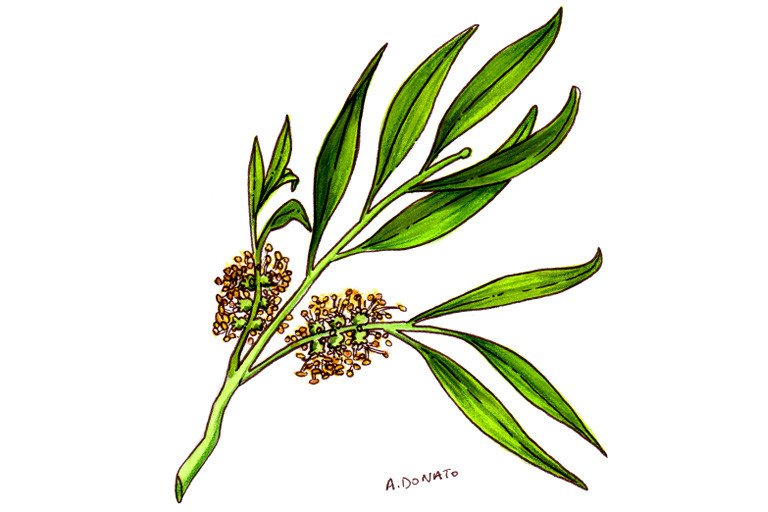
Tea tree oil is the essential oil distilled from Melaleuca alternifolia, a plant native to Australia. In laboratory tests, tea tree oil effectively killed a number of the bacteria and fungi most commonly found in skin infections and acne, including Candida albicans, Escherichia coli, Staphylococcus aureus, Pseudomonas aeruginosa, Staphylococcus epidermidis and Propionibacterium acnes. Tea tree oil was also found effective against some cancer cells in the laboratory.
In healthy volunteers, a tea tree oil extract was able to reduce inflammation caused by histamine injections. It was also shown to be effective in individuals with athlete's foot, acne, cold sores and warts.
Purported Uses
- To treat acne
One clinical trial showed that tea tree oil was as effective as benzoyl peroxide in treating acne.
- To treat minor burns
No scientific evidence supports this use.
- To treat fungal infections of the skin, fingernails, toenails
A clinical trial showed that tea tree oil was as effective as antifungal medicines against fingernail/toenail fungal infections. However, studies produced mixed results when used to treat fungal infections of the foot.
- To reduce inflammation
One study shows that tea tree oil reduces inflammation caused by histamine injections in healthy volunteers.
- To treat insect bites and stings
Tea tree oil can reduce inflammation.
- To treat mucositis (swelling of the mucous membranes of the mouth)
No scientific evidence supports this use. Intake of tea tree oil by mouth can cause severe toxicity.
- To promote the healing of wounds
Although they may have antimicrobial properties, tea tree oil products are not guaranteed to be sterile and therefore should not be applied to open wounds.
- To treat dandruff
One clinical trial supports this use.
- To treat cold sores
A small study shows possible benefits, but further study is necessary. Intake of tea tree oil by mouth can cause severe toxicity.
Side Effects
- When used topically, local skin irritation and/or an allergic reaction (contact dermatitis: itching, redness, and swelling) have been reported.
- Repeated application of lavender and tea tree oils resulted in gynecomastia (enlargement of breast tissue) in prepubertal boys.
- Oral use can cause disorientation, systemic contact dermatitis, coma, body rash, and neutrophil leukocytosis.
Last updated: May 10, 2013
acne (AK-nee)
A disorder of the skin in which oil glands and hair glands become inflamed.
Source: The National Cancer Institute's Dictionary of Cancer Terms
(http://www.cancer.gov/dictionary)
administration (ad-MIH-nih-STRAY-shun)
In medicine, the act of giving a treatment, such as a drug, to a patient. It can also refer to the way it is given, the dose, or how often it is given.
Source: The National Cancer Institute's Dictionary of Cancer Terms
(http://www.cancer.gov/dictionary)
androgen (AN-droh-jen)
A type of hormone that promotes the development and maintenance of male sex characteristics.
Source: The National Cancer Institute's Dictionary of Cancer Terms
(http://www.cancer.gov/dictionary)
antifungal (AN-tee-FUN-gul)
A drug that treats infections caused by fungi.
Source: The National Cancer Institute's Dictionary of Cancer Terms
(http://www.cancer.gov/dictionary)
antimicrobial (AN-tee-my-KROH-bee-ul)
A substance that kills microorganisms such as bacteria or mold, or stops them from growing and causing disease.
Source: The National Cancer Institute's Dictionary of Cancer Terms
(http://www.cancer.gov/dictionary)
bacteria (bak-TEER-ee-uh)
A large group of single-cell microorganisms. Some cause infections and disease in animals and humans. The singular of bacteria is bacterium.
Source: The National Cancer Institute's Dictionary of Cancer Terms
(http://www.cancer.gov/dictionary)
breast (brest)
Glandular organ located on the chest. The breast is made up of connective tissue, fat, and breast tissue that contains the glands that can make milk. Also called mammary gland.
Source: The National Cancer Institute's Dictionary of Cancer Terms
(http://www.cancer.gov/dictionary)
cancer (KAN-ser)
A term for diseases in which abnormal cells divide without control and can invade nearby tissues. Cancer cells can also spread to other parts of the body through the blood and lymph systems. There are several main types of cancer. Carcinoma is a cancer that begins in the skin or in tissues that line or cover internal organs. Sarcoma is a cancer that begins in bone, cartilage, fat, muscle, blood vessels, or other connective or supportive tissue. Leukemia is a cancer that starts in blood-forming tissue such as the bone marrow, and causes large numbers of abnormal blood cells to be produced and enter the blood. Lymphoma and multiple myeloma are cancers that begin in the cells of the immune system. Central nervous system cancers are cancers that begin in the tissues of the brain and spinal cord. Also called malignancy.
Source: The National Cancer Institute's Dictionary of Cancer Terms
(http://www.cancer.gov/dictionary)
clinical (KLIH-nih-kul)
Having to do with the examination and treatment of patients.
Source: The National Cancer Institute's Dictionary of Cancer Terms
(http://www.cancer.gov/dictionary)
clinical trial (KLIH-nih-kul TRY-ul)
A type of research study that tests how well new medical approaches work in people. These studies test new methods of screening, prevention, diagnosis, or treatment of a disease. Also called clinical study.
Source: The National Cancer Institute's Dictionary of Cancer Terms
(http://www.cancer.gov/dictionary)
coma (KOH-muh)
A condition in which a patient is in a state of deep sleep and cannot be awakened. A coma may be caused by many things, including trauma, drugs, toxins, or certain diseases.
Source: The National Cancer Institute's Dictionary of Cancer Terms
(http://www.cancer.gov/dictionary)
dermatitis (DER-muh-TY-tis)
Inflammation of the skin.
Source: The National Cancer Institute's Dictionary of Cancer Terms
(http://www.cancer.gov/dictionary)
disorientation (dis-OR-ee-en-TAY-shun)
A mental state marked by confusion about time, place, or who one is.
Source: The National Cancer Institute's Dictionary of Cancer Terms
(http://www.cancer.gov/dictionary)
distal (DIS-tul)
In medicine, refers to a part of the body that is farther away from the center of the body than another part. For example, the fingers are distal to the shoulder. The opposite is proximal.
Source: The National Cancer Institute's Dictionary of Cancer Terms
(http://www.cancer.gov/dictionary)
efficacy (EH-fih-kuh-see)
Effectiveness. In medicine, the ability of an intervention (for example, a drug or surgery) to produce the desired beneficial effect.
Source: The National Cancer Institute's Dictionary of Cancer Terms
(http://www.cancer.gov/dictionary)
essential oil (eh-SENT-shul oyl)
The scented liquid taken from certain plants using steam or pressure. Essential oils contain the natural chemicals that give the plant its “essence” (specific odor and flavor). Essential oils are used in perfumes, food flavorings, medicine, and aromatherapy.
Source: The National Cancer Institute's Dictionary of Cancer Terms
(http://www.cancer.gov/dictionary)
estrogen (ES-truh-jin)
A type of hormone made by the body that helps develop and maintain female sex characteristics and the growth of long bones. Estrogens can also be made in the laboratory. They may be used as a type of birth control and to treat symptoms of menopause, menstrual disorders, osteoporosis, and other conditions.
Source: The National Cancer Institute's Dictionary of Cancer Terms
(http://www.cancer.gov/dictionary)
experimental (ek-SPAYR-ih-men-tul)
In clinical trials, refers to a drug (including a new drug, dose, combination, or route of administration) or procedure that has undergone basic laboratory testing and received approval from the U.S. Food and Drug Administration (FDA) to be tested in human subjects. A drug or procedure may be approved by the FDA for use in one disease or condition, but be considered experimental in other diseases or conditions. Also called investigational.
Source: The National Cancer Institute's Dictionary of Cancer Terms
(http://www.cancer.gov/dictionary)
extract (EK-strakt)
In medicine, a preparation of a substance obtained from plants, animals, or bacteria and used as a drug or in drugs.
Source: The National Cancer Institute's Dictionary of Cancer Terms
(http://www.cancer.gov/dictionary)
histamine (HIS-tuh-meen)
A substance that has many effects in the body. It is released from some types of white blood cells during allergic reactions. It causes small blood vessels to dilate (widen) and become leaky, which can cause tissues to swell. It also causes smooth muscles to contract, gastric acid to be made, and the heart rate to increase. Histamine is used in tests for allergies, asthma, and gastric acid secretion. It is a type of neurotransmitter.
Source: The National Cancer Institute's Dictionary of Cancer Terms
(http://www.cancer.gov/dictionary)
hypersensitivity (HY-per-SEN-sih-tih-vih-tee)
An exaggerated response by the immune system to a drug or other substance.
Source: The National Cancer Institute's Dictionary of Cancer Terms
(http://www.cancer.gov/dictionary)
in vitro (in VEE-troh)
In the laboratory (outside the body). The opposite of in vivo (in the body).
Source: The National Cancer Institute's Dictionary of Cancer Terms
(http://www.cancer.gov/dictionary)
inflammation (IN-fluh-MAY-shun)
Redness, swelling, pain, and/or a feeling of heat in an area of the body. This is a protective reaction to injury, disease, or irritation of the tissues.
Source: The National Cancer Institute's Dictionary of Cancer Terms
(http://www.cancer.gov/dictionary)
inflammatory (in-FLA-muh-TOR-ee)
Having to do with inflammation (redness, swelling, pain, and a feeling of heat that helps protect tissues affected by injury or disease).
Source: The National Cancer Institute's Dictionary of Cancer Terms
(http://www.cancer.gov/dictionary)
lavender (LA-ven-der)
A plant with aromatic leaves and flowers that is a member of the mint family. Oil from the flowers has been used in some cultures to treat certain medical problems, to keep insects away, and to wash in. It is also used in aromatherapy. Perillyl alcohol, a substance found in lavender, is being studied in cancer prevention and treatment. The scientific name is . Also called English lavender and true lavender.
Source: The National Cancer Institute's Dictionary of Cancer Terms
(http://www.cancer.gov/dictionary)
neutrophil (NOO-troh-fil)
A type of immune cell that is one of the first cell types to travel to the site of an infection. Neutrophils help fight infection by ingesting microorganisms and releasing enzymes that kill the microorganisms. A neutrophil is a type of white blood cell, a type of granulocyte, and a type of phagocyte.
Source: The National Cancer Institute's Dictionary of Cancer Terms
(http://www.cancer.gov/dictionary)
oral (OR-ul)
By or having to do with the mouth.
Source: The National Cancer Institute's Dictionary of Cancer Terms
(http://www.cancer.gov/dictionary)
sterile (STAYR-il)
Unable to produce children. Also means free from germs.
Source: The National Cancer Institute's Dictionary of Cancer Terms
(http://www.cancer.gov/dictionary)
systemic (sis-TEH-mik)
Affecting the entire body.
Source: The National Cancer Institute's Dictionary of Cancer Terms
(http://www.cancer.gov/dictionary)
tea tree (tee tree)
A tree that is a member of the myrtle family. Oil from the tea tree is used in shampoos and skin care products and to treat skin infections. It has been used in some cultures to treat other skin conditions, including acne, burns, and insect bites. The scientific name is .
Source: The National Cancer Institute's Dictionary of Cancer Terms
(http://www.cancer.gov/dictionary)
topical (TAH-pih-kul)
On the surface of the body.
Source: The National Cancer Institute's Dictionary of Cancer Terms
(http://www.cancer.gov/dictionary)
toxicity (tok-SIH-sih-tee)
The extent to which something is poisonous or harmful.
Source: The National Cancer Institute's Dictionary of Cancer Terms
(http://www.cancer.gov/dictionary)
wound (woond)
A break in the skin or other body tissues caused by injury or surgical incision (cut).
Source: The National Cancer Institute's Dictionary of Cancer Terms
(http://www.cancer.gov/dictionary)