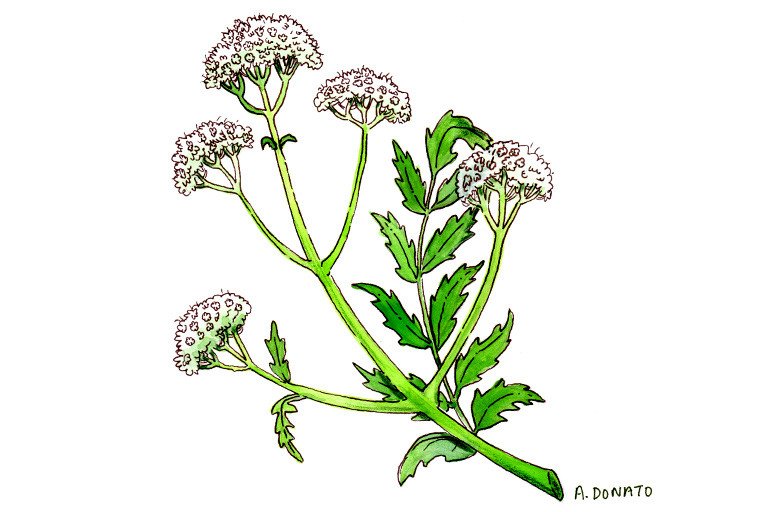
Common Names
- Garden valerian
- Indian valerian
- Pacific valerian
- Mexican valerian
For Patients & Caregivers
Tell your healthcare providers about any dietary supplements you’re taking, such as herbs, vitamins, minerals, and natural or home remedies. This will help them manage your care and keep you safe.
Valerian may provide modest improvements in sleep, but study results are mixed.
Valerian is sold as a dietary supplement for calmness and to improve sleep quality. It has a distinct odor that some may find unpleasant. In lab studies, valerian extract appears to have calming effects related to the nervous system. Studies in humans suggest valerian products have a modest effect on sleep quality.
Valerian products may interact with some drugs or health conditions. More research is needed to determine the benefits and safety of this botanical.
-
To treat anxiety
There is not enough evidence to determine whether valerian can treat anxiety. -
To treat insomnia
Valerian may provide modest improvements in sleep quality. Although a study in cancer patients did not find this to be true, valerian appeared to improve other symptoms such as fatigue, how long it took to fall asleep, and quantity of sleep per night. -
To calm muscle spasms
A small study suggests valerian may be helpful for menstrual cramps, but additional studies are needed. -
To treat menopausal symptoms
A few studies suggest valerian may improve hot flashes and insomnia in postmenopausal women.
Occasional, anecdotal, or possibly related:
- Bitter taste
- Daytime drowsiness/dullness
- Depression
- Diarrhea
- Dizziness
- Headache
- Heart palpitations
- Impaired alertness
- Irritability
- Liver toxicity
- Sweating
Patient Warnings:
- Valerian should be stopped at least 1 week before surgery because it can interfere with general anesthesia.
- Patients should not drive or operate dangerous machinery after taking valerian because it could disrupt the ability to process information, perform tasks, or be alert.
- Withdrawal symptoms may occur in those taking valerian for a period of time, if valerian is discontinued abruptly.
Do Not Take if:
- You are taking barbiturates, benzodiazepines, or other CNS drugs to treat anxiety, insomnia, seizures, or psychiatric disorders: Valerian lengthens sedation time of these drugs and may have other added effects.
- You are taking haloperidol: An animal study suggests valerian may increase effects and cause liver damage. Clinical relevance has yet to be determined.
- You have pancreatic, liver, or gallbladder disease: There have been case reports of liver damage and pancreatic infection with valerian use.
- You are driving or operating machinery: Valerian may affect your performance or functioning.
- You are pregnant or nursing: Animal experiments have shown reduced levels of essential micronutrients in fetal mouse brain tissue.
For Healthcare Professionals
Derived from the root of the plant V. officinalis, valerian is sold as a dietary supplement for calmness, sedation, and to improve sleep quality. Other species including V. jatamansi, V. fauriei, and V. wallichii are also used in traditional medicine to treat insomnia and anxiety. Valerian products are usually available in extracts or teas that have a distinct odor.
In preclinical studies, valerian showed antioxidant (1), cytoprotective (2), neuroprotective (3), antihypertensive, antispasmotic (4) (5), anxiolytic (6), and antidepressant (7), but not sedative (8) effects.
Clinical findings indicate improvements in anxiety (59) and sleep quality (9) (10) (11) (60), but the sleep-inducing properties were not superior to placebo (12) (13) (14) (15). Valerian also failed to improve sleep in a study of cancer patients (16). Other studies suggest valerian may improve sleep and anxiety in HIV patients on antiretroviral therapy (53), reduce hot flashes (17) (54) and dysmenorrhea (18), facilitate supervised benzodiazepine withdrawal (19), relieve symptoms of obsessive-compulsive disorder (20), and have a positive affect on mental energy (61). However, sample sizes in these studies were too small to draw firm conclusions. Other reviews also concluded the evidence for valerian as an anxiolytic is insufficient (21) (22).
The valerian derivative isovaleroxy-hydroxy dihydrovaltrate showed anticancer effects against human ovarian cancer cells in vitro and in vivo (23). Chlorovaltrates in valerian had moderate cytotoxicity against lung, prostate, colon and liver cancer cell lines (24). But a case-control study found valerian to be positively associated with risk of early-onset colorectal cancer (62). Clinical trials have yet to be conducted.
Although valerian products are generally safe, liver and pancreatic toxicities have been reported (25) (26) (27). Valerian is also thought to have estrogenic effects (17) (28), but this was not observed in vitro (29).
- Anxiety
- Insomnia
- Muscle spasms
- Menopause
In vitro, valerian protects against lipid peroxidation, deoxyribose degradation, and ROS production (1). Iridoids, germacrane-type sesquiterpenoids, and lignans in valerian are associated with neuroprotective effects (3) (34). Valerian constituents also bind to various neurotransmitter receptors implicated in circadian rhythms and anxiety such as serotonin receptors (35). Preclinical studies found that anxiolytic activity is due to valerenic acid (VA) which could be inhibited by derivatives such as hydroxy-VA that do not modulate GABAA receptors (36). VA inhibits the enzyme system responsible for central catabolism of GABA, increasing GABA concentration and decreasing CNS activity, and direct binding of this constituent to GABA-receptors has been demonstrated (37). VA interaction with the GABAAergic system is similar to that of benzodiazepines (6). Sesquiterpenes and valepotriates were identified as having varying levels of antidepressant activity (7) (38). Chronic treatment of rodents with valepotriate-rich extract increased norepinephrine and dopamine levels (38). Valerian showed antispasmodic and hypotensive effects via potassium channel activation, which may be useful in gastrointestinal and cardiovascular disorders (5). It also protected against vasopressin-induced coronary spasm and pressor response, suggestive of coronary and systemic vasodilation (4).
In healthy volunteers, valerian modulated intracortical facilitatory circuits (55). Valerian iridoids have choleretic activity and may increase the risk of gallstone formation (27).
- Valerian should be discontinued at least 1 week before surgery because it may interact with anesthesia (40) (41).
- Patients should not drive or operate dangerous machinery after taking valerian as it could disrupt information processing, task performance, and vigilance (35).
- Abrupt discontinuation of valerian in those who may have developed a dependency may cause benzodiazepine-like withdrawal (40).
- Patients with liver or pancreatic disease should avoid valerian due to case reports of hepatotoxicity (25) (26) and possible association of valerian iridoids with an increased risk for acute pancreatitis (27).
- Patients should not drive or operate dangerous machinery when taking valerian as early studies indicate that single-dose valerian could disrupt information processing, task performance, and vigilance in humans 1–2 hours post-administration (35).
- Pregnant or nursing women should avoid valerian, as it has not adequately been studied and preliminary animal models indicate some adverse effects on fetal brain development (42).
Occasional, anecdotal, or possibly related: Headache, diarrhea and other GI complaints, daytime sedation/dullness, impaired alertness, depression, irritability, dizziness, sweating, heart palpitations, bitter taste, benzodiazepine-like withdrawal symptoms with supplement cessation (10) (16) (35) (43).
One analysis determined most adverse effects with valerian to be of mild to moderate severity (56).
Case Reports
Delirium: Likely due to valerian root withdrawal in an elderly man with neurocognitive dysfunction and in the absence of other apparent etiologies (57).
Hepatotoxicity: Two separate cases in women with the use of valerian products, with eventual symptom resolution after discontinuation (25) (26) (63).
Risk of acute pancreatitis: A case-control study identified valerian use as a potential contributor to cases of idiopathic acute pancreatitis (27).
Encephalopathy: In a 48-year-old woman after taking valerian and a GABA supplement with symptom resolution after stopping supplement use (64).
Barbiturates: In animal models, valerian prolonged pentobarbital-induced sleep (40) (44).
Benzodiazepines: An animal study and case report suggest valerian may have synergistic effects (45) (46).
Haloperidol: An animal study suggests valerian may have an additive effect, causing hepatic damage (47). Clinical relevance has yet to be determined.
CYP450 substrates: Valerian may inhibit CYP2D6 (48) and CYP3A4 (41) (49), although other studies in vivo and in humans suggest CYP-mediated interactions with valerian are unlikely (58).
P-glycoprotein substrates: Valerian may inhibit P-gp transporters and affect the intracellular concentration of substrate drugs (17) (28), although another study suggests an in vivo P-gp interaction with common valerian is less probable (49).
Uridine 5’-diphospho-glucuronosyltransferase substrates: Preclinical studies suggest valerian modulates UGT enzymes and may increase the side effects of drugs metabolized by them (50). Clinical relevance has yet to be determined.