The Dinshaw Patel Lab
Research

Our group applies structural (cryo-EM, x-ray crystallography and NMR), biochemical and biophysical methods together with functional studies to investigate macromolecular-mediated recognition, regulation and catalysis. The ongoing major projects in the laboratory focus on the structural biology of CRISPR-Cas surveillance complexes and their suppression by anti-CRISPR proteins (in collaboration with Luciano Marraffini, Rockefeller), on Structure Maintenance of Chromosome Smc5/6 (with Xiaolan Zhao, MSKCC) and MRX (with John Petrini, MSKCC) complexes involved in double-strand break and stalled replication fork repair, and on complexes mediating the meiotic recombination pathway (with Scott Keeney, MSKCC). In addition, research is focused on protein-RNA complexes mediating the piRNA pathway (with Julius Brennecke, IMBA-Austria), on identification and characterization of small molecule inhibitors targeted to proteins of the cGAS-STING pathway and the SARS-CoV-2 family (with Thomas Tuschl, Rockefeller) and those that impact on proteins triggering the onset of acute myeloid leukemia (with Michael Kharas, MSKCC).
Our group retains an interest in the areas of structure-function studies of RNA interference mediated by siRNA pathway, and on post-translation histone and DNA modifications impacting on epigenetic regulation. Additional areas include RNA-mediated events ranging from cofactor recognition by riboswitches, catalysis by ribozymes and protein-RNA recognition events impacting on disease syndromes and the principles underlying the molecular basis of glycosphingolipid and phospholipid binding specificity by lipid transfer proteins.
Meeske, A. J., Jia, N., Cassel, A., Kozlova, A., Liao, J., Wiedman, M., Patel, D. J. & Marraffini, L. A. (2020). Phage-encoded anti-CRISPR enables full escape from type VIA CRISPR-Cas immunity. Science 369, 54-59.
Li, W., et al., Gozani, O., Patel, D. J. & Wang, Z. (2021). Molecular basis of nucleosomal H3K36 methylation by NSD methyltransferases. Nature 590, 498-503.
Rostol, J.T., Xie, W., Kuryavyi, V., Kao, K., Fromm, R., Patel, D. J. & Marraffini, L. A. (2021). The Card1 nuclease provides bacterial defense during Type III CRISPR immunity. Nature 590, 624-629.
Wang, J., Catania, S., Wang, C., de la Cruz, M. J., Rao, B., Madhani, H. & Patel, D. J. (2022). SNF2 ATPase remodels DNA methyltransferase to enable durable epigenetic memory. Mol. Cell 82, 1186-1198.
Yu, Y., Li, S., Ser, Z., Kuang, H., Than, T., Guan, D., Zhao, X. & Patel, D. J. Cryo-EM structure of DNA-bound Smc5/6 reveals DNA clamping enabled multi-subunit conformational changes. Proc. Natl. Acad. Scis. USA in press.
All Publications >
Research Projects

Featured News


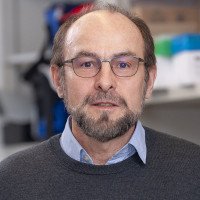
People
Dinshaw Patel, PhD
Abby Rockefeller Mauze Chair of Experimental Therapeutics
- The Patel laboratory studies the structural biology of macromolecular recognition, regulation and catalysis. Ongoing projects include structure-function studies of the CRISPR-Cas and cGAS-STING surveillance pathways, on the role of Structure Maintenance Chromosome complexes in mediating DNA double strand break repair, on the role of histone and DNA methylation in epigenetic regulation and on RNA-mediated processes ranging from riboswitches and ribozymes to those governing siRNA and piRNA pathways.
- PhD, New York University
- [email protected]
- Email Address
- 212-639-7207
- Office Phone
- Download CV
- PDF File
Members



Achievements
- Jamshetjee N. Tata Fellow (1961-1963)
- AT&T Bell Laboratories Distinguished Technical Staff Award (1983)
- Abby Rockefeller Mauzé Chair in Experimental Therapeutics, MSKCC (1992-current)
- Distinguished Alumnus Award, New York University (1997)
- Harvey Society, President (1998-1999)
- Member, National Academy of Sciences, USA (2009)
- NIH Directors Transformative Research Grant with Thomas Tuschl and Uwe Ohler (2013)
- Member, American Academy of Arts and Sciences, USA (2014)
- FEZANA Jamshed and Shirin Guzdar Excellence in Profession Award (2014)
- Einstein Professorship of Chinese Academy of Sciences, China (2015)
- Lifetime Achievement Award, American Association of Indian Scientists in Cancer Research (2019)
- Inaugural Tan Jiazhen International Life Science Collaboration Award (2019)
