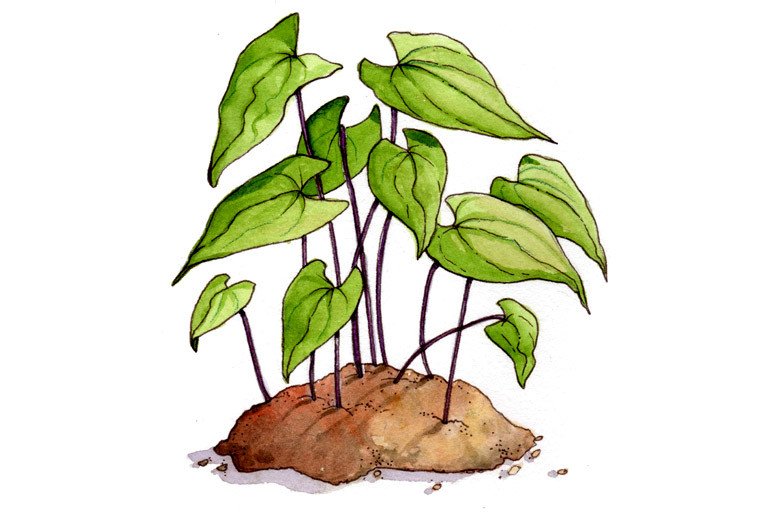
Common Names
- Horny Goat Weed
- Yin Yang Huo
- Inyokaku
- Herba Epimedii
For Patients & Caregivers
Tell your healthcare providers about any dietary supplements you’re taking, such as herbs, vitamins, minerals, and natural or home remedies. This will help them manage your care and keep you safe.
What is it?
Scientific evidence to support use of Epimedium is limited. More studies are needed to confirm its safety and efficacy.
Epimedium is a Chinese herb traditionally used to treat fatigue and sexual problems. Cancer patients may experience symptoms of sexual dysfunction such as painful intercourse, loss of libido, and ability to maintain arousal. These problems can be caused by many factors: stress, emotional distress, hormone changes, as well as various cancer treatments. Initial results suggest that a special blend of Epimedium may help prevent bone loss, but more studies are needed.
Epimedium may affect hormone levels, and should be avoided in patients with hormone-sensitive cancers or those with heart disease.
What are the potential uses and benefits?
- Fatigue
Epimedium is traditionally used for fatigue but it has not been studied in clinical trials. - Osteoporosis
A small randomized trial shows that Epimedium may help prevent bone loss in women who have had menopause for a long time. - Sexual dysfunction
Epimedium is traditionally used in herbal formulas for sexual dysfunction. More studies are needed to verify such effects.
What are the side effects?
- Sweating or feeling hot
- Rapid irregular heartbeat
- Increase in energy
- Mood changes
What else do I need to know?
Do Not Take if:
- You are sensitive to Epimedium.
- You have heart disease: Epimedium caused rapid irregular heartbeat and excitability in a patient with heart disease.
- You are taking drugs that are metabolized by the cytochrome P450 3A4 enzyme, or drugs that are aromatase inhibitors, like anastrozole, exemestane, and letrozole. Clinical relevance is not known.
For Healthcare Professionals
Scientific Name
Clinical Summary
Epimedium is an herb used in traditional Chinese medicine to treat fatigue, arthritic pain, nerve pain, and sexual dysfunction. It is thought to alter levels of certain hormones and is marketed as a dietary supplement for libido. Epimedium showed antiosteoporotic (1), neuroprotective (2) (3) (4) , immunomodulatory (5) (6), and anticancer effects (7) (8) (9), as well as anti-HIV activity (10) in preclinical studies. Epimedium derivatives also produced radiosensitizing effects (11) and reversed multidrug resistance (12) in tumor cells.
Small controlled studies and a systematic review suggest benefits of Epimedium for post-menopausal osteoporosis (13) (25) (26) but not for relieving symptoms of Gulf War Illness (27). Other published trials tend to combine this herb in a botanical “recipe,” confounding the determination of any specific contributions from Epimedium or its components. Further, the safety of such phytotherapeutic compounds needs to be determined.
Patients with hormone-sensitive cancers should use Epimedium with caution as it demonstrated estrogenic effects (14). Cancer patients may experience sexual dysfunction symptoms including painful intercourse, loss of libido, and difficulty in maintaining arousal. These problems are often multifactorial and can be caused by stress, distress, and hormonal changes, as well as treatments involving surgery, radiation, chemotherapy, or hormone therapy. Therefore, patients should consult and be monitored by a physician to properly address individual symptoms of sexual dysfunction.
Purported Uses and Benefits
- Fatigue
- Osteoporosis
- Sexual dysfunction
Mechanism of Action
Icariin, a major active constituent of Epimedium, promotes estrogen biosynthesis, and enhances aromatase mRNA and protein expression as well as alkaline phosphatase activity in vitro (1). However, other studies have attributed estrogen-like activity to icariin derivatives icaritin and desmethylicaritin, rather than icariin itself (14). Icariin can also exhibit a mild phosphodiesterase-5 inhibition effect (16). It has been implicated in differentiation of stem cells into cardiomyocytes via cell cycle regulation, induction of apoptosis, modulation of reactive oxygen species generation, and the regulation of various signaling pathways (17). In undifferentiated neuronal cell lines, it exhibited neuroprotective effects through LDH leakage attenuation which reduced GSH depletion, prevented DNA oxidation damage, and inhibited caspase-3 and p53 activation; and inhibited JNK/p38 MAPK pathways (4). Icariin was also shown to reduce viability of human esophageal cancer cells by regulating apoptotic signaling, which is mediated by endoplasmic reticulum stress (23).
Icaritin, a prenylflavonoid derivative, induced sustained activation of extracellular signal-regulated kinase (ERK) pathway and apoptosis in both breast (9) and endometrial cancer cells (18). It also induced G2/M phase cell-cycle arrest and downregulated G2/M regulatory protein expression (9). Its radiosensitizing effects suggest ERK1/2 and AKT pathway suppression, enhanced apoptosis, and induced G2/M blockage (11). Also, icaritin may reverse doxorubicin resistance in human hepatoma cells by increasing intracellular drug accumulation, and by decreasing MDR1 and P-glycoprotein expression (12). In another study, addition of an epimedium extract to gefitinib was shown effective against drug resistance caused by T790M mutation in non-samll cell lung cancer cells (24).
Adverse Reactions
Sweating or feeling hot in high doses; however, toxicity and safety evaluations are lacking (21)
Case reports
Vasculitic rash, pain, and burning sensation: Induced by either ginkgo and/or horny goat weed herbal remedies that a 77-year-old male colorectal cancer survivor reported taking to improve memory and libido. Patient was hospitalized for 3 days. Medical history included curative resection 8 years prior, hypertension managed with lisinopril for 4 years, and no other medication or health complaints. A working diagnosis of vasculitic rash secondary to adverse reactions to either herbal preparation was made due to cessation of symptoms upon discontinuation of these products and after 3 weeks’ follow-up (19).
Tachyarrhythmia and hypomania: A 66-year-old man with congestive heart failure was hospitalized following symptoms of shortness of breath, chest pain, and new-onset symptomatic arrhythmia. He reported taking Epimedium daily for 2 weeks to increase sexual pleasure. His symptoms were brought under control by administering olanzapine along with lorazepam (20).
Herb-Drug Interactions
- Cytochrome P450 substrates: Prolonged use of Epimedium can induce CYP3A4 through the activation of pregnane X receptor (22) . Clinical relevance is not known.
- Aromatase Inhibitors: Icariin enhances the action of aromatase (1). This may reduce the effect of aromatase inhibitors, like anastrozole, exemestane, and letrozole. Clinical relevance is not known.