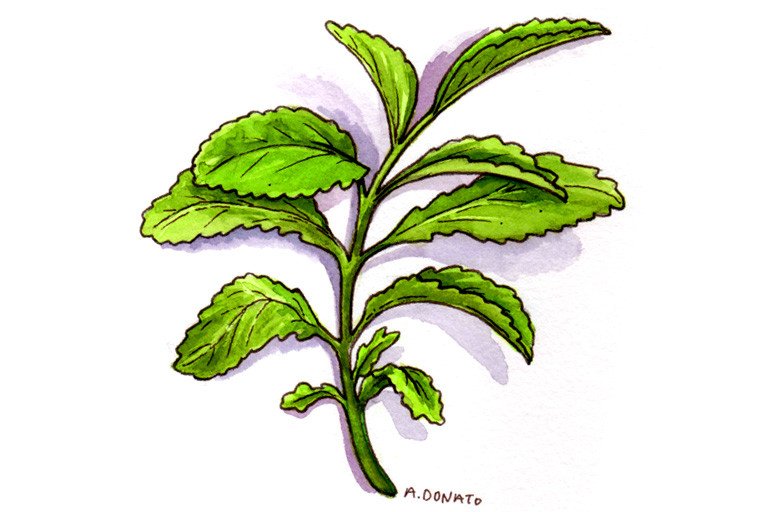
Common Names
- Sweet herb of Paraguay
- Candy leaf
- Honey leaf
- Sugar leaf
For Patients & Caregivers
Tell your healthcare providers about any dietary supplements you’re taking, such as herbs, vitamins, minerals, and natural or home remedies. This will help them manage your care and keep you safe.
What is it?
Stevia is a natural sweetener. It’s made from the leaves of Stevia rebaudiana, a plant in the sunflower family.
Stevia supplements come as liquid extracts, powders, and tablets.
What are the potential uses and benefits?
Stevia is used to:
- Sweeten foods and beverages
- Lower high blood pressure
- Help you lose weight
- Treat diabetes
Stevia also has other uses, but doctors have not studied them to see if they work.
It’s generally safe to use stevia as a sweetener. Talk with your healthcare provider before taking stevia supplements. Herbal supplements are stronger than the herbs you would use in cooking.
Supplements can also interact with some medications and affect how they work. For more information, read the “What else do I need to know?” section below.
What are the side effects?
Side effects of stevia may include:
- Nausea (feeling like you’re going to throw up)
- Stomach fullness
What else do I need to know?
- Talk with your healthcare provider if you’re pregnant or breastfeeding. Stevia may not be safe for you.
- Talk with your healthcare provider if you’re taking medications to lower your blood pressure. Stevia also lowers blood pressure so taking both at the same time may not be safe.
- Talk with your healthcare provider if you’re taking medications to lower your blood sugar. Stevia also lowers blood sugar so taking both at the same time may not be safe.
- Do not take stevia if you’re allergic to sunflowers, marigolds, ragweed, or other plants from the sunflower family.
For Healthcare Professionals
Scientific Name
Clinical Summary
Stevia rebaudiana is an herb native to Brazil and Paraguay. Its raw leaves as well as purified extracts such as stevioside and steviol have been used as sweeteners and promoted as sugar substitutes for diabetics (2). Stevia extract is many times sweeter than table sugar (1), but only purified steviol glycosides have the Generally Recognized as Safe (GRAS) status by the FDA for use in food (8).
Preclinical studies show that stevia has anti-inflammatory (5) (6), hepatoprotective and renoprotective effects (11). Small clinical studies found stevia to reduce hypertension and hyperglycemia (3) (4) (13), but a meta-analysis of steviol glycosides on type 2 diabetes biomarkers did not find significant benefit (14). In an RCT comparing low-calorie sweeteners, ingestion of rebaudioside did not appear to affect body weight (15). Additional studies are needed to clarify any benefits.
Purported Uses and Benefits
- Sweetener
- Hypertension
- Weight loss
- Diabetes
Mechanism of Action
Mechanisms of purported antihypertensive effects with stevioside are unclear, although it may act as a calcium channel antagonist, similar to the drug verapamil (9). Other studies suggest steviosides are metabolized in the gut where bacteria provide an aglycone metabolite that then enters the blood circulation (16).
In vitro studies suggest stevioside suppresses production of inflammatory mediators (6). In mouse skin, it inhibited tumor-promoting 12-O-tetradecanoylphorbol-13-acetate (5). In other animal studies, stevia products inhibited hepatic gluconeogenesis (10) and increased insulin sensitivity (11).
Potential effects of stevia on the dopaminergic system and iron metabolism, primary pathways implicated in restless leg syndrome, need further evaluation as there is a case report of a patient with complex comorbidities but no other potential causes for RLS except newly initiated stevia intake (17).
Warnings
Laboratory studies indicate weak mutagenic activity with large doses (7).
Contraindications
Pregnant women should not consume this herb, as there is a lack of knowledge on how non-nutritive sweeteners including stevia may affect offspring (16).
Adverse Reactions
Case Reports
Abdominal fullness, myalgia, nausea, and asthenia: In 4 patients during a study following consumption of 500 mg stevioside powder. Symptoms resolved after 1 week of treatment (4).
Moderate restless leg syndrome: In a 54-year-old man with complex comorbidities who reported limb restlessness that interfered with sleep. Medication review did not yield potential causes. Symptom onset corresponded to recent stevia use and subsided with product discontinuation. A brief reintroduction of stevia after a few months caused a recurrence which again subsided after product discontinuation (17).