The Christine Mayr Lab
Research


My laboratory studies the regulatory and structural roles of mRNAs in the cytoplasm. Specifically, we investigate how 3′UTRs regulate protein functions in a manner that is independent of protein abundance.
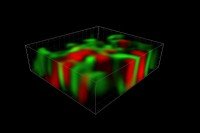
We found that inclusion or exclusion of the 3′UTR of an mRNA that encodes a transcription factor did not change how much of the transcription factor protein was expressed but determined the location of protein synthesis of the transcription factor as well as its induced gene expression program. Moreover, we observed that expression of a chromatin regulator from an mRNA with or without its 3′UTR resulted in similar expression of the protein in the nucleus but changed the enzymatic activity of the chromatin regulator in the nucleus.
These examples illustrate that in addition to the coding sequence (which is translated into protein), other parts of mRNAs, specifically the 3′ untranslated region (3′UTR), can control protein activity and protein function in a manner that is independent of protein abundance. We are currently studying the mechanism by which 3′UTRs control protein activity. In the course of these studies, we found that 3′UTRs determine where in the cytoplasm an mRNA transcript is translated. Moreover, we found that the cytoplasm is highly compartmentalized into different translation environments. We identified several mRNA-based translation environments and have evidence that within these environments, mRNAs play major regulatory roles. We currently study the three mRNA-based translation environments that were discovered by us. They include TIS granules, the FXR1 network, and a poorly characterized environment generated by TIAL1 on the endoplasmic reticulum.
We are interested in the following questions:
- What is the mechanism by which translation in different mRNA-based environments controls protein activity in the nucleus?
- What is the contribution of 3′UTRs to cellular phenotypes, with a focus on transcription factor and chromatin regulator functions during iPS cell differentiation?
- What is the relationship between mRNAs and intrinsically disordered regions (IDRs)? This is based on our findings that mRNAs can act as chaperones for IDRs and can change their conformational states.
- What is the molecular code by which different translation environments control transcription factor and chromatin regulator functions?
- Can we develop novel RNA therapeutics to activate or deactivate transcription factors or even target the separate functions of multifunctional transcriptional regulators?
Research Projects
Featured News


People
Christine Mayr, MD, PhD
- Molecular and cell biologist Christine Mayr studies how 3′UTRs regulate protein functions and how mRNAs contribute to cytoplasmic organization.
- MD, Free University Berlin
- PhD, Humboldt University Berlin
- [email protected]
- Email Address
- Nadine Hernández
- Office Phone
- Download CV
- PDF File
Members



























Achievements
- Luise and Allston Boyer Young Investigator Award for Basic Research (2019)
- NIH Director’s Pioneer Award (2016)
- Pershing Square Sohn Prize for Young Investigators in Cancer Research (2015)
- Damon Runyon-Rachleff Innovation Award, Damon Runyon Cancer Research Foundation (2012)
- Selected as ‘Cell Scientist to watch’ by Journal of Cell Science (2015)
- Science Signaling Breakthrough of the year (2013)