Molecular Biology Program
The Prasad Jallepalli Lab
Research

Prasad Jallepalli, MD, PhD
Member
Our laboratory is interested in how human cells accurately duplicate and transmit their chromosomes during each round of division.

Featured News
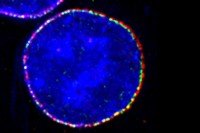
Snapshot
The discovery of a molecular process that slows down cell division could provide new understanding about how some cancers develop.
People
Prasad Jallepalli, MD, PhD
Member
- Molecular biologist Prasad Jallepalli studies the mechanisms that ensure accurate chromosome transmission in human cells.
- MD, PhD, Johns Hopkins University School of Medicine
- [email protected]
- Email Address
- 212-639-3252
- Office Phone
Members



Member & Professor
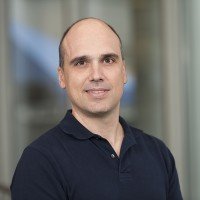
Senior Research Scientist

Research Technician
Sr. Administrative Assistant



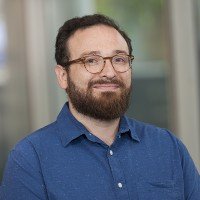
Research Scholar

Graduate Student
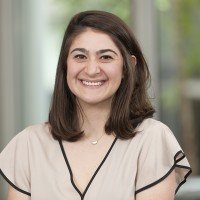
Research Scholar
Research Assistant
Research Associate
Graduate Student
Graduate Student
Research Fellow
Graduate Student
Research Fellow
Research Fellow
Research Fellow

Graduate Student
Vice President, Bipharma Equity Research, Wells Fargo
Research Associate
Graduate Student
Research Fellow
Achievements
- Phi Beta Kappa, Harvard University (1992)
- M.D./Ph.D. Fellow, Medical Scientist Training Program, Johns Hopkins University (1992-1999)
- Postdoctoral Fellow, Damon Runyon Cancer Foundation (1999-2002)
- Scholar, V Foundation for Cancer Research (2003)
- Frederick R. Adler Chair for Junior Faculty (2003-2007)
- Pew Scholar in the Biomedical Sciences (2003-2007)
- Louise & Allston Boyer Young Investigator Award (2008)
- Research Scholar, American Cancer Society (2008-2011)