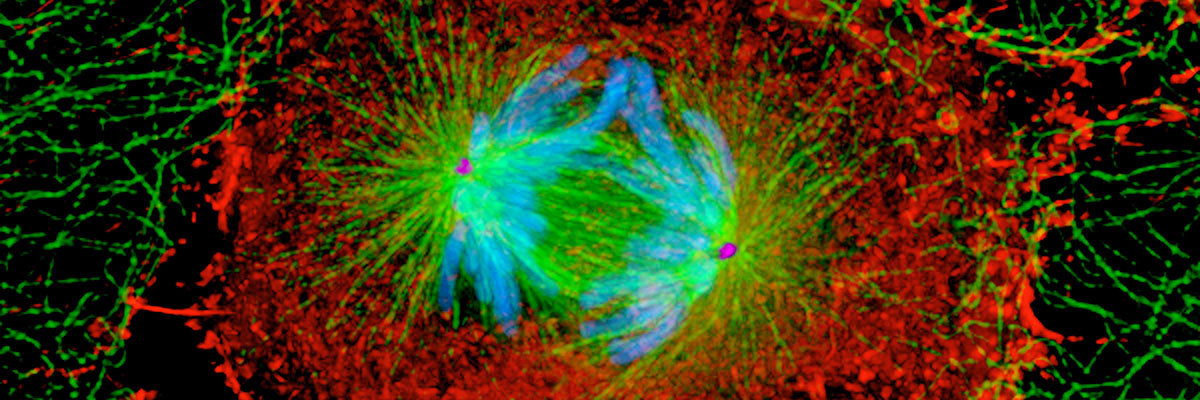
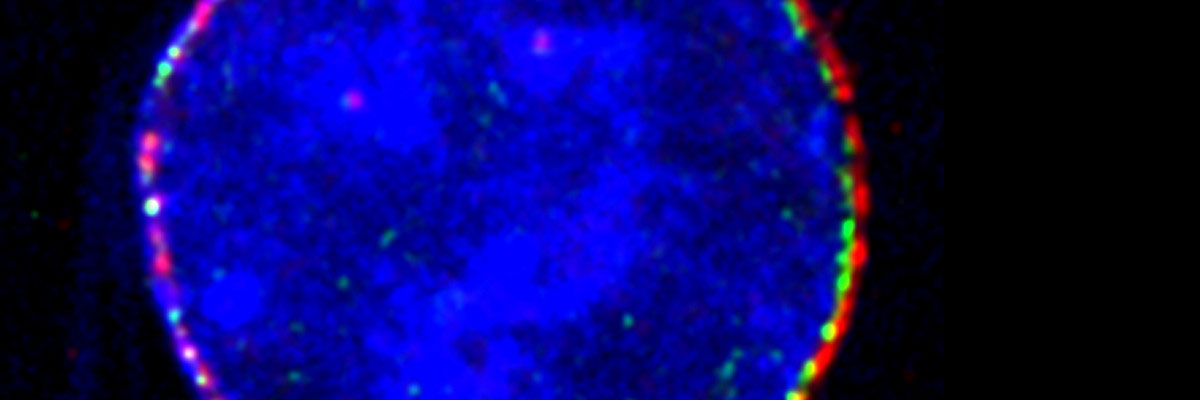
The overarching mission of the Molecular Biology Program at SKI is to understand the mechanisms that promote the integrity and expression of genetic information. Defects in the network of pathways that are integrated to preserve genome integrity are highly correlated with malignancy. This network, known as the DNA damage response, comprises DNA repair functions and DNA damage signaling, as well as the downstream outputs of signaling that include apoptosis and transcriptional changes. The focus of our genomic integrity research is on understanding the mechanisms and mediators of the various processes that make up the DNA damage response.
Researchers in our program utilize a broad range of experimental approaches such as genetics in mice, yeast, and bacteria as well as biochemistry, structural biology, and molecular biology to illuminate fundamental mechanistic features of biological processes.
Our interests include, but are not limited to:
- regulation of the cell cycle
- mechanisms that underlie accurate transmission of chromosomes during cell division
- DNA damage signaling
- mutagenesis and genome rearrangement
- mechanisms and regulation of DNA replication
- functions and metabolism of RNA
- programmed gene rearrangement pathways
- regulation of RNA repair and translation
- chromatin assembly during DNA replication and transcription
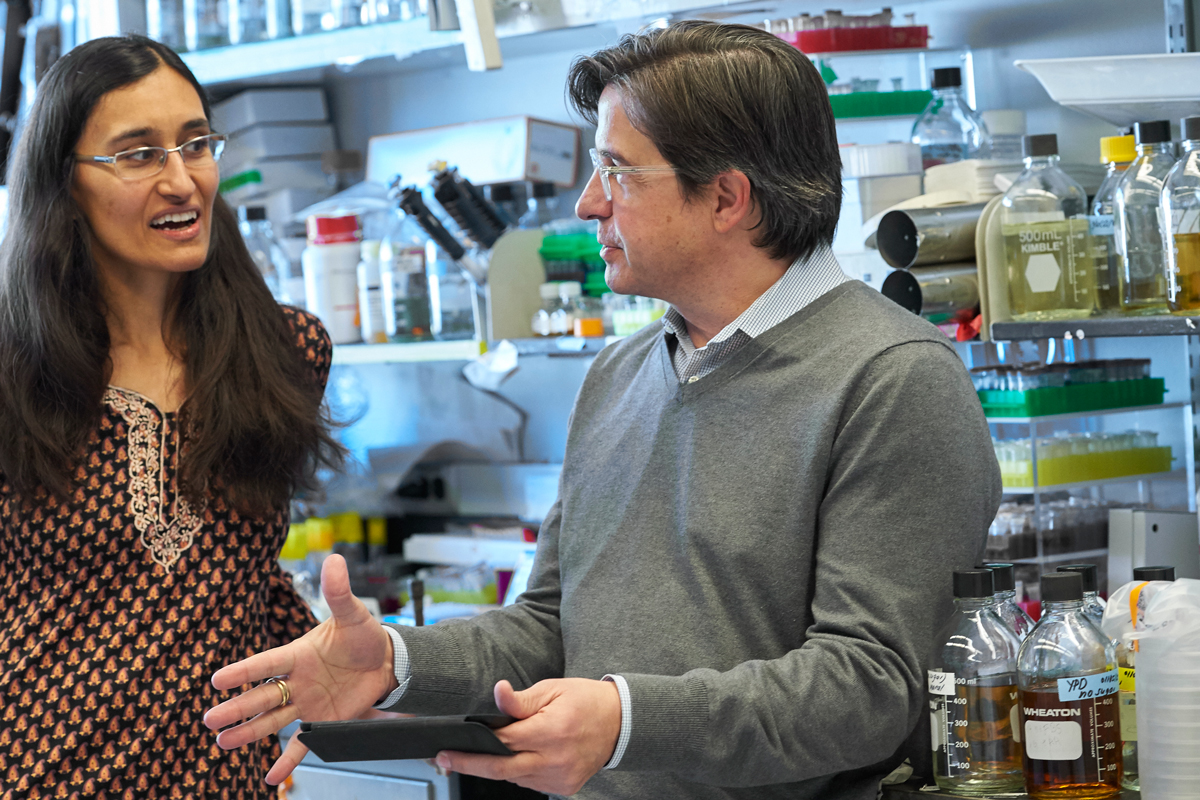
Our Faculty
-
John Petrini, PhD
Chair, Molecular Biology Program
Molecular biologist John Petrini investigates the repair of chromosomal breaks and the activation of the DNA-damage-induced cell-cycle checkpoints. -
Naama Aviram, PhD
The Aviram Lab investigates the molecular mechanisms that protect microorganisms from their own pathogenic invaders. -
Prasad Jallepalli, MD, PhD
Molecular biologist Prasad Jallepalli studies the mechanisms that ensure accurate chromosome transmission in human cells. -
Scott Keeney, PhD
Molecular biologist Scott Keeney investigates mechanisms of the initiation of meiotic recombination. -
John Maciejowski, PhD
Molecular biologist John Maciejowski studies the causes of complex chromosome rearrangements and the patterns of hypermutation that shape cancer genomes. -
Kenneth J. Marians, PhD
Kenneth Marians focuses on mechanisms of replication restart and chromosome segregation.
-
Dirk Remus, PhD
Molecular biologist Dirk Remus investigates mechanisms of DNA replication in eukaryotic cells. -
Agnel Sfeir, PhD
The Sfeir Lab investigates pathways that ensure genome fidelity and plasticity. -
Jessica Sheu-Gruttadauria, PhD
The Sheu-Gruttadauria Lab investigates how biomolecular condensates and biological phase transitions shape gene expression in physiology and disease. -
Stewart Shuman, MD, PhD
The goal of my research is to understand the mechanisms and structures of enzymes that perform and regulate essential nucleic acid transactions. -
Iestyn Whitehouse, PhD
Molecular biologist Iestyn Whitehouse investigates chromatin structure and the function of ATP-dependent chromatin remodelling enzymes. -
Xiaolan Zhao, PhD
Molecular biologist Xiaolan Zhao studies chromosomal organization, genome integrity, DNA replication and repair, dynamic protein modification.
Joint Appointees
-
Simon N. Powell, MD, PhD
Molecular biologist Simon Powell investigates DNA replication and recombination, chromosome dynamics, and human genetics.
Emeritus Faculty
Collaborations & Resources
SKI offers a wide array of core facilities and other technologies, as well as significant opportunity for collaboration. Members of the Molecular Biology Program derive particular benefit from close ties to the following:


