Health Care Professional Information
Common Name
Acai berry, acai palm, cabbage palm, palm berry
Clinical Summary
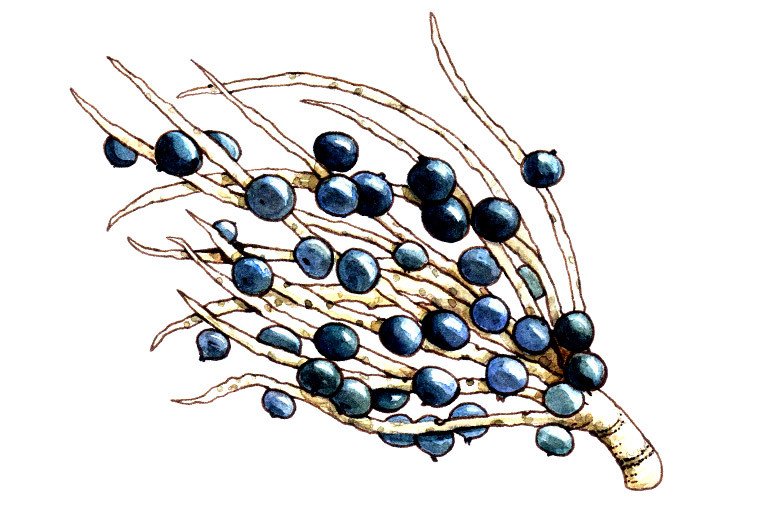
Acai is the fruit of a palm tree native to South America. It is consumed as food and used in traditional medicine. The pulp and skin of acai fruit are rich in anthocyanins (ACNs), proanthocyanidins (PACs), and other fatty acids (1). It is marketed as a dietary supplement for lowering cholesterol, cardiovascular disease, allergies, and for cancer.
In vitro and in vivo studies have shown that acai has anti-inflammatory, antioxidant, apoptotic (2) (9) (10) (11) (15) and athero-protective (13) effects. In another study, nasal Acai polysaccharides potentiated innate immunity against pulmonary infections (16).
Due to its antioxidant effects, acai may interfere with the actions of certain chemotherapy drugs.
Consumption of contaminated acai fruit with insects carrying Trypanosoma cruzii, a protozoan that causes Chagas disease, resulted in 178 cases of acute disease (12).
Purported Uses
- Cancer
- Heart disease
- Stroke
- Diarrhea
- Autoimmune disorders
- Allergies
Constituents
Acai Fruit
- Flavonoids: Anthocyanins (ACNs), Proanthocyanidins (PACs)
- Fatty acids: Oleic acid, Palmitic acid, Linoleic acid
Acai Seed
- Procyanidins, Protocatechuic acid, Epicatechin
(1) (6)
Mechanism of Action
Acai fruit has been shown to have antioxidant effects in vitro (5) (6) by scavenging reactive oxygen species (7). Acai has also been shown to protect human vascular endothelial cells against oxidative stress and inflammation, downregulate IL-6 and -8 expression at mRNA and protein levels, and inhibit gene expression of adhesion molecules and NF-κB activation (14). Some studies have demonstrated the potential effects of acai in inflammatory diseases, such as autoimmune disorders and allergies. Acai was shown to inhibit nitric oxide production (8) and cyclooxygenase (COX) 1 and 2 (5). Acai also induced apoptosis in HL-60 leukemia cells through caspase 3 activation, but its effects in humans are unknown (2).
Pharmacokinetics
In humans, anthocyanins from acai juice and pulp are absorbed after oral consumption. Plasma antioxidant capacity also increased (10).
Herb-Drug Interactions
Acai may interfere with the actions of certain chemotherapy drugs due to its antioxidant effects.
Dosage (Inside MSKCC Only)
This field is only visible to only Inside MSKCC users.
References
- Schauss AG, Wu X, Prior L, et al. Phytochemical and nutrient composition of the freeze-dried amazonian palm berry, Euterpe oleraceae mart. (acai). J Agric Food Chem 2006;54(22): 8598-603.
- Del Pozo-Insfran D, Percival SS, Talcott ST. Acai (Euterpe oleracea Mart.) polyphenolics in their glycoside and aglycone forms induce apoptosis of HL-60 leukemia cells. J Agric Food Chem 2006;54(4):1222-9.
- Wang H, Cao G, Prior RL. Total Antioxidant Capacity of Fruits. J Agric Food Chem 1996;44(3):701-705.
- Plotkin MJ, Balick MJ. Medicinal uses of South American palms. J Ethnopharmacol 1984;10(2):157-79.
- Schauss AG, Wu X, Prior RL, et al. Antioxidant capacity and other bioactivities of the freeze-dried Amazonian palm berry, Euterpe oleraceae mart. (acai). J Agric Food Chem 2006;54(22): 8604-10.
- Rodrigues RB, Lichtenthaler R,Zimmermann BF, et al. Total oxidant scavenging capacity of Euterpe oleracea Mart. (acai) seeds and identification of their polyphenolic compounds. J Agric Food Chem 2006; 54(12):4162-7.
- Hassimotto NM, Genovese MI, Lajolo FM. Antioxidant activity of dietary fruits, vegetables, and commercial frozen fruit pulps. J Agric Food Chem 2005;53(8):2928-35.
- Matheus ME, de Oliveira Fernandes SB, Silvera CS, et al. Inhibitory effects of Euterpe oleracea Mart. on nitric oxide production and iNOS expression. J Ethnopharmacol 2006;107(2):291-6.
- Pacheco-Palencia LA, Talcott ST. et al. Absorption and biological activity of phytochemical-rich extracts from açai (Euterpe oleracea Mart.) pulp and oil in vitro. J Agric Food Chem. 2008 May 28;56(10):3593-600.
- Mertens-Talcott SU, Rios J, Jilma-Stohlawetz P, Pacheco-Palencia LA, et al. Pharmacokinetics of anthocyanins and antioxidant effects after the consumption of anthocyanin-rich acai juice and pulp (Euterpe oleracea Mart.) in human healthy volunteers. J Agric Food Chem. 2008 Sep 10;56(17):7796-802.
- Jensen GS, Wu X, Patterson KM, Barnes J. et al. In vitro and in vivo antioxidant and anti-inflammatory capacities of an antioxidant-rich fruit and berry juice blend. Results of a pilot and randomized, double-blinded, placebo-controlled, crossover study. J Agric Food Chem. 2008 Sep 24;56(18):8326-33.
- Nóbrega AA, Garcia MH, Tatto E, et al. Oral transmission of Chagas disease by consumption of açaí palm fruit, Brazil. Emerg Infect Dis. 2009 Apr;15(4):653-5.
- Xie C, Kang J, Burris R, et al. Açaí juice attenuates atherosclerosis in ApoE deficient mice through antioxidant and anti-inflammatory activities. Atherosclerosis. 2011 Jun;216(2):327-33.
- Noratto GD, Angel-Morales G, Talcott ST, et al. Polyphenolics from açaí ( Euterpe oleracea Mart.) and red muscadine grape (Vitis rotundifolia ) protect human umbilical vascular Endothelial cells (HUVEC) from glucose- and lipopolysaccharide (LPS)-induced inflammation and target microRNA-126. J Agric Food Chem. 2011;59(14):7999-8012.
- Moura RS, Ferreira TS, Lopes AA, et al. Effects of Euterpe oleracea Mart. (AÇAÍ) extract in acute lung inflammation induced by cigarette smoke in the mouse.Phytomedicine. 2012 Feb 15;19(3-4):262-9.
- Skyberg JA, Rollins MF, Holderness JS, et al. Nasal Acai polysaccharides potentiate innate immunity to protect against pulmonary Francisella tularensis and Burkholderia pseudomallei Infections.PLoS Pathog. 2012 Mar;8(3):e1002587.
Consumer Information
How It Works
BOTTOM LINE: Acai has antioxidant effects. It has not been proven to be effective for cancer in humans.
Acai is the fruit of a palm mainly found in South America. The berries and seeds contain compounds called flavonoids that have antioxidant effects. Some laboratory studies suggest acai may reduce cholesterol, prevent diseases of the heart and blood vessels, and cause programmed cell death in leukemia cells. However, studies in humans are needed to confirm these effects.
Consumption of contaminated acai fruit with insects carrying Trypanosoma cruzii, a protozoan that causes Chagas disease, resulted in 178 cases of acute disease.
Purported Uses
- To prevent cancer
In vitro studies show that flavonoids present in acai fruit have antioxidant properties. There are no animal or human studies to support that acai is useful in cancer prevention.
- To prevent heart disease and stroke
In vitro studies show that acai fruit may be useful but human data is lacking.
Do Not Take If
You are undergoing chemotherapy (Acai has antioxidant effects that may interfere with the actions of certain chemotherapy drugs).
Last updated: June 13, 2012
acute (uh-KYOOT)
Symptoms or signs that begin and worsen quickly; not chronic.
Source: The National Cancer Institute's Dictionary of Cancer Terms
(http://www.cancer.gov/dictionary)
anti-inflammatory (AN-tee-in-FLA-muh-TOR-ee)
Having to do with reducing inflammation.
Source: The National Cancer Institute's Dictionary of Cancer Terms
(http://www.cancer.gov/dictionary)
antioxidant (AN-tee-OK-sih-dent)
A substance that protects cells from the damage caused by free radicals (unstable molecules made by the process of oxidation during normal metabolism). Free radicals may play a part in cancer, heart disease, stroke, and other diseases of aging. Antioxidants include beta-carotene, lycopene, vitamins A, C, and E, and other natural and manufactured substances.
Source: The National Cancer Institute's Dictionary of Cancer Terms
(http://www.cancer.gov/dictionary)
apoptosis (A-pop-TOH-sis)
A type of cell death in which a series of molecular steps in a cell leads to its death. This is the body’s normal way of getting rid of unneeded or abnormal cells. The process of apoptosis may be blocked in cancer cells. Also called programmed cell death.
Source: The National Cancer Institute's Dictionary of Cancer Terms
(http://www.cancer.gov/dictionary)
blood (blud)
A tissue with red blood cells, white blood cells, platelets, and other substances suspended in fluid called plasma. Blood takes oxygen and nutrients to the tissues, and carries away wastes.
Source: The National Cancer Institute's Dictionary of Cancer Terms
(http://www.cancer.gov/dictionary)
cancer (KAN-ser)
A term for diseases in which abnormal cells divide without control and can invade nearby tissues. Cancer cells can also spread to other parts of the body through the blood and lymph systems. There are several main types of cancer. Carcinoma is a cancer that begins in the skin or in tissues that line or cover internal organs. Sarcoma is a cancer that begins in bone, cartilage, fat, muscle, blood vessels, or other connective or supportive tissue. Leukemia is a cancer that starts in blood-forming tissue such as the bone marrow, and causes large numbers of abnormal blood cells to be produced and enter the blood. Lymphoma and multiple myeloma are cancers that begin in the cells of the immune system. Central nervous system cancers are cancers that begin in the tissues of the brain and spinal cord. Also called malignancy.
Source: The National Cancer Institute's Dictionary of Cancer Terms
(http://www.cancer.gov/dictionary)
cardiovascular (KAR-dee-oh-VAS-kyoo-ler)
Having to do with the heart and blood vessels.
Source: The National Cancer Institute's Dictionary of Cancer Terms
(http://www.cancer.gov/dictionary)
cell (sel)
The individual unit that makes up the tissues of the body. All living things are made up of one or more cells.
Source: The National Cancer Institute's Dictionary of Cancer Terms
(http://www.cancer.gov/dictionary)
chemotherapy (KEE-moh-THAYR-uh-pee)
Treatment with drugs that kill cancer cells.
Source: The National Cancer Institute's Dictionary of Cancer Terms
(http://www.cancer.gov/dictionary)
cholesterol (koh-LES-teh-rol)
A waxy, fat-like substance made in the liver, and found in the blood and in all cells of the body. Cholesterol is important for good health and is needed for making cell walls, tissues, hormones, vitamin D, and bile acid. Cholesterol also comes from eating foods taken from animals such as egg yolks, meat, and whole-milk dairy products. Too much cholesterol in the blood may build up in blood vessel walls, block blood flow to tissues and organs, and increase the risk of developing heart disease and stroke.
Source: The National Cancer Institute's Dictionary of Cancer Terms
(http://www.cancer.gov/dictionary)
dietary supplement (DY-uh-TAYR-ee SUH-pleh-ment)
A product that is added to the diet. A dietary supplement is taken by mouth, and usually contains one or more dietary ingredient (such as vitamin, mineral, herb, amino acid, and enzyme). Also called nutritional supplement.
Source: The National Cancer Institute's Dictionary of Cancer Terms
(http://www.cancer.gov/dictionary)
gene (jeen)
The functional and physical unit of heredity passed from parent to offspring. Genes are pieces of DNA, and most genes contain the information for making a specific protein.
Source: The National Cancer Institute's Dictionary of Cancer Terms
(http://www.cancer.gov/dictionary)
IL-6
One of a group of related proteins made by leukocytes (white blood cells) and other cells in the body. IL-6 is made mainly by some T lymphocytes. It causes B lymphocytes to make more antibodies and also causes fever by affecting areas of the brain that control body temperature. IL-6 made in the laboratory is used as a biological response modifier to boost the immune system in cancer therapy. IL-6 is a type of cytokine. Also called interleukin-6.
Source: The National Cancer Institute's Dictionary of Cancer Terms
(http://www.cancer.gov/dictionary)
immunity (ih-MYOO-nih-tee)
The condition of being protected against an infectious disease. Immunity can be caused by a vaccine, previous infection with the same agent, or by transfer of immune substances from another person or animal.
Source: The National Cancer Institute's Dictionary of Cancer Terms
(http://www.cancer.gov/dictionary)
in vitro (in VEE-troh)
In the laboratory (outside the body). The opposite of in vivo (in the body).
Source: The National Cancer Institute's Dictionary of Cancer Terms
(http://www.cancer.gov/dictionary)
in vivo (in VEE-voh)
In the body. The opposite of in vitro (outside the body or in the laboratory).
Source: The National Cancer Institute's Dictionary of Cancer Terms
(http://www.cancer.gov/dictionary)
inflammation (IN-fluh-MAY-shun)
Redness, swelling, pain, and/or a feeling of heat in an area of the body. This is a protective reaction to injury, disease, or irritation of the tissues.
Source: The National Cancer Institute's Dictionary of Cancer Terms
(http://www.cancer.gov/dictionary)
inflammatory (in-FLA-muh-TOR-ee)
Having to do with inflammation (redness, swelling, pain, and a feeling of heat that helps protect tissues affected by injury or disease).
Source: The National Cancer Institute's Dictionary of Cancer Terms
(http://www.cancer.gov/dictionary)
L
A measure of volume for a liquid, using the metric system. One L is equal to 1,000 cubic centimeters (cc), 1,000 milliliters (mm), or 1.0567 quarts (qt). Also called liter.
Source: The National Cancer Institute's Dictionary of Cancer Terms
(http://www.cancer.gov/dictionary)
leukemia (loo-KEE-mee-uh)
Cancer that starts in blood-forming tissue such as the bone marrow and causes large numbers of blood cells to be produced and enter the bloodstream.
Source: The National Cancer Institute's Dictionary of Cancer Terms
(http://www.cancer.gov/dictionary)
mRNA
A type of RNA found in cells. mRNA molecules carry the genetic information needed to make proteins. They carry the information from the DNA in the nucleus of the cell to the cytoplasm where the proteins are made. Also called messenger RNA.
Source: The National Cancer Institute's Dictionary of Cancer Terms
(http://www.cancer.gov/dictionary)
nasal (NAY-zul)
By or having to do with the nose.
Source: The National Cancer Institute's Dictionary of Cancer Terms
(http://www.cancer.gov/dictionary)
oral (OR-ul)
By or having to do with the mouth.
Source: The National Cancer Institute's Dictionary of Cancer Terms
(http://www.cancer.gov/dictionary)
oxidative stress (OK-sih-DAY-tiv ...)
A condition in which antioxidant levels are lower than normal. Antioxidant levels are usually measured in blood plasma.
Source: The National Cancer Institute's Dictionary of Cancer Terms
(http://www.cancer.gov/dictionary)
oxide (OK-side)
A type of chemical substance that is a combination of oxygen and another substance. Oxides are found in essential oils.
Source: The National Cancer Institute's Dictionary of Cancer Terms
(http://www.cancer.gov/dictionary)
oxygen (OK-sih-jen)
A colorless, odorless gas. It is needed for animal and plant life. Oxygen that is breathed in enters the blood from the lungs and travels to the tissues.
Source: The National Cancer Institute's Dictionary of Cancer Terms
(http://www.cancer.gov/dictionary)
plasma (PLAZ-muh)
The clear, yellowish, fluid part of the blood that carries the blood cells. The proteins that form blood clots are in plasma.
Source: The National Cancer Institute's Dictionary of Cancer Terms
(http://www.cancer.gov/dictionary)
prevention (pree-VEN-shun)
In medicine, action taken to decrease the chance of getting a disease or condition. For example, cancer prevention includes avoiding risk factors (such as smoking, obesity, lack of exercise, and radiation exposure) and increasing protective factors (such as getting regular physical activity, staying at a healthy weight, and having a healthy diet).
Source: The National Cancer Institute's Dictionary of Cancer Terms
(http://www.cancer.gov/dictionary)
protein (PROH-teen)
A molecule made up of amino acids that are needed for the body to function properly. Proteins are the basis of body structures such as skin and hair and of substances such as enzymes, cytokines, and antibodies.
Source: The National Cancer Institute's Dictionary of Cancer Terms
(http://www.cancer.gov/dictionary)
pulmonary (PUL-muh-NAYR-ee)
Having to do with the lungs.
Source: The National Cancer Institute's Dictionary of Cancer Terms
(http://www.cancer.gov/dictionary)