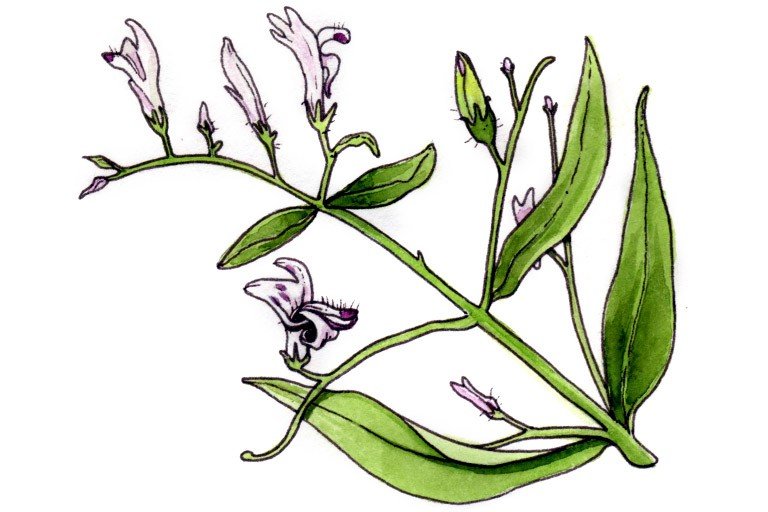
Common Names
- Indian Echinacea
- Chuan Xin Lian
- Chiretta
- Kalmegh
For Patients & Caregivers
Tell your healthcare providers about any dietary supplements you’re taking, such as herbs, vitamins, minerals, and natural or home remedies. This will help them manage your care and keep you safe.
Andrographis has been mostly studied for colds, flu, and upper respiratory infections.
Andrographis paniculata is used in traditional medicine to treat infectious diseases and fevers. In the lab, it exhibits antibacterial, antioxidant, anti-inflammatory, anticancer, and immunostimulating properties.
Preliminary studies suggest andrographis alone or in combination with other herbs may reduce duration and severity of upper respiratory infections associated with the common cold or flu. Other data suggest it may help some inflammatory conditions such as ulcerative colitis or rheumatoid arthritis, but more studies are needed.
Patients should use caution before using this herb as it may interact with many drugs.
- Colds and Flu
Either alone or in combination with other herbs, andrographis may reduce duration and severity of cold and flu symptoms. - Immune function
In a small trial of patients with HIV, andrographolides, the active ingredients in andrographis, increased the number of lymphocytes, suggesting improved immune function. However, the trial was interrupted midway due to an adverse event. - Cancer
Lab studies suggest antioxidant and anticancer properties, but this has not yet been studied in humans. - Inflammation
Small trials suggest benefit for inflammatory conditions such as rheumatoid arthritis and ulcerative colitis, but additional studies are needed to confirm these effects.
- Headache
- Fatigue, dizziness
- Allergic reactions, hypersensitivity, skin rash
- Lymph node pain or swelling
- Nausea, diarrhea, vomiting
- Altered taste
Case reports
- Anaphylaxis and allergic reactions: Caused by several different A. paniculata preparations. Methanol extracts may increase this allergy risk.
- Anaphylactic reaction: In an HIV patient on-study during week 4.
- Enlarged lymph nodes: With very high doses.
- Acute kidney injury: Following andrographolides given by IV. Symptoms included flank pain, decreased urine output, and nausea/vomiting.
Do Not Take if:
- You are taking aminophylline: Preclinical studies indicate that andrographis may increase the risk of side effects from this drug.
- You are taking chemotherapy drugs: Andrographis has antioxidant effects and may interfere with the actions of chemotherapy drugs.
- You are taking CYP450 substrate drugs: Although clinical relevance is yet to be determined, andrographis may make some of these drugs less effective or increase the risk of side effects.
- You are taking blood pressure-lowering drugs: Andrographis may have additional hypotensive effects. A study in healthy humans showed transient reductions in blood pressure when taking the suggested dose for common cold and respiratory tract infections.
- You are taking anticoagulants or antiplatelet drugs: Some lab studies suggest andrographis may interfere with these drugs. Patients taking these medications should use caution and consult their treating physician if considering the use of andrographis products.
- You are taking UGT 2B7 substrate drugs: Lab studies suggest andrographolide derivatives may increase the side effects of drugs metabolized by this enzyme.
For Healthcare Professionals
Andrographis paniculata is a bitter tasting annual plant prevalent in much of Asia. It is often used in combination with other herbs in traditional medicine to treat infectious diseases and associated fevers. It is also used in folk medicine to treat snakebites. Andrographis is promoted in supplemental form for cancer prevention or treatment, and to counter chemotherapy toxicity in humans. Formulations containing standardized extracts of andrographis are also marketed for colds and flu.
Preclinical studies suggest antimicrobial (23), anti-inflammatory (26), antioxidant (27), anticancer (13) (15) (18) (49) (50) (51) properties.
Kan Jang, a standardized extract of A. paniculata and Eleutherococcus senticosus, has been studied in manufacturer-sponsored clinical trials for relief of respiratory symptoms from cold and flu (1) (2) (3) (4), and may help reduce severity and recovery time (56). An andrographis extract also appeared helpful for upper respiratory infections (5) and meta-analyses suggest possible benefit to reduce cough frequency and severity (45) (46).
Andrographis has also been evaluated for ulcerative colitis. In one trial, those receiving A. paniculata extract at higher doses were more likely to achieve a clinical response compared with placebo (47), and another study found it as effective as mesalamine (6).
Other preliminary data suggest andrographis extracts can reduce rheumatoid factors and arthritis symptoms (7). In patients with modest hypertriglyceridemia, reduced triglyceride levels with a high-dose andrographis extract were comparable to reductions with gemfibrozil (48). In a pilot study of patients with not-active progressive multiple sclerosis, andrographolide appeared safe and showed trends in reducing brain atrophy rates and disability progression (57).
- Immunostimulation
- Inflammation
- Colds, flu
- Cancer
The active constituents of andrographis are diterpenoid lactones known as andrographolides (10) (11). They exhibit anti-inflammatory activity by inhibiting NO production and COX-2 expression (26). In mouse hepatocytes, andrographis induced mRNA expression of CYP1A1 and 1A2 in a concentration-dependent manner (31). In other studies, andrographis extract demonstrated a calcium channel inhibition effect that could cause smooth muscle relaxation, decreased blood pressure and heart rate (32), and relaxation of the uterus (33). It also showed antiplatelet effects by inhibiting thrombin (34) and platelet activating factor (35). When given orally to mice, andrographis extract neutralized snake venom (9).
In other preclinical studies, activity against multiple myeloma cells may occur via TLR4/NF-kappaB signaling pathway inhibition (52). In human colorectal cancer cells, reversal of 5-FU resistance was attributed to elevated BAX expression (50). Migration and invasion was inhibited through suppression of mRNA and MMP-7 protein levels (13), while MMP-2 activity was also identified (14). Inhibition of IL-6 expression and IL-6-mediated signals occurred in human prostate cancer cells (12). In non-small cell lung cancer cells andrographolides reduced invasiveness by suppressing the PI3K/Akt/AP-1 signaling pathway and inhibiting MMP-7 expression (15). Apoptosis in human hepatoma cells occurred via c-Jun N-terminal kinase induction (16) and caspase activation (17). Decreased adhesion of gastric cancer cells to endothelial tissue was attributed to inhibition of E-selection expression (18). Inhibition of tumor cell growth may also occur by stimulating cytotoxic T-lymphocyte production via IL-2 and IFN-gamma secretion (19). Andrographolides also enhanced doxorubicin-induced cell death in several human cancer cell lines, mainly through JAK-STAT suppression (20).
In HIV patients, andrographolides inhibited HIV-induced cell-cycle dysregulation and increased CD4+ lymphocyte levels (10).
Headache, fatigue, vertigo, skin rash, hypersensitivity, lymphadenopathy, pain in the lymph nodes, nausea, vomiting, diarrhea, altered taste (10) (11) (44) (45) (46) (47) (53) (57) (58)
Case reports
- Anaphylaxis and allergic reactions: Caused by several different A. paniculata preparations. Methanol extraction may increase risk of allergenicity (54).
- Anaphylactic reaction: In an HIV patient on-study during week 4 (10) .
- Lymphadenopathy: With very high doses (53).
- Acute kidney injury: Following IV administration of andrographolides. Symptoms included flank pain, decreased urine output, and nausea or vomiting (41).
- CYP450 substrates: Lab studies indicate andrographis extract inhibits 1A2, 2C9, 3A4 (37). Some andrographis compounds also induce CYP1A1 (39). Although clinical relevance is yet to be determined, these properties may affect the intracellular concentration of drugs metabolized by these enzymes.
- Anticoagulants, antiplatelets: Although lab studies indicate possible inhibition of platelet aggregation (34) (35), one study in rats suggests that andrographis extract does not interact with warfarin when used concomitantly (38). Patients taking anticoagulant or antiplatelet medications should use caution and consult their treating physician if considering the use of andrographis products.
- Chemotherapy drugs: Andrographolides have been shown to have antioxidant effects (21), which may interfere with the actions of some chemotherapy drugs.
- Blood pressure-lowering drugs: Lab studies indicate that andrographis may have additive hypotensive effects (32). In healthy subjects, A. paniculata at the normal therapeutic dose for the common cold and respiratory tract infections modulated various clinical parameters, including transient reductions in blood pressure (55).
- UDP-glucoronosyltransferase: Lab studies suggest andrographolide derivatives inhibit UGT2B7 and can increase the side effects of drugs metabolized by this enzyme (42).
- Aminophylline: Andrographis inhibits CYP1A2, which is involved in metabolizing aminophylline, resulting in increased risk of side effects from this drug (43).
May elevate liver enzymes (6).