Common Names
- L-arginine
For Patients & Caregivers
Tell your healthcare providers about any dietary supplements you’re taking, such as herbs, vitamins, minerals, and natural or home remedies. This will help them manage your care and keep you safe.
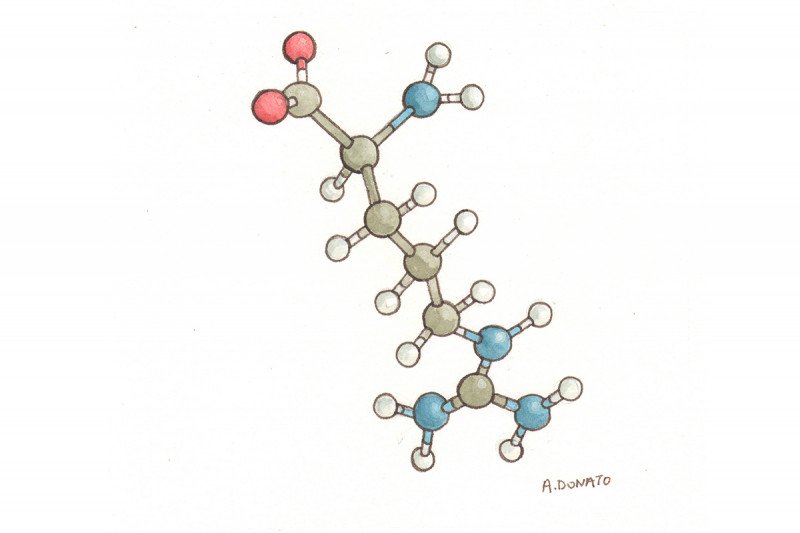
Arginine is a chemical that your body makes. It helps your body build protein. Arginine is also found in foods, such as red meat, poultry (such as chicken and turkey), fish, dairy products, soy, and whole grains.
Arginine supplements come as tablets, capsules, and powders.
Arginine is used to:
- Treat angina (a type of chest pain that comes from reduced blood flow to the heart).
- Treat atherosclerosis (ath-uh-roh-skluh-roh-sis) (when your arteries get hard because of a buildup of fats and cholesterol).
- Lower high blood pressure.
- Heal wounds.
- Boost your immune system.
- Treat erectile dysfunction (ED, not being able to have or keep an erection).
- Treat migraines.
Arginine has other uses, but doctors have not studied them to see if they work.
Arginine that you get from food is safe. Talk with your healthcare provider before taking arginine supplements. They are stronger than the arginine you get from food. Some herbal supplements can affect how some medications work. For more information, read the “What else do I need to know?” section below.
Side effects of using arginine supplements may include:
- Abdominal (belly) pain.
- Bloating.
- Nausea (feeling like you’re going to throw up).
- Diarrhea (loose or watery bowel movements).
- Talk with your healthcare provider if you’re taking medications to lower your blood pressure. Arginine supplements can also lower blood pressure so taking both at the same time may not be safe.
- Talk with your healthcare provider if you’re taking protein powders. Some protein powders or products claiming to improve sports performance may contain arginine.
For Healthcare Professionals
Arginine is an amino acid that is synthesized in the body. Oral arginine has been used for various conditions such as hypertension, angina, atherosclerosis, migraines, and erectile dysfunction. Its vasodilatory properties are thought responsible for beneficial effects. Arginine has also been used to enhance wound healing, immune function, and athletic performance.
Some studies support the use of arginine in coronary artery and peripheral artery diseases (10) (11) (12) (13), but long-term supplementation worsened PAD (14). In addition, oral supplementation in patients who had an acute myocardial infarction did not improve ejection fraction or vascular stiffness, and may be associated with higher mortality (38). A meta-analysis of arginine supplementation on markers for cardiovascular disease, obesity, or diabetes also did not find benefit, except perhaps in a select group of patients (39). Smaller studies suggest supplementation with arginine, glutamine, and HMB may benefit vascular endothelial function in older adults (33), but arginine supplementation alone did not improve blood flow or muscle performance in older women (34).
In cancer patients, preliminary data are mixed for perioperative enteral arginine-enriched formulas to improve wound healing (1) (41) and immune function (27) (35) (42), but other studies suggest such formulas may reduce complications and length of hospital stay (30) (36). However, early postoperative arginine-enriched feeding had no impact on long-term survival in patients undergoing surgery for oesophagogastric and pancreaticobiliary cancers (48), and a trial of an oral formula containing arginine, HMB, and glutamine to improve cachexia management in newly diagnosed lung cancer patients was halted due to slow accrual and partial adherence (49).
Some data suggest a prophylactic arginine-containing supplement may reduce incidence of hand-foot syndrome in hepatocellular carcinoma patients taking sorafenib (43). Interestingly, arginine deprivation-based treatments are also being pursued as potential cancer treatments (31) (32) (37).
Although a meta-analysis did not find significant effects with arginine supplementation on inflammatory biomarkers, subgroup analysis suggests it may increase circulating C-reactive protein in cancer patients, those older than age 60 or with higher baseline CRP levels, or with use of enteral formulas (44). Additional studies are needed to determine the circumstances under which arginine supplementation could be safe and effective.
Meat, poultry, fish, dairy products, nuts, seeds, soy foods, legumes, and chocolate
- Angina
- Atherosclerosis
- Hypertension
- Wound healing
- Immune stimulation
- Erectile dysfunction
- Migraines
Arginine is unique among amino acids for its vasodilatory properties (11). Arginine acts as a precursor for the synthesis of endogenous NO via the action of nitric oxide synthase. NO functions as a paracrine-signaling molecule mediating vasodilation and inhibition of platelet activation, monocyte and leucocyte adhesion, and smooth muscle cell proliferation. NO also helps to control vascular oxidative stress and redox-regulated gene expression (22). Arginine is also needed for the synthesis of creatine which is important in muscle contraction (22). In colorectal adenoma cells, arginine reduces the expression of survivin, an inhibitor of apoptosis, and induces iNOS expression (23).
- In patients who had an acute myocardial infarction, arginine supplementation may increase risk of mortality (38).
- Long-term supplementation may worsen peripheral artery disease (14).
- Limited studies suggest that arginine supplementation may increase breast tumor growth, but more research is needed to examine this (9) (21).
Case reports
Esophagitis: In a 40-year-old woman after ingestion of l-arginine, selenium, and vitamin E supplements. A few other cases have also pointed to arginine as the suggested cause (45).
Acute pancreatitis: Upper abdominal pain and increased serum lipase levels in a young adult man, attributed to a protein shake containing arginine. The condition improved with treatment and cessation of the product (46). Another earlier case in a young adult had also been reported (47).