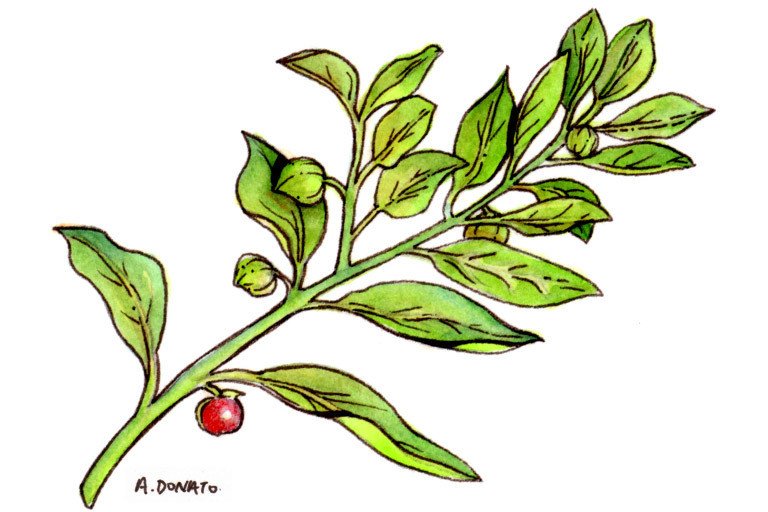
Common Names
- Ashwagandha
- Indian ginseng
- Winter cherry
For Patients & Caregivers
Tell your healthcare providers about any dietary supplements you’re taking, such as herbs, vitamins, minerals, and natural or home remedies. This will help them manage your care and keep you safe.
Ashwagandha is a popular herb used in traditional Indian medicine (Ayurveda) for stress relief and to improve general health. It can help you relax and reduce swelling.
Some lab studies show that it can slow the growth of cancer cells, but this effect has not been observed in humans.
Ashwagandha is used:
- To reduce anxiety (strong feelings of worry)
- To reduce stress
- To reduce fatigue (feeling more tired or weak than usual)
- To reduce joint pain
- To treat diabetes
It’s generally safe to use ashwagandha in food and tea. However, talk with your healthcare providers before taking supplements or higher amounts of ashwagandha. Supplements are stronger than the herbs you would use in cooking.
Ashwagandha can also interact with some medications and affect how they work. For more information, read the “What else do I need to know?” section below.
Side effects of using ashwagandha may include:
- Nausea (feeling like you’re going to throw up)
- Headache
- Drowsiness
- Stomach irritation
- Diarrhea (loose or watery stool)
- Don’t use ashwagandha if you’re pregnant because it may increase your risk of miscarriage.
- Talk with your doctor if you have hormone-sensitive prostate cancer because ashwagandha may increase testosterone levels. This can interfere with your treatments.
- Ashwagandha may increase the drowsiness effects of some prescription medications so talk with your healthcare provider before taking it.
For Healthcare Professionals
A popular Ayurvedic herb, ashwagandha is often used in formulations prescribed for stress, strain, fatigue, pain, skin diseases, diabetes, gastrointestinal disease, rheumatoid arthritis, and epilepsy (1). It is also used as a general tonic to improve energy levels, health, and longevity (2), and topically as an analgesic (3). Active constituents include alkaloids, steroidal lactones, saponins, and withanolides.
Preclinical studies showed neuroprotective (26) (37) and anti-inflammatory properties that may protect against cartilage damage in osteoarthritis (4), and improvements in hyperglycemia, hyperinsulinemia, and insulin sensitivity in a murine model of type 2 diabetes (5). Additional studies found cytotoxic, immunomodulating (8), chemopreventive (1) and radiosensitizing effects (10), and enhancement in chromosomal stability (11).
Limited clinical data suggest ashwagandha promotes growth, hemoglobin level, and red blood cell count in children (2), improves exercise performance (77), sexual health (2) (61), male infertility (27), and relieves mild to moderate climacteric symptoms in perimenopausal women (59). It may also help relieve constipation (69), lower fatigue (70), anxiety (23) (54) and stress (52) (62) (63) (71) with a systematic review/dose-response meta-analysis citing the need for high-quality evidence (64). Improvements were also seen in both non-restorative sleep in healthy adults (55) and sleep quality in patients with insomnia (51) (56). In patients with schizophrenia, adjunctive use improved symptoms and stress (43) (50), and affected markers of metabolic syndrome (34). Preliminary findings indicate improvements in measures of cognitive function in patients with bipolar disorder (35) and balance in patients with progressive degenerative cerebral ataxias (24). Ashwagandha formulations may also benefit patients with osteoarthritis (13), rheumatoid arthritis (72), exerting analgesic, anti-inflammatory, and chondro-protective effects in those with knee joint pain (41).
Ashwagandha exerted anticancer effects against several cancer cell lines (6) (7), but was ineffective against drug-resistant cancer stem cells (36). It prevented chemo-induced neutropenia in a murine model (12), and the compound Withaferin A enhanced oxaliplatin effects in human pancreatic cancer cells (38). Studies in breast cancer patients reported reduced chemo-induced fatigue and improved quality of life (31) (78).
Ashwagandha may increase testosterone levels and therefore, patients with hormone-sensitive prostate cancer should consult their physicians before taking it (48). It may also trigger or exacerbate autoimmune diseases (79).
- Anxiety
- Stress
- Fatigue
- Rheumatoid arthritis
- Diabetes
Alkaloids, steroidal lactones, saponins, and withanolides are considered the biologically active components of ashwagandha. Anti-arthritic effects are attributed to cyclooxygenase (COX) inhibition.
In animal studies, anti-inflammatory activity by ashwagandha was comparable to hydrocortisone (15). Brain antioxidant effects and CNS tranquilizing effects may be due to influences on GABA receptor function (2) (17). Withanolides in the roots and leaves are considered similar to steroids in their biological activities (41). Triethylene glycol, a compound isolated from the leaves, was identified as an active sleep-inducing component in a murine model, and may potentially be used to relieve insomnia (42).
Microarray analysis revealed that ashwagandha represses proinflammatory gene expression, including IL-6, IL-1β, IL-8, Hsp70, and STAT-2, and induces p38/MAPK expression in a prostate cancer cell line (16). Ashwagandha may inhibit tumor growth (1) (21) and increased cytotoxic T lymphocyte production (8). In vitro studies show that root extracts have cytotoxic properties against lung, colon, CNS, and breast cancer cell lines (6). Withaferin A induced reactive oxygen species (ROS) generation and disruption of mitochondrial function in a human leukemia cell line, thereby inducing apoptosis (18). In estrogen receptor-positive (ER+) and negative (ER-) breast cancer cells, withaferin A induced apoptosis and decreased tumor size (19). Apoptosis of cancer cells by withanone is mediated through p53 (7). Withianone also exerts anticancer activity by binding to the TPX2-Aurora A Complex (29). Other studies show ashwagandha cytotoxicity is related to its structure. It enhances ATPase and inhibits succinate dehydrogenase activities, impairing oxidative phosphorylation.
In animal studies, ashwagandha enhanced radiation therapy effects (20) by reducing tumor GSH levels (10), and reversed paclitaxel-induced neutropenia in mice (12). No significant interactions have been reported between ashwagandha and either CYP3A4 or CYP2D6 enzymes in human liver microsomes (40).
- Hemolytic anemia and abdominal pain were reported following ingestion of ashwagandha/mucuna pills containing high amounts of lead (32). Symptoms resolved following standard treatment.
- Ashwagandha may increase testosterone levels, and should therefore be avoided in patients with hormone-sensitive prostate cancer (48).
- Patients who take benzodiazepines, anticonvulsants, or barbiturates should likely avoid ashwagandha because this botanical may have both sedative and GABAnergic effects (49).
- Pregnant women should avoid ashwagandha as it may increase the risk of miscarriage at higher doses (49).
Commonly reported effects: Mild to moderate and transient drowsiness, upper GI discomfort, loose stools (43) (53)
Less common effects reported: Giddiness, drowsiness, hallucinogenic, vertigo, nasal congestion (rhinitis), cough, cold, decreased appetite, nausea, constipation, dry mouth, hyperactivity, nocturnal cramps, blurring of vision, hyperacidity, skin rash and weight gain (53)
Case reports
- Nausea, headache, and gastritis: Reported in a clinical study, but symptoms were managed by standard therapies (41)
- Thyrotoxicosis: Associated with ingestion of ashwagandha supplements for chronic fatigue (25), hypothyroidism (65) and insomnia (73). Symptoms resolved in all cases after cessation of supplement use.
- Burning, itching, and discoloration of skin/mucous membrane: In a 28-year-old man after taking ashwagandha for decreased libido. Symptoms abated with conventional treatment (33).
- Ventricular tachycardia: 2 cases were possibly associated with the use of herbomineral preparations that contained ashwagandha (45).
- Elevation of liver enzymes, skin rash, fatigue, fever, edema, and diarrhea: In patients with advanced stage high-grade osteosarcoma, following administration of Withaferin-A (47).
- Kidney transplant rejection: In a 69-year-old patient associated with use of ashwagandha. The patient needed a graft nephrectomy and was continued on maintenance dialysis (57).
- Liver injury: Associated with use of ashwagandha supplements. Symptoms improved after discontinuing ashwagandha with some patients needing additional treatments (60) (66) (67) (74) (75) (80).
- Acute steatohepatitis: In a 43-year-old female with a past medical history of iron deficiency anemia after taking multiple supplements which included ashwagandha, in addition to alcohol and ibuprofen (68).
- Reversible cerebral vasoconstriction syndrome: In a 47-year-old female with a history of ashwagandha, medical marijuana, and serotonin-norepinephrine reuptake inhibitor (SNRIs) use. Her symptoms resolved with conventional treatment (76).
- Acute-onset dystonia: In a 40-year-old male associated with use of ashwagandha. Discontinuating ashwagandha and treatment led to symptom resolution (81).
- Hypothalamic-pituitary-adrenal (HPA) axis suppression: In a 55-year-old postmenopausal woman after prolonged use of ashwagandha, necessitating continued hydrocortisone supplementation for symptomatic treatment (82).
- Acute neurotoxicity: In a 40-year-old man, temporally associated with ashwagandha ingestion. Supportive management and discontinuing ashwagandha resolved the symptoms (83).
- Anticonvulsants, barbiturates, and benzodiazepines: Preclinical studies suggest that ashwagandha has sedative and GABAnergic properties, and may have additive effects (30) (49). Clinical relevance has yet to be determined.
- Cytochrome P450 2B6 substrates: Ashwagandha inhibited CYP2B6 in vitro, and may affect the intracellular concentration of drugs metabolized by this enzyme (58). Clinical relevance is yet to be determined.
- Cytochrome P450 3A4 substrates: Ashwagandha was found to be a moderate inducer of CYP3A4 in vitro, and can affect the intracellular levels of drugs metabolized by this enzyme (58). Clinical relevance is not known.