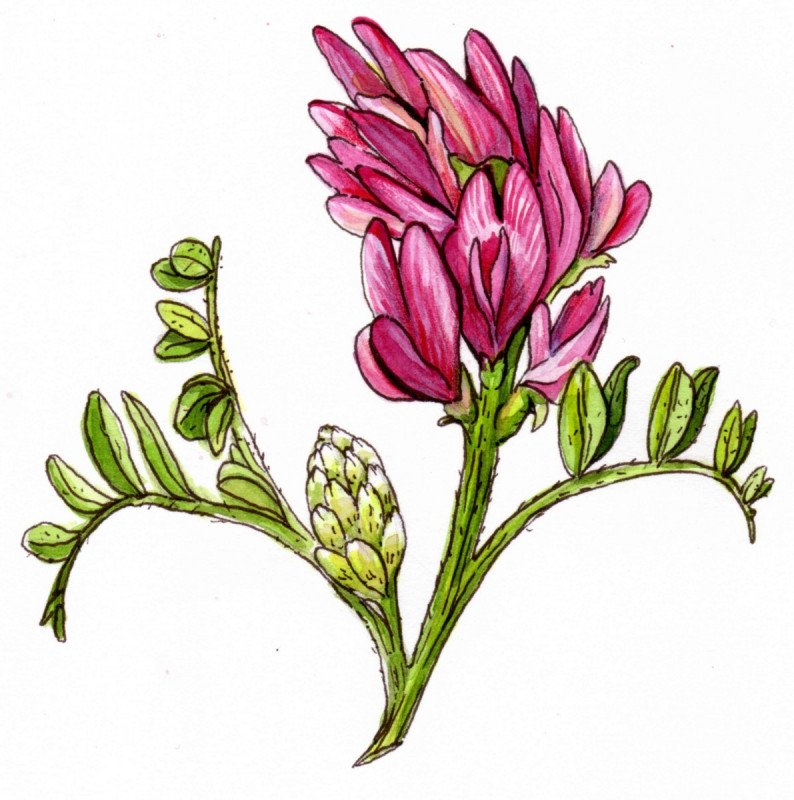
Common Names
- Huang chi
- Huang qi
- Milk vetch
- Radix astragali
For Patients & Caregivers
Tell your healthcare providers about any dietary supplements you’re taking, such as herbs, vitamins, minerals, and natural or home remedies. This will help them manage your care and keep you safe.
The root of the astragalus plant is used in traditional Chinese medicine to increase stamina and strength. You can also take astragalus as a supplement to strengthen your immune system and decrease fatigue (feeling more weak than usual).
Astragalus is used to:
- Strengthen your immune system
- Increase stamina and strength
- Reduce nausea (feeling like you’re going to throw up) and vomiting (throwing up) caused by chemotherapy
- Reduce cancer-related fatigue
Talk with your healthcare provider before taking astragalus supplements. They can interact with some medications and affect how they work.
For more information, read the “What else do I need to know?” section below.
The side effects below were reported in a study, but lasted only 24 hours:
- Fatigue (feeling more weak than usual)
- Headache
- Low blood pressure
- Talk to your healthcare provider if you’re on blood thinners such as warfarin (Jantoven® or Coumadin®). Astragalus can increase your risk of bleeding.
- Talk to your healthcare provider if you’re taking immunosuppressants (medications that weaken your immune system). Astragalus can make them less effective.
- Talk to your healthcare provider if you’re taking medications to lower your blood pressure. Astragalus by itself can lower blood pressure. Taking these together can bring down your blood pressure to unhealthy levels.
- Talk to your healthcare provider if you’re on diuretics (water pills). Astragalus may increase their effects.
For Healthcare Professionals
Astragalus belongs to a group of medicinal plants in the Leguminosae family. The root of A. membranaceus has a long history of use in traditional Chinese medicine (TCM), and is often used along with other herbs as a tonic to increase stamina, strength, and vitality. Extracts of astragalus are sold as dietary supplements to improve immune function and to decrease fatigue. Beneficial effects of astragalus are attributed to its polysaccharides and triterpenoid saponin compounds. Preclinical studies indicate that astragalus and its constituents have antioxidant (27), anti-inflammatory (28), and antiviral (29) properties, along with exerting protective effects on the heart (30) (31) (32), kidney (33) (34) (35), bones (36) , and the nervous system (11) (17) (37).
In small studies involving healthy individuals, astragalus exhibited sodium-excreting properties (8); produced a viral-type immune response (38); and attenuated immune-suppression induced by strenuous physical activity (71). A formula containing astragalus decreased fatigue in athletes (10); reduced diabetic ketoacidosis (39); and as an adjuvant therapy, helped manage fatigue in stroke patients (64). In the injectable form, astragalus may benefit patients with IgA nephropathy (26). In addition, an astragalus-based formula was shown to preserve residual renal function in dialysis patients (40), and to reduce proteinuria associated with idiopathic membranous nephropathy (7). Systematic reviews reported benefits of astragalus as an adjunctive therapy for short-term reductions of albuminuria, proteinuria, and serum creatinine in patients with diabetic kidney disease (60) ; and for improving quality of life in those with intracranial hemorrhage (75). Further research is needed to determine long-term safety and efficacy (65).
Astragalus also showed anticancer effects against gastric (41), colon (42) (43) (44) (45), hepatic (46) and ovarian (59) cancer cells, and concomitant treatment with aldesleukin potentiated tumoricidal activity while decreasing side effects (14). In addition, it enhanced platinum-based chemotherapy (3) and protected against oxaliplatin neurotoxicity (48). Its saponins were shown to reverse fluorouracil-associated toxicity (42) (28), and augmented benefits of vinblastine while reducing its neutropenic and anemic effects (44).
Limited clinical data suggest astragalus may be useful in managing cancer-related fatigue (22). It has also been associated with prolonged survival times in acute myeloid leukemia patients (47); and may help reverse chemo-induced immunosuppression along with reducing chemo-induced side effects (1) (2). Meta-analyses have shown associations between astragalus and reductions in chemo-induced nausea and vomiting (49), chemo-induced gastrointestinal toxicity (70), radiation-induced lung injury (76) and improvements in quality of life in patients with hepatocellular cancers (16). However, the majority of studies included in these analyses were limited by poor methodology. Larger, well-designed trials are needed to confirm the findings (70). Additionally, the injectable forms of astragalus were shown to improve clinical outcomes in liver cancer patients (67); and quality of life in patients with advanced (20) (68) (72) (73) and metastatic cancers (66) (69). Whether orally administered astragalus exerts similar effects is not known.
Although astragalus is considered generally safe, due to its antioxidant (27) and estrogenic (23) (50) activities, it may interfere with certain chemotherapy drugs and/or affect hormone-sensitive cancers. However, these findings are based on preclinical studies and cannot be extrapolated to clinical recommendations. The physiological concentration used in these studies is unlikely to be achieved in humans, which makes it difficult to predict the downstream effects/interactions.
- Immunostimulation
- Strength and stamina
- Chemotherapy side effects
Polysaccharides, triterpenoid saponins, and flavonoids are the main constituents of astragalus with immunomodulating, antioxidant, anti-inflammatory, and anticancer effects (27) (51). In vitro studies suggest the saponin astragaloside I promotes osteoblastic differentiation by regulating the Wnt/beta-catenin signaling pathway (36). Cardioprotective effects from astragaloside IV may occur via the notch1/hes1 signaling pathway (30). In addition, it augments fibrinolytic potential via increases in tissue-type plasminogen activator (t-PA) synthesis and downregulation of PA inhibitor type 1 (PAI-1) (21). Other anticoagulant activities are attributed to upregulation of KLF2 mRNA expression and inhibition of NF-kB signaling pathway (52).
Polysaccharides isolated from astragalus produce immunomodulating effects via activation of toll-like receptor 4 (TLR4)-related mitogen-activated protein kinase (MAPK) activities (53). In murine models, they reduced colitis via inhibition of NOD-like receptor protein 3 inflammasome, which decreases inflammatory factors such as interleukin (IL)-18 and IL-1beta (54), and reduced multiorgan iron overload via upregulated hepcidin and IL-6 expression and enhanced p38 MAPK phosphorylation (55). Cardioprotective effects with this constituent were attributed to anti-inflammatory properties and improved balance between reactive oxygen species (ROS) and NO (32). In a diabetic rat model, astragalus polysaccharides exerted effects on glucose and lipid metabolism and insulin resistance (37). Astragalus was also found to reduce the secretion of inflammatory cytokines via increasing levels of CD4+ CD25+ Foxp3+ T cells and by inhibiting the activation of NF-κB (61).
Benefits to counteract memory disorders were seen with astragalus due to its activity as a nerve-growth promoting factor (17) and due to its ability to increase M-cholinergic receptor density in senile rats (11).
In dialysis patients, an astragalus-based TCM formula enhanced NO production and transforming growth factor beta suppression (40). In IgA nephropathy patients, an astragalus injection decreased Core I β3-Gal-T-specific molecular chaperone (Cosmc) gene expression and increased IgA1 O-glycosylation levels (26). In healthy individuals, a sublingual/ingested astragalus root extract produced increases in monocytes, neutrophils, lymphocytes, and platelets, as well as circulating cytokines levels, and self-reported symptoms similar to viral type immune responses such as fatigue, malaise, and headache (38). In another study, a formula containing astragalus reduced fatigue in athletes by increasing the uptake and utility of oxygen (10).
Mechanisms by which astragalus and its constituents may exert anticancer effects have also been examined. In human colorectal cancers cell lines, astragalus suppressed chromosome organization, histone modification, and regulation of macromolecule metabolism, as well as several cancer signaling pathways (56). Saponins induced S phase and G2/M arrest and suppressed p21 expression and cyclin-dependent kinase activity (42). Modulation of mTOR signaling and COX2 downregulation also occurred, which in turn can reduce VEGF levels to suppress angiogenesis (43). In gastric adenocarcinoma cells, caspase 3 activation, G2/M phase cell cycle arrest, cyclin B1, p21 and c-myc regulation, and downregulation of vascular endothelial growth factor (VEGF) and metalloproteinase (MMP)-2 and MMP-9 occurred (41). Combined with vinblastine, saponins boosted downregulation of proangiogenic and proliferative factors while attenuating neutropenia and anemia seen with this chemotherapy (44). In combination with calpain inhibitors, these saponins may also exert more pronounced apoptotic effects (45). Polysaccharides potentiate immune-mediated antitumor activity of interleukin-2 in vitro (13), improve lymphocyte responses, enhance natural killer cell activity, potentiate monocyte activity (14), increase phagocytosis perhaps by regulating tumor necrosis factor production (5), and activate macrophages to release nitric oxie and tumor necrosis factor-alpha, which directly blocks growth of breast cancer cells (62). Apoptotic effects by polysaccharides in hepatocellular carcimona cells were attributed to decreased Notch1 expression (46).
Formononetin derived from astragalus was shown to have estrogen-receptor-modulating effects (50). Angiogenic effects of astragaloside IV appear to be synergized when combined with ferulic acid from Angelica sinsensis (57).
- Fatigue, malaise, headache, and lowering of blood pressure have been reported (38).
- Immunosuppressants: Astragalus can antagonize the effects of immunosuppressants. In a patient with refractory nephrotic syndrome, concomitant use of herbal medicine granules containing astragalus was associated with nearly 50% reduction in tacrolimus concentration (74).
- Hormonal therapies: Astragalus and its constituents have estrogenic (23) (50) properties and may interfere with their actions. Clinical relevance is not known.
- Anticoagulants: Astragalus and its constituents have anticoagulant properties (52), which may increase the risk of bleeding. Clinical significance is not known.
- Diuretics: In a small study involving healthy men, astragalus demonstrated natriuretic effects (8) and may therefore have additive effects with these medications.
- Antihypertensive drugs: Astragalus extract can lower both systolic and diastolic blood pressure and may have additive effects with other antihypertensive drugs (38). Clinical relevance is not known.
- P-glycoprotein substrates: Astragalus polysaccharides can inhibit P-glycoprotein efflux pump function. This may increase the cytotoxicity of chemotherapy drugs, including doxorubicin, etoposide, and vincristine (58). Clinical relevance is not known.
- Gemcitabine: Pretreatment with an astragalus extract was found to affect pharmacokinetics of gemcitabine in a murine model. Clinical relevance is not known (63).