For Patients & Caregivers
Tell your healthcare providers about any dietary supplements you’re taking, such as herbs, vitamins, minerals, and natural or home remedies. This will help them manage your care and keep you safe.
Beta-elemene has shown anticancer activity in laboratory studies. More research is needed to study its effects in humans.
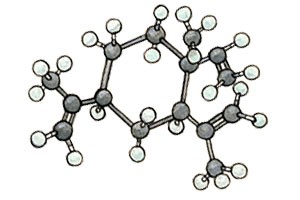
Beta-elemene is a compound found in plants such as celery, mint, and in many others used in traditional medicine. Although the pure form is not used as dietary supplement, some cancer patients use herbs high in beta-elemene as treatment. Beta-elemene was shown to prevent growth of cancer cells in laboratory cells by different mechanisms. A few poorly designed studies done in humans showed that it may improve quality of life in cancer patients. It is unclear if raw herbs containing beta-elemene have the same effects in humans. More research is needed.
- Cancer Treatment
Laboratory studies indicate that beta-elemene can stop the growth of cancer cells. A few studies have been done in humans but the results are not reliable. Larger, well designed clinical trials are needed.
- Beta-elemene was found to inhibit human sperm function by affecting sperm vitality, in vitro. Clinical significance is not known.
For Healthcare Professionals
Beta-elemene is a volatile terpene found in celery, mint, and in several other herbs used in traditional medicine. Whereas the purified form is generally not used as a dietary supplement because of poor absorption, many patients consume herbs high in beta-elemene in belief that they help cure cancer.
In vitro studies show anti-proliferative effects of beta-elemene in various cancer cells through cell-cycle arrest and induction of apoptosis (3) (4) (5) (16) (17) (19) (20). It also enhanced the activity of cisplatin against prostate cancer cells (18). The parenteral form of beta-elemene isolated from Rhizoma zedoariae, a species of ginger, has been studied in Asia and is reported to relieve pain, decrease the side effects of chemotherapy, and increase the quality of life in cancer patients. However, human trials conducted so far are of poor quality (1) (15).
A systematic review indicates that beta-elemene injection may improve effectiveness of chemotherapy for the treatment of lung cancer (21). However, controlled trials are needed to confirm this observation.
Rhizoma zedoariae (E Zhu)
Curcuma aromatica (Wenyujin)
- Cancer Treatment
In an erythroleukemic cell line, beta-elemene inhibited telomerase activity, which was enhanced in combination with cyclophosphamide (9). It also demonstrated anti-fibrotic effects, inducing decreases in plasma angiotensin II levels and angiotensin II receptor type 1 expression, reducing collagen formation in a liver fibrosis rat model (10). Beta-elemene also exhibits anti-inflammatory effects, with reduction in LPS-induced nitric oxide production and prostaglandin E2 by rat peritoneal macrophages (11).
Beta-elemene has been shown to affect cancer cells via different mechanisms. In an in vitro study, following administration of beta-elemene, leukemia cells were arrested in S/G2 phase and underwent apoptosis (2). The antiproliferative effects were dependent on p38 MAPK activation/phosphorylation, cell cycle arrest in G0/G1, and inhibition of tumor growth of glioblastoma cells (3). Beta-elemene also induced G2/M arrest in lung carcinoma cells and ovarian cancer cells by combined reduction of cell-cycle promoters Cdc2 and cyclin B1, and elevated cell cycle regulators p53 and p27 (4) (5). Derivatives of beta-elemene showed antiproliferative activity in human cervical carcinoma cells through a decrease in cell cycle protein Cyclin D1 and thus cell cycle suppression (14). Furthermore, beta-elemene may enhance the effects of chemotherapy and radiation. In non-small cell lung cancer cells, apoptosis was induced by increased expression of Bax and p-Bcl-2, decreased Bcl-2 and XIAP, and augmented cisplatin-induced increases in caspase activity (6). In another study, apoptosis response to the taxanes paclitaxel and docetaxel in lung carcinoma cells was enhanced with beta-elemene, through increases in cytochrome c, caspase activity, downregulation of Bcl-2, and altered cell membrane permeability (7). Beta-elemene combined with radiation induced apoptosis in lung adenocarcinoma cells, possibly by sensitizing cancer cells to radiation (8).
An in vivo study showed that beta-elemene inhibits growth of lung cancer cells, and up-regulates the expression of the tumor suppressor, P53, and the release of exosome (22). Another proposed mechanism is that beta-elemene reverses the resistance of lung cancer cells to cisplatin via the mitochondrial apoptosis pathway (23).
Beta-elemene was found to inhibit human sperm function by affecting sperm vitality, in vitro (24). Clinical significance is not known.