Common Names
- Electrodermal testing
- Bio-physical information therapy
- BIT; Bio-energetic therapy; Energy medicine
- Vibrational medicine
For Patients & Caregivers
Tell your healthcare providers about any dietary supplements you’re taking, such as herbs, vitamins, minerals, and natural or home remedies. This will help them manage your care and keep you safe.
Bioresonance therapies are based on unproven theories. They are not recommended for preventing or treating cancer.
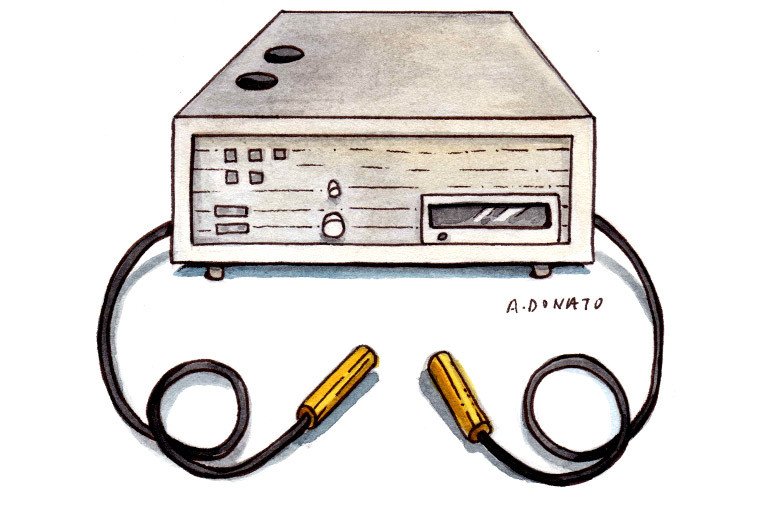
Bioresonance therapies and other therapies that use electronic devices claim to both diagnose diseased internal organs and "normalize" the body's electrical properties and wave emissions. This is based on an unproven idea that unhealthy cells or organs emit altered electromagnetic waves, and that changing these waves back to normal will heal the body. The electronic devices are often promoted for treating cancer. None of the claims made by the promoters have been proven.
The American Cancer Society urges cancer patients not to seek treatment with bioresonance or other electronic devices.
- To diagnose and treat allergies
Clinical trials show that bioresonance therapy and electrodermal testing are not successful in diagnosing allergies. - To treat eczema
A clinical trial in children showed that bioresonance therapy was not effective. In addition, European guidelines do not recommend bioresonance for atopic eczema. - To treat asthma
No scientific evidence supports this use. - To treat cancer
This use is not supported by clinical data. - To treat rheumatoid arthritis
This claim is not backed by research.
For Healthcare Professionals
Bioresonance therapy, available in clinics in Europe, Mexico, Florida, and elsewhere in the US, is used to diagnose and treat cancer, allergies, arthritis, and chronic degenerative diseases. A variation known as electrodermal testing was developed as an aid in prescribing homeopathic remedies, and is used in Europe for the diagnosis of allergies. Bioresonance therapy is based on the claim that electromagnetic oscillations emitted by diseased organs and cancer cells vary from those emitted by healthy cells due to their differences in cell metabolism and DNA damage. No evidence supports these claims. Treatment may involve removal and replacement of dental alloys or amalgams, which are said to carry currents that “alter the body’s electromagnetic circulatory system.”
Clinical trials evaluating electrodermal testing show no reliability in diagnosing allergies (7). A randomized trial of bioresonance for the treatment of atopic dermatitis in children showed no efficacy (3). In addition, European guidelines do not recommend bioresonance for atopic dermatitis (10).
The Food and Drug Administration has prosecuted numerous purveyors of electrical devices for making unsubstantiated health benefit claims (9). The American Cancer Society advises patients not to seek treatment with unproved electronic devices (4).
- Allergies
- Asthma
- Eczema
- Cancer
- Arthritis
Bioresonance is based upon the unproved premise that electromagnetic oscillations emitted by damaged organs and cancer cells vary from those emitted by healthy cells due to their differences in cell metabolism and DNA damage. An electrical device supposedly detects these differences and can determine which organs are affected and “cancel out” their diseased signal via destructive wave interference (1) (2).
Electrodermal testing was developed as an aid in prescribing homeopathic remedies. Medicines are tested “to determine how well they resonate with the individual or how similar they are to the body frequencies needing enhancement to overcome an illness.” Practitioners claim the wave emission from homeopathic medicines or allergens is measured through the device and is modulated through the patient’s autonomic nervous system, influencing skin resistance (4) (6). No evidence supports any of these claims.
Some proponents claim the device naturally kills tumor cells by releasing “suppressed” tumor suppressor genes or attenuating overactive oncogenes. This hypothesis is untenable because of the irreversibility of most cancer-causing genetic mutations. An evaluation of one device found that a galvanic skin response of low resistance was not a reliable indicator of vertebral pathology, and that the device produced a low-resistance reading after 5 seconds of application to any point on the body (7) (8).