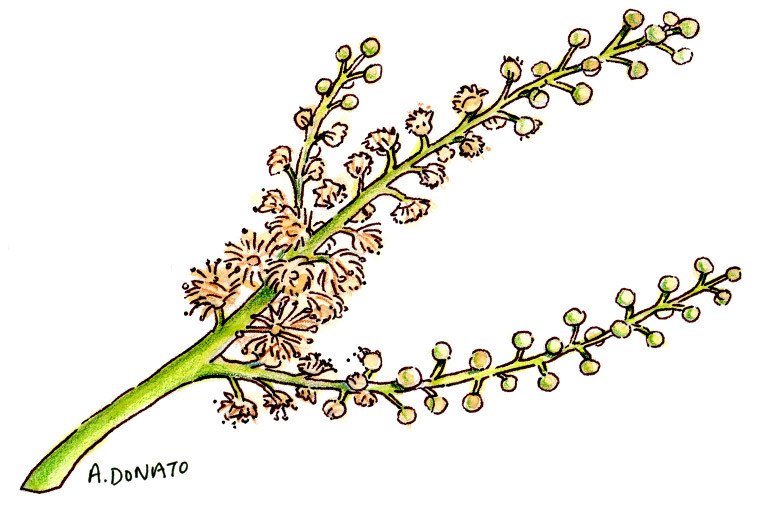
Common Names
- Black snakeroot
- Rattlesnake root
- Squawroot
For Patients & Caregivers
Tell your healthcare providers about any dietary supplements you’re taking, such as herbs, vitamins, minerals, and natural or home remedies. This will help them manage your care and keep you safe.
Black cohosh is a plant used in herbal medicine. The root of this plant is used to treat menstrual (monthly period) cramps and symptoms you may get during menopause (permanent end to your menstrual cycle), such as hot flashes.
You can take black cohosh supplements as tablets, capsules, or liquid extracts.
Black cohosh is used to:
- Treat menstrual cramps and pain
- Treat symptoms of menopause (permanent end of menstrual cycles) such as hot flashes
- Treat premenstrual (one or two weeks before period) symptoms such as bloating, mood swings, and irritability
Black cohosh also has other uses that haven’t been studied by doctors to see if they work.
Talk with your healthcare provider before taking black cohosh supplements. Herbal supplements can interact with some medications and affect how they work. For more information, read the “What else do I need to know?” section of this resource.
Side effects of using high amounts of black cohosh may include:
- Stomach upset
- Rash
- Dizziness
- Nausea (feeling like you’re going to throw up)
- Vomiting (throwing up)
Although rare, a few cases of abnormal liver function and liver damage were also reported after taking black cohosh.
- Talk to your healthcare provider if you have a liver disorder. Black cohosh can worsen your condition.
- Talk to your healthcare provider if you have breast cancer, or if you’re at risk of breast cancer. Whether black cohosh is safe or not is unclear.
For Healthcare Professionals
Obtained from the root of the plant, black cohosh is used as a dietary supplement to relieve symptoms of menopause and dysmenorrhea. Preliminary data suggest it has antiosteoporotic effects (8) and enhances bone formation (9). Black cohosh by itself (2) (3) or in combination with other herbs (4) (5) may be effective for menopausal symptoms, although data are conflicting (6) (31) (32) (36) (45) and an older meta analysis cited insufficient evidence to support its use (40). However, a more recent meta-analysis found isopropanolic black cohosh extract, an herbal medicinal product widely used in the EU as nonhormonal therapy, is comparable to low-dose transdermal estradiol or tibolone with a better benefit-risk profile than tibolone (62).
Investigations of black cohosh for hot flashes due to breast cancer treatment also yielded mixed results (10) (11) (12), but supplementation may be effective for menopausal syndrome induced by luteinizing hormone-releasing hormone analogue (57). In other studies, black cohosh did not enhance bone density, improve menopausal symptoms, nor improve 10-year risk of coronary heart disease in early postmenopausal women (37), although it has been reported to improve sleep (53).
Preclinical data suggest black cohosh may decrease proliferation of prostate cancer cells (14) and induce an apoptotic response in liver cells (21), but it also increased incidence of metastatic disease in mice (16). Whether it has similar effects in breast cancer patients is not clear, and a retrospective observational study of breast cancer patients found that isopropanolic black cohosh extract enhanced disease-free survival (15).
Concomitant use of black cohosh with prescription medications has been associated with adverse drug reactions, most commonly involving abnormal hepatic function, hepatitis or hepatotoxicity (58). Black cohosh should not be confused with blue cohosh, which has a different medicinal profile. It is also not clear whether or not black cohosh acts as a phytoestrogen. Patients with breast cancer or at risk of breast cancer should consult with their physicians before taking it.
- Dysmenorrhea
- Menopausal symptoms
- Premenstrual syndrome
Black cohosh relieves menopausal symptoms likely by mimicking neurostransmitters: dopaminergic, noradrenergic, serotoninergic and GABAergic effects have been demonstrated (49). It was believed to have estrogenic effects due to its ability to relieve menopausal symptoms in women (40), but studies show it has no effect on LH, FSH, prolactin, or estradiol levels (24). A black cohosh extract had antiproliferative and antiestrogenic effects in ER-negative cells, which suggests effects are mediated via an estrogen-independent pathway (25), possibly through HER-2 signaling (26).
In other studies, black cohosh repressed cyclin D1 and ID3 expression and inhibited proliferation of HepG2 p53-positive liver cells (43). In prostate cancer cells, antiproliferative effects occurred via impaired equilibrative nucleoside transporter activity, resulting in hindered nucleoside uptake (50). Black cohosh also induced apoptosis and suppressed estradiol-induced cell proliferation in human endometrial adenocarcinoma cells (55).
Hepatotoxicity is a major concern with black cohosh use. Evaluation of liver biopsies from two patients who took black cohosh supplements showed pathological injury identical to toxic necrosis, seen during autoimmune hepatitis (51).
- After reviewing 30 independent cases of hepatoxicity associated with black cohosh intake, the United States Pharmacopeia’s Botanical Expert Committee decided that black cohosh products should include a statement of caution concerning their use (28).
- A recent survey reported poor quality control of several black cohosh products (44).
- Pregnant women should avoid black cohosh because it has the potential to act as an abortifacient (60).
- GI upset, rashes, dizziness, headaches, nausea, and vomiting with higher than normal doses (27)
Case reports
- Hepatotoxicity: Following use of black cohosh (18) (20) (33) (34) (47).
- Liver injury resembling autoimmune hepatitis: Two cases in which both patients responded to corticosteroid treatment (35).
- Transient autoimmune hepatitis: As well as coagulation activation and fluid retention in a patient likely triggered by use of black cohosh (38). Although lower leg edema is not uncommon in women suffering from climacteric and menopausal symptoms, black cohosh-induced fluid retention and coagulation activation should be considered, especially if thrombosis has been excluded.
- Acute liver injury: In a 40-year-old woman with concomitant use of black cohosh and Thuja occidentalis. However, it is unclear to what extent each botanical or the combination contributed to this event (63).
- Bradycardia: Observed in a woman following use of black cohosh (41).
- Orobuccolingual dyskinesia: Involving speech interference, tongue-biting, and eating difficulties in a 46-year-old woman while taking an herbal supplement containing black cohosh and ginseng (48).
- Severe hyponatremia: In a 39-year-old woman following several doses of black cohosh to induce/augment labor for home birth. She later underwent cesarean delivery, and sodium levels returned to normal after treatment with hypertonic saline (59).
- Acute onset mania: Associated with black cohosh, likely due to its psychopharmacological activities on serotonergic and dopaminergic receptors (61).
Tamoxifen: Black cohosh may interfere with the action of tamoxifen (42). Clinical relevance is not known.
Chemotherapy drugs: Black cohosh may increase toxicity of doxorubicin and docetaxel (13). Clinical significance has yet to be determined.
CYP450 3A4: Black cohosh may interact with drugs metabolized by the CYP3A4 enzyme (17). Clinical significance has yet to be determined.
Simvastatin: Black cohosh and the isolated compound actein have synergistic effects with simvastatin that may enhance activity but also increase side effects (56).