Common Names
- Hyperimmune Bovine Colostrum
- Bovine Immunoglobulin
- Cow milk Colostrum
For Patients & Caregivers
Tell your healthcare providers about any dietary supplements you’re taking, such as herbs, vitamins, minerals, and natural or home remedies. This will help them manage your care and keep you safe.
Some studies suggest that bovine colostrum in various forms can help treat diarrhea or infections.
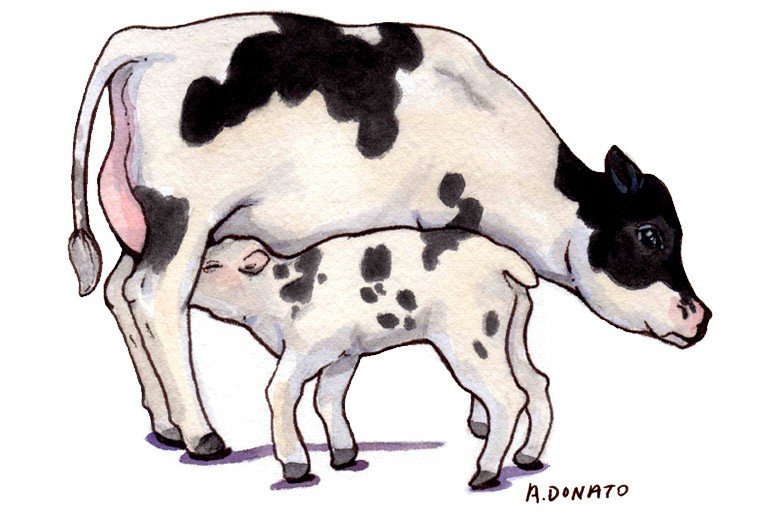
Bovine colostrum is the milk produced by cows for the first several days following birthing. It is rich in antibodies, growth factors, and cytokines, and protects the newborn calf from infections. It has also been used as a dietary supplement in the last decade.
Several clinical trials suggest that various bovine colostrum preparations may be helpful to treat or prevent diarrhea, but additional studies are needed. Similarly, more studies are needed on the conditions under which it may confer immune function benefits.
Bovine colostrum contains trace amounts of estrogen, so patients with hormone-sensitive cancers should discuss this product with their doctors before consumption. In addition, individuals allergic to dairy products should avoid this product.
- Diarrhea
Certain bovine colostrum formulas have been used in small studies with positive results, but larger trials are needed. - Infections
Small studies suggest bovine colostrum may increase immune response, but larger studies are needed. - Gastrointestinal disorders
A few studies suggest that bovine colostrum may be helpful, but more studies are needed.
Case report
Severe allergic reaction: In a 16-year-old boy with cow’s milk allergy, from a bovine colostrum-based cream applied to a surgical wound.
Do Not Take if:
- You are allergic to dairy products: Bovine colostrum is from milk produced by cows.
- You have a hormone-sensitive cancer: Bovine colostrum contains trace amounts of estrogen, so patients with hormone-sensitive cancers should discuss use of this product with their doctors before consumption.
For Healthcare Professionals
Bovine colostrum is cow’s milk secreted during the first few days following calving. It is rich in immunoglobulins, growth factors, and cytokines, and confers immune protection to the newborn calf from opportunistic infections. Bovine colostrum has been used as a dietary supplement to treat diarrhea, infections, and colitis, and to improve athletic performance. In vitro studies suggest that bovine colostrum has anti-inflammatory (16) and chemopreventive (17) properties.
Several clinical trials suggest that hyperimmune bovine colostrum, prepared by immunizing cows with the causative agent, is effective in treating diarrhea caused by rotavirus (2), E. Coli (12) (18), and Cryptosporidium parvum (3) (4). In human challenge trials, specially formulated bovine colostral-IgG preparations provided protection against some enterotoxigenic E. coli strains (22) (23).
Other small studies suggest bovine colostrum supplementation may reduce GI problems including diarrhea in ICU-hospitalized patients (24) and in children (25). There is also some data suggesting it may prevent gastrointestinal damage caused by NSAIDs (7) (19) or help treat distal colitis (8).
In perioperative settings, data suggest that oral bovine colostrum may reduce endotoxemia in patients undergoing abdominal surgery (5) and postoperative plasma C-reactive protein levels in patients undergoing coronary bypass surgery (6).
Although it is thought to have immunological benefits, meta-analyses found a lack of evidence for colostrum in either preterm infants (26) or physically active adults (27). Evidence is also lacking on whether it could help prevent hemolytic uremic syndrome from E. coli infections (28).
In a study of children with acute lymphoblastic leukemia, prophylactic bovine colostrum had no effect on fever or infection, although oral mucositis severity was significantly reduced (29).
Bovine colostrum contains trace amounts of naturally occurring estrogen (20) (21). Therefore, patients with hormone-sensitive cancers should discuss this product with their physicians before consumption. In addition, individuals allergic to dairy products should avoid this product.
Cow’s milk from the first few days after calving
- Colitis
- Diarrhea
- GI disorders
- Immunostimulation
- Infections
Although the high concentration of immunoglobulins may account for bovine colostrum’s effects, the exact mechanism is not known. Studies suggest that bovine colostrum improves exercise performance (9) (10) by increasing serum insulin-like growth factor I and may enhance immune response in humans (11), although a meta-analysis found that evidence is lacking (27). Other studies suggest that colostrum derived from cows immunized with C. parvum is effective against diarrhea induced by C. parvum in AIDS patients (3) (4). Similarly, colostrum from cows immunized with rotavirus alleviated symptoms of rotaviral diarrhea in children (2). Colostrum also reduced diarrhea associated with E.coli (12).
- Allergy to dairy products
Case report
Anaphylaxis: In a 16-year-old boy with cow’s milk allergy, from application of a bovine colostrum-based cream to a surgical wound (30).