Health Care Professional Information
Scientific Name
Brassica oleracea L. var. italica Plenck
Clinical Summary
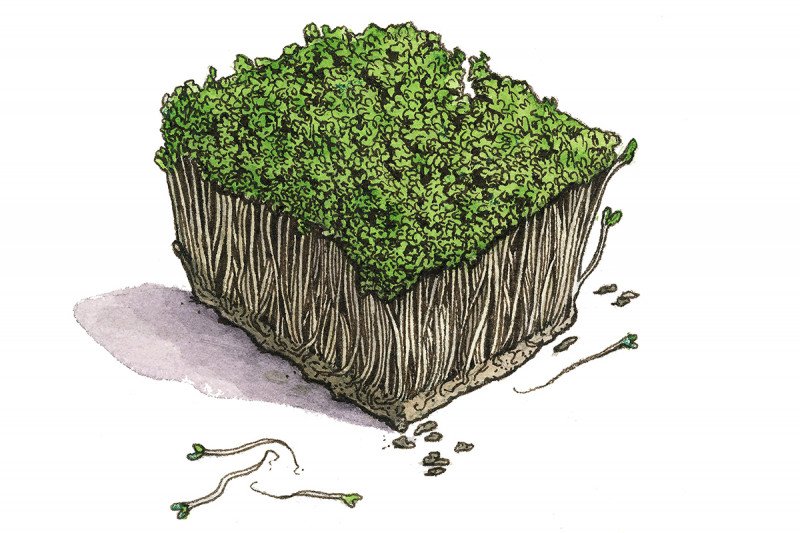
Broccoli sprouts are young broccoli plants that are rich in glucoraphanin, a precursor of sulforaphane. Sulforaphane has been shown in vitro studies to have anticancer effects against prostate (1), breast (2) (3), and urinary cancers (4). It may also protect the skin from ultraviolet radiation (5).
Consumption of broccoli sprouts was found to help reduce Helicobacter pylori induced gastritis (6) (7), protect against oxidative stress-induced upper airway disease (8) and against oxidative DNA damage (9). Glucoraphanin extracted from broccoli sprouts may play a role in the excretion of environmental toxicants (10). A small Phase I study in healthy volunteers found broccoli sprout extract to be safe and well tolerated (11). Further research is warranted.
No adverse effects have been reported with consumption of broccoli sprouts.
Purported Uses
- Cancer prevention
- Cancer treatment
- Bacterial Infections
Constituents
- Glucosinolates
- Isothiocyanates: Sulforophane
- Sulfides
- Polyphenols
- Carotenoids
(12)
Mechanism of Action
Glucoraphanin is converted in the gut to sulforaphane, an isothiocyanate, by the action of myrosinase enzymes from the plants. Sulforaphane blocks the initiation stage in carcinogenesis by inhibiting enzymes that convert procarcinogens to carcinogens and by inducing phase 2 enzymes that detoxify carcinogens and facilitate their excretion from the body. Induction of phase 2 enzymes is done via anti-oxidant response element (ARE)-driven gene expression whose targets include NAD(P)H:quinone reductase (NQO1), heme oxygenase 1 (HO1) and gamma-glutamylcysteine synthetase (ã-GCS), a rate-limiting enzyme in glutathione (GSH) synthesis. These genes are regulated by nuclear factor E2-factor related factor (Nrf2) (13). Sulforaphane also suppresses cancer development through various molecular targets. It induces G2/M cell cycle arrest suppressing proliferation via cyclin-dependent kinases (CDKs) and triggers dose-dependent apoptosis via death-receptor caspase cascades or the mitochondrial caspase cascades. Also, sulforaphane inhibits histone deacetylase (HDAC) by its metabolites in vitro (13).
Pharmacokinetics
Upon oral administration, broccoli sprout extract is absorbed rapidly reaching peak plasma concentration after 1 hour (4). The half-life of the sprouts is 1.77±0.13 hours. The primary metabolite is sulforaphane-N-acetylcysteine (SFN-NAC) and is excreted in urine (13). It is completely cleared from the body within 72 hours (13). The bioavailability of sulforaphane varies greatly between individuals (10).
Literature Summary and Critique
In vitro studies indicate anticancer effects of broccoli sprouts, but human studies have yet to be conducted.
References
- Abdulah R, Faried A, Kobayashi K, et al. Selenium enrichment of broccoli sprout extract increases chemosensitivity and apoptosis of LNCaP prostate cancer cells. BMC Cancer. 2009;9:414.
- Li Y, Zhang T, Korkaya H, et al. Sulforaphane, a dietary component of broccoli/broccoli sprouts, inhibits breast cancer stem cells. Clin Cancer Res. 2010;16(9):2580-2590.
- Fahey JW, Haristoy X, Dolan PM, et al. Sulforaphane inhibits extracellular, intracellular, and antibiotic-resistant strains of Helicobacter pylori and prevents benzo[a]pyrene-induced stomach tumors. Proc Natl Acad Sci U S A. May 28 2002;99(11):7610-7615.
- Munday R, Mhawech-Fauceglia P, Munday CM, et al. Inhibition of urinary bladder carcinogenesis by broccoli sprouts. Cancer Res. Mar 1 2008;68(5):1593-1600.
- Talalay P, Fahey JW, Healy ZR, et al. Sulforaphane mobilizes cellular defenses that protect skin against damage by UV radiation. Proc Natl Acad Sci U S A. Oct 30 2007;104(44):17500-17505.
- Moon JK, Kim JR, Ahn YJ, Shibamoto T. Analysis and anti-Helicobacter activity of sulforaphane and related compounds present in broccoli ( Brassica oleracea L.) sprouts. J Agric Food Chem. Jun 9 2010;58(11):6672-6677.
- Yanaka A, Fahey JW, Fukumoto A, et al. Dietary sulforaphane-rich broccoli sprouts reduce colonization and attenuate gastritis in Helicobacter pylori-infected mice and humans.Cancer Prev Res (Phila Pa). Apr 2009;2(4):353-360.
- Riedl MA, Saxon A, Diaz-Sanchez D. Oral sulforaphane increases Phase II antioxidant enzymes in the human upper airway. Clin Immunol. 2009;130(3):244-251.
- Hoelzl C, Glatt H, Meinl W, et al. Consumption of Brussels sprouts protects peripheral human lymphocytes against 2-amino-1-methyl-6-phenylimidazo[4,5-b]pyridine (PhIP) and oxidative DNA-damage: results of a controlled human intervention trial. Mol Nutr Food Res. 2008;52(3):330-341.
- Kensler TW, Chen JG, Egner PA, et al. Effects of glucosinolate-rich broccoli sprouts on urinary levels of aflatoxin-DNA adducts and phenanthrene tetraols in a randomized clinical trial in He Zuo township, Qidong, People's Republic of China. Cancer Epidemiol Biomarkers Prev. 2005;14(11 Pt 1):2605-2613.
- Shapiro TA, Fahey JW, Dinkova-Kostova AT, et al. Safety, tolerance, and metabolism of broccoli sprout glucosinolates and isothiocyanates: a clinical phase I study. Nutr Cancer. 2006;55(1):53-62.
- Park EJ, Pezzuto JM. Botanicals in cancer chemoprevention. Cancer Metastasis Rev. 2002;21(3-4):231-255.
- Clarke JD, Dashwood RH, Ho E. Multi-targeted prevention of cancer by sulforaphane. Cancer Lett. 2008;269(2):291-304.
Consumer Information
How It Works
Bottom Line: Broccoli sprouts contain compounds that have anticancer effects. Further studies are warranted.
Broccoli sprouts are young broccoli plants. They contain compounds with strong chemopreventive effects. Small studies in humans suggest that broccoli sprouts can help to eliminate environmental toxins, protect against bacterial infections and against oxidative damage. More research is needed to confirm these effects.
Purported Uses
- Cancer Prevention
Studies done in the lab and in animals have shown that broccoli sprouts contains sulforaphane, which has strong anticancer properties. In a study conducted in humans, broccoli sprouts were found to play a role in eliminating cancer-causing chemicals. Large scale studies are needed to confirm such effects.
- Bacterial Infections
Small studies in humans suggest that broccoli sprouts may help reduce inflammation of the stomach caused by the bacterium Helicobacter pylori.
Research Evidence
Laboratory studies show that broccoli sprouts have anticancer effects, but human studies have yet to be conducted.
Last updated: March 20, 2012
administration (ad-MIH-nih-STRAY-shun)
In medicine, the act of giving a treatment, such as a drug, to a patient. It can also refer to the way it is given, the dose, or how often it is given.
Source: The National Cancer Institute's Dictionary of Cancer Terms
(http://www.cancer.gov/dictionary)
apoptosis (A-pop-TOH-sis)
A type of cell death in which a series of molecular steps in a cell leads to its death. This is the body’s normal way of getting rid of unneeded or abnormal cells. The process of apoptosis may be blocked in cancer cells. Also called programmed cell death.
Source: The National Cancer Institute's Dictionary of Cancer Terms
(http://www.cancer.gov/dictionary)
breast (brest)
Glandular organ located on the chest. The breast is made up of connective tissue, fat, and breast tissue that contains the glands that can make milk. Also called mammary gland.
Source: The National Cancer Institute's Dictionary of Cancer Terms
(http://www.cancer.gov/dictionary)
broccoli sprout extract (BRAH-kuh-lee … EK-strakt)
A substance being studied in the prevention of cancer. Broccoli sprout extract comes from newly sprouted broccoli. It causes cells to make enzymes that may protect them against cancer-causing toxins in the body, and it may also block the growth of cancer cells.
Source: The National Cancer Institute's Dictionary of Cancer Terms
(http://www.cancer.gov/dictionary)
cancer (KAN-ser)
A term for diseases in which abnormal cells divide without control and can invade nearby tissues. Cancer cells can also spread to other parts of the body through the blood and lymph systems. There are several main types of cancer. Carcinoma is a cancer that begins in the skin or in tissues that line or cover internal organs. Sarcoma is a cancer that begins in bone, cartilage, fat, muscle, blood vessels, or other connective or supportive tissue. Leukemia is a cancer that starts in blood-forming tissue such as the bone marrow, and causes large numbers of abnormal blood cells to be produced and enter the blood. Lymphoma and multiple myeloma are cancers that begin in the cells of the immune system. Central nervous system cancers are cancers that begin in the tissues of the brain and spinal cord. Also called malignancy.
Source: The National Cancer Institute's Dictionary of Cancer Terms
(http://www.cancer.gov/dictionary)
cell (sel)
The individual unit that makes up the tissues of the body. All living things are made up of one or more cells.
Source: The National Cancer Institute's Dictionary of Cancer Terms
(http://www.cancer.gov/dictionary)
concentration (KON-sen-TRAY-shun)
In science, the amount of a substance, such as a salt, that is in a certain amount of tissue or liquid, such as blood. A substance becomes more concentrated when less water is present. For example, the salt in urine may become more concentrated when a person doesn’t drink enough water.
Source: The National Cancer Institute's Dictionary of Cancer Terms
(http://www.cancer.gov/dictionary)
DNA
The molecules inside cells that carry genetic information and pass it from one generation to the next. Also called deoxyribonucleic acid.
Source: The National Cancer Institute's Dictionary of Cancer Terms
(http://www.cancer.gov/dictionary)
dose-dependent (dose-deh-PEN-dent)
Refers to the effects of treatment with a drug. If the effects change when the dose of the drug is changed, the effects are said to be dose-dependent.
Source: The National Cancer Institute's Dictionary of Cancer Terms
(http://www.cancer.gov/dictionary)
extract (EK-strakt)
In medicine, a preparation of a substance obtained from plants, animals, or bacteria and used as a drug or in drugs.
Source: The National Cancer Institute's Dictionary of Cancer Terms
(http://www.cancer.gov/dictionary)
gastritis (gas-TRY-tis)
Inflammation of the lining of the stomach.
Source: The National Cancer Institute's Dictionary of Cancer Terms
(http://www.cancer.gov/dictionary)
histone (HIS-tone)
A type of protein found in chromosomes. Histones bind to DNA, help give chromosomes their shape, and help control the activity of genes.
Source: The National Cancer Institute's Dictionary of Cancer Terms
(http://www.cancer.gov/dictionary)
in vitro (in VEE-troh)
In the laboratory (outside the body). The opposite of in vivo (in the body).
Source: The National Cancer Institute's Dictionary of Cancer Terms
(http://www.cancer.gov/dictionary)
inflammation (IN-fluh-MAY-shun)
Redness, swelling, pain, and/or a feeling of heat in an area of the body. This is a protective reaction to injury, disease, or irritation of the tissues.
Source: The National Cancer Institute's Dictionary of Cancer Terms
(http://www.cancer.gov/dictionary)
metabolite (meh-TA-boh-lite)
A substance made or used when the body breaks down food, drugs or chemicals, or its own tissue (for example, fat or muscle tissue). This process, called metabolism, makes energy and the materials needed for growth, reproduction, and maintaining health. It also helps get rid of toxic substances.
Source: The National Cancer Institute's Dictionary of Cancer Terms
(http://www.cancer.gov/dictionary)
oral (OR-ul)
By or having to do with the mouth.
Source: The National Cancer Institute's Dictionary of Cancer Terms
(http://www.cancer.gov/dictionary)
plasma (PLAZ-muh)
The clear, yellowish, fluid part of the blood that carries the blood cells. The proteins that form blood clots are in plasma.
Source: The National Cancer Institute's Dictionary of Cancer Terms
(http://www.cancer.gov/dictionary)
radiation (RAY-dee-AY-shun)
Energy released in the form of particle or electromagnetic waves. Common sources of radiation include radon gas, cosmic rays from outer space, medical x-rays, and energy given off by a radioisotope (unstable form of a chemical element that releases radiation as it breaks down and becomes more stable).
Source: The National Cancer Institute's Dictionary of Cancer Terms
(http://www.cancer.gov/dictionary)
stomach (STUH-muk)
An organ that is part of the digestive system. The stomach helps digest food by mixing it with digestive juices and churning it into a thin liquid.
Source: The National Cancer Institute's Dictionary of Cancer Terms
(http://www.cancer.gov/dictionary)
urinary (YOOR-ih-NAYR-ee)
Having to do with urine or the organs of the body that produce and get rid of urine.
Source: The National Cancer Institute's Dictionary of Cancer Terms
(http://www.cancer.gov/dictionary)
urine (YOOR-in)
Fluid containing water and waste products. Urine is made by the kidneys, stored in the bladder, and leaves the body through the urethra.
Source: The National Cancer Institute's Dictionary of Cancer Terms
(http://www.cancer.gov/dictionary)