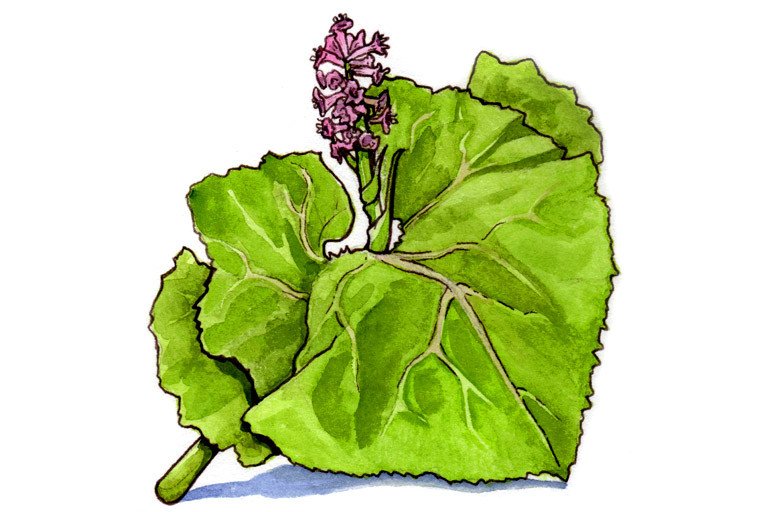
Common Names
- Butterbur
- Butter dock
- Bog rhubarb
- Exwort
- pestilence wort
- Devil's hat
For Patients & Caregivers
Tell your healthcare providers about any dietary supplements you’re taking, such as herbs, vitamins, minerals, and natural or home remedies. This will help them manage your care and keep you safe.
Butterbur extracts have been shown effective in the treatment of migraines and allergies.
Butterbur is an herb native to Europe, Southwestern Asia, and North Africa. It has been used to treat allergies, asthma, headache, and muscle spasms. Butterbur was shown in clinical studies to be effective for migraines, allergic rhinitis (inflammation of the mucus membranes of nose marked by runny nose, congestion, itching, and sneezing) and asthma.
Butterbur contains compounds known as pyrrolizidine alkaloids that can cause liver toxicity.
- Allergic rhinitis
Butterbur was shown to have benefits for allergic rhinitis. - Migraine
Current evidence indicates that butterbur extract is effective against migraine. - Asthma
A few studies showed that butterbur may benefit those with asthma.
Do Not Take if:
- You are hypersensitive to butterbur.
- You have liver disease or dysfunction because some compounds present in butterbur can be damaging to the liver.
For Healthcare Professionals
Butterbur is an herb native to Europe, Southwestern Asia, and North Africa, the leaf and root extracts of which have been used to treat allergies, bronchial asthma, headache, pain, and muscle and urinary tract spasms.
Petasins, the sesquiterpene compounds found in butterbur, are thought to be the active constituents (1) (2) (3). Its leaf and root extracts have been shown effective in controlling migraines in adults and in children (4) (5) (6) (17) (19) (23) and asthma (7). Butterbur extract may also be effective against somatoform disorders (20). However, results from studies on allergic diseases are mixed. Some suggest that butterbur is effective against allergic rhinitis (24) and comparable to standard antihistamine drugs (8) (9) (10), but conflicting data indicate that it is no better than placebo for intermittent rhinitis (11) or for allergic skin disease (12). A systematic review suggests the need for more rigorous studies before recommending use of butterbur (13).
Butterbur contains pyrrolizidine alkaloids that can cause hepatotoxicity (14).
- Allergic rhinitis
- Asthma
- Migraine
Sesquiterpene petasin inhibits leukotriene and histamine activities, and is thought responsible for butterbur’s anti-inflammatory and antiallergic effects (15). Petasins were also shown to have calcium channel blocking effects (18) making them effective for migraine prophylaxis (1). The vasorelaxation effects of petasin may be via direct Ca(2+) antagonism of L-type voltage-dependent Ca(2+) channel (VDCC) in vascular smooth muscle (21).
In another study, a butterbur extract showed dose-dependent inhibition effect on cyclooxygenase (COX2) and prostaglandin E2 in vitro that was not correlated to the petasin content (16).
- Hypersensitivity to butterbur
- Patients with liver disease or dysfunction should avoid raw butterbur extract with pyrrolizidine alkaloids due to potential for hepatotoxicity (14).