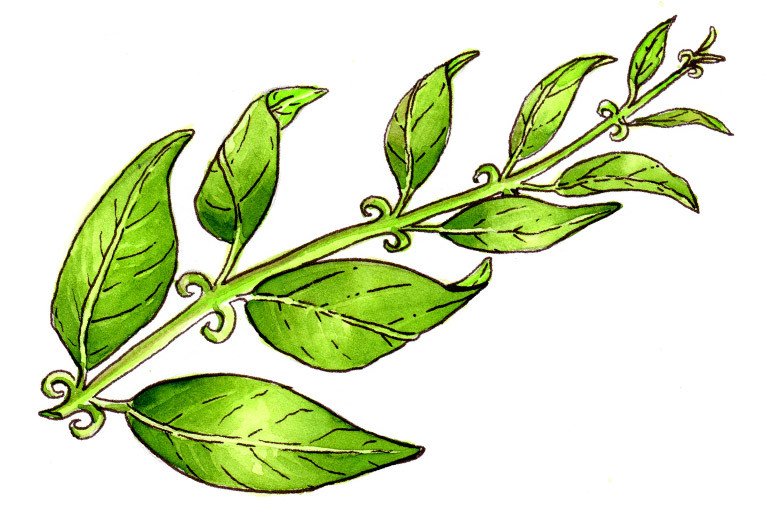
Common Names
- Una de gato
- Saventaro
- Life-giving vine of Peru
- Hawk's claw
For Patients & Caregivers
Tell your healthcare providers about any dietary supplements you’re taking, such as herbs, vitamins, minerals, and natural or home remedies. This will help them manage your care and keep you safe.
Cat's claw has not been shown to be effective for cancer or AIDS.
Cat's claw is a vine native to South America, the bark of which has been used in traditional medicine to treat various conditions such as gastric and inflammatory disorders. It is marketed as a dietary supplement to support the body's natural defenses, for digestive and joint health, and as a general health tonic.
In lab experiments, compounds from cat's claw stimulated specific immune cells known as phagocytes and T-helper cells. Other lab studies suggest cat’s claw may enhance DNA repair, or reduce inflammation and some chemotherapy side effects. However, one lab study showed it may actually stimulate pediatric leukemia cells.
Data in humans are limited, and studies on safety and effectiveness for any condition are needed.
- To treat arthritis
A small study of a highly purified extract suggested modest benefit in patients with active rheumatoid arthritis, but larger well-designed studies are needed. - To reduce chemotherapy side effects
Small studies suggest cat's claw may protect against abnormally low white blood cell counts in patients receiving certain cancer treatments. It may also improve quality of life in those with advanced cancer. However, additional studies are needed. - To treat cancer
Lab studies suggest cat's claw might inhibit certain cancer cells, although one study suggests it may also stimulate pediatric leukemia cells. Human data are lacking. - To treat gastrointestinal disorders
Lab studies suggest cat's claw may reduce inflammation, but this has not been studied in humans. - To treat HIV and AIDS
Lab studies suggest cat's claw can stimulate specific immune cells, but human studies are needed.
- Nausea, diarrhea, stomach discomfort
Case reports
- Kidney failure in a patient with lupus
- Worsening movement in a patient with Parkinson’s disease
Do Not Take if:
- You are taking warfarin or other blood thinners: Cat's claw may increase bruising and bleeding risk. Clinical relevance is not known.
- You are taking antiretroviral drugs: Case reports have shown that cat's claw increases serum concentrations of atazanavir, ritonavir, and saquinavir, and can therefore increase their side effects.
- You are taking CYP 3A4 or 2J2 substrate drugs: Cat's claw may alter the effect of drugs metabolized by these enzymes. Clinical relevance is not known.
- You are taking UGT 1A3 or 1A9 substrate drugs: Cat's claw may alter the effect of drugs metabolized by these enzymes. Clinical relevance is not known.
For Healthcare Professionals
Cat’s claw is a vine native to South America, the bark of which has been used in traditional medicine to treat various conditions such as gastric and inflammatory disorders (1). It is marketed as a dietary supplement to support the body’s natural defenses, for digestive and joint health, and as a general health tonic.
In vitro studies suggest some of the plant constituents have antiviral, antimutagenic, anti-inflammatory, and immunomodulatory properties, and may enhance phagocytosis (1) (2) (3) (4) (5) (6). Anticancer effects have also been observed (8) (9) (10) (11) (12), and bioassays suggest cat’s claw may increase neutrophil count (13).
Data in humans are limited. Small studies suggest cat’s claw may be helpful for active rheumatoid arthritis (14) and denture stomatitis (31). It also reduced chemotherapy adverse effects in a study of breast cancer patients (15), and improved quality of life in patients with advanced cancer (32). However preclinical data of a cat’s claw extract showed it could stimulate survival of pediatric leukemic cells (16). Therefore, larger studies evaluating safety and efficacy are needed.
- AIDS
- Arthritis
- Cancer
- Chemotherapy side effects
- GI disorders
Oxindole alkaloids in cat’s claw have immunostimulating properties in vitro, increasing phagocytotic activity and synthesis of WBCs (5) and enhancing T-helper cell function (2). Inhibition of TNFα production (3) (4) has been linked to observed anti-inflammatory activities. Mitraphylline isolated from cat’s claw was also identified as possessing anti-inflammatory effects by inhibiting release of IL1α, 1β, 4, 17, and TNFα (21).
In other preclinical studies, aqueous extracts enhanced DNA repair after chemically-induced damage (22). Protection against oxidative DNA damage following UVB exposure may occur via enhanced base excision repair and inherent antioxidant effects (23). The biphasic manner in which cat’s claw modulates anxiety, initially inducing and then reversing the effect after long-term administration, is attributed to the presence of alkaloids and flavonols (18).
The quinovic acid glycoside purified fraction of cat’s claw inhibited human bladder cancer cells via NF-κB modulation to induce apoptosis (20). Cat’s claw also inhibited lactate dehydrogenase-A, an enzyme highly expressed in malignant and treatment-resistant tumors with poor clinical outcomes (24). In vivo studies demonstrated antineoplastic effects against breast tumors due to modulation of oxidative stress and synergy among constituents with antioxidant properties, rather than alkaloid activity (12).
Anticoagulants, antihypertensives: May increase effects of cardiovascular drugs, including increased bleeding risk (25) (28). Clinical relevance is not known.
Antiretrovirals: Cat’s claw increased serum concentrations of atazanavir, ritonavir, and saquinavirn in an AIDS patient (30). Data from 28 pharmacokinetic studies and case series/reports also indicate that cat’s claw significantly increases levels of antiretrovirals (34).
CYP450 substrates: In vitro, cat’s claw inhibits CYP3A4 and may increase the serum levels of drugs such as nonnucleoside reverse-transcriptase inhibitors, cyclosporine, and some benzodiazepines (29). Other data suggest a cat’s claw extract could induce 2J2 (33). Clinical relevance is not known.
UGT substrates: A cat’s claw extract induced UGT1A3 and 1A9 and may alter the effect of drugs metabolized by these enzymes (33). Clinical relevance is not known.