Health Care Professional Information
Common Name
Una de gato, life-giving vine of Peru, hawk’s claw
Clinical Summary
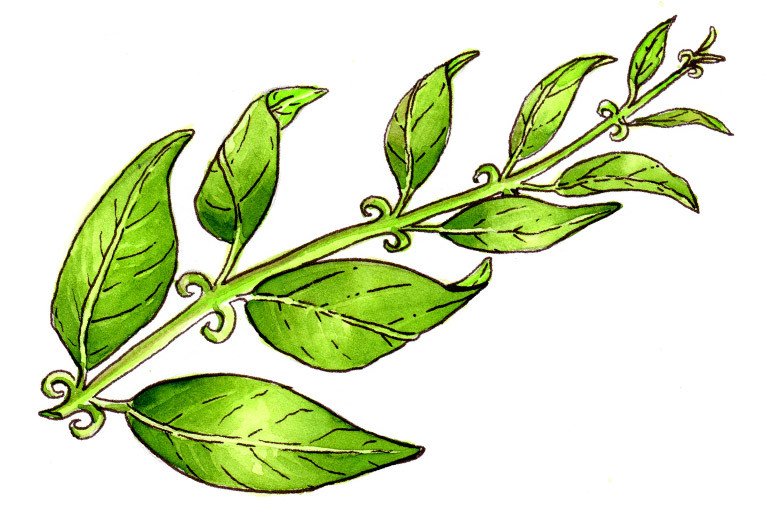
Cat's claw is a vine native to South America, the bark of which has been used in traditional medicine to treat diseases. It is also a very popular immune-enhancing supplement. In vitro studies show that the alkaloids from Cat's claw enhance phagocytosis, display immunomodulatory properties, alleviate inflammation, and possess anti-viral activity (1) (2) (3) (4) (5).
Cat's claw demonstrated anticancer effects against several cancer cell lines (6) (7) (17) (18). However, no human studies have been conducted to evaluate its efficacy.
Reported adverse reactions include hypotension and diarrhea. An additive effect with anticoagulants or hypotensives is possible (8).
Purported Uses
- Cancer treatment
- GI disorders
- AIDS
- Inflammation
Constituents
- Oxindole alkaloids: Isopteropodine, pteropodine, rhynchophylline, mytraphylline, speciphylline
- Indole alkaloidal glucosides: Cadambine, 3-dihydrocadambine, and 3-isodihydrocadambine
- Hirsutine
- Quinovic acid glycosides
- Tannins
- Polyphenols
- Catechins
- Beta sitosterol
(9) (10)
Mechanism of Action
The oxindole alkaloids are claimed to have immunostimulating properties in vitro, increasing phagocytotic activity and synthesis of WBCs (4) and enhancing T-helper cell function (1). The major alkaloid, rhynchophylline, is claimed to be anti-hypertensive; it relaxes the endothelial cells of blood vessels, dilates peripheral blood vessels, inhibits sympathetic nervous system activities, and lowers the heart rate and blood cholesterol. The alkaloid mytraphylline has diuretic properties, and hirsutine inhibits urinary bladder contractions and possesses local anesthetic (4) (11) (12). The anti-inflammatory activity may be caused by the inhibition of TNF-alpha production (2) (3). Uncaria tomentosa water extracts have been shown to enhance DNA repair after chemical-induced damage (13).
Adverse Reactions
Common: May cause diarrhea and lower blood pressure.
Case report: Acute renal failure was observed in a patient with systemic lupus erythematosus (SLE) (14).
Case report: Worsening of motor signs in a 38-year-old patient with Parkinson disease has been reported after oral intake of cat's claw extract. But the symptoms improved following withdrawal of cat's claw use (16).
Herb-Drug Interactions
Cytochrome P450 substrates: Cat's claw inhibits CYP3A4 in vitro indicating that it may increase the serum levels of drugs such as nonnucleoside reverse-transcriptase inhibitors, cyclosporine, and some benzodiazepines (8).
Protease Inhibitors: Cat's claw was shown to increase the serum concentrations of atazanavir, ritonavir and saquinavir (15).
Literature Summary and Critique
The safety and efficacy of Cat's claw have not been evaluated in humans.
Dosage (Inside MSKCC Only)
This field is only visible to only Inside MSKCC users.
References
- Riva L, et al. The antiproliferative effects of Uncaria tomentosa extracts and fractions on the growth of breast cancer cell line. Anticancer Res 2001;21:2457-61.
- Sandoval M, et al. Cat's claw inhibits TNFalpha production and scavenges free radicals: role in cytoprotection. Free Radic Biol Med 2000;29:71-8.
- Sandoval M, et al. Anti-inflammatory and antioxidant activities of cat's claw (Uncaria tomentosa and Uncaria guianensis) are independent of their alkaloid content. Phytomedicine 2002;9:325-37.
- Sheng Y, Bryngelsson C, Pero R. Enhanced DNA repair, immune function and reduced toxicity of C-MED-100, a novel aqueous extract from Uncaria tomentosa. J Ethnopharmacol 2000;69:115-26.
- Reis SR, Valente LM, Sampaio AL, et al. Immunomodulating and antiviral activities of Uncaria tomentosa on human monocytes infected with Dengue Virus-2. Int Immunopharmacol. Mar 2008;8(3):468-476.
- Garcia Prado E, Garcia Gimenez MD, De la Puerta Vazquez R, Espartero Sanchez JL, Saenz Rodriguez MT. Antiproliferative effects of mitraphylline, a pentacyclic oxindole alkaloid of Uncaria tomentosa on human glioma and neuroblastoma cell lines. Phytomedicine. Apr 2007;14(4):280-284.
- Pilarski R, Poczekaj-Kostrzewska M, Ciesiolka D, Szyfter K, Gulewicz K. Antiproliferative activity of various Uncaria tomentosa preparations on HL-60 promyelocytic leukemia cells. Pharmacol Rep. Sep-Oct 2007;59(5):565-572.
- Scott GN, Elmer GW. Update on natural product-drug interactions. Am J Health-Syst Pharm 2002;59:339-47.
- Hemingway SR, Phillipson JD. Proceedings: alkaloids from south American species of Uncaria (Rubiaceae). J Pharm Pharmacol 1974;26(suppl):113.
- Wirth C, et al. Pharmacologically active procyanidines from the bark of Uncaria tomentose. Phytomedicine 1997;4:265-6.
- Aquino R, et al. Plant metabolites: New compounds and anti-inflammatory activity of Uncaria tomentosa. J Nat Prod 1991;54:453-9.
- Rizzi R, et al. Mutagenic and antimutagenic activities of Uncaria tomentosa and its extracts. J Ethnopharmacol 1993;38:63-77.
- Sheng Y, et al. DNA repair of aqueous extracts of Uncaria tomentosa in a human volunteer study. Phytomedicine 2001;8:275-82.
- Hilepo JN, et al. Acute renal failure caused by 'cat's claw' herbal remedy in a patient with systemic lupus erythematosus. Nephron 1997;77:361.
- López Galera RM, Ribera Pascuet E, et al. Interaction between cat's claw and protease inhibitors atazanavir, ritonavir and saquinavir. Eur J Clin Pharmacol. 2008 Dec;64(12):1235-6.
- Cosentino C, Torres L. Reversible worsening of Parkinson disease motor symptoms after oral intake of Uncaria tomentosa (cat's claw). Clin Neuropharmacol. 2008 Sep-Oct;31(5):293-4.
- Rinner B, Li ZX, Haas H, et al. Antiproliferative and pro-apoptotic effects of Uncaria tomentosa in human medullary thyroid carcinoma cells. Anticancer Res. 2009 Nov;29(11):4519-28.
- García Giménez D, García Prado E, Sáenz Rodríguez T, et al. Cytotoxic effect of the pentacyclic oxindole alkaloid mitraphylline isolated from Uncaria tomentosa bark on human Ewing sarcoma and breast cancer cell lines. Planta Med. 2010 Feb;76(2):133-6.
Consumer Information
How It Works
Bottom Line: Cat's claw may stimulate the body's immune system but it has not been shown to be an effective treatment for cancer or HIV.
In laboratory experiments, compounds found in cat's claw stimulate the activity of specific immune cells (phagocytes and T-helper cells). It also lowers blood pressure by relaxing the cells that line blood vessels and inhibiting the excitatory effect that the sympathetic nervous system (the “fight or flight” response) has on the heart and blood vessels. These extracts are also able to 1) slow some of the processes that cause inflammation and 2) enhance the repair of DNA in the laboratory setting. However, it is not known if these effects occur in the human body.
Purported Uses
- To treat cancer
Cat's claw inhibits the growth of certain cancer cells in the labs. Human data are lacking.
- To treat gastrointestinal disorders
Laboratory studies suggest that cat's claw may reduce inflammation. This has not been studied in humans.
- To treat HIV and AIDS
Laboratory studies suggest that cat's claw can stimulate the activity of specific immune cells. Human studies are needed.
Do Not Take If
- You are taking medication to lower your blood pressure (Cat's claw can have additive effects).
- You are taking warfarin or other blood thinners (Cat's claw may increase the risk of bruising and bleeding).
- You are taking drugs that are substrates of Cytochrome P450 3A4 (Cat's claw may increase the risk of side effects of these drugs).
- You are taking Protease Inhibitors (Cat's claw was shown to increase the serum concentrations of atazanavir, ritonavir and saquinavir and can increase their side effects).
Side Effects
- Diarrhea
- Low blood pressure
- Case report: Acute renal failure was observed in a patient with systemic lupus erythematosus (SLE).
Case report: Worsening of motor signs in a 38-year-old patient with Parkinson disease has been reported after oral intake of cat's claw extract. But the symptoms improved following withdrawal of cat's claw use.
Last updated: March 27, 2012
acute (uh-KYOOT)
Symptoms or signs that begin and worsen quickly; not chronic.
Source: The National Cancer Institute's Dictionary of Cancer Terms
(http://www.cancer.gov/dictionary)
alkaloid (AL-kuh-loyd)
A member of a large group of substances found in plants and in some fungi. Alkaloids contain nitrogen and can be made in the laboratory. Nicotine, caffeine, codeine, and vincristine are alkaloids. Some alkaloids, such as vincristine, are used to treat cancer.
Source: The National Cancer Institute's Dictionary of Cancer Terms
(http://www.cancer.gov/dictionary)
anesthetic (A-nes-THEH-tik)
A drug or other substance that causes a loss of feeling or awareness. Local anesthetics cause a loss of feeling in one small area of the body. Regional anesthetics cause a loss of feeling in a part of the body, such as an arm or leg. General anesthetics cause a loss of feeling and a complete loss of awareness that feels like a very deep sleep.
Source: The National Cancer Institute's Dictionary of Cancer Terms
(http://www.cancer.gov/dictionary)
anti-inflammatory (AN-tee-in-FLA-muh-TOR-ee)
Having to do with reducing inflammation.
Source: The National Cancer Institute's Dictionary of Cancer Terms
(http://www.cancer.gov/dictionary)
bladder (BLA-der)
The organ that stores urine.
Source: The National Cancer Institute's Dictionary of Cancer Terms
(http://www.cancer.gov/dictionary)
blood (blud)
A tissue with red blood cells, white blood cells, platelets, and other substances suspended in fluid called plasma. Blood takes oxygen and nutrients to the tissues, and carries away wastes.
Source: The National Cancer Institute's Dictionary of Cancer Terms
(http://www.cancer.gov/dictionary)
blood pressure (blud PREH-sher)
The force of circulating blood on the walls of the arteries. Blood pressure is taken using two measurements: systolic (measured when the heart beats, when blood pressure is at its highest) and diastolic (measured between heart beats, when blood pressure is at its lowest). Blood pressure is written with the systolic blood pressure first, followed by the diastolic blood pressure (for example 120/80).
Source: The National Cancer Institute's Dictionary of Cancer Terms
(http://www.cancer.gov/dictionary)
cancer (KAN-ser)
A term for diseases in which abnormal cells divide without control and can invade nearby tissues. Cancer cells can also spread to other parts of the body through the blood and lymph systems. There are several main types of cancer. Carcinoma is a cancer that begins in the skin or in tissues that line or cover internal organs. Sarcoma is a cancer that begins in bone, cartilage, fat, muscle, blood vessels, or other connective or supportive tissue. Leukemia is a cancer that starts in blood-forming tissue such as the bone marrow, and causes large numbers of abnormal blood cells to be produced and enter the blood. Lymphoma and multiple myeloma are cancers that begin in the cells of the immune system. Central nervous system cancers are cancers that begin in the tissues of the brain and spinal cord. Also called malignancy.
Source: The National Cancer Institute's Dictionary of Cancer Terms
(http://www.cancer.gov/dictionary)
cell (sel)
The individual unit that makes up the tissues of the body. All living things are made up of one or more cells.
Source: The National Cancer Institute's Dictionary of Cancer Terms
(http://www.cancer.gov/dictionary)
cholesterol (koh-LES-teh-rol)
A waxy, fat-like substance made in the liver, and found in the blood and in all cells of the body. Cholesterol is important for good health and is needed for making cell walls, tissues, hormones, vitamin D, and bile acid. Cholesterol also comes from eating foods taken from animals such as egg yolks, meat, and whole-milk dairy products. Too much cholesterol in the blood may build up in blood vessel walls, block blood flow to tissues and organs, and increase the risk of developing heart disease and stroke.
Source: The National Cancer Institute's Dictionary of Cancer Terms
(http://www.cancer.gov/dictionary)
cyclosporine (SY-kloh-SPOR-een)
A drug used to help reduce the risk of rejection of organ and bone marrow transplants by the body. It is also used in clinical trials to make cancer cells more sensitive to anticancer drugs.
Source: The National Cancer Institute's Dictionary of Cancer Terms
(http://www.cancer.gov/dictionary)
diarrhea (dy-uh-REE-uh)
Frequent and watery bowel movements.
Source: The National Cancer Institute's Dictionary of Cancer Terms
(http://www.cancer.gov/dictionary)
diuretic (DY-yoo-REH-tik)
A drug that increases the production of urine.
Source: The National Cancer Institute's Dictionary of Cancer Terms
(http://www.cancer.gov/dictionary)
DNA
The molecules inside cells that carry genetic information and pass it from one generation to the next. Also called deoxyribonucleic acid.
Source: The National Cancer Institute's Dictionary of Cancer Terms
(http://www.cancer.gov/dictionary)
efficacy (EH-fih-kuh-see)
Effectiveness. In medicine, the ability of an intervention (for example, a drug or surgery) to produce the desired beneficial effect.
Source: The National Cancer Institute's Dictionary of Cancer Terms
(http://www.cancer.gov/dictionary)
extract (EK-strakt)
In medicine, a preparation of a substance obtained from plants, animals, or bacteria and used as a drug or in drugs.
Source: The National Cancer Institute's Dictionary of Cancer Terms
(http://www.cancer.gov/dictionary)
GI
Refers to the stomach and intestines. Also called gastrointestinal.
Source: The National Cancer Institute's Dictionary of Cancer Terms
(http://www.cancer.gov/dictionary)
hypotension (HY-poh-TEN-shun)
Abnormally low blood pressure.
Source: The National Cancer Institute's Dictionary of Cancer Terms
(http://www.cancer.gov/dictionary)
in vitro (in VEE-troh)
In the laboratory (outside the body). The opposite of in vivo (in the body).
Source: The National Cancer Institute's Dictionary of Cancer Terms
(http://www.cancer.gov/dictionary)
inflammation (IN-fluh-MAY-shun)
Redness, swelling, pain, and/or a feeling of heat in an area of the body. This is a protective reaction to injury, disease, or irritation of the tissues.
Source: The National Cancer Institute's Dictionary of Cancer Terms
(http://www.cancer.gov/dictionary)
L
A measure of volume for a liquid, using the metric system. One L is equal to 1,000 cubic centimeters (cc), 1,000 milliliters (mm), or 1.0567 quarts (qt). Also called liter.
Source: The National Cancer Institute's Dictionary of Cancer Terms
(http://www.cancer.gov/dictionary)
lupus (LOO-pus)
A chronic, inflammatory, connective tissue disease that can affect the joints and many organs, including the skin, heart, lungs, kidneys, and nervous system. It can cause many different symptoms; however, not everyone with lupus has all of the symptoms. Also called SLE and systemic lupus erythematosus.
Source: The National Cancer Institute's Dictionary of Cancer Terms
(http://www.cancer.gov/dictionary)
motor (MOH-ter)
In medicine, having to do with the movement of body parts.
Source: The National Cancer Institute's Dictionary of Cancer Terms
(http://www.cancer.gov/dictionary)
nervous system (NER-vus SIS-tem)
The organized network of nerve tissue in the body. It includes the central nervous system (the brain and spinal cord), the peripheral nervous system (nerves that extend from the spinal cord to the rest of the body), and other nerve tissue.
Source: The National Cancer Institute's Dictionary of Cancer Terms
(http://www.cancer.gov/dictionary)
oral (OR-ul)
By or having to do with the mouth.
Source: The National Cancer Institute's Dictionary of Cancer Terms
(http://www.cancer.gov/dictionary)
Parkinson disease (PAR-kin-sun dih-ZEEZ)
A progressive disorder of the nervous system marked by muscle tremors, muscle rigidity, decreased mobility, stooped posture, slow voluntary movements, and a mask-like facial expression.
Source: The National Cancer Institute's Dictionary of Cancer Terms
(http://www.cancer.gov/dictionary)
peripheral blood (peh-RIH-feh-rul blud)
Blood circulating throughout the body.
Source: The National Cancer Institute's Dictionary of Cancer Terms
(http://www.cancer.gov/dictionary)
renal failure (REE-nul FAYL-yer)
A condition in which the kidneys stop working and are not able to remove waste and extra water from the blood or keep body chemicals in balance. Acute or severe renal failure happens suddenly (for example, after an injury) and may be treated and cured. Chronic renal failure develops over many years, may be caused by conditions like high blood pressure or diabetes, and cannot be cured. Chronic renal failure may lead to total and long-lasting renal failure, called end-stage renal disease (ESRD). A person in ESRD needs dialysis (the process of cleaning the blood by passing it through a membrane or filter) or a kidney transplant. Also called kidney failure.
Source: The National Cancer Institute's Dictionary of Cancer Terms
(http://www.cancer.gov/dictionary)
ritonavir (ry-TOH-nuh-veer)
A drug used to treat infection with HIV (the virus that causes AIDS). It is also being studied in the treatment of some types of cancer. Ritonavir blocks the ability of HIV to make copies of itself and may block the growth of cancer cells. It is a type of anti-HIV agent and a type of protease inhibitor. Also called Norvir.
Source: The National Cancer Institute's Dictionary of Cancer Terms
(http://www.cancer.gov/dictionary)
serum (SEER-um)
The clear liquid part of the blood that remains after blood cells and clotting proteins have been removed.
Source: The National Cancer Institute's Dictionary of Cancer Terms
(http://www.cancer.gov/dictionary)
sympathetic nervous system (SIM-puh-THEH-tik NER-vus SIS-tem)
The part of the nervous system that increases heart rate, blood pressure, breathing rate, and pupil size. It also causes blood vessels to narrow and decreases digestive juices.
Source: The National Cancer Institute's Dictionary of Cancer Terms
(http://www.cancer.gov/dictionary)
systemic (sis-TEH-mik)
Affecting the entire body.
Source: The National Cancer Institute's Dictionary of Cancer Terms
(http://www.cancer.gov/dictionary)
urinary (YOOR-ih-NAYR-ee)
Having to do with urine or the organs of the body that produce and get rid of urine.
Source: The National Cancer Institute's Dictionary of Cancer Terms
(http://www.cancer.gov/dictionary)