Common Names
- Cinder conk
- Birch conk
- Clinker polypore
- Bai Hua Rang
For Patients & Caregivers
Tell your healthcare providers about any dietary supplements you’re taking, such as herbs, vitamins, minerals, and natural or home remedies. This will help them manage your care and keep you safe.
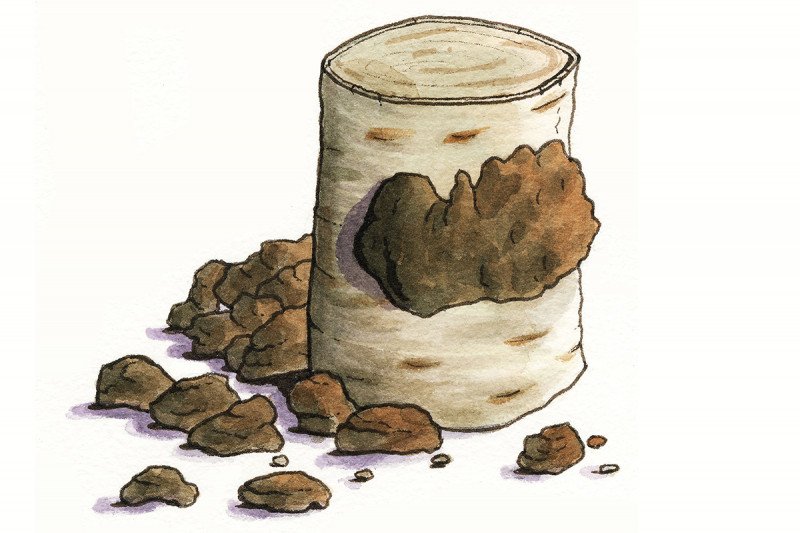
Chaga mushroom is a type of fungus that’s commonly found on birch trees in cold climates. It’s used in folk medicine for various ailments across northern Europe. Chaga mushrooms are edible but because of their bitter taste, most people drink chaga mushroom as a tea.
Chaga mushroom supplements come as tablets, capsules, or powders.
Chaga mushroom is used to:
- Boost the immune system
- Reduce inflammation (swelling)
Chaga also has other uses that haven’t been studied by doctors to see if they work.
It’s generally safe to eat chaga mushroom and drink it as a tea. But talk with your healthcare providers before taking chaga supplements. Herbal supplements are stronger than the herbs you would use in cooking. They can also interact with some medications and affect how they work. For more information, read the “What else do I need to know?” section below.
- There aren’t any reports of side effects from using chaga mushroom.
- Talk with your healthcare provider if you’re taking blood thinners such as warfarin (Coumadin®, Jantoven®). Chaga mushroom may increase your risk of bleeding.
For Healthcare Professionals
Chaga mushroom is commonly found on birch trees in cold climates. It is used as a folk remedy in Russia and other northern European countries to treat various ailments and diseases including cancer. The conk that is used medicinally comprises wood from the substrate tree and mycelium of the invasive fungus (12).
In preclinical studies, chaga showed antitumor (12) (13), anti-mutagenic (9), antiviral (14), antiplatelet (2), antidiabetic (15), antioxidant (8), analgesic (3), immunomodulating (16), anti-inflammatory and pain-relieving (3) (19), anti-allergic (17), cognition-enhancing, and antioxidant effects (18). Oral administration of polysaccharides from chaga increased exercise endurance and biological measures related to fatigue (20) and may also have antidiabetic effects (4) (27).
In addition, chaga extracts and its constituents showed inhibitory and pro-apoptotic effects against colon (5) (21) (22), lung (28) and liver cancer (1) cells, and the active constituent Inotodiol exhibited antitumor activity against cervical cancer cells (23). Chaga has also been shown to induce selective apoptosis in tumor cells without impacting healthy cells (1), and inhibited melanoma in a murine model (7).
But the safety and efficacy of chaga have yet to be evaluated in clinical studies. Because natural reserves of this fungus have nearly been exhausted, scientists are seeking to develop cultivated substitutes of wild chaga (4) (25).
Although chaga is an edible fungus, it is not commonly ingested due to its bitter nature. Instead, tea made from the whole mushroom is consumed.
- Inflammation
- Hepatoprotection
- Immunostimulation
Oxalic, gallic, protocatechuic and p-hydroxybenzoic acids have been identified in chaga extracts (12). In vitro, antidiabetic effects are attributed to terpenoids that inhibit alpha-glucosidase (15). Anti-inflammatory and pain-relieving properties may occur via inhibition of nitric oxide synthase (iNOS) and cyclooxygenase-2 (COX-2) (3). Immunomodulating effects are attributed to Th1/Th2 cytokine secretion in immune cells and regulation of antigen-specific antibody production (16). Anti-quorum sensing activity in chaga conks suggests broader anti-infection attributes beyond immunomodulatory effects (12).
In animal studies, a methanolic extract of chaga produced beneficial effects on learning and memory via decreased malondialdehyde and nitrite levels, decreased acetylcholinesterase activity, and restored glutathione, superoxide dismutase, and acetylcholine levels (18). Antifatigue effects were attributed to polysaccharides from chaga, which increased endurance and glycogen content of liver and muscle in mice, while decreasing blood lactic acid and serum urea nitrogen levels (20). Anti-inflammatory effects in animal colitis models were related to suppression of tumor necrosis factor (TNF)-alpha, iNOS, and interleukin (IL)-1beta (19).
3beta-hydroxy-lanosta-8, 24-dien-21-al, and inotodiol constituents in chaga produce antimutagenic and antioxidative activities (9). Water-soluble lignin derivatives have also been identified as bioactive constituents with anticancer properties (26). A hot-water extract of chaga exhibited inhibitory and proapoptotic actions against colon cancer cells via upregulation of Bax and caspase-3 and downregulation of Bcl-2 (5). Inhibition of colorectal cancer was exerted by the constituent ergosterol via downregulation of the beta-catenin pathway (21). Inotodiol, a triterpenoid isolated from chaga, inhibited proliferation of cervical cancer cells and induced apoptosis in vitro via increased Bax expression, decreased Bcl-2, cyclin E downregulation, and p27 up-regulation (23). Aqueous extracts of chaga inhibited growth of human hepatoma cells via G0/G1 phase cell-cycle arrest and selective apoptotic induction (1). Other apoptotic characteristics can induce caspase cleavage and nuclear fragmentation (7).
- Oxalate nephropathy: In a 72-year-old woman with liver cancer after ingesting chaga mushroom powder (4-5 teaspoons daily for 6 months). Hemodialysis was required but renal function did not recover (24). In a 69-year-old man after consuming chaga mushroom powder (10-15 g per day) and vitamin C (500 mg per day) for 3 months. Kidney function improved after hemodialysis and high-dose steroids (30).
- End stage renal disease: In a 49-year-old man following long-term consumption of chaga mushroom for atopic dermatitis. Hemodialysis was required but renal function did not recover (29).
- Antiplatelet or anticoagulant drugs: Chaga extract inhibited platelet aggregation in a murine model (2). It may also have synergistic effects when used with anticoagulant/antiplatelet drugs, but clinical relevance is not known.
- Hypoglycemic agents: In vitro, chaga had additive effects in lowering blood sugar levels (15). Clinical significance is yet unknown.