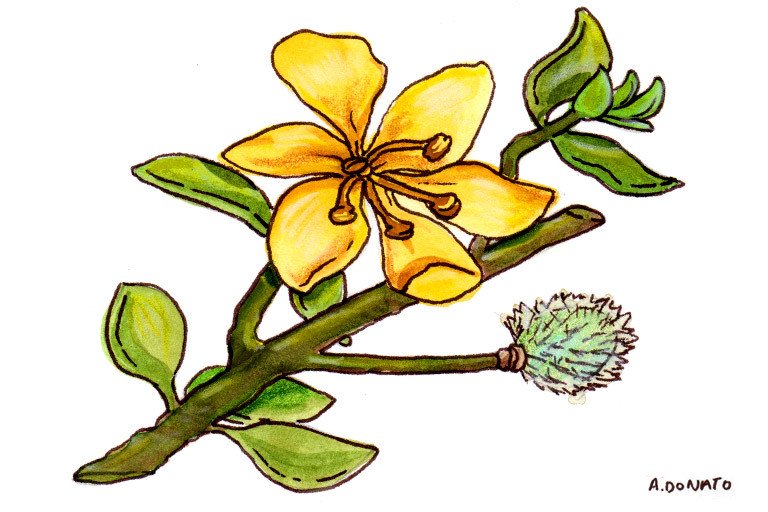
Common Names
- Creosote bush
- Greasewood
- Hediondilla
- Gobernadora
For Patients & Caregivers
Tell your healthcare providers about any dietary supplements you’re taking, such as herbs, vitamins, minerals, and natural or home remedies. This will help them manage your care and keep you safe.
Chaparral has not been shown to treat any medical condition, and has been associated with cases of liver toxicity.
Chaparral is a plant that grows in the desert regions of Mexico and the southwest United States. It has a long medicinal history and has been used by Native Americans to treat skin sores, inflammatory disorders, rheumatism, diabetes, tuberculosis, colds, venereal disease, and cancer. Chaparral tea has been employed to treat kidney and gallbladder stones.
However, evidence on whether it can treat any medical condition is lacking. Although lab studies suggest an active compound in chaparral, nordihydroguaiaretic acid (NDGA), has antiviral, anticancer, and antiparasitic properties, a clinical trial found chaparral was ineffective as an anticancer agent.
Because several patients who regularly drank chaparral tea developed kidney cysts, kidney cancer, and liver damage, chaparral products are not recommended. The FDA removed NDGA, formerly used as a food additive in low concentrations, from its "Generally Recognized as Safe" (GRAS) substances list. Also Masoprocol, a topical cream containing NDGA for the treatment of actinic keratoses, was withdrawn from the US market in June 1996.
Chaparral is an ingredient in black salve, which is promoted as an alternative cancer treatment.
There is no scientific evidence on the use of chaparral to treat:
- Arthritis
- Bronchitis or the common cold
- Cancer
- Inflammation
- Menstrual cramps
- Urinary problems
- Muscle spasms
- Fatigue
- Skin rash
- Stomach upset
- Yellowing of the skin
- Liver damage, cirrhosis, acute hepatitis
- Kidney failure
Patient Warnings:
- Chaparral and products containing chaparral have been associated with severe liver damage, in some cases requiring liver transplantation.
For Healthcare Professionals
Chaparral is a plant prevalent in the desert regions of Mexico and southwest United States with a long medicinal history. Native Americans used extracts and preparations from this plant to treat skin sores, diabetes, cancer, venereal disease, tuberculosis, colds, and rheumatism. The aqueous extract, known as chaparral tea, has been employed for the treatment of kidney and gallbladder stones.
A phase II clinical trial found chaparral to be ineffective as an anticancer agent (9). In another small retrospective study, low intake of chaparral tincture (<10%) did not cause adverse effects (3), but the association between length of exposure and risk is not known.
Nordihydroguaiaretic acid (NDGA), the active compound isolated from chaparral, has been investigated for its biological effects. In preclinical studies, it demonstrated antioxidant (12), anticancer (2) (13) (19) (20), antiviral (21), antiparastitic (22), neuroprotective (14) and renoprotective (15) properties. It also had a protective effect against diet-induced metabolic function (23). However, studies in humans are quite limited. One pilot in patients with relapsed prostate cancer suggested NDGA was reasonably well tolerated and affected increases in PSA doubling time, but it was also associated with transaminitis in some patients (16).
Several cases of reversible and irreversible liver damage (4) (7) (8) (17) have been associated with chaparral and products containing chaparral. NDGA, formerly employed as a food additive in low concentrations, has been removed by the FDA from its “Generally Recognized as Safe” (GRAS) substances list (1). Also Masoprocol, a topical cream containing NDGA for the treatment of actinic keratoses, was withdrawn from the US market in June 1996 (18).
Chaparral is an ingredient in black salve, which is promoted as an alternative cancer treatment.
- Arthritis
- Bronchitis
- Cancer
- Common cold
- Inflammation
- Menstrual cramps
- Promote urination
- Spasms
Nordihydroguaiaretic acid (NDGA), a lipoxygenase inhibitor, may be responsible for the biological activity of chaparral. In vitro, it blocked cellular respiration (2). It also inhibited growth of estrogen receptor (ER) positive MCF-7 cells that overexpressed HER 2 (MCF-7/HER2-18), and had additive effects when combined with tamoxifen (13).
In murine models, NDGA exerted neuroprotective effects against ischemic/reperfusion injury mediated via suppression of the c-Jun N-terminal protein kinase pathway (14), and ameliorated potassium dichromate-induced oxidative stress and nephrotoxicity (15).