For Patients & Caregivers
Tell your healthcare providers about any dietary supplements you’re taking, such as herbs, vitamins, minerals, and natural or home remedies. This will help them manage your care and keep you safe.
Coral calcium has not been shown to treat or prevent cancer, and is not superior to other forms of calcium supplements.
Coral calcium supplements contain calcium and magnesium. However, there is no evidence that these supplements are any better than typical calcium supplements available at lower cost. In addition, claims that coral calcium can maintain a proper pH balance in the human body or that it has anticancer properties are not support by scientific evidence.
Please see our entry on calcium for more information about getting this mineral through diet or from supplements.
- To treat arthritis
No laboratory or clinical studies have evaluated coral calcium for arthritis. - To prevent cancer
This claim is not backed by research. - To treat diabetes
No scientific evidence supports this use. - To alleviate fatigue
This use is not supported by any evidence. - To prevent and treat osteoporosis
One animal study suggests that the effects of coral calcium are largely similar to those of calcium carbonate.
- Constipation
- Flatulence
- Chalky taste
- Dry mouth
- Nausea
Patient Warnings:
- The FTC has prohibited marketers of coral calcium products from making disease treatment and cure claims in advertising.
- Tests on a number of coral calcium supplements by an independent lab identified one that contained excessive amounts of lead.
Do Not Take if:
- You have high blood levels of calcium or low blood levels of phosphate: Patients should consult their doctor before taking calcium supplements.
Special Point:
- Coral calcium supplements may cost more than other calcium supplements that have similar effects on the body.
- Oral coral calcium supplements should not be confused with the coral matrix used in surgery and bone grafting.
For Healthcare Professionals
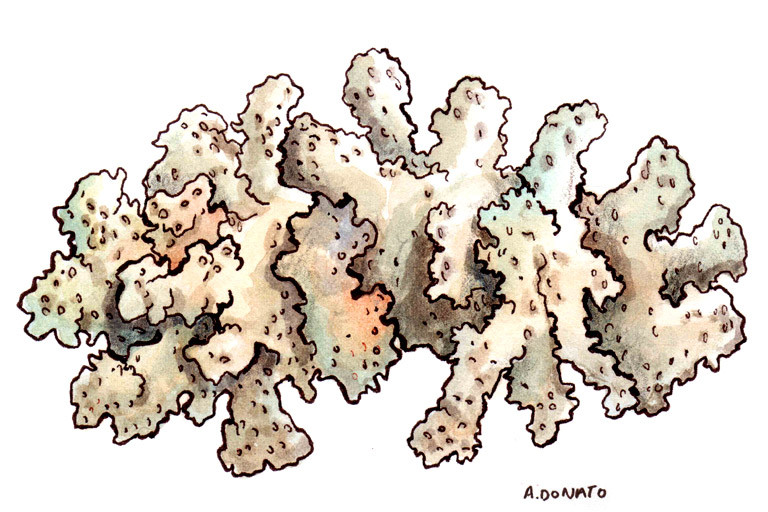
Coral calcium is derived from the natural matrix of coral. Coral particles that drift to the sea bottom from natural erosion are harvested from a wide region of tropical oceans. Coral has been used in the Ayurvedic system of medicine either alone or in polyherbal formulas for its high calcium content to treat conditions such as inflammation, cough, and osteoporosis (7). Coral calcium has been marketed as both a natural calcium supplement and linked to longevity in the elderly in Okinawa, Japan. However, some studies suggest that this longevity is attributable to their traditional plant-based diet (8).
In a rodent model of postmenopausal bone loss, effects with dietary coral calcium were comparable to a calcium carbonate control (9). A few animal studies have been conducted with coral calcium hydride, a hydrogen-rich form of coral calcium considered to have increased antioxidant potential. In obese rodents, it prevented fatty liver disease (10).
Limited studies suggest that calcium of coral origin is better absorbed in the intestine than calcium from other sources, and thought to be due to the 2:1 calcium:magnesium ratio that occurs naturally in coral (3). Claims that it can maintain a proper pH balance in the human body are unsubstantiated.
There is no evidence that coral calcium has anticancer properties, and the oral supplements should not be confused with the coral matrix used in surgery and bone grafting.
For more information on calcium supplementation, please read our monograph on calcium.
- Arthritis
- Cancer
- Diabetes
- Fatigue
- Osteoporosis
Corals contain 20% calcium and 10% magnesium by weight. This ratio is comparable to the recommended daily allowances of these two minerals (3).
In postmenopausal animal models of bone loss, coral calcium increased both bone-forming (osteocalcin, P1NP, ALP) and bone-resorption (Trap5b, CTX) markers to protect against post-ovariectomy bone loss, but effects were largely similar to those with calcium carbonate (9).
Coral calcium hydride, a hydrogen-rich form considered to have increased antioxidant potential, prevented accelerated senescence in rodents through upregulation of cell death, free radical scavenging, and molecular transport (11). In obese rodents, it improved hepatic mitochondrial dysfunction, reduced oxidative stress, and activated phase II enzymes to prevent fatty liver disease (10).
- Patients with high serum calcium levels or low serum phosphate levels should consult their physicians before taking calcium supplements.
- Coral calcium does not appear to have adverse effects beyond those associated with other forms of calcium supplementation (3).