Common Names
- PSK
- PSP
- VPS
- Turkey Tail
- Yun Zhi
- Kawaratake
- Krestin
For Patients & Caregivers
Tell your healthcare providers about any dietary supplements you’re taking, such as herbs, vitamins, minerals, and natural or home remedies. This will help them manage your care and keep you safe.
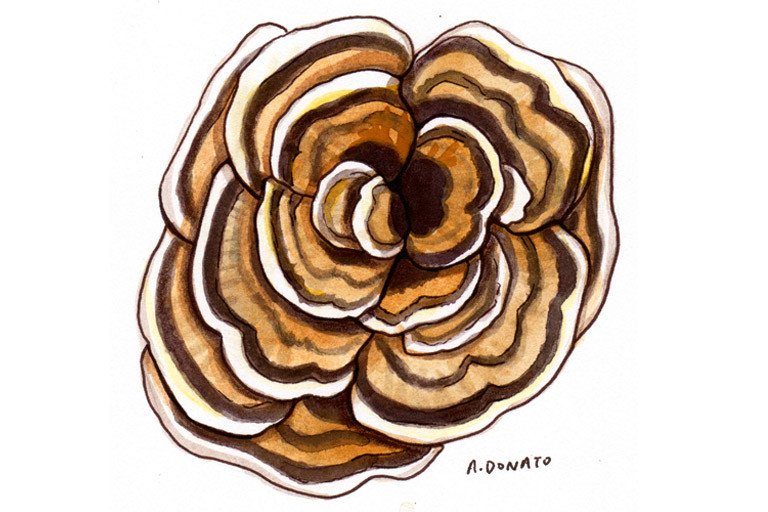
Coriolus is a mushroom used to help with health issues in traditional Chinese medicine. It also comes as dietary supplements in pills or powders.
Coriolus is used to:
- Improve general health
- Boost the immune system
Coriolus also has other uses that haven’t been studied by doctors to see if they work.
It’s generally safe to use coriolus in food and tea, but talk with your healthcare providers before taking coriolus supplements. Herbal supplements are stronger than the herbs you would use in cooking.
They can also interact with some medications and affect how they work. For more information, read the “What else do I need to know?” section below.
Side effects of using coriolus may include:
- Dark colored stool (poop)
- Darkening of fingernails
- Talk to your healthcare provider before taking coriolus in any form if you’re pregnant or breastfeeding. It is not known if this mushroom is safe.
- Coriolus extracts are used in Japan and China as additional cancer treatments after the primary treatment to lower the risk that the cancer will come back. But the United States Food and Drug Administration (FDA) has not approved coriolus extracts as additional cancer treatments.
For Healthcare Professionals
Coriolus versicolor is a mushroom of the Basidiomycetes class. It is used in traditional Chinese medicine as a tonic, and studies suggest that it has immunostimulant and antitumor properties. Polysaccharide-K (PSK), a proprietary product derived from Coriolus, was developed for cancer treatment in Japan. Other Coriolus extracts such as polysaccharide-peptide (PSP) and VPS are available as dietary supplements.
When used as an adjuvant, PSK appears to improve survival rates in patients with gastric (1) (2) and colorectal (3) (4) (5) cancers. It may also benefit patients with esophageal cancer (27). Findings from a study of PSP in conjunction with chemotherapy suggest benefits in patients with advanced non-small cell lung cancer (6). PSP was also reported to act as a prebiotic and to modulate human intestinal microbiome composition (30). Studies of Coriolus extracts alone or in combination with other botanicals suggest positive immunomodulatory effects (7) (8). However, data on their effects on breast cancer (9), hepatocellular carcinoma (10) (28), or leukemia (11) are mixed. A meta-analysis reported reduced mortality risk with adjuvant use of Coriolus across a variety of cancers (29), but confirmatory studies are needed.
A coriolus-based vaginal gel had clinical benefits in patients with HPV-related low-grade cervical lesions (31) (32) (33).
Coriolus extracts are generally well tolerated but minor adverse effects have been reported. Many over-the-counter products are not standardized, making it difficult to compare potency between brands. It is also unclear if PSK, PSP, and other Coriolus extracts have comparable effects.
- Health maintenance
- Immunomodulation
Coriolus versicolor is thought to be a biological response modifier. In vitro, PSP, PSK, and Coriolus extract induces apoptosis in leukemia cells (13) (23) (24). PSP also increased apoptosis in cells treated with camptothecin, reduced proliferation, progression, and 3H-thymidine uptake, and prolonged DNA synthesis time (14). A Coriolus medicinal mushroom blend inhibited cell proliferation and induced G2/M cell cycle arrest in an invasive breast cancer cell line (15). The mushroom extract inhibits expression of cell-cycle regulatory genes and suppresses metastatic behavior via inhibition of cell adhesion, migration, and invasion. Antiproliferative effects were linked to suppression of urokinase plasminogen activator (15). PSP also inhibits interaction between HIV-1 gp120 and CD4 receptor, HIV-1 transcriptase activity, and glycohydrolase enzyme activity associated with viral glycosylation (16).
Several animal studies report synergy between PSK and biologic therapies, including a concanavalin A-bound L1210 vaccine and the IgG2a monoclonal antibody against human colon cancer cells (17). PSP induces cytokine production and T-cell proliferation, and prevents cyclophosphamide-induced immune suppression. Peritoneal macrophages isolated from PSP-fed mice show increased production of reactive nitrogen intermediates, superoxide anions, and TNF (18). PSP also shows analgesic activity in mouse models (19).
In human studies, non-small cell lung cancer patients have increased leukocyte and neutrophil counts after PSP consumption, as well as increased serum IgG and IgM (6). Healthy volunteers and breast cancer patients who used a formula containing Coriolus and Salvia had elevated CD4+ counts, a high CD4+/CD8+ ratio, and elevated absolute counts of B-lymphocytes (7) (8). TNF-alpha and IL-8 gene expression were significantly induced after PSK administration in healthy volunteers and gastric cancer patients, although individual response varied (20).
High doses of a hot water extract of Coriolus enhanced development of large intestinal tumors in mice (12). However, this is not clinically relevant as the dosage was 10-13x higher than what is used in human studies and the mice were injected with known potent carcinogens.
- Until safety data become available, pregnant or breastfeeding women should avoid taking Coriolus.