Health Care Professional Information
Scientific Name
Coriolus versicolor, Trametes versicolor, Polyporus versicolor, Polystictus versicolor
Common Name
PSK, PSP, VPS, Trametes versicolor, Turkey Tail, Yun Zhi, Kawaratake, Krestin
Clinical Summary
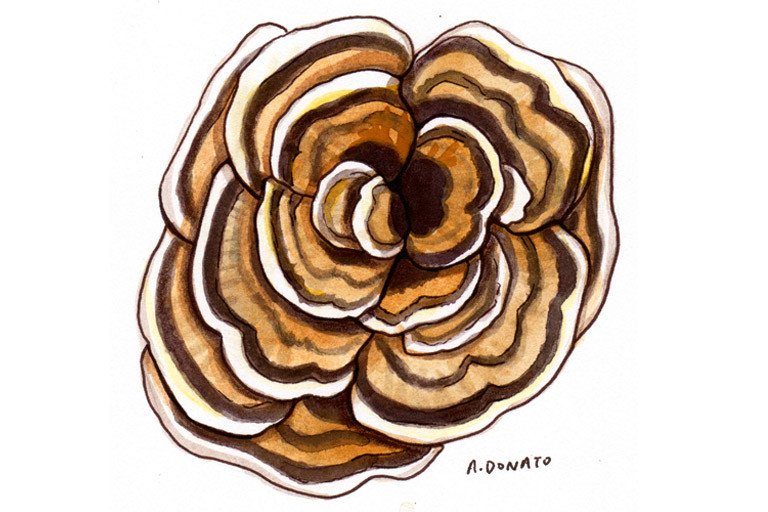
Coriolus versicolor is a mushroom of the Basidiomycetes class. It was used in Traditional Chinese medicine as a tonic, and recent studies suggest that it has immunostimulant and anti-tumor properties. Polysaccharide-K (PSK), a proprietary product derived from Coriolus, was developed for cancer treatment in Japan. When used as an adjuvant, PSK appears to improve survival rates in patients with gastric (1) (2) and colorectal (3) (4) (5) cancers. Other Coriolus extracts, such as polysaccharide-peptide (PSP) and VPS, are available as dietary supplements. One clinical study demonstrated that when used in conjunction with chemotherapy, PSP may benefit patients with advanced non-small cell lung cancer (6). Other clinical studies using Coriolus extract alone or in combination with other botanicals also suggest positive immunomodulatory effects (7) (8). However, studies on breast cancer (9), hepatocellular carcinoma (10), and leukemia (11) produced mixed results. A hot water extract of Coriolus, VPS, was found to enhance development of large intestinal tumors in mice (12). Coriolus extracts are generally well tolerated but minor adverse effects have been reported.
Many over-the-counter Coriolus products are not standardized, making it difficult to compare potency between brands. It is also unclear if PSK, PSP and other Coriolus extracts have comparable effects.
Purported Uses
- Cancer prevention
- Cancer treatment
- Chemotherapy side effects
- Hepatitis
- Herpes
- Immunostimulation
- Infections
- Radiation therapy side effects
- Strength and stamina
Constituents
Proteoglycans: Polysaccharide-K (PSK), a beta-1,4-glucan (isolated from the CM-101 strain), polysaccharide-P (PSP), isolated from the COV-1 strain.
Mechanism of Action
Coriolus versicolor is thought to be a biological response modifier. The proteoglycan constituents are responsible for its immunostimulant and anticancer activities. Many different mechanisms of action have been proposed. PSK has been found to induce cytokine expression in human peripheral blood mononuclear cells in vitro. In another studies, PSP, as well as Coriolus extract, selectively induced apoptosis of human promyelocytic leukemia HL-60 cells (13) (23). It also increased apoptotic cell death in cells that had been treated with camptothecin. In these cells, PSP reduced cellular proliferation, inhibited cell progression through both the S and G2 phases of DNA replication, reduced 3H - thymidine uptake, and prolonged DNA synthesis time (14). An additional in vitro study showed that a medicinal mushroom blend that included Coriolus Versicolor inhibited cell proliferation and induced cell cycle arrest at the G2/M phase in the invasive human breast cancer cell line MDA-MB-231 (15). DNA-microarray analysis indicated that the mushroom extract inhibited the expression of cell cycle regulatory genes and suppressed metastatic behavior through the inhibition of cell adhesion, cell migration, and cell invasion . The inhibition of metastatic behavior was linked to the suppression of urokinase plasminogen activator (uPA) (15). PSP has also been shown to inhibit the interaction between HIV-1 gp120 and CD4 receptor, HIV-1 transcriptase activity, and glycohydrolase enzyme activity associated with viral glycosylation (16). Several animal studies report of synergism between PSK and biologic therapies, including a concanavalin A-bound L1210 vaccine and the IgG2a monoclonal antibody against human colon cancer cells (17). PSP induces cytokine production and T-cell proliferation and prevents immune suppression due to cyclophosphamide in animal models. Peritoneal macrophages isolated from mice that were fed PSP show increased production of reactive nitrogen intermediates, superoxide anions, and tumor necrosis factor (18). PSP also shows analgesic activity in mouse models (19). Non-small cell lung cancer patients have increased leukocyte and neutrophil counts, and increased serum IgG and IgM after consumption of PSP (6). Healthy volunteers as well as breast cancer patients who used a formula containing Coriolus and Salvia were found to have elevated counts of T-helper lymphocytes (CD4+), high ratio of CD4+/CD8+), and elevated absolute counts of B-lymphocytes (7) (8). TNF-alpha and IL-8 gene expression were also found to be significantly induced after PSK administration in healthy volunteers and gastric cancer patients, although individual response varied (20).
Pharmacokinetics
Absorption
Animal studies with radiolabeled PSK show that it is partially decomposed to small molecular products in the digestive tract. The full molecular spectrum of labeled PSK is absorbed within 24 hours following oral administration in mice. Peak plasma levels of low molecular weight substances occur at 0.5-1 h in rats and 1-2 h in rabbits, while molecules the size of PSK appear in serum after 4, 10, and 24 h.
Distribution
Radiolabeled PSK or its metabolites were detected in the digestive tract, bone marrow, salivary glands, thymus, adrenal gland, brain, liver, spleen, pancreas, and tumor tissue in sarcoma-bearing mice. Activity remained high longest in the liver and bone marrow.
Excretion
Approximately 70% of radiolabeled PSK is excreted in expired air, 20% in feces, 10% in urine, and 0.8% in bile. Approximately 86% is excreted within 24 h.
(4)
Adverse Reactions
Adverse reactions from Coriolus are rare. But passage of dark colored stools (not originating from occult blood) (21), darkening of fingernails (22), and low-grade hematological and gastrointestinal toxicities have been reported when used in conjunction with chemotherapy agents (3). However, such effects may be caused by the chemo agents themselves.
Literature Summary and Critique
Wong CK, et al. Immunomodulatory effects of Yun Zhi and Danshen capsules in health subjects—a randomized, double-blind, placebo-controlled, crossover study. Int Immunopharmacology 2004;4:201-211.
One hundred healthy subjects were given a combination of Yun Zhi (Coriolus versicolor, 50 mg/kg body weight) and Danshen (Salvia miltiorrhiza, 20mg/kg body weight) capsules or placebo for four months. After a 2-month washout period, subjects who received Coriolus and Salvia capsules were given placebo while those on placebo received Coriolus and Salvia capsules for another four months. Researchers used flow cytometry and cDNA expression arrays to assess immune functions and gene expression. Results indicated that oral consumption of Coriolus-Salvia capsules significantly increased the peripheral blood mononuclear cell (PBMC) gene expression of interleukin (IL-2) receptor, increased the percentage and absolute counts of T helper cell and ratio of Thelper/Tsuppressor cells, and also the production of interferon-gamma from PBMC. Since T helper cells participate in both cell mediated and humoral immunities, Coriolus-Salvia combination may be used to enhance immune function. Studies are being conducted in cancer patients to determine the immunomodulating potential of these agents.
Dosage (Inside MSKCC Only)
This field is only visible to only Inside MSKCC users.
References
- Nakazato H, et al. Efficacy of immunochemotherapy as adjuvant treatment after curative resection of gastric cancer. Study Group of Immunochemotherapy with PSK for Gastric Cancer. Lancet 1994; 343(8906): 1122-6.
- Niimoto M, et al. Postoperative adjuvant immunochemotherapy with mitomycin C, futraful and PSK for gastric cancer. An analysis of data on 579 patients followed for five years. Jpn J Surg 1988; 18(6): 681-6.
- Ohwada S, et al. Adjuvant immunochemotherapy with oral Tegafur/Uracil plus PSK in patients with stage II or III colorectal cancer: a randomised controlled study. Br J Cancer 2004; 90(5): 1003-10.
- Mitomi T, et al. Randomized, controlled study on adjuvant immunochemotherapy with PSK in curatively resected colorectal cancer. The Cooperative Study Group of Surgical Adjuvant Immunochemotherapy for Cancer of Colon and Rectum (Kanagawa). Dis Colon Rectum 1992; 35(2): 123-30.
- Torisu M, et al. Significant prolongation of disease-free period gained by oral polysaccharide K (PSK) administration after curative surgical operation of colorectal cancer. Cancer Immunol Immunother 1990; 31(5): 261-8.
- Tsang KW, et al. Coriolus versicolor polysaccharide peptide slows progression of advanced non-small cell lung cancer. Respir Med 2003; 97(6): 618-24.
- Wong CK, et al. Immunomodulatory effects of yun zhi and danshen capsules in health subjects—a randomized, double-blind, placebo-controlled, crossover study. Int Immunopharmacol 2004; 4(2): 201-11.
- Wong CK, et al. Immunomodulatory activities of Yunzhi and Danshen in post-treatment breast cancer patients. Am J Chin Med 2005; 33(3): 381-95.
- Iino Y, et al. Immunochemotherapies versus chemotherapy as adjuvant treatment after curative resection of operable breast cancer. Anticancer Res 1995; 15(6B): 2907-11.
- Suto T, et al. Clinical study of biological response modifiers as maintenance therapy for hepatocellular carcinoma. Cancer Chemother Pharmacol 1994; 33: S145-8.
- Ohno R, et al. A randomized trial of chemoimmunotherapy of acute nonlymphocytic leukemia in adults using a protein-bound polysaccharide preparation. Cancer Immunol Immunother 1984; 18(3): 149-54.
- Toth B, Coles M, Lynch J. Effects of VPS extract of Coriolus versicolor on cancer of the large interstine using a serial sacrifice technique. In Vivo 2006;20(3):341-6.
- Yang X, et al. The cell death process of the anticancer agent polysaccharide-peptide (PSP) in human promyelocytic leukemic HL-60 cells. Oncol Rep 2005; 13(6): 1201-10.
- Wan JMF, Sit WH, Yang X, Jiang P, Wong LY. Polysaccharopeptides derived from Coriolus versicolor potentiate the S-phase specific cytotoxicity of Camptothecin (CPT) on human leukemia HL-60 cells. Chinese Medicine. 2010;5:16.
- Jiang J, Sliva D. Novel medicinal mushroom blend suppresses growth and invasiveness of human breast cancer cells. Int J Oncol. 2010 Dec;37(6):1529-36.
- Collins RA, Ng TB. Polysaccharopeptide from Coriolus versicolor has Potential for Use Against Human Immunodeficiency Virus type I Infection. Pharmcology Letters 1997; 60(25): 387-387.
- Tsukagoshi S, et al. Krestin (PSK). Cancer Treat Rev 1984; 11(2): 131-55.
- Liu WK, et al. Activation of peritoneal macrophages by polysaccharopeptide from the mushroom, Coriolus versicolor. Immunopharmacology 1993; 26(2): 139-46.
- Ng TB, Chan WY. Polysaccharopeptide from the mushroom Coriolus versicolor possesses analgesic activity but does not produce adverse effects on female reproductive or embryonic development in mice. Gen Pharmacol 1997; 29(2): 269-73.
- Kato M, et al. Induction of gene expression for immunomodulating cytokines in peripheral blood mononuclear cells in response to orally administered PSK, an immunomodulating protein-bound polysaccharide. Cancer Immunol Immunother 1995; 40(3): 152-6.
- Shiu WCT, et al. A Clinical Study of PSP on Peripheral Blood Counts during Chemotherapy. Phytotherapy Research 1992; (6): 217-218.
- Kidd, PM. The use of mushroom glucans and proteoglycans in cancer treatment. Altern Med Rev 2000 5(1): 4-27.
-
Lau CB, et al. Cytotoxic activities of Coriolus versicolor (Yunzhi) extract on human leukemia and lymphoma cells by induction of apoptosis. Life Sci 2004; 75(7): 797-808.
Consumer Information
How It Works
Bottom Line: Coriolus versicolor extracts have been studied in cancer patients with some positive results. However, more studies are needed to verify their effects.
Coriolus versicolor is a mushroom that was used in traditional Chinese medicine as a tonic. PSK and PSP, polysaccharide compounds isolated from Coriolus, were shown to improve immune function in patients with certain cancers when used along with chemotherapy.
Purported Uses
- To prevent and treat cancer
When used in combination with certain chemotherapy regimens, PSK has been shown to benefit patients following surgical removal of stomach and colorectal cancers. Clinical trials in patients with breast cancer, leukemias, and liver cancer do not show beneficial results.
- To reduce the side effects of chemotherapy
Animal studies suggest that PSK can prevent chemotherapy-induced immune suppression, but clinical trials have not been performed to confirm this effect in humans.
- To stimulate the immune system
Studies in animals and human volunteers suggest that PSK might stimulate the immune system.
- To treat infections
Coriolus' effects against infections have not been studied in the laboratory or in clinical trials.
- To reduce the side effects of radiation therapy
Studies in mice and rats suggest that PSK can prevent radiation therapy-induced immune suppression, but this is yet to be proven in clinical trials.
Side Effects
- Passage of dark colored stools
- Darkening of fingernails
- Low-grade toxicities have been reported when used along with chemotherapy agents. However, such effects may be caused by the chemo agents themselves.
Special Point
PSK is approved for clinical use in Japan. Purified PSK, PSP extracts or raw Coriolus extract alone or in combination with other herbs were used in clinical studies. However, the clinical effects of these products have not been compared.
Last updated: September 26, 2012
administration (ad-MIH-nih-STRAY-shun)
In medicine, the act of giving a treatment, such as a drug, to a patient. It can also refer to the way it is given, the dose, or how often it is given.
Source: The National Cancer Institute's Dictionary of Cancer Terms
(http://www.cancer.gov/dictionary)
adrenal gland (uh-DREE-nul...)
A small gland that makes steroid hormones, adrenaline, and noradrenaline. These hormones help control heart rate, blood pressure, and other important body functions. There are two adrenal glands, one on top of each kidney. Also called suprarenal gland.
Source: The National Cancer Institute's Dictionary of Cancer Terms
(http://www.cancer.gov/dictionary)
analgesic (A-nul-JEE-zik)
A drug that reduces pain. Analgesics include aspirin, acetaminophen, and ibuprofen.
Source: The National Cancer Institute's Dictionary of Cancer Terms
(http://www.cancer.gov/dictionary)
analysis (uh-NA-lih-sis)
A process in which anything complex is separated into simple or less complex parts.
Source: The National Cancer Institute's Dictionary of Cancer Terms
(http://www.cancer.gov/dictionary)
antibody (AN-tee-BAH-dee)
A protein made by plasma cells (a type of white blood cell) in response to an antigen (a substance that causes the body to make a specific immune response). Each antibody can bind to only one specific antigen. The purpose of this binding is to help destroy the antigen. Some antibodies destroy antigens directly. Others make it easier for white blood cells to destroy the antigen.
Source: The National Cancer Institute's Dictionary of Cancer Terms
(http://www.cancer.gov/dictionary)
bile (bile)
A fluid made by the liver and stored in the gallbladder. Bile is excreted into the small intestine, where it helps digest fat.
Source: The National Cancer Institute's Dictionary of Cancer Terms
(http://www.cancer.gov/dictionary)
blood (blud)
A tissue with red blood cells, white blood cells, platelets, and other substances suspended in fluid called plasma. Blood takes oxygen and nutrients to the tissues, and carries away wastes.
Source: The National Cancer Institute's Dictionary of Cancer Terms
(http://www.cancer.gov/dictionary)
bone marrow (bone MAYR-oh)
The soft, sponge-like tissue in the center of most bones. It produces white blood cells, red blood cells, and platelets.
Source: The National Cancer Institute's Dictionary of Cancer Terms
(http://www.cancer.gov/dictionary)
breast (brest)
Glandular organ located on the chest. The breast is made up of connective tissue, fat, and breast tissue that contains the glands that can make milk. Also called mammary gland.
Source: The National Cancer Institute's Dictionary of Cancer Terms
(http://www.cancer.gov/dictionary)
breast cancer (brest KAN-ser)
Cancer that forms in tissues of the breast, usually the ducts (tubes that carry milk to the nipple) and lobules (glands that make milk). It occurs in both men and women, although male breast cancer is rare.
Source: The National Cancer Institute's Dictionary of Cancer Terms
(http://www.cancer.gov/dictionary)
camptothecin (KAMP-toh-THEH-kin)
An anticancer drug that belongs to the family of drugs called topoisomerase inhibitors.
Source: The National Cancer Institute's Dictionary of Cancer Terms
(http://www.cancer.gov/dictionary)
cancer (KAN-ser)
A term for diseases in which abnormal cells divide without control and can invade nearby tissues. Cancer cells can also spread to other parts of the body through the blood and lymph systems. There are several main types of cancer. Carcinoma is a cancer that begins in the skin or in tissues that line or cover internal organs. Sarcoma is a cancer that begins in bone, cartilage, fat, muscle, blood vessels, or other connective or supportive tissue. Leukemia is a cancer that starts in blood-forming tissue such as the bone marrow, and causes large numbers of abnormal blood cells to be produced and enter the blood. Lymphoma and multiple myeloma are cancers that begin in the cells of the immune system. Central nervous system cancers are cancers that begin in the tissues of the brain and spinal cord. Also called malignancy.
Source: The National Cancer Institute's Dictionary of Cancer Terms
(http://www.cancer.gov/dictionary)
carcinoma (KAR-sih-NOH-muh)
Cancer that begins in the skin or in tissues that line or cover internal organs.
Source: The National Cancer Institute's Dictionary of Cancer Terms
(http://www.cancer.gov/dictionary)
cell (sel)
The individual unit that makes up the tissues of the body. All living things are made up of one or more cells.
Source: The National Cancer Institute's Dictionary of Cancer Terms
(http://www.cancer.gov/dictionary)
cell cycle (sel SY-kul)
The process a cell goes through each time it divides. The cell cycle consists of a series of steps during which the chromosomes and other cell material double to make two copies. The cell then divides into two daughter cells, each receiving one copy of the doubled material. The cell cycle is complete when each daughter cell is surrounded by its own outer membrane. Also called mitotic cycle.
Source: The National Cancer Institute's Dictionary of Cancer Terms
(http://www.cancer.gov/dictionary)
cell proliferation (sel proh-LIH-feh-RAY-shun)
An increase in the number of cells as a result of cell growth and cell division.
Source: The National Cancer Institute's Dictionary of Cancer Terms
(http://www.cancer.gov/dictionary)
chemotherapy (KEE-moh-THAYR-uh-pee)
Treatment with drugs that kill cancer cells.
Source: The National Cancer Institute's Dictionary of Cancer Terms
(http://www.cancer.gov/dictionary)
clinical (KLIH-nih-kul)
Having to do with the examination and treatment of patients.
Source: The National Cancer Institute's Dictionary of Cancer Terms
(http://www.cancer.gov/dictionary)
colon (KOH-lun)
The longest part of the large intestine, which is a tube-like organ connected to the small intestine at one end and the anus at the other. The colon removes water and some nutrients and electrolytes from partially digested food. The remaining material, solid waste called stool, moves through the colon to the rectum and leaves the body through the anus.
Source: The National Cancer Institute's Dictionary of Cancer Terms
(http://www.cancer.gov/dictionary)
colorectal (KOH-loh-REK-tul)
Having to do with the colon or the rectum.
Source: The National Cancer Institute's Dictionary of Cancer Terms
(http://www.cancer.gov/dictionary)
cyclophosphamide (SY-kloh-FOS-fuh-mide)
A drug that is used to treat many types of cancer and is being studied in the treatment of other types of cancer. It is also used to treat some types of kidney disease in children. Cyclophosphamide attaches to DNA in cells and may kill cancer cells. It is a type of alkylating agent. Also called CTX and Cytoxan.
Source: The National Cancer Institute's Dictionary of Cancer Terms
(http://www.cancer.gov/dictionary)
cytokine (SY-toh-kine)
A substance that is made by cells of the immune system. Some cytokines can boost the immune response and others can suppress it. Cytokines can also be made in the laboratory by recombinant DNA technology and used in the treatment of various diseases, including cancer.
Source: The National Cancer Institute's Dictionary of Cancer Terms
(http://www.cancer.gov/dictionary)
digestive tract (dy-JES-tiv trakt)
The organs through which food and liquids pass when they are swallowed, digested, and eliminated. These organs are the mouth, esophagus, stomach, small and large intestines, and rectum and anus.
Source: The National Cancer Institute's Dictionary of Cancer Terms
(http://www.cancer.gov/dictionary)
DNA
The molecules inside cells that carry genetic information and pass it from one generation to the next. Also called deoxyribonucleic acid.
Source: The National Cancer Institute's Dictionary of Cancer Terms
(http://www.cancer.gov/dictionary)
enzyme (EN-zime)
A protein that speeds up chemical reactions in the body.
Source: The National Cancer Institute's Dictionary of Cancer Terms
(http://www.cancer.gov/dictionary)
extract (EK-strakt)
In medicine, a preparation of a substance obtained from plants, animals, or bacteria and used as a drug or in drugs.
Source: The National Cancer Institute's Dictionary of Cancer Terms
(http://www.cancer.gov/dictionary)
feces (FEE-seez)
The material in a bowel movement. Feces is made up of undigested food, bacteria, mucus, and cells from the lining of the intestines. Also called stool.
Source: The National Cancer Institute's Dictionary of Cancer Terms
(http://www.cancer.gov/dictionary)
flow cytometry (floh sy-TAH-meh-tree)
A method of measuring the number of cells in a sample, the percentage of live cells in a sample, and certain characteristics of cells, such as size, shape, and the presence of tumor markers on the cell surface. The cells are stained with a light-sensitive dye, placed in a fluid, and passed in a stream before a laser or other type of light. The measurements are based on how the light-sensitive dye reacts to the light.
Source: The National Cancer Institute's Dictionary of Cancer Terms
(http://www.cancer.gov/dictionary)
gastric (GAS-trik)
Having to do with the stomach.
Source: The National Cancer Institute's Dictionary of Cancer Terms
(http://www.cancer.gov/dictionary)
gastrointestinal (GAS-troh-in-TES-tih-nul)
Refers to the stomach and intestines. Also called GI.
Source: The National Cancer Institute's Dictionary of Cancer Terms
(http://www.cancer.gov/dictionary)
gene (jeen)
The functional and physical unit of heredity passed from parent to offspring. Genes are pieces of DNA, and most genes contain the information for making a specific protein.
Source: The National Cancer Institute's Dictionary of Cancer Terms
(http://www.cancer.gov/dictionary)
gene expression (jeen ek-SPREH-shun)
The process by which a gene gets turned on in a cell to make RNA and proteins. Gene expression may be measured by looking at the RNA, or the protein made from the RNA, or what the protein does in a cell.
Source: The National Cancer Institute's Dictionary of Cancer Terms
(http://www.cancer.gov/dictionary)
immune function (ih-MYOON FUNK-shun)
Production and action of cells that fight disease or infection.
Source: The National Cancer Institute's Dictionary of Cancer Terms
(http://www.cancer.gov/dictionary)
immune system (ih-MYOON SIS-tem)
The complex group of organs and cells that defends the body against infections and other diseases.
Source: The National Cancer Institute's Dictionary of Cancer Terms
(http://www.cancer.gov/dictionary)
in vitro (in VEE-troh)
In the laboratory (outside the body). The opposite of in vivo (in the body).
Source: The National Cancer Institute's Dictionary of Cancer Terms
(http://www.cancer.gov/dictionary)
interleukin (in-ter-LOO-kin)
One of a group of related proteins made by leukocytes (white blood cells) and other cells in the body. Interleukins regulate immune responses. Interleukins made in the laboratory are used as biological response modifiers to boost the immune system in cancer therapy. An interleukin is a type of cytokine. Also called IL.
Source: The National Cancer Institute's Dictionary of Cancer Terms
(http://www.cancer.gov/dictionary)
intestinal (in-TES-tih-nul)
Having to do with the intestines.
Source: The National Cancer Institute's Dictionary of Cancer Terms
(http://www.cancer.gov/dictionary)
leukemia (loo-KEE-mee-uh)
Cancer that starts in blood-forming tissue such as the bone marrow and causes large numbers of blood cells to be produced and enter the bloodstream.
Source: The National Cancer Institute's Dictionary of Cancer Terms
(http://www.cancer.gov/dictionary)
leukocyte (LOO-koh-site)
A type of immune cell. Most leukocytes are made in the bone marrow and are found in the blood and lymph tissue. Leukocytes help the body fight infections and other diseases. Granulocytes, monocytes, and lymphocytes are leukocytes. Also called WBC and white blood cell.
Source: The National Cancer Institute's Dictionary of Cancer Terms
(http://www.cancer.gov/dictionary)
liver (LIH-ver)
A large organ located in the upper abdomen. The liver cleanses the blood and aids in digestion by secreting bile.
Source: The National Cancer Institute's Dictionary of Cancer Terms
(http://www.cancer.gov/dictionary)
liver cancer (LIH-ver KAN-ser)
Primary liver cancer is cancer that forms in the tissues of the liver. Secondary liver cancer is cancer that spreads to the liver from another part of the body.
Source: The National Cancer Institute's Dictionary of Cancer Terms
(http://www.cancer.gov/dictionary)
lung (lung)
One of a pair of organs in the chest that supplies the body with oxygen, and removes carbon dioxide from the body.
Source: The National Cancer Institute's Dictionary of Cancer Terms
(http://www.cancer.gov/dictionary)
lung cancer (lung KAN-ser)
Cancer that forms in tissues of the lung, usually in the cells lining air passages. The two main types are small cell lung cancer and non-small cell lung cancer. These types are diagnosed based on how the cells look under a microscope.
Source: The National Cancer Institute's Dictionary of Cancer Terms
(http://www.cancer.gov/dictionary)
medicine (MEH-dih-sin)
Refers to the practices and procedures used for the prevention, treatment, or relief of symptoms of a diseases or abnormal conditions. This term may also refer to a legal drug used for the same purpose.
Source: The National Cancer Institute's Dictionary of Cancer Terms
(http://www.cancer.gov/dictionary)
metastatic (meh-tuh-STA-tik)
Having to do with metastasis, which is the spread of cancer from the primary site (place where it started) to other places in the body.
Source: The National Cancer Institute's Dictionary of Cancer Terms
(http://www.cancer.gov/dictionary)
necrosis (neh-KROH-sis)
Refers to the death of living tissues.
Source: The National Cancer Institute's Dictionary of Cancer Terms
(http://www.cancer.gov/dictionary)
neutrophil (NOO-troh-fil)
A type of immune cell that is one of the first cell types to travel to the site of an infection. Neutrophils help fight infection by ingesting microorganisms and releasing enzymes that kill the microorganisms. A neutrophil is a type of white blood cell, a type of granulocyte, and a type of phagocyte.
Source: The National Cancer Institute's Dictionary of Cancer Terms
(http://www.cancer.gov/dictionary)
oral (OR-ul)
By or having to do with the mouth.
Source: The National Cancer Institute's Dictionary of Cancer Terms
(http://www.cancer.gov/dictionary)
over-the-counter (OH-ver-the-KOWN-ter)
A medicine that can be bought without a prescription (doctor's order). Examples include analgesics (pain relievers) such as aspirin and acetaminophen. Also called nonprescription and OTC.
Source: The National Cancer Institute's Dictionary of Cancer Terms
(http://www.cancer.gov/dictionary)
pancreas (PAN-kree-us)
A glandular organ located in the abdomen. It makes pancreatic juices, which contain enzymes that aid in digestion, and it produces several hormones, including insulin. The pancreas is surrounded by the stomach, intestines, and other organs.
Source: The National Cancer Institute's Dictionary of Cancer Terms
(http://www.cancer.gov/dictionary)
peritoneal (PAYR-ih-toh-NEE-ul)
Having to do with the parietal peritoneum (the tissue that lines the abdominal wall and pelvic cavity) and visceral peritoneum (the tissue that covers most of the organs in the abdomen, including the intestines).
Source: The National Cancer Institute's Dictionary of Cancer Terms
(http://www.cancer.gov/dictionary)
placebo (pluh-SEE-boh)
An inactive substance or treatment that looks the same as, and is given the same way as, an active drug or treatment being tested. The effects of the active drug or treatment are compared to the effects of the placebo.
Source: The National Cancer Institute's Dictionary of Cancer Terms
(http://www.cancer.gov/dictionary)
plasma (PLAZ-muh)
The clear, yellowish, fluid part of the blood that carries the blood cells. The proteins that form blood clots are in plasma.
Source: The National Cancer Institute's Dictionary of Cancer Terms
(http://www.cancer.gov/dictionary)
polysaccharide (PAH-lee-SA-kuh-ride)
A large carbohydrate molecule. It contains many small sugar molecules that are joined chemically. Also called glycan.
Source: The National Cancer Institute's Dictionary of Cancer Terms
(http://www.cancer.gov/dictionary)
progression (pruh-GREH-shun)
In medicine, the course of a disease, such as cancer, as it becomes worse or spreads in the body.
Source: The National Cancer Institute's Dictionary of Cancer Terms
(http://www.cancer.gov/dictionary)
radiation (RAY-dee-AY-shun)
Energy released in the form of particle or electromagnetic waves. Common sources of radiation include radon gas, cosmic rays from outer space, medical x-rays, and energy given off by a radioisotope (unstable form of a chemical element that releases radiation as it breaks down and becomes more stable).
Source: The National Cancer Institute's Dictionary of Cancer Terms
(http://www.cancer.gov/dictionary)
radiolabeled (RAY-dee-oh-LAY-buld)
Any compound that has been joined with a radioactive substance.
Source: The National Cancer Institute's Dictionary of Cancer Terms
(http://www.cancer.gov/dictionary)
receptor (reh-SEP-ter)
A molecule inside or on the surface of a cell that binds to a specific substance and causes a specific physiologic effect in the cell.
Source: The National Cancer Institute's Dictionary of Cancer Terms
(http://www.cancer.gov/dictionary)
response (reh-SPONTS)
In medicine, an improvement related to treatment.
Source: The National Cancer Institute's Dictionary of Cancer Terms
(http://www.cancer.gov/dictionary)
serum (SEER-um)
The clear liquid part of the blood that remains after blood cells and clotting proteins have been removed.
Source: The National Cancer Institute's Dictionary of Cancer Terms
(http://www.cancer.gov/dictionary)
spleen (spleen)
An organ that is part of the lymphatic system. The spleen makes lymphocytes, filters the blood, stores blood cells, and destroys old blood cells. It is located on the left side of the abdomen near the stomach.
Source: The National Cancer Institute's Dictionary of Cancer Terms
(http://www.cancer.gov/dictionary)
stomach (STUH-muk)
An organ that is part of the digestive system. The stomach helps digest food by mixing it with digestive juices and churning it into a thin liquid.
Source: The National Cancer Institute's Dictionary of Cancer Terms
(http://www.cancer.gov/dictionary)
therapy (THAYR-uh-pee)
Treatment.
Source: The National Cancer Institute's Dictionary of Cancer Terms
(http://www.cancer.gov/dictionary)
thymidine (THY-mih-deen)
A chemical compound found in DNA. Also used as treatment for mucositis.
Source: The National Cancer Institute's Dictionary of Cancer Terms
(http://www.cancer.gov/dictionary)
thymus (THY-mus)
An organ that is part of the lymphatic system, in which T lymphocytes grow and multiply. The thymus is in the chest behind the breastbone.
Source: The National Cancer Institute's Dictionary of Cancer Terms
(http://www.cancer.gov/dictionary)
tissue (TIH-shoo)
A group or layer of cells that work together to perform a specific function.
Source: The National Cancer Institute's Dictionary of Cancer Terms
(http://www.cancer.gov/dictionary)
tumor (TOO-mer)
An abnormal mass of tissue that results when cells divide more than they should or do not die when they should. Tumors may be benign (not cancer), or malignant (cancer). Also called neoplasm.
Source: The National Cancer Institute's Dictionary of Cancer Terms
(http://www.cancer.gov/dictionary)
urine (YOOR-in)
Fluid containing water and waste products. Urine is made by the kidneys, stored in the bladder, and leaves the body through the urethra.
Source: The National Cancer Institute's Dictionary of Cancer Terms
(http://www.cancer.gov/dictionary)
urokinase (YOOR-oh-KY-nays)
An enzyme that is made in the kidney and found in the urine. A form of this enzyme is made in the laboratory and used to dissolve blood clots or to prevent them from forming. Also called u-plasminogen activator, uPA, and urokinase-plasminogen activator.
Source: The National Cancer Institute's Dictionary of Cancer Terms
(http://www.cancer.gov/dictionary)
vaccine (vak-SEEN)
A substance or group of substances meant to cause the immune system to respond to a tumor or to microorganisms, such as bacteria or viruses. A vaccine can help the body recognize and destroy cancer cells or microorganisms.
Source: The National Cancer Institute's Dictionary of Cancer Terms
(http://www.cancer.gov/dictionary)
viral (VY-rul)
Having to do with a virus.
Source: The National Cancer Institute's Dictionary of Cancer Terms
(http://www.cancer.gov/dictionary)