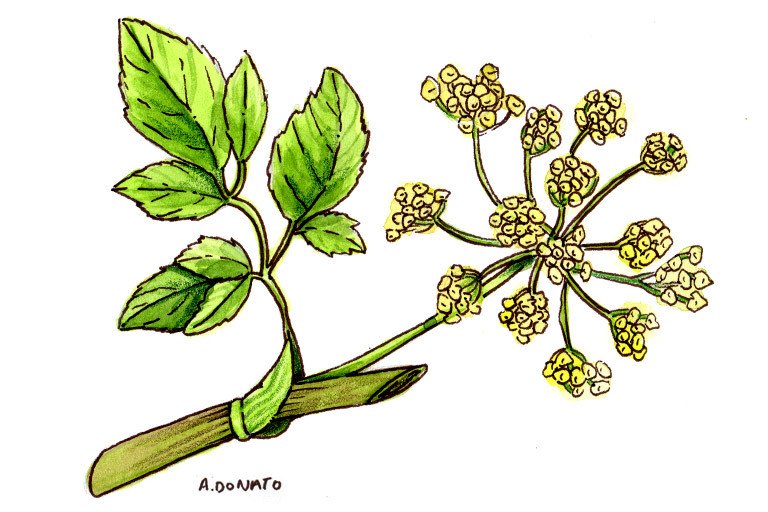
Health Care Professional Information
Common Name
Chinese angelica, dang gui, tang kuei, tan kue
Clinical Summary
Dong quai is an herb the root of which has been used in traditional Chinese medicine for thousands of years. It is often combined with other herbs in formulations. Dong quai is also available as a dietary supplement and promoted as a woman's herb to treat menstrual and menopausal symptoms.
Extracts of dong quai demonstrated antitumor (7) (8) (9) (10), anti-tuberculosis (TB) (11), neuroprotective (32), and hematopoeitic (34) effects in vitro. In animal studies, the polysaccharides extracted from dong quai root showed protective effects against cyclophosphamide-induced toxicity (12), doxorubicin-induced cardiotoxicity (13), and radiation-induced pneumonitis (14). But these effects have not been evaluated in humans.
Clinical trial data regarding efficacy of dong quai for menopausal symptoms are inconclusive (1) (2) (3) (4) (5) (6) (29) (33). A small study done in men with hot flashes did not find dong quai effective (31).
Dong quai exhibits estrogenic activity in vitro (15) and stimulates proliferation of MCF-7 cells (16) (17). Until definitive efficacy and safety data are available, patients with hormonal-sensitive cancers should avoid this herb.
Purported Uses
- Dysmenorrhea
- Health maintenance
- Menopausal symptoms
- Premenstrual syndrome
- Spasms
Constituents
- Volatile oils: Safrole, isosafrole, and n-butylphthalide
- Coumarin derivatives: Psoralens, bergapten, osthol, imperatorin, and oxypeucedanin
- Ferulic acid
(22)
Mechanism of Action
Ferulic acid, one of the constituents of Dong quai, may play an important role in the treatment of osteoarthritis by reducing the hydrogen peroxide-induced interleukin IL-1beta, tumor necrosis factor TNF-alpha, matrix metalloproteinases MMP-1 and MMP-13 and by increasing SOX9 gene expression. SOX9 is a protein involved in the establishment and maintenance of the phenotype of chondrocytes (35).
A component isolated from dong quai promotes wound healing and bone regeneration by inducing osteoblast proliferation and hyaluronic acid deposition (25).
The water extract from dong quai was shown to have estrogen-agonist activity and stimulated proliferation of both estrogen receptor-positive and negative breast cancer cells (17). It exerts a protective effect in mice with radiation-induced pneumonitis by down regulating proinflammatory cytokines such as TNF-alpha and TGF-beta1 (14). Subcutaneous injection of dong quai extract also protected mice against cyclophosphamide-induced cytotoxicity by promoting recovery from leukopenia (12).
The antitumor effects of dong quai may be due to its inhibitory effects on invasion and metastasis of carcinoma cells (9) and by suppression of tumor growth (7) (8) (10) which may be mediated by Nur77-dependent apoptosis (23) (24). Furthermore, dong quai extracts promote angiogenesis by inducing proliferation and migration of endothelial cells by upregulating VEGF expression (26).
Contraindications
- Pregnant and breastfeeding women should avoid dong quai (27).
- Patients taking anticoagulants should avoid dong quai as it can potentiate their effects (21).
- Patients with hormone-sensitive cancers should avoid dong quai because it has estrogenic effects (15).
Adverse Reactions
Reported adverse events include bloating, loss of apeptite (18), diarrhea, photosensitivity (19), and gynecomastia (20).
Case report: Subarachnoid hemorrhage was reported in a 53-year-old woman following use of a herbal supplement containing red clover, dong quai, and Siberian ginseng for hot flashes associated with perimenopause. Her symptoms resolved after discontinuing use of the supplement (30).
Literature Summary and Critique
Rotem C, Kaplan B. Phyto-Female Complex for the relief of hot flushes, night sweats and quality of sleep: randomized, controlled, double-blind pilot study. Gynecol Endocrinol. 2007;23(2):117-22.
Fifty healthy pre and postmenopausal women (aged 44-65 years) were randomized to receive Phyto-Female Complex (an herbal formula of black cohosh, dong quai, milk thistle, red clover, American ginseng, and chaste-tree berry extracts) or a placebo twice daily for 3 months. Women who took Phyto-Female Complex reported a decrease in hot flushes, reduction in night sweat, and improved sleep quality compared to those in the placebo group. However, it is not clear if dong quai alone would have similar effects. Further studies are needed.
Dosage (Inside MSKCC Only)
This field is only visible to only Inside MSKCC users.
References
- Carroll DG. Nonhormonal therapies for hot flashes in menopause. Am Fam Physician. 2006;73(3):457-464.
- Cheema D, Coomarasamy A, El-Toukhy T. Non-hormonal therapy of post-menopausal vasomotor symptoms: a structured evidence-based review. Arch Gynecol Obstet. 2007;276(5):463-469.
- Fugate SE, Church CO. Nonestrogen treatment modalities for vasomotor symptoms associated with menopause. Ann Pharmacother. 2004;38(9):1482-1499.
- Kupfersztain C, Rotem C, Fagot R, Kaplan B. The immediate effect of natural plant extract, Angelica sinensis and Matricaria chamomilla (Climex) for the treatment of hot flushes during menopause. A preliminary report. Clin Exp Obstet Gynecol. 2003;30(4):203-206.
- Rotem C, Kaplan B. Phyto-Female Complex for the relief of hot flushes, night sweats and quality of sleep: randomized, controlled, double-blind pilot study. Gynecol Endocrinol. 2007;23(2):117-122.
- TNAM Society. Treatment of menopause-associated vasomotor symptoms: position statement of The North American Menopause Society. Menopause. 2004;11(1):11-33.
- Lee WH, Jin JS, Tsai WC, et al. Biological inhibitory effects of the Chinese herb danggui on brain astrocytoma. Pathobiology. 2006;73(3):141-148.
- Ng SS, Figg WD. Antitumor activity of herbal supplements in human prostate cancer xenografts implanted in immunodeficient mice. Anticancer Res. 2003;23(5A):3585-3590.
- Shang P, Qian AR, Yang TH, et al. Experimental study of anti-tumor effects of polysaccharides from Angelica sinensis. World J Gastroenterol. 2003;9(9):1963-1967.
- Tsai NM, Lin SZ, Lee CC, et al. The antitumor effects of Angelica sinensis on malignant brain tumors in vitro and in vivo. Clin Cancer Res. 2005;11(9):3475-3484.
- Deng S, Wang Y, Inui T, et al. Anti-TB polyynes from the roots of Angelica sinensis. Phytother Res. Jul 2008;22(7):878-882.
- Hui MK, Wu WK, Shin VY, et al. Polysaccharides from the root of Angelica sinensis protect bone marrow and gastrointestinal tissues against the cytotoxicity of cyclophosphamide in mice. Int J Med Sci. 2006;3(1):1-6.
- Xin YF, Zhou GL, Shen M, et al. Angelica sinensis: a novel adjunct to prevent doxorubicin-induced chronic cardiotoxicity. Basic Clin Pharmacol Toxicol. Dec 2007;101(6):421-426.
- Xie CH, Zhang MS, Zhou YF, et al. Chinese medicine Angelica sinensis suppresses radiation-induced expression of TNF-alpha and TGF-beta1 in mice. Oncol Rep. 2006;15(6):1429-1436.
- Liu J, Burdette JE, Xu H, et al. Evaluation of estrogenic activity of plant extracts for the potential treatment of menopausal symptoms. J Agric Food Chem. 2001;49(5):2472-2479.
- Amato P, Christophe S, Mellon PL. Estrogenic activity of herbs commonly used as remedies for menopausal symptoms. Menopause. 2002;9(2):145-150.
- Lau CB, Ho TC, Chan TW, Kim SC. Use of dong quai (Angelica sinensis) to treat peri- or postmenopausal symptoms in women with breast cancer: is it appropriate? Menopause. 2005;12(6):734-740.
- Foster S, Tyler VE. Tyler's Honest Herbal: A Sensible Guide to the use of Herbs and related remedies. 3rd ed. New York: Haworth Herbal Press; 1993.
- DerMarderosian A. The Review of Natural Products. St. Louis: Facts and Comparisons; 1999.
- Goh SY, Loh KC. Gynaecomastia and the herbal tonic “Dong Quai”. Singapore Med J. 2001;42(3):115-116.
- Page RL, 2nd, Lawrence JD. Potentiation of warfarin by dong quai. Pharmacotherapy. 1999;19(7):870-876.
- Bone K. Clinical Applications of Ayurvedic and Chinese Herbs. Queensland (Australia): Phytotherapy Press; 1997.
- Chen YL, Jian MH, Lin CC, et al. The induction of orphan nuclear receptor Nur77 expression by n-butylenephthalide as pharmaceuticals on hepatocellular carcinoma (HCC) cells therapy. Mol Pharmacol. Jun 24 2008.
- Lin PC, Chen YL, Chiu SC, et al. Orphan nuclear receptor, Nurr-77 was a possible target gene of butylidenephthalide chemotherapy on glioblastoma multiform brain tumor.J Neurochem. Aug 2008;106(3):1017-1026.
- Zhao H, Alexeev A, Sharma V, Guzman LD, Bojanowski K. Effect of SBD.4A—a defined multicomponent preparation of Angelica sinensis—in periodontal regeneration models. Phytother Res. Jul 2008;22(7):923-928.
- Lam HW, Lin HC, Lao SC, et al. The angiogenic effects of Angelica sinensis extract on HUVEC in vitro and zebrafish in vivo. J Cell Biochem. Jan 1 2008;103(1):195-211.
- Tyler V. The Honest Herbal: A Sensible Guide to Herbs and Related Remedies. Philadelphia: George Stickley Company; 1982.
- Hirata JD, Swiersz LM, Zell B, Small R, Ettinger B. Does dong quai have estrogenic effects in postmenopausal women? A double-blind, placebo-controlled trial. Fertil Steril. Dec 1997;68(6):981-986.
- Haines CJ, Lam PM, Chung TK, et al. A randomized, double-blind, placebo-controlled study of the effect of a Chinese herbal medicine preparation (Dang Gui Buxue Tang) on menopausal symptoms in Hong Kong Chinese women. Climacteric 2008 Jun;11(3):244-51.
- Friedman JA, Taylor SA, McDermott W, Alikhani P. Multifocal and recurrent subarachnoid hemorrhage due to an herbal supplement containing natural coumarins. Neurocrit Care. 2007;7(1):76-80.
- Al-Bareeq RJ, Ray AA, Nott L, Pautler SE, Razvi H. Dong Quai (angelica sinensis) in the treatment of hot flashes for men on androgen deprivation therapy: results of a randomized double-blind placebo controlled trial. Can Urol Assoc J. 2010 Feb;4(1):49-53.
- Bu Y, Kwon S, Kim YT, Kim MY, et al. Neuroprotective effect of HT008-1, a prescription of traditional Korean medicine, on transient focal cerebral ischemia model in rats. Phytother Res. 2010 Feb 10. [Epub ahead of print]
- Wong VC, Lim CE, Luo X, Wong WS. Current alternative and complementary therapies used in menopause. Gynecol Endocrinol. 2009 Mar;25(3):166-74.
- Liu PJ, Hsieh WT, Huang SH, Liao HF, Chiang BH. Hematopoietic effect of water-soluble polysaccharides from Angelica sinensis on mice with acute blood loss. Exp Hematol. 2010 Jun;38(6):437-45.
- Chen MP, Yang SH, Chou CH, et al. The chondroprotective effects of ferulic acid on hydrogen peroxide-stimulated chondrocytes: inhibition of hydrogen peroxide-induced pro-inflammatory cytokines and metalloproteinase gene expression at the mRNA level. Inflamm Res. 2010 Aug;59(8):587-95.
Consumer Information
How It Works
Bottom Line: Dong quai has not been shown to treat or prevent cancer.
Dong quai is an herb used in traditional Chinese medicine to treat menstrual and menopausal symptoms and to 'tonify' blood. Root extracts of dong quai were shown to stop growth of cancer cells in laboratory studies but human data are lacking. A few studies have been done to test effectiveness of dong quai for menopausal symptoms but results are inconclusive.
Dong quai has estrogen like effects and it was shown to increase growth of breast cancer cells in laboratory experiments. It may also contain compounds that can cause cancer in high doses.
Purported Uses
- To relieve symptoms of menopause
Results from a few studies done in postmenopausal women are inconclusive.
- To treat dysmenorrhea
Traditional medicine uses dong quai to treat dysmenorrhea but there is no scientific basis to support this use.
- To treat premenstrual syndrome
Although traditionally used to treat premenstrual symptoms, there are no clinical studies to support this claim.
Research Evidence
Menopausal symptoms
Fifty healthy pre- and postmenopausal women (aged 44-65 years) were randomized to receive Phyto-Female Complex (an herbal formula of black cohosh, dong quai, milk thistle, red clover, American ginseng, and chaste-tree berry extracts) or a placebo twice daily for 3 months. Women who took Phyto-Female Complex reported a decrease in hot flushes, reduction in night sweat, and improved sleep quality compared to those in the placebo group. However, it is not clear if dong quai alone would have similar effects.
Do Not Take If
- You are taking anticoagulants such as warfarin (Dong quai may increase the risk of bleeding).
- You are pregnant or breastfeeding.
- You are undergoing radiation therapy (Dong quai can cause photodermatitis, and therefore might worsen the effects of radiation therapy on the skin).
- You have hormone-sensitive cancer (Dong quai has estrogenic effects and can further stimulate growth of cancer cells)
Side Effects
- Photosensitivity (sensitivity of the eyes to light)
- Photodermatitis (skin sensitivity to light, causing swelling, itching, and/or redness)
- Gynecomastia (excessive development of breasts in men)
- Excessive bleeding due to the blood thinning effect
- Diarrhea
- Fever
- Case report: Intracranial hemorrhage was reported in a 53-year-old woman following use of an herbal supplement containing red clover, dong quai, and Siberian ginseng for hot flashes associated with perimenopause. Her symptoms resolved after discontinuing use of the supplement.
Last updated: June 27, 2012
acid (A-sid)
A chemical that gives off hydrogen ions in water and forms salts by combining with certain metals. Acids have a sour taste and turn certain dyes red. Some acids made by the body, such as gastric acid, can help organs work the way they should. An example of an acid is hydrochloric acid. Acidity is measured on a scale called the pH scale. On this scale, a value of 7 is neutral, and a pH value of less than 7 to 0 shows increasing acidity.
Source: The National Cancer Institute's Dictionary of Cancer Terms
(http://www.cancer.gov/dictionary)
angiogenesis (AN-jee-oh-JEH-neh-sis)
Blood vessel formation. Tumor angiogenesis is the growth of new blood vessels that tumors need to grow. This is caused by the release of chemicals by the tumor.
Source: The National Cancer Institute's Dictionary of Cancer Terms
(http://www.cancer.gov/dictionary)
anticoagulant (AN-tee-koh-A-gyuh-lunt)
A substance that is used to prevent and treat blood clots in blood vessels and the heart. Also called blood thinner.
Source: The National Cancer Institute's Dictionary of Cancer Terms
(http://www.cancer.gov/dictionary)
antitumor (AN-tee-TOO-mer)
Having to do with stopping abnormal cell growth.
Source: The National Cancer Institute's Dictionary of Cancer Terms
(http://www.cancer.gov/dictionary)
apoptosis (A-pop-TOH-sis)
A type of cell death in which a series of molecular steps in a cell leads to its death. This is the body’s normal way of getting rid of unneeded or abnormal cells. The process of apoptosis may be blocked in cancer cells. Also called programmed cell death.
Source: The National Cancer Institute's Dictionary of Cancer Terms
(http://www.cancer.gov/dictionary)
black cohosh (blak KOH-osh)
An eastern North American perennial herb. A substance obtained from the root of the plant has been used in some cultures to treat a number of medical problems. It is being studied in the treatment of hot flashes and other symptoms of menopause. The scientific name is Also called black snakeroot, bugbane, bugwort, and rattlesnake root.
Source: The National Cancer Institute's Dictionary of Cancer Terms
(http://www.cancer.gov/dictionary)
blood (blud)
A tissue with red blood cells, white blood cells, platelets, and other substances suspended in fluid called plasma. Blood takes oxygen and nutrients to the tissues, and carries away wastes.
Source: The National Cancer Institute's Dictionary of Cancer Terms
(http://www.cancer.gov/dictionary)
breast (brest)
Glandular organ located on the chest. The breast is made up of connective tissue, fat, and breast tissue that contains the glands that can make milk. Also called mammary gland.
Source: The National Cancer Institute's Dictionary of Cancer Terms
(http://www.cancer.gov/dictionary)
breast cancer (brest KAN-ser)
Cancer that forms in tissues of the breast, usually the ducts (tubes that carry milk to the nipple) and lobules (glands that make milk). It occurs in both men and women, although male breast cancer is rare.
Source: The National Cancer Institute's Dictionary of Cancer Terms
(http://www.cancer.gov/dictionary)
cancer (KAN-ser)
A term for diseases in which abnormal cells divide without control and can invade nearby tissues. Cancer cells can also spread to other parts of the body through the blood and lymph systems. There are several main types of cancer. Carcinoma is a cancer that begins in the skin or in tissues that line or cover internal organs. Sarcoma is a cancer that begins in bone, cartilage, fat, muscle, blood vessels, or other connective or supportive tissue. Leukemia is a cancer that starts in blood-forming tissue such as the bone marrow, and causes large numbers of abnormal blood cells to be produced and enter the blood. Lymphoma and multiple myeloma are cancers that begin in the cells of the immune system. Central nervous system cancers are cancers that begin in the tissues of the brain and spinal cord. Also called malignancy.
Source: The National Cancer Institute's Dictionary of Cancer Terms
(http://www.cancer.gov/dictionary)
carcinoma (KAR-sih-NOH-muh)
Cancer that begins in the skin or in tissues that line or cover internal organs.
Source: The National Cancer Institute's Dictionary of Cancer Terms
(http://www.cancer.gov/dictionary)
cardiotoxicity (KAR-dee-oh-tok-SIH-sih-tee)
Toxicity that affects the heart.
Source: The National Cancer Institute's Dictionary of Cancer Terms
(http://www.cancer.gov/dictionary)
clinical (KLIH-nih-kul)
Having to do with the examination and treatment of patients.
Source: The National Cancer Institute's Dictionary of Cancer Terms
(http://www.cancer.gov/dictionary)
diarrhea (dy-uh-REE-uh)
Frequent and watery bowel movements.
Source: The National Cancer Institute's Dictionary of Cancer Terms
(http://www.cancer.gov/dictionary)
dong quai (dong kwye)
An herb native to China. A substance taken from the roots has been used in traditional Chinese medicine to treat menstrual and menopausal problems. Dong quai may increase the effect of the drug warfarin (a blood-thinner). The scientific name is .
Source: The National Cancer Institute's Dictionary of Cancer Terms
(http://www.cancer.gov/dictionary)
efficacy (EH-fih-kuh-see)
Effectiveness. In medicine, the ability of an intervention (for example, a drug or surgery) to produce the desired beneficial effect.
Source: The National Cancer Institute's Dictionary of Cancer Terms
(http://www.cancer.gov/dictionary)
estrogen (ES-truh-jin)
A type of hormone made by the body that helps develop and maintain female sex characteristics and the growth of long bones. Estrogens can also be made in the laboratory. They may be used as a type of birth control and to treat symptoms of menopause, menstrual disorders, osteoporosis, and other conditions.
Source: The National Cancer Institute's Dictionary of Cancer Terms
(http://www.cancer.gov/dictionary)
extract (EK-strakt)
In medicine, a preparation of a substance obtained from plants, animals, or bacteria and used as a drug or in drugs.
Source: The National Cancer Institute's Dictionary of Cancer Terms
(http://www.cancer.gov/dictionary)
ginseng (JIN-seng)
An herb with a root that has been used in some cultures to treat certain medical problems. It may have anticancer effects.
Source: The National Cancer Institute's Dictionary of Cancer Terms
(http://www.cancer.gov/dictionary)
hemorrhage (HEH-muh-rij)
In medicine, loss of blood from damaged blood vessels. A hemorrhage may be internal or external, and usually involves a lot of bleeding in a short time.
Source: The National Cancer Institute's Dictionary of Cancer Terms
(http://www.cancer.gov/dictionary)
herbal (ER-bul)
Having to do with plants.
Source: The National Cancer Institute's Dictionary of Cancer Terms
(http://www.cancer.gov/dictionary)
herbal supplement (ER-bul SUH-pleh-ment)
A product made from a plant that is thought to be useful in treating disease or staying healthy. Herbal supplements are taken by mouth.
Source: The National Cancer Institute's Dictionary of Cancer Terms
(http://www.cancer.gov/dictionary)
in vitro (in VEE-troh)
In the laboratory (outside the body). The opposite of in vivo (in the body).
Source: The National Cancer Institute's Dictionary of Cancer Terms
(http://www.cancer.gov/dictionary)
inconclusive (IN-kun-KLOO-siv)
A negative test result in an individual where a clearly deleterious mutation has not been found in any family members. The genetic risk status of such an individual must be interpreted in the context of his or her personal and family history. Also called indeterminate and uninformative.
Source: The National Cancer Institute's Dictionary of Cancer Terms
(http://www.cancer.gov/dictionary)
injection (in-JEK-shun)
Use of a syringe and needle to push fluids or drugs into the body; often called a "shot."
Source: The National Cancer Institute's Dictionary of Cancer Terms
(http://www.cancer.gov/dictionary)
leukopenia (LOO-koh-PEE-nee-uh)
A condition in which there is a lower-than-normal number of leukocytes (white blood cells) in the blood.
Source: The National Cancer Institute's Dictionary of Cancer Terms
(http://www.cancer.gov/dictionary)
medicine (MEH-dih-sin)
Refers to the practices and procedures used for the prevention, treatment, or relief of symptoms of a diseases or abnormal conditions. This term may also refer to a legal drug used for the same purpose.
Source: The National Cancer Institute's Dictionary of Cancer Terms
(http://www.cancer.gov/dictionary)
menopause (MEH-nuh-pawz)
The time of life when a woman’s ovaries stop producing hormones and menstrual periods stop. Natural menopause usually occurs around age 50. A woman is said to be in menopause when she hasn’t had a period for 12 months in a row. Symptoms of menopause include hot flashes, mood swings, night sweats, vaginal dryness, trouble concentrating, and infertility.
Source: The National Cancer Institute's Dictionary of Cancer Terms
(http://www.cancer.gov/dictionary)
metastasis (meh-TAS-tuh-sis)
The spread of cancer from one part of the body to another. A tumor formed by cells that have spread is called a “metastatic tumor” or a “metastasis.” The metastatic tumor contains cells that are like those in the original (primary) tumor. The plural form of metastasis is metastases (meh-TAS-tuh-SEEZ).
Source: The National Cancer Institute's Dictionary of Cancer Terms
(http://www.cancer.gov/dictionary)
milk thistle (milk THIH-sul)
A plant that has been used in some cultures to treat certain medical problems, including stomach, liver, and gallbladder disorders. The active extract of milk thistle seeds is called silymarin. It is being studied in the prevention of liver damage caused by some cancer treatments. Also called Silybum marianum.
Source: The National Cancer Institute's Dictionary of Cancer Terms
(http://www.cancer.gov/dictionary)
placebo (pluh-SEE-boh)
An inactive substance or treatment that looks the same as, and is given the same way as, an active drug or treatment being tested. The effects of the active drug or treatment are compared to the effects of the placebo.
Source: The National Cancer Institute's Dictionary of Cancer Terms
(http://www.cancer.gov/dictionary)
pneumonitis (NOO-moh-NY-tis)
Inflammation of the lungs. This may be caused by disease, infection, radiation therapy, allergy, or irritation of lung tissue by inhaled substances.
Source: The National Cancer Institute's Dictionary of Cancer Terms
(http://www.cancer.gov/dictionary)
postmenopausal (post-MEH-nuh-PAW-zul)
Having to do with the time after menopause. Menopause (“change of life”) is the time in a woman's life when menstrual periods stop permanently.
Source: The National Cancer Institute's Dictionary of Cancer Terms
(http://www.cancer.gov/dictionary)
radiation (RAY-dee-AY-shun)
Energy released in the form of particle or electromagnetic waves. Common sources of radiation include radon gas, cosmic rays from outer space, medical x-rays, and energy given off by a radioisotope (unstable form of a chemical element that releases radiation as it breaks down and becomes more stable).
Source: The National Cancer Institute's Dictionary of Cancer Terms
(http://www.cancer.gov/dictionary)
randomized
Describes an experiment or clinical trial in which animal or human subjects are assigned by chance to separate groups that compare different treatments.
Source: The National Cancer Institute's Dictionary of Cancer Terms
(http://www.cancer.gov/dictionary)
red clover (red KLOH-ver)
Trifolium pratense. A plant with flowers that has been used in some cultures to treat certain medical problems. It is being studied in the relief of menopausal symptoms and may have anticancer effects. Also called purple clover, Trifolium pratense, and wild clover.
Source: The National Cancer Institute's Dictionary of Cancer Terms
(http://www.cancer.gov/dictionary)
reduction (ree-DUK-shun)
A chemical reaction that takes place when a substance comes into contact with hydrogen or another reducing substance.
Source: The National Cancer Institute's Dictionary of Cancer Terms
(http://www.cancer.gov/dictionary)
regeneration (ree-JEH-neh-RAY-shun)
In biology, regrowth of damaged or destroyed tissue or body part.
Source: The National Cancer Institute's Dictionary of Cancer Terms
(http://www.cancer.gov/dictionary)
sensitivity (SEN-sih-TIH-vih-tee)
When referring to a medical test, sensitivity refers to the percentage of people who test positive for a specific disease among a group of people who have the disease. No test has 100% sensitivity because some people who have the disease will test negative for it (false negatives).
Source: The National Cancer Institute's Dictionary of Cancer Terms
(http://www.cancer.gov/dictionary)
subcutaneous (SUB-kyoo-TAY-nee-us)
Beneath the skin.
Source: The National Cancer Institute's Dictionary of Cancer Terms
(http://www.cancer.gov/dictionary)
therapy (THAYR-uh-pee)
Treatment.
Source: The National Cancer Institute's Dictionary of Cancer Terms
(http://www.cancer.gov/dictionary)
toxicity (tok-SIH-sih-tee)
The extent to which something is poisonous or harmful.
Source: The National Cancer Institute's Dictionary of Cancer Terms
(http://www.cancer.gov/dictionary)
tumor (TOO-mer)
An abnormal mass of tissue that results when cells divide more than they should or do not die when they should. Tumors may be benign (not cancer), or malignant (cancer). Also called neoplasm.
Source: The National Cancer Institute's Dictionary of Cancer Terms
(http://www.cancer.gov/dictionary)
VEGF
A substance made by cells that stimulates new blood vessel formation. Also called vascular endothelial growth factor.
Source: The National Cancer Institute's Dictionary of Cancer Terms
(http://www.cancer.gov/dictionary)
wound (woond)
A break in the skin or other body tissues caused by injury or surgical incision (cut).
Source: The National Cancer Institute's Dictionary of Cancer Terms
(http://www.cancer.gov/dictionary)