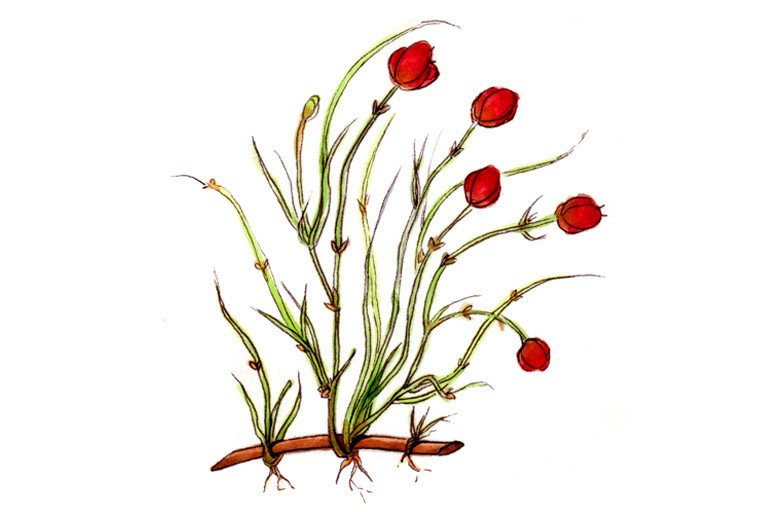
Common Names
- Mahuang
- herbal ecstasy
For Patients & Caregivers
Tell your healthcare providers about any dietary supplements you’re taking, such as herbs, vitamins, minerals, and natural or home remedies. This will help them manage your care and keep you safe.
Ephedra is a stimulant that has caused heart attack and stroke resulting in several deaths.
Ephedra contains ephedrine and pseudoephedrine, which are known to stimulate the central nervous system (brain and spinal cord). They activate the "fight or flight" response, resulting in constriction of blood vessels, relaxation and dilation of air passages, appetite suppression, and general stimulant effects. While these effects explain the use of ephedra as a decongestant, weight loss supplement, and anti-asthma agent, in high doses ephedra can raise blood pressure and cause adverse reactions such as stroke and heart attack. Even a single dose of an ephedra containing supplement can cause dangerous increases in blood pressure and effects on heart function.
Laboratory studies indicate that ephedra also can kill bacteria on contact, reduce inflammation, and cause contraction of the muscles of the uterus. These effects have not been studied in humans.
- To treat asthma
Ephedra may stimulate bronchial dilation. Alkaloids from ephedra have been used in over-the-counter medication as asthma remedies and nasal decongestants. - To treat coughs and bronchitis
Ephedra may stimulate bronchial dilation, but human data are lacking. The risk of dangerous side effects of ephedra may outweigh any benefits. - To treat the common cold
No scientific evidence supports this use. - To treat infections
Laboratory studies show that ephedra has antibacterial properties. - To promote urination
There are no data to back this claim. - For strength and stamina
Ephedra stimulates the central nervous system, but humand data are lacking. The risk of dangerous side effects of ephedra may outweigh any benefits. - To lose weight
Even though a few clinical trials suggest that people taking ephedra lose weight, ephedra is not safe to use, even at normal doses.
- Headache
- Hypertension
- Gastric mucosal injury
- Palpitations
- Heart attack
- Stroke
- Seizures
- Insomnia
- Psychosis
- Death
- Acute bilateral ocular pain and decreased vision along with headache, nausea and vomiting: In a 52-year-old woman after taking a herbal medicine containing ephedra for weight loss. Her symptoms resolved following treatment with antiglaucoma medications.
Patient Warnings:
- The FDA banned the sales of ephedra-containing dietary supplements as they pose significant health risks.
Do Not Take if:
- You have any of the following conditions: Anxiety, high blood pressure, heart disease, glaucoma, prostate enlargement, or hyperthyroidism.
- You are pregnant. (Ephedra can stimulate contraction of the uterus).
- You are taking aspirin (Ephedra may increase the risk of brain hemorrhage (stroke).
- You are taking benzodiazepines or other sedatives (Ephedra may lessen their effects).
- You are taking beta-adrenergic agonists (Ephedra may have additive effects, possibly leading to toxicity).
- You are taking CNS stimulants (Ephedra may increase the stimulatory effects).
- You are taking monoamine-oxidase inhibitors (MAO-Is) (Use of ephedra at the same time can cause hypertensive crisis, or dangerously high blood pressure).
- You are taking theophylline (Ephedra may decrease its effects).
- You are taking digoxin (Use of ephedra at the same time can cause cardiac arrhythmia).
For Healthcare Professionals
Derived from the dried rhizome and root of the plant, ephedra has been used as a medicinal herb for thousands of years in India, China and Japan. It is commonly consumed in low doses and in combination with other herbs to promote urination, to treat asthma, bronchitis and coughs. Ephedrine and pseudoephedrine, the major constituents, are non-selective sympathomimetic agents with both alpha and beta activities, and have direct as well as indirect central nervous system (CNS) stimulation effects, which account for the medicinal properties of the herb. In preclinical models, ephedra demonstrated antibacterial and anti-inflammatory properties (1) (2) (3).
Although ephedra is widely promoted as a natural stimulant and as an appetite suppressant, a systematic review cited insufficient evidence to support its use for weight loss (21). Additional preliminary data suggest an ephedrine alkaloids-free ephedra extract may be safer compared to ephedra extract, which causes adverse effects such as excitation, insomnia, and arrhythmias (19) (20), and a formula containing ephedra used alone or combined with NSAIDs reduced disease activity in active ankylosing spondylitis patients (23).
Misuse and overdose of ephedra have resulted in heart attack, stroke, seizure, psychosis and death (8). The FDA has banned the sales of dietary supplements that contain ephedra because of their significant risk to human health (12) (13). However, a review of 51 websites found nearly 20% sold weight loss products that potentially violated the ban of ephedra alkaloids (24).
- Asthma
- Bronchitis
- Common cold
- Cough
- Infections
- Promote urination
- Strength and stamina
- Weight loss
The major alkaloids in ephedra, ephedrine and pseudoephedrine, are CNS stimulants. They are non-selective sympathomimetic agents with both alpha and beta activities. These alkaloids can be used as decongestants because they constrict peripheral blood vessels, but in high doses, they also raise blood pressure (1) (2) (3). The CNS stimulation property contributes to ephedra’s appetite suppressant effects and its reputation as a weight loss agent (7). This effect, however, may lead to other cardiovascular adverse reactions such as stroke and heart attack (8). Ephedra’s antiasthmatic effect arises from its ability to relax bronchial smooth muscle. Studies indicate that ephedra also has antibacterial, anti-inflammatory and uterine stimulatory activities (9).
- Reported: Hypertension, palpitations, heart attack, stroke, seizures, insomnia, cardiomyopathy, psychosis and death (6) (10) (14), coronary artery aneurysm and thrombosis (16), and gastric mucosal injury (17).
- Acute bilateral ocular pain and decreased vision along with headache, nausea and vomiting: In a 52-year-old woman after taking a herbal medicine containing ephedra for weight loss. Her symptoms resolved following treatment with antiglaucoma medications (22).
- Atrial tachycardia: In a 65-year-old man with a history of idiopathic pulmonary fibrosis, after taking heart-leaf sida, a banned ephedrine alkaloid. The patient’s heart rate abruptly decreased without other intervention after stopping supplement use (25).