Health Care Professional Information
Scientific Name
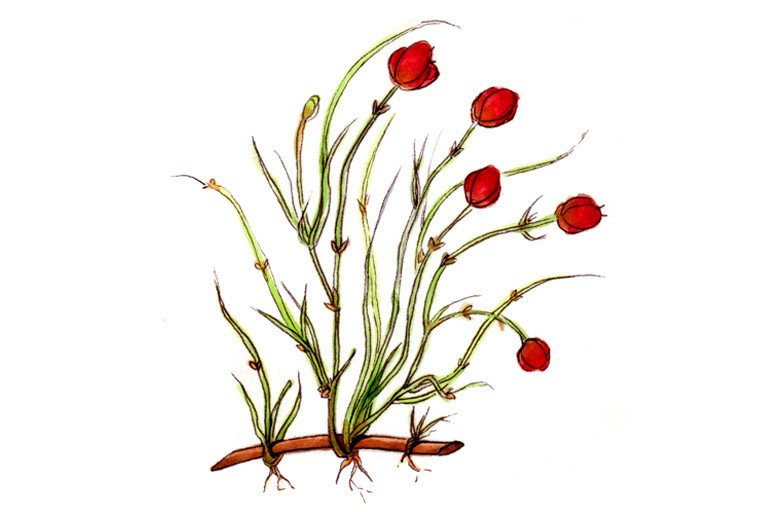
Ephedra sinica, Ephedra equisetina
Brand Name
Herbal Ectasy, Herbal fen-phen
Clinical Summary
Derived from the dried rhizome and root of the plant, ephedra has been used as a medicinal herb for thousands of years in India and China. It is commonly consumed in low doses and in combination with other herbs to promote urination, to treat asthma, bronchitis and coughs.
Ephedrine and pseudoephedrine, the major constituents, are non-selective sympathomimetic agents with both alpha and beta activities and have direct and indirect CNS stimulation effects, which account for the medicinal properties of the herb. Ephedra also has antibacterial and anti-inflammatory properties (1) (2) (3). It has been widely promoted as a natural stimulant and as an appetite suppressant.
Misuse and overdose of ephedra have resulted in heart attack, stroke, seizure, psychosis and death (8). Herb-drug interactions are major concerns (1) (4) (11) (14). A single dose of a weight loss supplement containing ephedra and caffeine increased QTc interval and systolic blood pressure significantly (15). The FDA has banned the sales of dietary supplements that contain ephedra because of their significant risk to human health (12) (13).
Purported Uses
- Asthma
- Bronchitis
- Common cold
- Cough
- Infections
- Promote urination
- Strength and stamina
- Weight loss
Constituents
Alkaloids: Ephedrine, pseudoephedrine, norephedrine, methylephedrine, norpseudoephedrine, and methylpseudoephedrine
(9)
Mechanism of Action
The major alkaloids in ephedra, ephedrine and pseudoephedrine, are CNS stimulants. They are non-selective sympathomimetic agents with both alpha and beta activities. These alkaloids can be used as decongestants because they constrict peripheral blood vessels, but in high doses, they also raise blood pressure (1) (2) (3). The CNS stimulation property contributes to ephedra's appetite suppressant effects and its reputation as a weight loss agent (7). This effect, however, may lead to other cardiovascular adverse reactions such as stroke and heart attack (8). Ephedra's antiasthmatic effect arises from its ability to relax bronchial smooth muscle. Studies indicate that ephedra also has antibacterial, anti-inflammatory and uterine stimulatory activities (9).
Pharmacokinetics
Ephedra alkaloids are absorbed in the intestine. A small amount is metabolized in the liver but most is excreted in the urine unchanged (9). Excretion rate is adversely affected by the pH of urine. Serum half-life is 3 to 6 hours for ephedrine and 5 to 8 hours for pseudoephedrine (1).
Warnings
The FDA has banned the sales of ephedra-containing dietary supplements. Consumers are urged not to buy or use these products (12) (13). These products have made unsubstantiated claims and may pose significant health risks (6).
Herb-Drug Interactions
CNS stimulants: May increase stimulatory effects.
(1)
Theophylline: May decrease its effectiveness (18).
Digoxin: Concomitant use can cause arrhythmia (1) (11).
Monoamine-oxidase inhibitors (MAO-I): Concomitant use can cause hypertensive crisis (4).
References
- Barnes J, et al. Herbal Medicines. Second Ed. London: Pharmaceutical Press; 2002.
- Bensky D, Gamble A. Chinese Herbal Medicine: Materia Medica. Revised Ed. Seattle: Eastland Press; 1993.
- Foster S, et al. Tyler's Honest Herbal: A Sensible Guide to the Use of Herbs and Related Remedies. New York: Haworth Herbal Press; 1999.
- Gruenwald J, et al. PDR for Herbal medicines, 2nd ed. Montvale (NJ): Medical Economics Company; 1998.
- Huang KC. The Pharmacology of Chinese Herbs, 2nd ed. New York: CRC Press; 1999.
- News Release. FDA Acts to Seize Ephedra-Containing Dietary Supplements. December 6, 2005. Accessed March 7, 2013.
- Boozer C, et al. An herbal supplement containing Ma Huang-Guarana for weight loss: a randomized, double-blind trial. Int J Obes Relat Metab Disord 2001;25:316-24.
- Samenuk D, et al. Adverse cardiovascular events temporally associated with ma huang, an herbal source of ephedrine. Mayo Clin Proc 2002;77:12-6.
- Haller C, et al. Pharmacology of ephedra alkaloids and caffeine after single-dose dietary supplement use. Clin Pharmacol Ther 2002;71:421-32.
- Haller C, Benowitz N. Adverse cardiovascular and central nervous system events associated with dietary supplements containing ephedra alkaloids. N Engl J Med 2000;343:1833-8.
- Jellin J, editor. Natural Medicines Comprehensive Database. Therapeutic Reseach Faculty; 2002.
- News Release. FDA Acts to Remove Ephedra-Containing Dietary Supplements From Market. United States Department of Health and Human Services. November 23, 2004. Accessed March 7, 2013.
- Food and Drug Administration, HHS. Final rule declaring dietary supplements containing ephedrine alkaloids adulterated because they present an unreasonable risk. Final rule. Fed Regist. 2004 Feb 11;69(28):6787-854.
- Naik SD, Freudenberger RS. Ephedra-associated cardiomyopathy. Ann Pharmacother. 2004 Mar;38(3):400-3. Epub 2004 Jan 23.
- McBride BF, Karapanos AK, Krudysz A, Kluger J, Coleman CI, White CM. Electrocardiographic and hemodynamic effects of a multicomponent dietary supplement containing ephedra and caffeine: a randomized controlled trial. JAMA. 2004 Jan 14;291(2):216-21.
- Flanagan CM, Kaesberg JL, Mitchell ES, Ferguson MA, Haigney MC. Coronary artery aneurysm and thrombosis following chronic ephedra use. Int J Cardiol. 2010 Feb 18;139(1):e11-3.
- Lillegard JB, Porterfield Jr JR. Ephedra-Induced Gastric Mucosal Injury. Case Rep Gastroenterol. 2010 Feb 27;4(1):79-83.
- Tang J, Zhou X, Ji H, Zhu D, Wu L. Effects of Ephedra Water Decoction and Cough Tablets containing Ephedra and Liquorice on CYP1A2 and the Pharmacokinetics of Theophylline in Rats. Phytother Res. 2011;26(3):470-4.
Consumer Information
How It Works
Bottom Line: Ephedra is a stimulant that has caused heart attack and stroke resulting in several deaths.
Ephedra contains ephedrine and pseudoephedrine, which are known to stimulate the central nervous system (brain and spinal cord). They activate the “fight or flight” response, resulting in constriction of blood vessels, relaxation and dilation of air passages, appetite suppression, and general stimulant effects. While these effects explain the use of ephedra as a decongestant, weight loss supplement, and anti-asthma agent, in high doses ephedra can raise blood pressure and cause adverse reactions such as stroke and heart attack. Even a single dose of an ephedra containing supplement can cause dangerous increases in blood pressure and effects on heart function.
Laboratory studies indicate that ephedra also can kill bacteria on contact, reduce inflammation, and cause contraction of the muscles of the uterus. These effects have not been studied in humans.
Purported Uses
- To treat asthma
Ephedra may stimulate bronchial dilation. Alkaloids from ephedra have been used in over-the-counter medication as asthma remedies and nasal decongestants.
- To treat coughs and bronchitis
Ephedra may stimulate bronchial dilation, but human data are lacking. The risk of dangerous side effects of ephedra may outweigh any benefits.
- To treat the common cold
No scientific evidence supports this use.
- To treat infections
Laboratory studies show that ephedra has antibacterial properties.
- To promote urination
There are no data to back this claim.
- For strength and stamina
Ephedra stimulates the central nervous system, but humand data are lacking. The risk of dangerous side effects of ephedra may outweigh any benefits.
- To lose weight
Even though a few clinical trials suggest that people taking ephedra lose weight, ephedra is not safe to use, even at normal doses.
Patient Warnings
- The FDA has banned the sales of ephedra-containing dietary supplements as they pose significant health risks. Possible adverse effects include high blood pressure, palpitations, heart attack, stroke, seizures, psychosis and death.
Do Not Take If
- You have any of the following conditions: Anxiety, high blood pressure, heart disease, glaucoma, prostate enlargement, or hyperthyroidism.
- You are pregnant. (Ephedra can stimulate contraction of the uterus).
- You are taking aspirin (Ephedra may increase the risk of brain hemorrhage (stroke).
- You are taking benzodiazepines or other sedatives (Ephedra may lessen their effects).
- You are taking beta-adrenergic agonists (Ephedra may have additive effects, possibly leading to toxicity).
- You are taking CNS stimulants (Ephedra may increase the stimulatory effects).
- You are taking monoamine-oxidase inhibitors (MAO-Is) (Use of ephedra at the same time can cause hypertensive crisis, or dangerously high blood pressure).
- You are taking theophylline (Ephedra may decrease its effects).
- You are taking digoxin (Use of ephedra at the same time can cause cardiac arrhythmia).
Side Effects
- Headache
- Hypertension
- Gastric mucosal injury
- Palpitations
- Heart attack
- Stroke
- Seizures
- Insomnia
- Psychosis
- Death
Last updated: March 7, 2013
activate (AK-tih-vayt)
In biology, to stimulate a cell in a resting state to become active. This causes biochemical and functional changes in the activated cell.
Source: The National Cancer Institute's Dictionary of Cancer Terms
(http://www.cancer.gov/dictionary)
affected
Individuals in a pedigree who exhibit the specific phenotype under study.
Source: The National Cancer Institute's Dictionary of Cancer Terms
(http://www.cancer.gov/dictionary)
anti-inflammatory (AN-tee-in-FLA-muh-TOR-ee)
Having to do with reducing inflammation.
Source: The National Cancer Institute's Dictionary of Cancer Terms
(http://www.cancer.gov/dictionary)
antibacterial (AN-tee-bak-TEER-ee-ul)
A substance that kills bacteria or stops them from growing and causing disease.
Source: The National Cancer Institute's Dictionary of Cancer Terms
(http://www.cancer.gov/dictionary)
anxiety (ang-ZY-eh-tee)
Feelings of fear, dread, and uneasiness that may occur as a reaction to stress. A person with anxiety may sweat, feel restless and tense, and have a rapid heart beat. Extreme anxiety that happens often over time may be a sign of an anxiety disorder.
Source: The National Cancer Institute's Dictionary of Cancer Terms
(http://www.cancer.gov/dictionary)
appetite (A-peh-tite)
A desire to satisfy a physical or mental need, such as for food, sex, or adventure.
Source: The National Cancer Institute's Dictionary of Cancer Terms
(http://www.cancer.gov/dictionary)
artery (AR-tuh-ree)
A blood vessel that carries blood from the heart to tissues and organs in the body.
Source: The National Cancer Institute's Dictionary of Cancer Terms
(http://www.cancer.gov/dictionary)
asthma (AZ-muh)
A chronic disease in which the bronchial airways in the lungs become narrowed and swollen, making it difficult to breathe. Symptoms include wheezing, coughing, tightness in the chest, shortness of breath, and rapid breathing. An attack may be brought on by pet hair, dust, smoke, pollen, mold, exercise, cold air, or stress.
Source: The National Cancer Institute's Dictionary of Cancer Terms
(http://www.cancer.gov/dictionary)
bacteria (bak-TEER-ee-uh)
A large group of single-cell microorganisms. Some cause infections and disease in animals and humans. The singular of bacteria is bacterium.
Source: The National Cancer Institute's Dictionary of Cancer Terms
(http://www.cancer.gov/dictionary)
blood (blud)
A tissue with red blood cells, white blood cells, platelets, and other substances suspended in fluid called plasma. Blood takes oxygen and nutrients to the tissues, and carries away wastes.
Source: The National Cancer Institute's Dictionary of Cancer Terms
(http://www.cancer.gov/dictionary)
blood pressure (blud PREH-sher)
The force of circulating blood on the walls of the arteries. Blood pressure is taken using two measurements: systolic (measured when the heart beats, when blood pressure is at its highest) and diastolic (measured between heart beats, when blood pressure is at its lowest). Blood pressure is written with the systolic blood pressure first, followed by the diastolic blood pressure (for example 120/80).
Source: The National Cancer Institute's Dictionary of Cancer Terms
(http://www.cancer.gov/dictionary)
bronchial (BRON-kee-ul)
Having to do with the bronchi, which are the larger air passages of the lungs, including those that lead from the trachea (windpipe) to the lungs and those within the lungs.
Source: The National Cancer Institute's Dictionary of Cancer Terms
(http://www.cancer.gov/dictionary)
caffeine (ka-FEEN)
A substance found in the leaves and beans of the coffee tree, in tea, yerba mate, guarana berries, and in small amounts in cocoa. It can also be made in the laboratory, and is added to some soft drinks, foods, and medicines. Caffeine increases brain activity, alertness, attention, and energy. It may also increase blood pressure, heart rate, breathing rate, and the loss of water from the body in urine.
Source: The National Cancer Institute's Dictionary of Cancer Terms
(http://www.cancer.gov/dictionary)
cardiac (KAR-dee-ak)
Having to do with the heart.
Source: The National Cancer Institute's Dictionary of Cancer Terms
(http://www.cancer.gov/dictionary)
cardiovascular (KAR-dee-oh-VAS-kyoo-ler)
Having to do with the heart and blood vessels.
Source: The National Cancer Institute's Dictionary of Cancer Terms
(http://www.cancer.gov/dictionary)
central nervous system (SEN-trul NER-vus SIS-tem)
The brain and spinal cord. Also called CNS.
Source: The National Cancer Institute's Dictionary of Cancer Terms
(http://www.cancer.gov/dictionary)
clinical (KLIH-nih-kul)
Having to do with the examination and treatment of patients.
Source: The National Cancer Institute's Dictionary of Cancer Terms
(http://www.cancer.gov/dictionary)
CNS
The brain and spinal cord. Also called central nervous system.
Source: The National Cancer Institute's Dictionary of Cancer Terms
(http://www.cancer.gov/dictionary)
concomitant (kon-KAH-mih-tunt)
Occurring or existing at the same time as something else. In medicine, it may refer to a condition a person has or a medication a person is taking that is not being studied in the clinical trial he or she is taking part in.
Source: The National Cancer Institute's Dictionary of Cancer Terms
(http://www.cancer.gov/dictionary)
dose (dose)
The amount of medicine taken, or radiation given, at one time.
Source: The National Cancer Institute's Dictionary of Cancer Terms
(http://www.cancer.gov/dictionary)
ephedra (eh-FEH-druh)
A shrub native to China and India. The stems and roots are used in traditional medicine as a diuretic and for asthma, bronchitis, and cough. It has also been promoted as a decongestant, a weight loss aid, and as a supplement to increase energy. Ephedra may cause high blood pressure, increased heart rate, or death if used with certain drugs, and may reduce the effects of certain drugs used to treat cancer and other diseases. The U.S. Food and Drug Administration has banned the sale of dietary supplements that contain ephedra. The scientific name is . Also called ma huang.
Source: The National Cancer Institute's Dictionary of Cancer Terms
(http://www.cancer.gov/dictionary)
FDA
An agency in the U.S. federal government whose mission is to protect public health by making sure that food, cosmetics, and nutritional supplements are safe to use and truthfully labeled. The FDA also makes sure that drugs, medical devices, and equipment are safe and effective, and that blood for transfusions and transplant tissue are safe. Also called Food and Drug Administration.
Source: The National Cancer Institute's Dictionary of Cancer Terms
(http://www.cancer.gov/dictionary)
gastric (GAS-trik)
Having to do with the stomach.
Source: The National Cancer Institute's Dictionary of Cancer Terms
(http://www.cancer.gov/dictionary)
glaucoma (glaw-KOH-muh)
A condition in which there is a build-up of fluid in the eye, which presses on the retina and the optic nerve. The retina is the layer of nerve tissue inside the eye that senses light and sends images along the optic nerve to the brain. Glaucoma can damage the optic nerve and cause loss of vision or blindness.
Source: The National Cancer Institute's Dictionary of Cancer Terms
(http://www.cancer.gov/dictionary)
hemorrhage (HEH-muh-rij)
In medicine, loss of blood from damaged blood vessels. A hemorrhage may be internal or external, and usually involves a lot of bleeding in a short time.
Source: The National Cancer Institute's Dictionary of Cancer Terms
(http://www.cancer.gov/dictionary)
herbal (ER-bul)
Having to do with plants.
Source: The National Cancer Institute's Dictionary of Cancer Terms
(http://www.cancer.gov/dictionary)
high blood pressure (hy blud PREH-sher)
A blood pressure of 140/90 or higher. High blood pressure usually has no symptoms. It can harm the arteries and cause an increase in the risk of stroke, heart attack, kidney failure, and blindness. Also called hypertension.
Source: The National Cancer Institute's Dictionary of Cancer Terms
(http://www.cancer.gov/dictionary)
hypertension (HY-per-TEN-shun)
A blood pressure of 140/90 or higher. Hypertension usually has no symptoms. It can harm the arteries and cause an increase in the risk of stroke, heart attack, kidney failure, and blindness. Also called high blood pressure.
Source: The National Cancer Institute's Dictionary of Cancer Terms
(http://www.cancer.gov/dictionary)
hyperthyroidism (HY-per-THY-roy-dih-zum)
Too much thyroid hormone. Symptoms include weight loss, chest pain, cramps, diarrhea, and nervousness. Also called overactive thyroid.
Source: The National Cancer Institute's Dictionary of Cancer Terms
(http://www.cancer.gov/dictionary)
inflammation (IN-fluh-MAY-shun)
Redness, swelling, pain, and/or a feeling of heat in an area of the body. This is a protective reaction to injury, disease, or irritation of the tissues.
Source: The National Cancer Institute's Dictionary of Cancer Terms
(http://www.cancer.gov/dictionary)
insomnia (in-SOM-nee-uh)
Difficulty in going to sleep or getting enough sleep.
Source: The National Cancer Institute's Dictionary of Cancer Terms
(http://www.cancer.gov/dictionary)
intestine (in-TES-tin)
The long, tube-shaped organ in the abdomen that completes the process of digestion. The intestine has two parts, the small intestine and the large intestine. Also called bowel.
Source: The National Cancer Institute's Dictionary of Cancer Terms
(http://www.cancer.gov/dictionary)
liver (LIH-ver)
A large organ located in the upper abdomen. The liver cleanses the blood and aids in digestion by secreting bile.
Source: The National Cancer Institute's Dictionary of Cancer Terms
(http://www.cancer.gov/dictionary)
medication (MEH-dih-KAY-shun)
A legal drug that is used to prevent, treat, or relieve symptoms of a disease or abnormal condition.
Source: The National Cancer Institute's Dictionary of Cancer Terms
(http://www.cancer.gov/dictionary)
nasal (NAY-zul)
By or having to do with the nose.
Source: The National Cancer Institute's Dictionary of Cancer Terms
(http://www.cancer.gov/dictionary)
nervous system (NER-vus SIS-tem)
The organized network of nerve tissue in the body. It includes the central nervous system (the brain and spinal cord), the peripheral nervous system (nerves that extend from the spinal cord to the rest of the body), and other nerve tissue.
Source: The National Cancer Institute's Dictionary of Cancer Terms
(http://www.cancer.gov/dictionary)
over-the-counter (OH-ver-the-KOWN-ter)
A medicine that can be bought without a prescription (doctor's order). Examples include analgesics (pain relievers) such as aspirin and acetaminophen. Also called nonprescription and OTC.
Source: The National Cancer Institute's Dictionary of Cancer Terms
(http://www.cancer.gov/dictionary)
overdose (OH-ver-dose)
An amount of drug that is more than what should be taken at one time.
Source: The National Cancer Institute's Dictionary of Cancer Terms
(http://www.cancer.gov/dictionary)
peripheral blood (peh-RIH-feh-rul blud)
Blood circulating throughout the body.
Source: The National Cancer Institute's Dictionary of Cancer Terms
(http://www.cancer.gov/dictionary)
pharmacology (FAR-muh-KAH-loh-jee)
The study of the origin, chemistry, and uses of drugs and their effects on the body.
Source: The National Cancer Institute's Dictionary of Cancer Terms
(http://www.cancer.gov/dictionary)
pregnancy (PREG-nun-see)
The condition between conception (fertilization of an egg by a sperm) and birth, during which the fertilized egg develops in the uterus. In humans, pregnancy lasts about 288 days.
Source: The National Cancer Institute's Dictionary of Cancer Terms
(http://www.cancer.gov/dictionary)
prostate (PROS-tayt)
A gland in the male reproductive system. The prostate surrounds the part of the urethra (the tube that empties the bladder) just below the bladder, and produces a fluid that forms part of the semen.
Source: The National Cancer Institute's Dictionary of Cancer Terms
(http://www.cancer.gov/dictionary)
psychosis (sy-KOH-sis)
A severe mental disorder in which a person loses the ability to recognize reality or relate to others. The person is not able to cope with the demands of everyday life. Symptoms include being paranoid, having false ideas about what is taking place or who one is, and seeing, hearing, or feeling things that are not there.
Source: The National Cancer Institute's Dictionary of Cancer Terms
(http://www.cancer.gov/dictionary)
response (reh-SPONTS)
In medicine, an improvement related to treatment.
Source: The National Cancer Institute's Dictionary of Cancer Terms
(http://www.cancer.gov/dictionary)
seizure (SEE-zher)
Sudden, uncontrolled body movements and changes in behavior that occur because of abnormal electrical activity in the brain. Symptoms include loss of awareness, changes in emotion, loss of muscle control, and shaking. Seizures may be caused by drugs, high fevers, head injuries, and certain diseases, such as epilepsy.
Source: The National Cancer Institute's Dictionary of Cancer Terms
(http://www.cancer.gov/dictionary)
serum (SEER-um)
The clear liquid part of the blood that remains after blood cells and clotting proteins have been removed.
Source: The National Cancer Institute's Dictionary of Cancer Terms
(http://www.cancer.gov/dictionary)
significant (sig-NIH-fih-kunt)
In statistics, describes a mathematical measure of difference between groups. The difference is said to be significant if it is greater than what might be expected to happen by chance alone. Also called statistically significant.
Source: The National Cancer Institute's Dictionary of Cancer Terms
(http://www.cancer.gov/dictionary)
stimulant (STIM-yoo-lunt)
In medicine, a family of drugs used to treat depression, attention-deficit disorder (a common disorder in which children are inattentive, impulsive, and/or over-active), and narcolepsy (a sleep disorder that causes uncontrollable sleepiness). Stimulants increase brain activity, alertness, attention, and energy. They also raise blood pressure and increase heart rate and breathing rate.
Source: The National Cancer Institute's Dictionary of Cancer Terms
(http://www.cancer.gov/dictionary)
stroke (stroke)
In medicine, a loss of blood flow to part of the brain, which damages brain tissue. Strokes are caused by blood clots and broken blood vessels in the brain. Symptoms include dizziness, numbness, weakness on one side of the body, and problems with talking, writing, or understanding language. The risk of stroke is increased by high blood pressure, older age, smoking, diabetes, high cholesterol, heart disease, atherosclerosis (a build-up of fatty material and plaque inside the coronary arteries), and a family history of stroke.
Source: The National Cancer Institute's Dictionary of Cancer Terms
(http://www.cancer.gov/dictionary)
thrombosis (throm-BOH-sis)
The formation or presence of a thrombus (blood clot) inside a blood vessel.
Source: The National Cancer Institute's Dictionary of Cancer Terms
(http://www.cancer.gov/dictionary)
urine (YOOR-in)
Fluid containing water and waste products. Urine is made by the kidneys, stored in the bladder, and leaves the body through the urethra.
Source: The National Cancer Institute's Dictionary of Cancer Terms
(http://www.cancer.gov/dictionary)
uterus (YOO-teh-rus)
The small, hollow, pear-shaped organ in a woman's pelvis. This is the organ in which a fetus develops. Also called womb.
Source: The National Cancer Institute's Dictionary of Cancer Terms
(http://www.cancer.gov/dictionary)