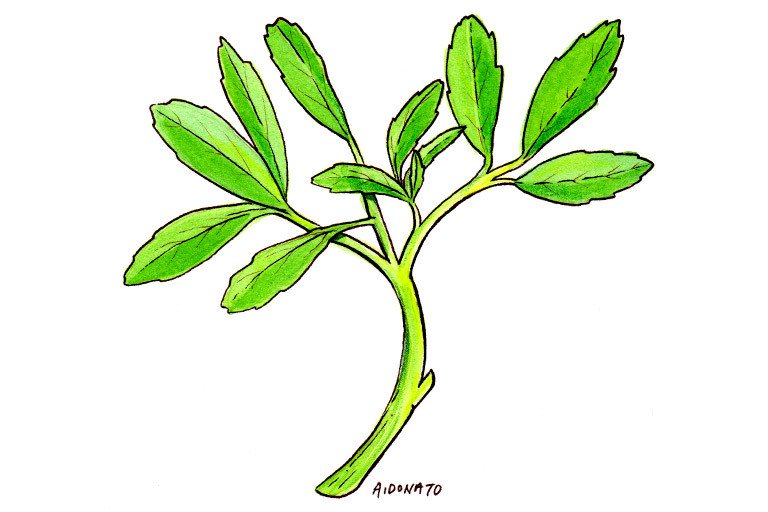
Common Names
- Bird's foot
- Greek hayseed
- Bockshornsame
- Methi
- Hu lu ba
For Patients & Caregivers
Tell your healthcare providers about any dietary supplements you’re taking, such as herbs, vitamins, minerals, and natural or home remedies. This will help them manage your care and keep you safe.
Fenugreek may help lower blood sugar and cholesterol levels, but data is limited and more studies are needed.
Fenugreek comes from the dried seeds of the plant, and has a scent and taste similar to maple syrup. It is used in Middle Eastern, African, and Indian cuisine, and in traditional medicine such as Ayurveda to treat inflammation, diabetes, and gastrointestinal disorders.
Research on this botanical is limited. Small studies in humans suggest fenugreek may help reduce blood fats and sugars, or relieve menopause symptoms, but larger-well designed studies are needed.
In vitro, fenugreek acted as an estrogen receptor modulator and stimulated breast cancer cells. Therefore, patients with hormone-sensitive cancers should consult their physician before using this product in amounts greater than typically found in food.
-
To treat diabetes
Small studies suggest that fenugreek can lower blood glucose levels when taken with meals. However, more research is needed. -
As a laxative
Although fenugreek seeds contain high levels of fiber, clinical data are lacking. -
To treat disorders of the digestive tract
Evidence is lacking to support this claim. -
To lower high cholesterol
A few trials support this use, but additional studies are needed. -
To fight infections
Lab studies suggest fenugreek has antibacterial properties, but this has not been studied in humans. -
To reduce inflammation
Evidence is lacking to support this claim. -
As a lactation stimulant
Although fenugreek is used in folk medicine to stimulate lactation, evidence is lacking to support this claim and side effects have been reported. -
For wound healing
Evidence is lacking to support this claim.
Case reports
- Allergic reactions: Runny nose, wheezing, shortness of breath, nausea, abdominal pain, facial swelling, hives, and fainting
- Severe clotting failure: With excessive use of fenugreek milk porridge, in a patient with cirrhosis.
- Serotonin syndrome: Nausea, anxiety, dilated pupils, sweating, rapid heartbeat, twitching, and spasms in a 38-year-old woman with postnatal depression and anxiety who was being treated with the antidepressant sertraline, but had also taken daily fenugreek supplements to aid in lactation.
Do Not Take if:
- You are taking warfarin: Case reports indicate that fenugreek may increase bleeding risk.
- You are taking SSRI antidepressants: A case report suggests supplemental fenugreek may increase the risk for serotonin syndrome, a serious medical condition.
- You are taking cyclophosphamide: Animal studies suggest fenugreek may interfere with the actions of cyclophosphamide.
- You have a hormone-sensitive cancer: Lab studies show that fenugreek acts as an estrogenic receptor modulator and may increase growth of breast cancer cells.
- You are pregnant or breastfeeding: Fenugreek has been linked to an increased risk of birth defects and its safety in amounts greater than typically found in food are unknown.
For Healthcare Professionals
Fenugreek is derived from the dried seeds of the plant, with a scent and taste similar to maple syrup. It is used in ayurvedic medicine as a demulcent, laxative, and to increase breast milk supply. It is also used as a dietary supplement to treat various conditions including diabetes, high cholesterol, wounds, inflammation, and gastrointestinal complaints.
Preclinical studies suggest fenugreek has hypocholesterolemic (1), hypolipidemic (2) (23), hypoglycemic (3), antimicrobial (20), hepatoprotective (5) (6), and antinociceptive (30) effects.
Data in humans are limited. Small studies showed benefits of fenugreek for mild asthma (33), metabolic syndrome (48), as well as menopausal (34), postmenopausal (35), polycystic ovary syndrome symptoms (42), and Alzheimer’s disease (49). Data also suggest it may improve exercise performance (50), lipid parameters and glycemic control (51), and decrease insulin resistance in type-2 diabetic patients (36) (43). More research is needed to confirm these effects (37).
Fenugreek demonstrated chemopreventive (7) (8) (9) (24) and chemoprotective properties (25), but human studies have not been conducted. Fenugreek also acts as an estrogen receptor modulator and stimulates breast cancer cells in vitro (26), but evidence of its potential to stimulate lactation is limited (52).
- Diabetes
- GI disorders
- High cholesterol
- Infections
- Inflammation
- Lactation
- Laxative
- Wounds
The hypoglycemic activity of fenugreek may be associated with the galactomannan fiber and saponin components that reduce gastrointestinal glucose and cholesterol absorption, and increase bile acid excretion (14). 4-Hydroxyisoleucine, an amino acid constituent, potentiates insulin secretion in non-insulin-dependent diabetic rats when administered intraperitoneally (15). In addition to lower fasting and postprandial glucose levels, fenugreek-treated diabetic rats had higher hemoglobin, GSH, and plasma antioxidant levels and lower glycosylated hemoglobin, plasma lipids, and TBARS levels than diabetic controls (4). Dietary fenugreek also normalizes the activities of glucose and lipid-metabolizing enzymes in diabetic rats (3). Other animal studies suggest dietary fenugreek increases serum T4, liver GSH, glyoxalase I, and GST activities, and decreases T3 levels and T3/T4 ratio (17) (18) (19). In humans, fenugreek intake was associated with an increase in molar insulin binding sites of erythrocytes, which may enhance glucose utilization (16).
Fenugreek has also been studied for its anticancer potential. In MCF-7 estrogen receptor-positive breast cancer cells, a fenugreek extract induced cell cycle arrest and apoptosis (9). Dioscin, a steroidal saponin isolated from fenugreek, suppressed cell viability of ovarian cancer cells by regulating VEGFR2, PI3K, phosphorylated AKT and phosphorylated p38 MAPK signaling pathways (39).
In a case report of serotonin syndrome likely caused by an interaction between fenugreek and sertraline, the authors point to animal studies that posit 4-hydroxyisoleucine may increase serotonin turnover in the brain (47).
- Fenugreek acts as an estrogen receptor modulator and stimulated breast cancer cells in vitro (26). Patients with hormonal-sensitive cancers should consult their physicians before using fenugreek.
- Patients taking SSRI antidepressants should avoid using fenugreek products outside of typical food intake, as a case of serotonin syndrome has been reported (47).
- Fenugreek should be avoided in those who are pregnant or breastfeeding as it has been linked to an increased risk of birth defects in animals and humans (44) (45), and its safety in amounts greater than typically found in food are unknown.
Case reports
- Allergic reactions: Rhinorrhea, wheezing, numbness of head, facial angioedema and fainting following inhalation and external application of fenugreek seed powder (31).
- IgE-Mediated anaphylaxis: Hives, abdominal pain, nausea, and dyspnea in a 34-year-old woman with multiple food allergies. A challenge test with fenugreek caused anaphylaxis, but symptoms resolved with treatment (46).
- Serotonin syndrome: In a 38-year-old woman with postnatal depression and anxiety who was being treated with sertraline, but had also taken daily fenugreek supplements to aid in lactation (47).
- Severe coagulation failure: Related to excessive use of fenugreek milk porridge in a patient with compensation cirrhosis (40).
- Pulmonary embolism: Associated with use of a fenugreek-containing supplement for erectile dysfunction, in a 75-year-old man (53).
- Warfarin: Case reports indicate that fenugreek may potentiate the effects of warfarin (28) (29).
- SSRI antidepressants: A case report suggests supplemental fenugreek may increase the risk for serotonin syndrome (47).
- Cyclophosphamide: Animal studies suggest fenugreek may interfere with the cytotoxic effects of cyclophosphamide (25). Clinical relevance has yet to be determined.
- Theophylline: Fenugreek altered theophylline bioavailability in an animal model (32). Clinical relevance has yet to be determined.