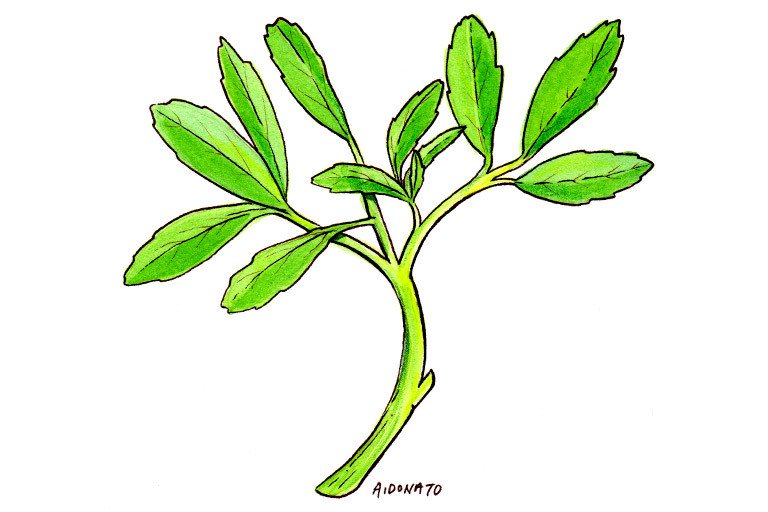
Health Care Professional Information
Scientific Name
Trigonella foenum-graecum
Common Name
Bird’s foot, Greek hayseed, trigonella, bockshornsame, Methi, hu lu ba
Clinical Summary
Fenugreek is derived from the dried seeds of the plant and is used traditionally in ayurvedic medicine as a demulcent, laxative, and lactation stimulant. It is also used as a dietary supplement to treat various conditions including diabetes, high cholesterol, wounds, inflammation, and gastrointestinal complaints.
Fenugreek exhibits hypocholesterolemic (1), hypolipidemic (2) (23) and hypoglycemic (3) properties in healthy and diabetic animals, and in humans. The defatted seed material may reduce gastrointestinal glucose and cholesterol absorption, and increase bile acid secretion (4). Further, fenugreek demonstrated hepatoprotective effects against alcohol-induced liver damage (5) (6)and may be effective in reducing peripheral neuropathy (30).
In vitro studies suggest chemopreventive properties against certain cancers (7) (8) (9) (24). Fenugreek also reduced the toxicity associated with buthionine sulfoximine and cyclophosphamide in mice (25). Human studies have not yet been conducted.
Evidence is limited on fenugreek's potential to stimulate lactation.
It acts as an estrogenic receptor modulator and stimulates breast cancer cells in vitro (26). Patients with hormonal-sensitive cancers should avoid this product.
Purported Uses
- Alopecia
- Arthritis
- Cancer treatment
- Diabetes
- GI disorders
- High cholesterol
- Induce childbirth
- Infections
- Inflammation
- Lactation stimulation
- Lymphadenitis
- Muscle pain
- Promote urination
- Skin ulcers
- Wound healing
Constituents
- Alkaloids: Trigonelline (yields nicotinic acid with roasting), gentianine, carpaine, choline
- Proteins and amino acids: 4-Hydroxyisoleucine, histidine, lysine, arginine
- Flavonoids: Apigenin, luteolin, orientin, vitexin, quercetin
- Saponins: Graecunins, fenugrin B, fenugreekine, trigofoenosides A-G
- Steroidal sapinogens: Yamogenin, diosgenin, smilagenin, sarsasapogenin, tigogenin, neotigogenin, gitogenin, neogitogenin, yuccagenin
- Fiber: Gum, neutral detergent fiber
- Other: Coumarin, lipids, vitamins, minerals
(11) (12) (13)
Mechanism of Action
Fenugreek exhibits hypocholesterolemic, hypolipidemic, and hypoglycemic activity in healthy and diabetic animals and humans (1) (2). The mechanism is uncertain, but its activity may be associated with the galactomannan fiber and saponin components that reduce gastrointestinal glucose and cholesterol absorption and increase bile acid excretion (14). Hypoglycemic activity is also attributed to the trigonelline, nicotinic acid, and coumarin fractions. 4-Hydroxyisoleucine, an amino acid constituent of fenugreek, potentiates insulin secretion in NIDDM rats when administered intraperitoneally (15). Fenugreek intake in humans is associated with an increase in molar insulin binding sites of erythrocytes, which may enhance glucose utilization (16). In addition to lower fasting and postprandial glucose levels, fenugreek-treated diabetic rats have higher hemoglobin, GSH, and plasma antioxidant levels and lower glycosylated hemoglobin, plasma lipids, and TBARS levels than diabetic controls (4). Dietary fenugreek normalizes the activities of glucose and lipid-metabolizing enzymes in diabetic rats (3). In healthy mice and rats, dietary fenugreek is associated with increased serum T4, liver GSH, glyoxalase I, and GST activities, and decreased T3 levels and T3/T4 ratio (17) (18) (19). Extracts of fenugreek show antimicrobial and nematocidal activity in vitro (20). In MCF-7 estrogen receptor-positive breast cancer cells, fenugreek extract induces cell cycle arrest as well as apoptosis (9).
Contraindications
Fenugreek acts as an estrogenic receptor modulator and was shown to stimulate breast cancer cells in vitro (26). Patients with hormonal-sensitive cancers should avoid this product.
Adverse Reactions
- Fenugreek seed extract caused developmental abnormalities in mice (27), but this has not been shown in humans.
Herb-Drug Interactions
- Warfarin: Fenugreek may potentiate the effects of warfarin (28) (29).
- Cyclophosphamide: Fenugreek may interfere with the cytotoxic effects of cyclophosphamide (25).
Herb Lab Interactions
- Increased INR (28).
- Urine odor: False diagnosis of maple syrup urine disease in the infant due to presence of sotolone in the urine (21) (22).
Literature Summary and Critique
In vitro and animal studies suggest benefits of fenugreek. Preliminary evidence indicates its effectiveness against diabetes in humans; however, large randomized clinical trials have not been conducted.
Dosage (Inside MSKCC Only)
This field is only visible to only Inside MSKCC users.
References
- Sharma RD, et al. Hypolipidaemic effect of fenugreek seeds: a chronic study in non-insulin dependent diabetic patients. Phytother Res 1996;10:332-4.
- Sharma RD, et al. Effect of fenugreek seeds on blood glucose and serum lipids in type I diabetes. Eur J Clin Nutr 1990;44:301-6.
- Vijayakumar MV, Bhat MK. Hypoglycemic effect of a novel dialysed fenugreek seeds extract is sustainable and is mediated, in part, by the activation of hepatic enzymes.Phytother Res. Apr 2008;22(4):500-505.
- Ravikumar P, Anuradha CV. Effect of fenugreek seeds on blood lipid peroxidation and antioxidants in diabetic rats. Phytother Res 1999;13:197-201.
- Kaviarasan S, Viswanathan P, Anuradha CV.Fenugreek seed (Trigonella foenum graecum) polyphenols inhibit ethanol-induced collagen and lipid accumulation in rat liver.Cell Biol Toxicol. Nov 2007;23(6):373-383.
- Kaviarasan S, Sundarapandiyan R, Anuradha CV. Protective action of fenugreek (Trigonella foenum graecum) seed polyphenols against alcohol-induced protein and lipid damage in rat liver.Cell Biol Toxicol. Oct 2008;24(5):391-400.
- Amin A, Alkaabi A, Al-Falasi S, Daoud SA. Chemopreventive activities of Trigonella foenum graecum (Fenugreek) against breast cancer. Cell Biol Int 2005.
- Raju J, Patlolla JM, Swamy MV, Rao CV. Diosgenin, a steroid saponin of Trigonella foenum graecum (Fenugreek), inhibits azoxymethane-induced aberrant crypt foci formation in F344 rats and induces apoptosis in HT-29 human colon cancer cells.Cancer Epidemiol Biomarkers Prev 2004;13(8):1392-8.
- Sebastian KS, Thampan RV. Differential effects of soybean and fenugreek extracts on the growth of MCF-7 cells. Chem Biol Interact. Nov 20 2007;170(2):135-143.
- Fetrow CW, Avila JR. Professional's Handbook of Complementary and Alternative Medicines. Philadelphia: Springerhouse; 1999.
- Barnes J, Anderson LA, Phillipson JD. Herbal Medicines: A Guide for Healthcare Professionals. 2nd ed. London: Pharmaceutical Press; 2002.
- DerMarderosian A. he Review of Natural Products. St. Louis: Facts and Comparisons;1999.
- Newall C. Herbal Medicines: A Guide for Health-Care Professionals. 1st ed. London: Pharmaceutical Press; 1998.
- Bordia A, Verma SK, Srivastava KC. Effect of ginger (Zingiber officinale Rosc.) and fenugreek (Trigonella foenumgraecum L.) on blood lipids, blood sugar, and platelet aggregation in patients with coronary artery disease. Prostagl Leukot Ess Fatty Acids 1997;56:379-84.
- Broca C, et al. 4-Hydroxyisoleucine: experimental evidence of its insulinotropic and antidiabetic properties. Am J Physiol 1999;277:E617-23.
- Raghuram TC, Sharmar RD, Sivakumar B, Sahay BK. Effect of fenugreek seeds on intravenous glucose disposition in non-insulin dependent diabetic patients. Phytother Res 1994;8:83-6.
- Choudhary D, et al. Modulation of glyoxalase, glutathione S-transferase and antioxidant enzymes in the liver, spleen and erythrocytes of mice by dietary administration of fenugreek seeds. Food Chem Toxicol 2001;39:989-97.
- Panda S, Tahiliani P, Kar A. Inhibition of triiodothyronine production by fenugreek seed extract in mice and rats. Pharmacol Res 1999;40:405-9.
- Raju J, et al. Trigonella foenum graecum (Fenugreek) seed powder improves glucose homeostasis in alloxan diabetic rat tissues by reversing the altered glycolytic, gluconeogenic and lipogenic enzymes. Mol Cell Biochem 2001;224:45-51.
- Zia T, Siddiqui IA, Hasnain N. Nematicidal activity of Trigonella foenum-graecum L. Phytother Res 2001;15:538-40.
- Korman SH, Cohen E, Preminger A. Pseudo-maple syrup urine disease due to maternal prenatal ingestion of fenugreek. J Paediatr Child Health 2001;37:403-4.
- Sewell AC, Mosandl A, Bohles H. False diagnosis of maple syrup urine disease owing to ingestion of herbal tea. N Engl J Med 1999;341:769.
- Hasani-Ranjbar S, Nayebi N, Moradi L, et al. The efficacy and safety of herbal medicines used in the treatment of hyperlipidemia; a systematic review. Curr Pharm Des. 2010;16(26):2935-47.
- Li F, Fernandez PP, Rajendran P, Hui KM, Sethi G. Diosgenin, a steroidal saponin, inhibits STAT3 signaling pathway leading to suppression of proliferation and chemosensitization of human hepatocellular carcinoma cells. Cancer Lett. 2010 Jun 28;292(2):197-207.
- Bhatia K, Kaur M, Atif F, et al. Aqueous extract of Trigonella foenum-graecum L. ameliorates additive urotoxicity of buthionine sulfoximine and cyclophosphamide in mice. Food Chem Toxicol. 2006 Oct;44(10):1744-50.
- Sreeja S, Anju VS, Sreeja S. In vitro estrogenic activities of fenugreek Trigonella foenum graecum seeds. Indian J Med Res. 2010 Jun;131:814-9.
- Khalki L, M'hamed SB, Bennis M, Chait A, Sokar Z. Evaluation of the developmental toxicity of the aqueous extract from Trigonella foenum-graecum (L.) in mice. J Ethnopharmacol. 2010 Sep 15;131(2):321-5.
- Lambert JP, Cormier J. Potential interaction between warfarin and boldo-fenugreek. Pharmacotherapy. 2001 Apr;21(4):509-12.
- Izzo AA, Di Carlo G, Borrelli F, Ernst E. Cardiovascular pharmacotherapy and herbal medicines: the risk of drug interaction. Int J Cardiol. 2005 Jan;98(1):1-14.
- Morani AS, Bodhankar SL, Mohan V, Thakurdesai PA. Ameliorative effects of standardized extract from Trigonella foenum-graecum L. seeds on painful peripheral neuropathy in rats. Asian Pac J Trop Med. 2012 May;5(5):385-90.
Consumer Information
How It Works
Bottom Line: Fenugreek may lower blood glucose and cholesterol levels in people with diabetes.
Much research on fenugreek has been conducted in India and other countries, focusing on its potential for the treatment of diabetes. In healthy and diabetic animals and humans, fenugreek lowers cholesterol, blood triglyceride levels, and blood glucose levels. Scientists are not certain how this effect happens, but propose that the fiber in fenugreek binds to glucose and cholesterol in the digestive tract and prevents it from being absorbed by the body, or increases insulin secretion. Laboratory studies in rats show that fenugreek normalizes their blood levels of antioxidants and metabolic enzymes, but it is unclear whether this effect occurs in humans. Fenugreek has anticancer properties but human studies are needed.
Fenugreek acts as an estrogenic receptor modulator and was shown to stimulate breast cancer cells in vitro. Patients with hormonal-sensitive cancers should avoid this product.
Purported Uses
- To treat cancer
Laboratory and animal studies show that fenugreek has anticancer properties. Human studies are needed.
- To treat diabetes
Several animal studies and a few clinical trials show that fenugreek can lower blood glucose levels when taken with meals. However, more research is needed to support its use as a replacement for diabetes medications.
- As a laxative
No clinical trials have studied this use, but fenugreek seeds do contain high levels of fiber.
- To treat disorders of the digestive tract
No scientific evidence supports this use. Fenugreek seeds contain high levels of fiber.
- To lower high cholesterol
Several animal studies and a few clinical trials support this use.
- To induce childbirth
Although laboratory studies show that fenugreek stimulates contraction of the uterus, human data are lacking.
- To fight infections
Fenugreek shows antibacterial properties in laboratory experiments, but it has not been studied in humans.
- To reduce inflammation
No scientific evidence supports this use.
- As a lactation stimulant
Although fenugreek is often used to stimulate lactation in folk medicine, there are no data to back this claim.
- For wound healing
Fenugreek shows antibacterial properties in laboratory experiments, but there is no scientific evidence supports this use.
Research Evidence
Laboratory and animal studies suggest benefits of fenugreek. Preliminary evidence indicates its effectiveness against diabetes in humans; however, large randomized clinical trials have not been conducted.
Do Not Take If
- You are taking warfarin (fenugreek can increase the risk of bleeding).
- You are taking cyclophosphamide (fenugreek may interfere with the actions of cyclophosphamide).
- You have hormone-sensitive cancer (fenugreek acts as an estrogenic receptor modulator and was shown to increase growth of breast cancer cells in vitro).
Side Effects
- Fenugreek seed extract caused developmental abnormalities in mice, but this has not been shown in humans.
Last updated: June 6, 2012
absorption (ub-SORP-shun)
The process of taking nutrients from the digestive system into the blood so they can be used in the body.
Source: The National Cancer Institute's Dictionary of Cancer Terms
(http://www.cancer.gov/dictionary)
acid (A-sid)
A chemical that gives off hydrogen ions in water and forms salts by combining with certain metals. Acids have a sour taste and turn certain dyes red. Some acids made by the body, such as gastric acid, can help organs work the way they should. An example of an acid is hydrochloric acid. Acidity is measured on a scale called the pH scale. On this scale, a value of 7 is neutral, and a pH value of less than 7 to 0 shows increasing acidity.
Source: The National Cancer Institute's Dictionary of Cancer Terms
(http://www.cancer.gov/dictionary)
amino acid (uh-MEE-noh A-sid)
One of several molecules that join together to form proteins. There are 20 common amino acids found in proteins.
Source: The National Cancer Institute's Dictionary of Cancer Terms
(http://www.cancer.gov/dictionary)
antibacterial (AN-tee-bak-TEER-ee-ul)
A substance that kills bacteria or stops them from growing and causing disease.
Source: The National Cancer Institute's Dictionary of Cancer Terms
(http://www.cancer.gov/dictionary)
antimicrobial (AN-tee-my-KROH-bee-ul)
A substance that kills microorganisms such as bacteria or mold, or stops them from growing and causing disease.
Source: The National Cancer Institute's Dictionary of Cancer Terms
(http://www.cancer.gov/dictionary)
antioxidant (AN-tee-OK-sih-dent)
A substance that protects cells from the damage caused by free radicals (unstable molecules made by the process of oxidation during normal metabolism). Free radicals may play a part in cancer, heart disease, stroke, and other diseases of aging. Antioxidants include beta-carotene, lycopene, vitamins A, C, and E, and other natural and manufactured substances.
Source: The National Cancer Institute's Dictionary of Cancer Terms
(http://www.cancer.gov/dictionary)
apoptosis (A-pop-TOH-sis)
A type of cell death in which a series of molecular steps in a cell leads to its death. This is the body’s normal way of getting rid of unneeded or abnormal cells. The process of apoptosis may be blocked in cancer cells. Also called programmed cell death.
Source: The National Cancer Institute's Dictionary of Cancer Terms
(http://www.cancer.gov/dictionary)
bile (bile)
A fluid made by the liver and stored in the gallbladder. Bile is excreted into the small intestine, where it helps digest fat.
Source: The National Cancer Institute's Dictionary of Cancer Terms
(http://www.cancer.gov/dictionary)
blood (blud)
A tissue with red blood cells, white blood cells, platelets, and other substances suspended in fluid called plasma. Blood takes oxygen and nutrients to the tissues, and carries away wastes.
Source: The National Cancer Institute's Dictionary of Cancer Terms
(http://www.cancer.gov/dictionary)
breast (brest)
Glandular organ located on the chest. The breast is made up of connective tissue, fat, and breast tissue that contains the glands that can make milk. Also called mammary gland.
Source: The National Cancer Institute's Dictionary of Cancer Terms
(http://www.cancer.gov/dictionary)
breast cancer (brest KAN-ser)
Cancer that forms in tissues of the breast, usually the ducts (tubes that carry milk to the nipple) and lobules (glands that make milk). It occurs in both men and women, although male breast cancer is rare.
Source: The National Cancer Institute's Dictionary of Cancer Terms
(http://www.cancer.gov/dictionary)
buthionine sulfoximine (byoo-THY-oh-neen sul-FOK-sih-meen)
A drug that may help prevent resistance to some anticancer drugs.
Source: The National Cancer Institute's Dictionary of Cancer Terms
(http://www.cancer.gov/dictionary)
cancer (KAN-ser)
A term for diseases in which abnormal cells divide without control and can invade nearby tissues. Cancer cells can also spread to other parts of the body through the blood and lymph systems. There are several main types of cancer. Carcinoma is a cancer that begins in the skin or in tissues that line or cover internal organs. Sarcoma is a cancer that begins in bone, cartilage, fat, muscle, blood vessels, or other connective or supportive tissue. Leukemia is a cancer that starts in blood-forming tissue such as the bone marrow, and causes large numbers of abnormal blood cells to be produced and enter the blood. Lymphoma and multiple myeloma are cancers that begin in the cells of the immune system. Central nervous system cancers are cancers that begin in the tissues of the brain and spinal cord. Also called malignancy.
Source: The National Cancer Institute's Dictionary of Cancer Terms
(http://www.cancer.gov/dictionary)
cell (sel)
The individual unit that makes up the tissues of the body. All living things are made up of one or more cells.
Source: The National Cancer Institute's Dictionary of Cancer Terms
(http://www.cancer.gov/dictionary)
cholesterol (koh-LES-teh-rol)
A waxy, fat-like substance made in the liver, and found in the blood and in all cells of the body. Cholesterol is important for good health and is needed for making cell walls, tissues, hormones, vitamin D, and bile acid. Cholesterol also comes from eating foods taken from animals such as egg yolks, meat, and whole-milk dairy products. Too much cholesterol in the blood may build up in blood vessel walls, block blood flow to tissues and organs, and increase the risk of developing heart disease and stroke.
Source: The National Cancer Institute's Dictionary of Cancer Terms
(http://www.cancer.gov/dictionary)
chronic (KRAH-nik)
A disease or condition that persists or progresses over a long period of time.
Source: The National Cancer Institute's Dictionary of Cancer Terms
(http://www.cancer.gov/dictionary)
clinical (KLIH-nih-kul)
Having to do with the examination and treatment of patients.
Source: The National Cancer Institute's Dictionary of Cancer Terms
(http://www.cancer.gov/dictionary)
coumarin (KOO-muh-rin)
A substance used to make drugs that prevent and treat blood clots in blood vessels and treat certain heart conditions. Coumarin is taken from certain plants and can also be made in the laboratory. It is a type of anticoagulant.
Source: The National Cancer Institute's Dictionary of Cancer Terms
(http://www.cancer.gov/dictionary)
cyclophosphamide (SY-kloh-FOS-fuh-mide)
A drug that is used to treat many types of cancer and is being studied in the treatment of other types of cancer. It is also used to treat some types of kidney disease in children. Cyclophosphamide attaches to DNA in cells and may kill cancer cells. It is a type of alkylating agent. Also called CTX and Cytoxan.
Source: The National Cancer Institute's Dictionary of Cancer Terms
(http://www.cancer.gov/dictionary)
cytotoxic (SY-toh-TOK-sik)
Cell-killing.
Source: The National Cancer Institute's Dictionary of Cancer Terms
(http://www.cancer.gov/dictionary)
diabetes (dy-uh-BEE-teez)
Any of several diseases in which the kidneys make a large amount of urine. Diabetes usually refers to diabetes mellitus in which there is also a high level of glucose (a type of sugar) in the blood because the body does not make enough insulin or use it the way it should.
Source: The National Cancer Institute's Dictionary of Cancer Terms
(http://www.cancer.gov/dictionary)
diagnosis (DY-ug-NOH-sis)
The process of identifying a disease, such as cancer, from its signs and symptoms.
Source: The National Cancer Institute's Dictionary of Cancer Terms
(http://www.cancer.gov/dictionary)
digestive tract (dy-JES-tiv trakt)
The organs through which food and liquids pass when they are swallowed, digested, and eliminated. These organs are the mouth, esophagus, stomach, small and large intestines, and rectum and anus.
Source: The National Cancer Institute's Dictionary of Cancer Terms
(http://www.cancer.gov/dictionary)
estrogen (ES-truh-jin)
A type of hormone made by the body that helps develop and maintain female sex characteristics and the growth of long bones. Estrogens can also be made in the laboratory. They may be used as a type of birth control and to treat symptoms of menopause, menstrual disorders, osteoporosis, and other conditions.
Source: The National Cancer Institute's Dictionary of Cancer Terms
(http://www.cancer.gov/dictionary)
extract (EK-strakt)
In medicine, a preparation of a substance obtained from plants, animals, or bacteria and used as a drug or in drugs.
Source: The National Cancer Institute's Dictionary of Cancer Terms
(http://www.cancer.gov/dictionary)
fiber (FY-ber)
In food, fiber is the part of fruits, vegetables, legumes, and whole grains that cannot be digested. The fiber in food may help prevent cancer. In the body, fiber refers to tissue made of long threadlike cells, such as muscle fiber or nerve fiber.
Source: The National Cancer Institute's Dictionary of Cancer Terms
(http://www.cancer.gov/dictionary)
gastrointestinal (GAS-troh-in-TES-tih-nul)
Refers to the stomach and intestines. Also called GI.
Source: The National Cancer Institute's Dictionary of Cancer Terms
(http://www.cancer.gov/dictionary)
GI
Refers to the stomach and intestines. Also called gastrointestinal.
Source: The National Cancer Institute's Dictionary of Cancer Terms
(http://www.cancer.gov/dictionary)
glucose (GLOO-kose)
A type of sugar; the chief source of energy for living organisms.
Source: The National Cancer Institute's Dictionary of Cancer Terms
(http://www.cancer.gov/dictionary)
hemoglobin (HEE-moh-GLOH-bin)
The substance inside red blood cells that binds to oxygen in the lungs and carries it to the tissues.
Source: The National Cancer Institute's Dictionary of Cancer Terms
(http://www.cancer.gov/dictionary)
in vitro (in VEE-troh)
In the laboratory (outside the body). The opposite of in vivo (in the body).
Source: The National Cancer Institute's Dictionary of Cancer Terms
(http://www.cancer.gov/dictionary)
insulin (IN-suh-lin)
A hormone made by the islet cells of the pancreas. Insulin controls the amount of sugar in the blood by moving it into the cells, where it can be used by the body for energy.
Source: The National Cancer Institute's Dictionary of Cancer Terms
(http://www.cancer.gov/dictionary)
liver (LIH-ver)
A large organ located in the upper abdomen. The liver cleanses the blood and aids in digestion by secreting bile.
Source: The National Cancer Institute's Dictionary of Cancer Terms
(http://www.cancer.gov/dictionary)
medicine (MEH-dih-sin)
Refers to the practices and procedures used for the prevention, treatment, or relief of symptoms of a diseases or abnormal conditions. This term may also refer to a legal drug used for the same purpose.
Source: The National Cancer Institute's Dictionary of Cancer Terms
(http://www.cancer.gov/dictionary)
metabolic (MEH-tuh-BAH-lik)
Having to do with metabolism (the total of all chemical changes that take place in a cell or an organism to produce energy and basic materials needed for important life processes).
Source: The National Cancer Institute's Dictionary of Cancer Terms
(http://www.cancer.gov/dictionary)
neuropathy (noor-AH-puh-thee)
A nerve problem that causes pain, numbness, tingling, swelling, or muscle weakness in different parts of the body. It usually begins in the hands or feet and gets worse over time. Neuropathy may be caused by physical injury, infection, toxic substances, disease (such as cancer, diabetes, kidney failure, or malnutrition), or drugs, including anticancer drugs. Also called peripheral neuropathy.
Source: The National Cancer Institute's Dictionary of Cancer Terms
(http://www.cancer.gov/dictionary)
nicotinic acid (NIH-kuh-TIH-nik A-sid)
A nutrient in the vitamin B complex that the body needs in small amounts to function and stay healthy. Nicotinic acid helps some enzymes work properly and helps skin, nerves, and the digestive tract stay healthy. Nicotinic acid is found in many plant and animal products. It is water-soluble (can dissolve in water) and must be taken in every day. Not enough nicotinic acid can cause a disease called pellagra (a condition marked by skin, nerve, and digestive disorders). A form of nicotinic acid is being studied in the prevention of skin and other types of cancer. Nicotinic acid may help to lower blood cholesterol. Also called niacin and vitamin B3.
Source: The National Cancer Institute's Dictionary of Cancer Terms
(http://www.cancer.gov/dictionary)
plasma (PLAZ-muh)
The clear, yellowish, fluid part of the blood that carries the blood cells. The proteins that form blood clots are in plasma.
Source: The National Cancer Institute's Dictionary of Cancer Terms
(http://www.cancer.gov/dictionary)
postprandial (post-PRAN-dee-ul)
After a meal.
Source: The National Cancer Institute's Dictionary of Cancer Terms
(http://www.cancer.gov/dictionary)
randomized
Describes an experiment or clinical trial in which animal or human subjects are assigned by chance to separate groups that compare different treatments.
Source: The National Cancer Institute's Dictionary of Cancer Terms
(http://www.cancer.gov/dictionary)
receptor (reh-SEP-ter)
A molecule inside or on the surface of a cell that binds to a specific substance and causes a specific physiologic effect in the cell.
Source: The National Cancer Institute's Dictionary of Cancer Terms
(http://www.cancer.gov/dictionary)
saponin (SA-poh-nin)
A substance found in soybeans and many other plants. Saponins may help lower cholesterol and may have anticancer effects.
Source: The National Cancer Institute's Dictionary of Cancer Terms
(http://www.cancer.gov/dictionary)
serum (SEER-um)
The clear liquid part of the blood that remains after blood cells and clotting proteins have been removed.
Source: The National Cancer Institute's Dictionary of Cancer Terms
(http://www.cancer.gov/dictionary)
T4
A hormone that is made by the thyroid gland and contains iodine. T4 increases the rate of chemical reactions in cells and helps control growth and development. T4 can also be made in the laboratory and is used to treat thyroid disorders. Also called L-3,5,5’-tetraiodothyronine, thyroxin, and thyroxine.
Source: The National Cancer Institute's Dictionary of Cancer Terms
(http://www.cancer.gov/dictionary)
toxicity (tok-SIH-sih-tee)
The extent to which something is poisonous or harmful.
Source: The National Cancer Institute's Dictionary of Cancer Terms
(http://www.cancer.gov/dictionary)
urine (YOOR-in)
Fluid containing water and waste products. Urine is made by the kidneys, stored in the bladder, and leaves the body through the urethra.
Source: The National Cancer Institute's Dictionary of Cancer Terms
(http://www.cancer.gov/dictionary)
uterus (YOO-teh-rus)
The small, hollow, pear-shaped organ in a woman's pelvis. This is the organ in which a fetus develops. Also called womb.
Source: The National Cancer Institute's Dictionary of Cancer Terms
(http://www.cancer.gov/dictionary)
wound (woond)
A break in the skin or other body tissues caused by injury or surgical incision (cut).
Source: The National Cancer Institute's Dictionary of Cancer Terms
(http://www.cancer.gov/dictionary)