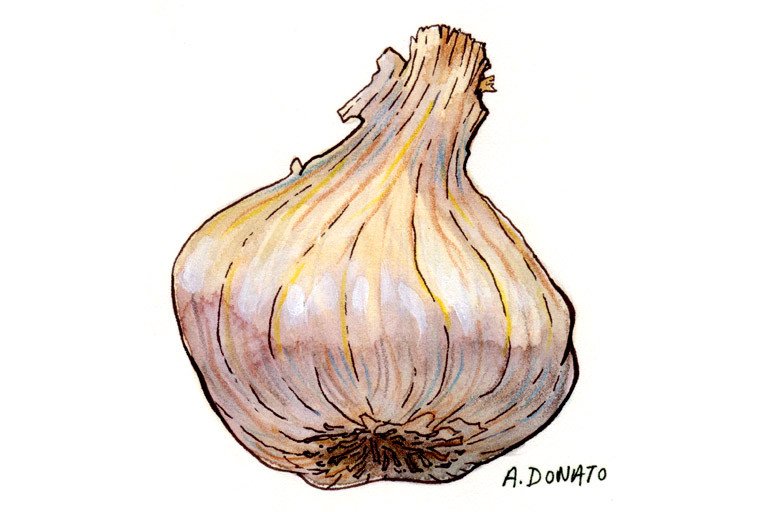
Common Names
- Nectar of the gods
- Camphor of the poor
- Da-suan
- La-suan
- Stinking rose
For Patients & Caregivers
Tell your healthcare providers about any dietary supplements you’re taking, such as herbs, vitamins, minerals, and natural or home remedies. This will help them manage your care and keep you safe.
Evidence on whether garlic can help lower cholesterol levels or blood pressure are mixed.
Derived from the bulb or clove of the plant, garlic is used as a spice worldwide. It is also used traditionally for a variety of conditions such as maintaining circulatory function, to treat infections, and to boost the immune system.
Studies on whether garlic can reduce cholesterol or lower blood pressure are mixed, but other data suggest it may help reduce some cardiovascular risk factors.
Processing may reduce active compounds found in garlic products. For example, garlic powder and garlic essential oil do not contain allicin or ajoene, compounds believed to have cholesterol-reducing and blood-thinning properties.
Patients taking warfarin or other blood thinners should ask their doctor before taking garlic supplements.
- To treat cardiovascular disease
Studies have shown mixed results, but garlic may help reduce some risk factors for cardiovascular disease. Patients should ask their doctor before taking garlic supplements. - To prevent and treat cancer
Evidence on whether garlic can reduce risk of gastric and colorectal cancers is mixed. - To treat infections
Data suggest garlic can stimulate the immune system, but it is unclear whether it can treat infections.
- Headache
- Fatigue
- Offensive odor, bad breath
- Stomach upset
- Diarrhea
- Changes in natural intestinal bacteria
- Sweating
- Low blood sugar
- Altered platelet function
- Increased bleeding risk
Case reports (Oral)
- Bleeding, reduced blood clotting: Following excessive use of garlic supplements.
- Redetected levels of HIV: In 2 cases due to interactions between garlic and darunavir. The effectiveness of the medication returned some time after garlic intake was stopped.
- Chemical burns in the mouth lining: Following consumption of crushed garlic.
- Allergic reactions: Two cases, following ingestion of garlic.
- Liver toxicity: After a liver transplant patient was started on high-dose garlic supplementation to treat low levels of oxygen in the blood.
Case reports (Topical)
- Chemical burns: Multiple cases from the topical use of garlic in attempts to treat warts, rash/itching, tooth pain, acne, and sore throat.
- Skin rash: Due to “garlic necklace” on infant’s neck to treat nasal congestion
Patient Warnings:
- Garlic supplements should be discontinued 1–2 weeks before surgery because of the potential for increased bleeding.
- Topical use of garlic preparations should be avoided. Chemical burns have occurred in attempts to treat a variety of conditions.
Do Not Take if:
- You are taking warfarin or other blood thinners: Garlic may increase the risk of bleeding or bruising.
- You take cyclosporine: Garlic can reduce its effectiveness and potentially cause transplant rejection.
- You are taking protease inhibitors (darunavir/Prezista®, saquinavir/Fortovase®, Invirase®): In 2 cases of HIV patients who regularly consumed garlic, darunavir became ineffective. Other studies found garlic reduced blood levels of saquinavir and may reduce its effectiveness.
- You are taking insulin: Dose adjustments may be required from potential blood sugar-lowering effects with garlic supplements. Take with caution and consult your doctor.
- You are taking drugs that are substrates of CYP450 2C9, 2C19, or 3A4: Garlic may increase the risk of side effects of these drugs.
- You are taking drugs that are substrates of P-glycoprotein: Garlic may reduce the activity of such drugs.
For Healthcare Professionals
Derived from the bulb or clove of the plant, garlic is used as a spice and to treat hyperlipidemia, hypertension, atherosclerosis, cancer, and infections. Processing can have a substantial effect on the chemical content of garlic because the volatile oil components are heat-sensitive and certain enzymes are acid-labile. The best measure of total activity of garlic is its ability to produce allicin, which in turn, results in the formation of other active constituents (1).
Studies are mixed on whether garlic preparations can lower cholesterol (2) (3) (4) (5) (6) (7) (31) or blood pressure (45) (53) (55), but meta-analyses suggest reductions in cardiovascular risk factors (50) (56) (57) (58) (59).
Studies on protective effects against various cancers are also mixed. In a large trial, long-term garlic supplementation was associated with reduced risk of gastric cancer mortality but not incidence (63), although conflicting data did not find evidence for either (43). Whether garlic protects against Helicobacter pylori infection is also unclear (64). Meta-analyses are also mixed on whether garlic intake reduces colorectal cancer risk (65) (66). Inverse associations have been identified between garlic consumption and risk of endometrial (13), prostate (12), and other cancers (9). Garlic supplementation may also be associated with reduced risk of hematologic malignancies (40).
Because garlic is known to decrease platelet aggregation and potentially elevate INR values, it should not be used with anticoagulants or in patients with platelet dysfunction (17).
- Cardiovascular disease
- High cholesterol
- Hypertension
- Infections
- Cancer
Intact cells of garlic contain alliin, an odorless sulfur-containing amino acid derivative. When the cells are crushed, alliin comes into contact with the enzyme alliinase located in neighboring cells and is converted to allicin. Allicin has antibacterial and antimicrobial activity, but is highly odoriferous and unstable. It also has antiplatelet and antihyperlipidemic activities. Most authorities agree that the best measure of total activity of garlic is the ability to produce allicin, which, in turn, results in the formation of other active constituents (1).
In patients with hyperlipidemia, garlic might lower cholesterol levels by acting as an HMG-CoA reductase inhibitor (21). Garlic may also reduce oxidative stress and LDL oxidation and have antithrombotic effects (22). It might reduce blood pressure by causing smooth muscle relaxation and vasodilation (23).
Garlic may stimulate both humoral and cellular immunity, causing T-cell proliferation, restoring suppressed antibody responses (24), and stimulating macrophage cytotoxicity on tumor cells. It may increase selenium absorption with possible protection against tumorigenesis (25). In addition, garlic may protect against certain cancers by halting cell cycle progression and inducing apoptosis of cancer cells as well as by decreasing angiogenesis and influencing carcinogen metabolism (26) (27).
Headache, fatigue, altered platelet function with potential for bleeding, offensive odor, GI upset, diarrhea, sweating, changes in the intestinal flora, hypoglycemia (16).
Case reports (Oral)
- Anaphylaxis (38) (54)
- Perioperative bleeding: Following excessive garlic intake (46) (70).
- Prolonged bleeding, spinal epidural hematoma, platelet dysfunction: Following excessive use of garlic (29).
- Renal hematoma following lithotripsy: In a 51-year-old man, due to excessive odorless garlic ingestion. Treated with antibiotics and fluids; remission occurred after 5 months (35).
- Viral rebound in HIV patients: Two cases occurred due to significant interactions between garlic and darunavir that resulted in sub-therapeutic DRV plasma concentrations (71).
- Hepatotoxicity: After a liver transplant patient was started on high-dose garlic supplementation for presenting hypoxemia and hepatopulmonary syndrome (72).
- Chemical burn of oral mucosa: Following consumption of crushed garlic (36).
Case reports (Topical)
- Warfarin: Anticoagulant activity may be enhanced due to increased fibrinolytic activity and diminished human platelet aggregation (17) (49).
- Protease inhibitors (darunavir, saquinavir): In 2 cases of HIV-infected patients, significant interactions between garlic and darunavir resulted in sub-therapeutic DRV plasma concentrations and viral rebound (71). In one case the patient ingested 15 garlic cloves per week, while in the other the patient could not quantify the amount, but said it was significant. In both patients, drug effectiveness eventually returned with cessation of garlic. In healthy volunteers, garlic supplements with the rough equivalent of two 4-g cloves daily significantly decreased mean serum concentration levels, peak levels by 54%, and trough levels by 49%, which can cause therapeutic failure (18).
- Insulin: Dose of insulin may require adjustment due to hypoglycemic effects of garlic exhibited in animal studies (39).
- CYP450 substrates: In vitro studies suggest that garlic products may inhibit 2C9 and 2C19, and interfere with drugs metabolized by these enzymes (41) (42). Studies on its effects on 3A4 are mixed (34) (41) (42).
- P-Glycoprotein substrates: In healthy volunteers, garlic extract induced P-glycoprotein and can interfere with the metabolism of certain drugs (34).
- Insulin
- Increased PT and INR
- Decreased cholesterol
- Change in blood pressure