Health Care Professional Information
Common Name
Genistein Combined Polysaccharide
Clinical Summary
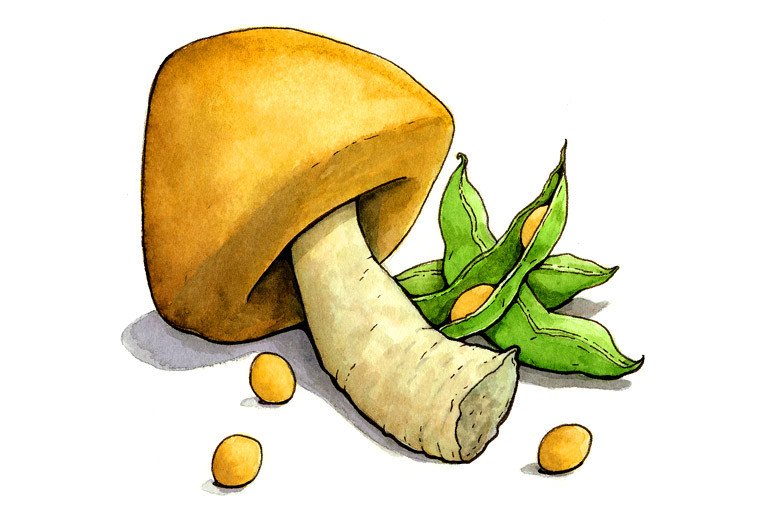
A nutritional supplement prepared by fermenting soy extract with basidiomycetes, genistein combined polysaccharide (GCP) is composed of genistein, a soy isoflavone, and polysaccharides obtained from a variety of mushrooms. Isoflavones have been shown to influence hormone-dependent cancers due to their estrogenic activity. Basidiomycetes express immune-stimulant (1) and antitumor (2) (3) activity in vitro. In prostate cancer cells, GCP was found to reduce androgen receptor and prostate specific antigen levels, induce cell growth arrest, and modestly increase apoptosis (4). GCP was also found to inhibit cell growth and induce apoptosis in androgen-dependent and -independent human prostate cancer cell lines (5). It potentiated the cytostatic and cytotoxic activities of docetaxel, bicalutamide, and the sRC kinase inhibitor, pp2 (5). Another study found that GCP treatment resulted in significant inhibition of cell proliferation and arrested the cell cycle in the G2/M phase in three human lymphoid cell lines (6).
Case reports show complete regression of T3 prostate cancer following treatment with GCP (7); and supplementation with GCP prevented recurrence of transitional cell carcinoma (TCC) of the bladder (10). However, no large scale clinical trials have been performed to verify GCP's anticancer potential.
Purported Uses
- Cancer prevention
- Prostate cancer
Constituents
- Genistein
- Basidiomycetes polysaccharides
(4)
Mechanism of Action
In vitro experiments show that genistein inhibits tyrosine-specific protein kinase activity of EGF receptors. Inhibition is competitive with respect to ATP and noncompetitive to a phosphate acceptor, histone H2B. Genistein bears no structural relationship with ATP, so inhibition may not be due to true competition for the same active site as that utilized by ATP (8). Basidiomycetes polysaccharides possess antitumor, antiviral, antibacterial and immune-modulating activities. The fermentation of soy extract with basidiomycetes deglycosylates the soy isoflavones which renders them in a highly absorbable form (7). In prostate cancer cells, GCP was found to inhibit mammalian target of rapamycin (MTOR) activity (4). MTOR is a downstream effector of Akt, an enzyme which plays an important role in cancer cell proliferation and survival (4). (For more information on the mechanism of genistein action, see our monograph on soy.)
Pharmacokinetics
Absorption
Natural isoflavones are glycosylated and poorly absorbed. Fermentation of soy extract deglycosylates the isoflavones which are absorbed more readily.
(7)
Herb-Drug Interactions
Tamoxifen: Animal studies suggest that genistein, a soy isoflavone, may antagonize the effects of tamoxifen on estrogen-dependent breast cancer.
(9)
Dosage (Inside MSKCC Only)
This field is only visible to only Inside MSKCC users.
References
- Rice L, et al. Mechanisms of the growth inhibitory effects of the isoflavonoid biochanin A on LNCaP cells and xenografts. Prostate 2002;52:201-12.
- Mentor-Marcel R, et al. Genistein in the diet reduces the incidence of poorly differentiated prostatic adenocarcinoma in transgenic mice (TRAMP). Cancer Res 2001;61:6777-82.
- Yuan L, Wagatsuma C, Sun B, Kim JH, Surh YJ. The role of beta-glucuronidase in induction of apoptosis by genistein combined polysaccharide (GCP) in xenogeneic mice bearing human mammary cancer cells. Ann N Y Acad Sci. 2003 Dec;1010:347-9.
- Vinall RL, Hwa K, Ghosh P, Pan CX, Lara PN Jr, de Vere White RW. Combination treatment of prostate cancer cell lines with bioactive soy isoflavones and perifosine causes increased growth arrest and/or apoptosis. Clin Cancer Res. 2007 Oct 15;13(20):6204-16.
- Burich RA, Holland WS, Vinall RL, et al. Genistein combined polysaccharide enhances activity of docetaxel, bicalutamide and Src kinase inhibition in androgen-dependent and independent prostate cancer cell lines. BJU Int. 2008 Nov;102(10):1458-66.
- McCall JL, Burich RA, Mack PC. GCP, a genistein-rich compound, inhibits proliferation and induces apoptosis in lymphoma cell lines. Leuk Res. 2010. Jan;34(1):69-76.
- Ghafar MA, et al. Regression of prostate cancer following administration of Genistein Combined Polysaccharide (GCP), a nutritional supplement: a case report. J Altern Complement Med 2002;8:493-7.
- Akiyama T, et al. Genistein, a specific inhibitor of tyrosine-specific protein kinases. J Biol Chem 1987;262:5592-5.
- Ju YH, et al. Dietary genistein negates the inhibitory effects of tamoxifen on growth of estrogen-dependent human breast cancer (MCF-7) cells implanted in athymic mice. Can Res 2002;62:2474-7.
- Capodice JL, Cammack AS, McKiernan JM, Katz AE. Two case reports on the use of genistein combined polysaccharide (GCP) against bladder cancer recurrence.J Complement Integr Med. 2011 Jan;8(1).
Consumer Information
How It Works
Bottom Line: There are no clinical data to support use of GCP for cancer prevention or treatment.
Genistein Combined Polysaccharide (GCP) is composed of genistein, a soy isoflavone, and polysaccharides derived from Basidiomycetes mushrooms. Although GCP itself has not been studied in the laboratory, genistein and Basidiomycetes mushrooms have, with the following results.
Genistein has been studied extensively in laboratory experiments. These generally show that genistein, when directly applied to several types of cancer cells (including estrogen receptor (ER+) and (ER-) breast cancer, prostate cancer, neuroblastoma and sarcoma), inhibits their growth and replication. Genistein 1) competes with the body's own estrogen and 2) inhibits the ability of a growth factor called EGF to stimulate its receptor and cause downstream cellular effects. Estrogen and EGF can enhance the growth of certain tumors (such as ER+ breast cancer), so scientists think that genistein might act against them to slow tumor growth. This theory has not been confirmed in humans through clinical studies, however.
Laboratory research has suggested that the polysaccharides in Basidiomycetes mushrooms can slow the growth of tumors, enhance certain activities of immune cells, and kill some bacteria and viruses on contact. It is not clear to what extent these effects occur in the human body.
Purported Uses
- To prevent and treat cancer
Genistein shows anti-tumor activity in the laboratory setting, but the same has not been shown for GCP.
- To treat prostate and bladder cancer
Case reports show benefit of GCP, but clinical trials are lacking.
Patient Warnings
- It is controversial whether patients with estrogen-dependent tumors should take soy products such as genistein, due to its possible estrogenic activity. Patients should ask their doctors.
Do Not Take If
- You are undergoing chemotherapy with tamoxifen (Studies in animals suggest that genistein may lessen its effects).
Last updated: October 4, 2012
Akt
A group of enzymes involved in several processes related to cell growth and survival. Akt enzymes help to transfer signals inside cells. An Akt enzyme is a type of serine/threonine protein kinase. Also called protein kinase B.
Source: The National Cancer Institute's Dictionary of Cancer Terms
(http://www.cancer.gov/dictionary)
androgen (AN-droh-jen)
A type of hormone that promotes the development and maintenance of male sex characteristics.
Source: The National Cancer Institute's Dictionary of Cancer Terms
(http://www.cancer.gov/dictionary)
antibacterial (AN-tee-bak-TEER-ee-ul)
A substance that kills bacteria or stops them from growing and causing disease.
Source: The National Cancer Institute's Dictionary of Cancer Terms
(http://www.cancer.gov/dictionary)
antigen (AN-tih-jen)
Any substance that causes the body to make a specific immune response.
Source: The National Cancer Institute's Dictionary of Cancer Terms
(http://www.cancer.gov/dictionary)
antitumor (AN-tee-TOO-mer)
Having to do with stopping abnormal cell growth.
Source: The National Cancer Institute's Dictionary of Cancer Terms
(http://www.cancer.gov/dictionary)
antiviral (AN-tee-VY-rul)
A drug used to treat infections caused by viruses.
Source: The National Cancer Institute's Dictionary of Cancer Terms
(http://www.cancer.gov/dictionary)
apoptosis (A-pop-TOH-sis)
A type of cell death in which a series of molecular steps in a cell leads to its death. This is the body’s normal way of getting rid of unneeded or abnormal cells. The process of apoptosis may be blocked in cancer cells. Also called programmed cell death.
Source: The National Cancer Institute's Dictionary of Cancer Terms
(http://www.cancer.gov/dictionary)
bacteria (bak-TEER-ee-uh)
A large group of single-cell microorganisms. Some cause infections and disease in animals and humans. The singular of bacteria is bacterium.
Source: The National Cancer Institute's Dictionary of Cancer Terms
(http://www.cancer.gov/dictionary)
bicalutamide (BY-kuh-LOO-tuh-mide)
An anticancer drug that belongs to the family of drugs called antiandrogens.
Source: The National Cancer Institute's Dictionary of Cancer Terms
(http://www.cancer.gov/dictionary)
bladder (BLA-der)
The organ that stores urine.
Source: The National Cancer Institute's Dictionary of Cancer Terms
(http://www.cancer.gov/dictionary)
breast (brest)
Glandular organ located on the chest. The breast is made up of connective tissue, fat, and breast tissue that contains the glands that can make milk. Also called mammary gland.
Source: The National Cancer Institute's Dictionary of Cancer Terms
(http://www.cancer.gov/dictionary)
cancer (KAN-ser)
A term for diseases in which abnormal cells divide without control and can invade nearby tissues. Cancer cells can also spread to other parts of the body through the blood and lymph systems. There are several main types of cancer. Carcinoma is a cancer that begins in the skin or in tissues that line or cover internal organs. Sarcoma is a cancer that begins in bone, cartilage, fat, muscle, blood vessels, or other connective or supportive tissue. Leukemia is a cancer that starts in blood-forming tissue such as the bone marrow, and causes large numbers of abnormal blood cells to be produced and enter the blood. Lymphoma and multiple myeloma are cancers that begin in the cells of the immune system. Central nervous system cancers are cancers that begin in the tissues of the brain and spinal cord. Also called malignancy.
Source: The National Cancer Institute's Dictionary of Cancer Terms
(http://www.cancer.gov/dictionary)
carcinoma (KAR-sih-NOH-muh)
Cancer that begins in the skin or in tissues that line or cover internal organs.
Source: The National Cancer Institute's Dictionary of Cancer Terms
(http://www.cancer.gov/dictionary)
cell (sel)
The individual unit that makes up the tissues of the body. All living things are made up of one or more cells.
Source: The National Cancer Institute's Dictionary of Cancer Terms
(http://www.cancer.gov/dictionary)
cell cycle (sel SY-kul)
The process a cell goes through each time it divides. The cell cycle consists of a series of steps during which the chromosomes and other cell material double to make two copies. The cell then divides into two daughter cells, each receiving one copy of the doubled material. The cell cycle is complete when each daughter cell is surrounded by its own outer membrane. Also called mitotic cycle.
Source: The National Cancer Institute's Dictionary of Cancer Terms
(http://www.cancer.gov/dictionary)
cell proliferation (sel proh-LIH-feh-RAY-shun)
An increase in the number of cells as a result of cell growth and cell division.
Source: The National Cancer Institute's Dictionary of Cancer Terms
(http://www.cancer.gov/dictionary)
clinical (KLIH-nih-kul)
Having to do with the examination and treatment of patients.
Source: The National Cancer Institute's Dictionary of Cancer Terms
(http://www.cancer.gov/dictionary)
cytotoxic (SY-toh-TOK-sik)
Cell-killing.
Source: The National Cancer Institute's Dictionary of Cancer Terms
(http://www.cancer.gov/dictionary)
docetaxel (DOH-seh-TAK-sil)
A drug used to treat certain types of cancers of the breast, stomach, lung, prostate, and head and neck. It is being studied in the treatment of other types of cancer. Docetaxel kills cancer cells by stopping them from dividing. It is a type of taxane. Also called Taxotere.
Source: The National Cancer Institute's Dictionary of Cancer Terms
(http://www.cancer.gov/dictionary)
EGF
A protein made by many cells in the body and by some types of tumors. It causes cells to grow and differentiate (become more specialized). It is a type of growth factor and a type of cytokine. Also called epidermal growth factor.
Source: The National Cancer Institute's Dictionary of Cancer Terms
(http://www.cancer.gov/dictionary)
enzyme (EN-zime)
A protein that speeds up chemical reactions in the body.
Source: The National Cancer Institute's Dictionary of Cancer Terms
(http://www.cancer.gov/dictionary)
ER+
Describes cells that have a receptor protein that binds the hormone estrogen. Cancer cells that are ER+ may need estrogen to grow, and may stop growing or die when treated with substances that block the binding and actions of estrogen. Also called estrogen receptor positive.
Source: The National Cancer Institute's Dictionary of Cancer Terms
(http://www.cancer.gov/dictionary)
estrogen (ES-truh-jin)
A type of hormone made by the body that helps develop and maintain female sex characteristics and the growth of long bones. Estrogens can also be made in the laboratory. They may be used as a type of birth control and to treat symptoms of menopause, menstrual disorders, osteoporosis, and other conditions.
Source: The National Cancer Institute's Dictionary of Cancer Terms
(http://www.cancer.gov/dictionary)
extract (EK-strakt)
In medicine, a preparation of a substance obtained from plants, animals, or bacteria and used as a drug or in drugs.
Source: The National Cancer Institute's Dictionary of Cancer Terms
(http://www.cancer.gov/dictionary)
GCP
An international set of guidelines that helps make sure that the results of a clinical trial are reliable and that the patients are protected. GCP covers the way a clinical trial is designed, conducted, performed, monitored, audited, recorded, analyzed, and reported. Also called Good Clinical Practice.
Source: The National Cancer Institute's Dictionary of Cancer Terms
(http://www.cancer.gov/dictionary)
genistein (jeh-NIS-teen)
An isoflavone found in soy products. Soy isoflavones are being studied to see if they help prevent cancer.
Source: The National Cancer Institute's Dictionary of Cancer Terms
(http://www.cancer.gov/dictionary)
growth factor (grothe FAK-ter)
A substance made by the body that functions to regulate cell division and cell survival. Some growth factors are also produced in the laboratory and used in biological therapy.
Source: The National Cancer Institute's Dictionary of Cancer Terms
(http://www.cancer.gov/dictionary)
in vitro (in VEE-troh)
In the laboratory (outside the body). The opposite of in vivo (in the body).
Source: The National Cancer Institute's Dictionary of Cancer Terms
(http://www.cancer.gov/dictionary)
isoflavone (I-soh-FLAY-vone)
An estrogen-like substance made by some plants, including the soy plant. Soy isoflavones are being studied in the prevention of cancer, hot flashes that occur with menopause, and osteoporosis (loss of bone density).
Source: The National Cancer Institute's Dictionary of Cancer Terms
(http://www.cancer.gov/dictionary)
kinase (KY-nays)
A type of enzyme that causes other molecules in the cell to become active. Some kinases work by adding chemicals called phosphates to other molecules, such as sugars or proteins. Kinases are a part of many cell processes. Some cancer treatments target certain kinases that are linked to cancer.
Source: The National Cancer Institute's Dictionary of Cancer Terms
(http://www.cancer.gov/dictionary)
L
A measure of volume for a liquid, using the metric system. One L is equal to 1,000 cubic centimeters (cc), 1,000 milliliters (mm), or 1.0567 quarts (qt). Also called liter.
Source: The National Cancer Institute's Dictionary of Cancer Terms
(http://www.cancer.gov/dictionary)
lymphoid (LIM-foyd)
Referring to lymphocytes, a type of white blood cell. Also refers to tissue in which lymphocytes develop.
Source: The National Cancer Institute's Dictionary of Cancer Terms
(http://www.cancer.gov/dictionary)
mammalian target of rapamycin (muh-MA-lee-un TAR-get … RA-puh-MY-sin)
A protein that helps control several cell functions, including cell division and survival, and binds to rapamycin and other drugs. Mammalian target of rapamycin may be more active in some types of cancer cells than it is in normal cells. Blocking mammalian target of rapamycin may cause the cancer cells to die. It is a type of serine/threonine protein kinase. Also called mTOR.
Source: The National Cancer Institute's Dictionary of Cancer Terms
(http://www.cancer.gov/dictionary)
mTOR
A protein that helps control several cell functions, including cell division and survival, and binds to rapamycin and other drugs. mTOR may be more active in some types of cancer cells than it is in normal cells. Blocking mTOR may cause the cancer cells to die. It is a type of serine/threonine protein kinase. Also called mammalian target of rapamycin.
Source: The National Cancer Institute's Dictionary of Cancer Terms
(http://www.cancer.gov/dictionary)
neuroblastoma (NOOR-oh-blas-TOH-muh)
Cancer that arises in immature nerve cells and affects mostly infants and children.
Source: The National Cancer Institute's Dictionary of Cancer Terms
(http://www.cancer.gov/dictionary)
polysaccharide (PAH-lee-SA-kuh-ride)
A large carbohydrate molecule. It contains many small sugar molecules that are joined chemically. Also called glycan.
Source: The National Cancer Institute's Dictionary of Cancer Terms
(http://www.cancer.gov/dictionary)
prostate (PROS-tayt)
A gland in the male reproductive system. The prostate surrounds the part of the urethra (the tube that empties the bladder) just below the bladder, and produces a fluid that forms part of the semen.
Source: The National Cancer Institute's Dictionary of Cancer Terms
(http://www.cancer.gov/dictionary)
prostate cancer (PROS-tayt KAN-ser)
Cancer that forms in tissues of the prostate (a gland in the male reproductive system found below the bladder and in front of the rectum). Prostate cancer usually occurs in older men.
Source: The National Cancer Institute's Dictionary of Cancer Terms
(http://www.cancer.gov/dictionary)
receptor (reh-SEP-ter)
A molecule inside or on the surface of a cell that binds to a specific substance and causes a specific physiologic effect in the cell.
Source: The National Cancer Institute's Dictionary of Cancer Terms
(http://www.cancer.gov/dictionary)
recurrence (ree-KER-ents)
Cancer that has recurred (come back), usually after a period of time during which the cancer could not be detected. The cancer may come back to the same place as the original (primary) tumor or to another place in the body. Also called recurrent cancer.
Source: The National Cancer Institute's Dictionary of Cancer Terms
(http://www.cancer.gov/dictionary)
regression (reh-GREH-shun)
A decrease in the size of a tumor or in the extent of cancer in the body.
Source: The National Cancer Institute's Dictionary of Cancer Terms
(http://www.cancer.gov/dictionary)
significant (sig-NIH-fih-kunt)
In statistics, describes a mathematical measure of difference between groups. The difference is said to be significant if it is greater than what might be expected to happen by chance alone. Also called statistically significant.
Source: The National Cancer Institute's Dictionary of Cancer Terms
(http://www.cancer.gov/dictionary)
soy (soy)
A product from a plant of Asian origin that produces beans used in many food products. Soy contains isoflavones (estrogen-like substances) that are being studied for the prevention of cancer, hot flashes that occur with menopause, and osteoporosis (loss of bone density). Soy in the diet may lower cholesterol levels and reduce the risk of heart disease. Also called Glycine max, soya, and soybean.
Source: The National Cancer Institute's Dictionary of Cancer Terms
(http://www.cancer.gov/dictionary)
supplementation (SUH-pleh-men-TAY-shun)
Adding nutrients to the diet.
Source: The National Cancer Institute's Dictionary of Cancer Terms
(http://www.cancer.gov/dictionary)
transitional cell (tran-ZIH-shuh-nul sel)
A cell that varies in shape depending on whether the tissue is being stretched. Transitional cells may be stretched without breaking apart. They line hollow organs such as the bladder.
Source: The National Cancer Institute's Dictionary of Cancer Terms
(http://www.cancer.gov/dictionary)
tumor (TOO-mer)
An abnormal mass of tissue that results when cells divide more than they should or do not die when they should. Tumors may be benign (not cancer), or malignant (cancer). Also called neoplasm.
Source: The National Cancer Institute's Dictionary of Cancer Terms
(http://www.cancer.gov/dictionary)