Common Names
- Fossil tree
- Maidenhair tree
- Kew tree
- Bai guo ye
- Yinhsing
For Patients & Caregivers
Tell your healthcare providers about any dietary supplements you’re taking, such as herbs, vitamins, minerals, and natural or home remedies. This will help them manage your care and keep you safe.
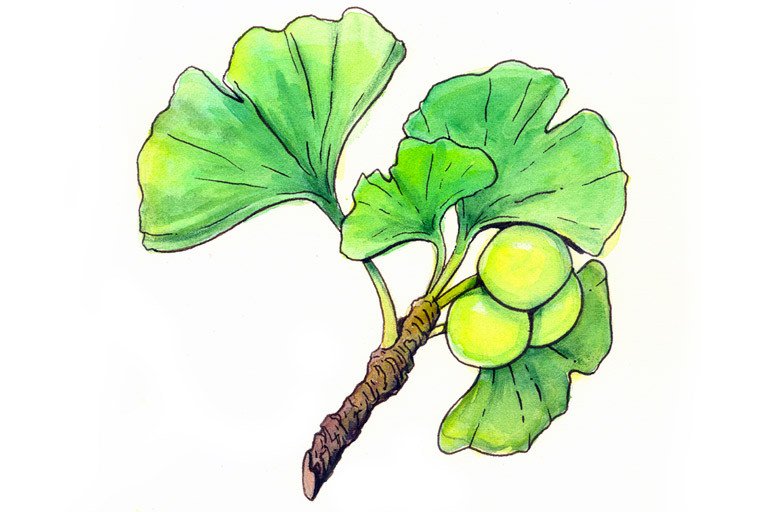
Ginkgo biloba is one of the oldest living species of trees. Its seeds and leaves are used in traditional Chinese medicine. Ginkgo also comes as capsules, extracts, tablets, and tea.
Ginkgo is used to:
- Improve circulation
- Improve memory
- Treat tinnitus (buzzing or ringing noise in one or both your ears)
Ginkgo also has other uses that haven’t been studied by doctors to see if they work.
Ginkgo supplements can interact with some medications and affect how they work. Talk with your healthcare providers before taking ginkgo supplements. For more information, read the “What else do I need to know?” section below.
Side effects of using ginkgo supplements may include:
- Low sodium levels in your blood
- Talk with your healthcare provider if you’re taking blood thinners such as warfarin (Coumadin®, Jantoven®). Ginkgo may increase your risk of bleeding.
- Talk with your healthcare provider if you have a history of seizures. Ginkgo can increase your risk of seizures.
- Tell your healthcare provider if you’re taking efavirenz (Sustiva®) to treat HIV. Ginkgo can make it less effective.
- Talk to your healthcare provider if you’re taking midazolam (Versed) for anxiety, trouble sleeping, or for seizures. Ginkgo may make this medication less effective.
- Tell your healthcare provider if you’re on insulin. Ginkgo can affect how it works in your body.
- Talk to your healthcare provider if you’re taking medications such as prochlorperazine (Compazine®). Ginkgo can increase your risk for seizures when you’re taking this medication.
For Healthcare Professionals
Ginkgo biloba is one of the oldest living tree species. It is cultivated around the world for its medicinal properties and aesthetic value. The seeds and leaves have been used in traditional Chinese medicine to treat respiratory diseases, circulatory disorders, sexual dysfunction, and hearing loss. It is also marketed as a supplement to support memory and circulation.
Clinical studies including the large Ginkgo Evaluation of Memory (GEM) study generally show supplementation with ginkgo does not improve cognitive performance or prevent Alzheimer’s disease or dementia (4) (5) (6) (7) (8). In addition, positive effects from earlier studies were not confirmed in more recent trials and some systematic reviews determined there was insufficient evidence on any benefits in adults with either normal cognition or mild cognitive impairment (9) (10).
Although two trials suggest potential benefit with ginkgo in acute ischemic stroke (11) (12), a study in older adults noted increased stroke incidence (4), and a meta-analysis suggests evidence is generally weak with a high risk of bias (54). In addition, the large GEM study did not find benefit with ginkgo for cardiovascular disease incidence or mortality (13). Studies on whether ginkgo can help tinnitus are mixed (14) (15) (55) (56) (58), as are studies for other conditions such as ADHD (16) (17).
Studies on ginkgo in cancer patients are quite limited (3) (21), and secondary outcome data from the aforementioned GEM study does not support the use of ginkgo to reduce cancer risk (22). It is also ineffective in preventing chemotherapy-associated cognitive dysfunction in breast cancer patients (23).
Although some preliminary data suggested ginkgo may reduce ovarian cancer risk (20), animal models suggest that high doses may have hepatocarcinogenic effects (24) (25). More studies are needed to determine the significance of these findings.
- Circulatory disorders
- Memory loss
- Tinnitus
Ginkgo interacts with several cytochrome P450 enzymes. Pretreatment with G. biloba extract induces expression of CYP3A proteins and mRNA and increases CYP3A activity (26). It also inhibits CYP2B6 catalytic activity and bupropion hydroxylation (27). Ginkgo may play a role in decreasing high-glucose-induced endothelial inflammation via inhibition of interleukin-6 activation (28), and repeated intake of ginkgo enhanced cell proliferation and neuroblast differentiation (29). Flavonoids present in ginkgo extracts inhibited estrogen biosynthesis via aromatase inhibition, decreased CYP19 mRNA, and induced transcriptional suppression (30).
Chemopreventive properties of bilobalide, a terpene trilactone, may occur via alterations in cryptal cell proliferation and drug-metabolizing enzyme activities (1). Exocarp polysaccharides from ginkgo affected expression of c-myc, bcl-2 and c-fos genes, which can inhibit proliferation and induce apoptosis and differentiation of human gastric tumor cells (3).
- Ginkgo should be used with caution during pregnancy, especially around childbirth, because its antiplatelet properties may prolong bleeding time. The safety of ginkgo leaf during lactation is not known (61).
Case reports
Hyponatremia: Several cases, which included symptoms of confused state, malaise, headaches, and fatigue. Plasma sodium normalized following cessation of ginkgo supplements (57).
Spontaneous bleeding: Including hematomas (31) (32), hyphema (33), and cerebral and intracerebral bleeding (34) (35).
Prolonged bleeding time: Among some healthy volunteers in a pharmacodynamic study that evaluated the interaction of ginkgo with antiplatelet drugs (36).
Seizures: In predisposed patients or those on medications that lowered the seizure threshold (37).
Cutaneous reaction: Pruritus and macular erythema in a man after repeatedly ingesting a natural product containing ginkgo and vinpocetine (38).
Acute hemolytic anemia (with injected ginkgo): In a patient with glucose-6-phosphate dehydrogenase (G6PD) deficiency receiving a G. biloba injection for dementia prophylaxis. Symptoms resolved following intravenous fluid infusion and discontinuation of G. biloba (39).
Anaphylactic shock caused by Ischemic Optic Neuropathy: In a 55-year-old male after receiving a G. biloba and Damo injection. Medical intervention led to symptom resolution (59).
- Cytochrome P450 substrates: Laboratory studies and a few case reports suggest ginkgo can inhibit and induce the CYP450 1A2, 2D6, and 3A4 enzymes, but data are conflicting (26) (27) (40) (41) (42) (43). Clinical relevance has yet to be determined.
- P-glycoprotein substrates: In healthy volunteers, ginkgo inhibits P-glycoprotein and may interfere with drugs that are transported by P-glycoprotein (44).
- UGT (Uridine 5’-diphospho-glucuronosyltransferase) substrates: In vitro, ginkgo modulates UGT enzymes and may increase the side effects of drugs metabolized by them (45). Clinical relevance has yet to be determined.
- MATE1 substrates: Laboratory studies indicate that isorhamnetin, a compound present in ginkgo is a strong inhibitor of the human multidrug and toxic compounds extrusion transporter 1 (hMATE1), responsible for the excretion of various drugs in the kidney and liver (46). Clinical relevance has yet to be determined.
- Anticoagulants / Antiplatelets: Human studies and case reports indicate that ginkgo may induce or prolong bleeding time (36) (47).
- Nonsteroidal anti-inflammatory drugs (NSAIDS): Adverse event reports indicate that ginkgo can have additive anticoagulant/antiplatelet effects (48).
- Antipsychotics / Prochlorperazine: Case reports suggest ginkgo may cause seizures when combined with medications that lower the seizure threshold (37).
- Insulin: Laboratory and human studies suggest ginkgo can alter insulin secretion and affect blood glucose levels (49) (50).
- Trazodone: Ginkgo extract was associated with coma in a patient with Alzheimer’s disease who was also taking trazodone (47).
- Efavirenz: Case reports suggest ginkgo may inhibit the effects of this drug (43) (51).
- Midazolam: A study in healthy subjects suggests ginkgo may decrease serum concentrations (52).
- Amlodipine: Animal studies suggest that a multiherbal formula containing ginkgo could inhibit the metabolism of amlodipine (53). Clinical relevance has yet to be determined.
- Tacrolimus: Concurrent use of ginkgo inhibited metabolism of tacrolimus in a preclinical study. Clinical relevance is not known (60).