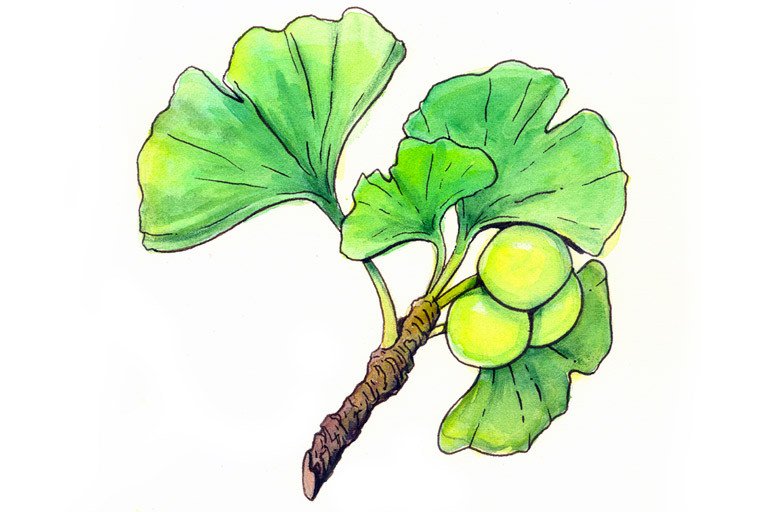
Health Care Professional Information
Common Name
Fossil tree, maidenhair tree, kew tree, bai guo ye, yinhsing
Clinical Summary
Ginkgo biloba is one of the oldest living tree species. It is cultivated around the world for its medicinal properties and aesthetic value. The seeds and the leaves have been used in traditional medicine to treat respiratory diseases, circulatory disorders, sexual dysfunction, and loss of hearing. Ginkgo biloba extract exhibits anti-infective (1), chemopreventive (2), anticancer (3), and cytotoxic (4) effects in vitro.
Supplementation with Ginkgo improved cognitive performance in healthy adults (5), and demented patients (6) but data are conflicting (7) (8) (9) (10) (11). However, findings from the Gingko Evaluation of Memory (GEM) study, the largest trial of Ginkgo for dementia so far, indicate that Ginkgo is ineffective in decreasing the incidence of dementia or Alzheimer's disease in elderly individuals (30); another randomized trial reported similar findings (43). Further, gingko did not slow down cognitive decline in older adults with normal cognition or with mild cognitive impairment (32).
It was less effective than the standard treatment for ADHD in children (37).
Ginkgo biloba may also reduce the severity of acute mountain sickness, but the evidence is mixed (25) (26) (27) (28). More studies are warranted.
Ginkgo has also been implicated in reducing the risk of ovarian cancer but this is based only on epidemiological and biological data (12). Orally administered capsules of Ginkgo biloba exocarp polysaccharides reduced tumor area in patients with gastric cancer (4). In another study, an injectable form of Ginkgo extract and 5-flurouracil were administered to patients with advanced colorectal cancer. Data suggests benefits of the combination therapy (13). But data from the GEM study, in which cancer was the secondary outcome, do not support Gingko's effectiveness in reducing cancer risk (38).
High doses of a Ginkgo biloba extract showed carcinogenic effects in mice (44). However, dietary supplements in use today have much smaller concentrations.
Human data regarding ginkgo's effects on cancer are inconclusive (4) (12) (38).
Purported Uses
- Asthma
- Bronchitis
- Cardiovascular disease
- Circulatory disorders
- Hearing loss
- Memory loss
- Raynaud's disease
- Sexual dysfunction
- Stress
- Tinnitus
Constituents
Leaf:
- Amino Acids
- Flavonoids: Dimeric flavones (bilobretinl, ginkgetin, isoginkgetin, sciadopitysin)
- Flavonols: Quercetin, kaempferol, and their glycosides
- Proanthocyanidins
- Terpenoids: Bilobalide, ginkgolides A,B, C, J, M, which are unique cage molecules
- Seeds:
- Alkaloids: Ginkgotoxin
- Cyanogenetic glycosides
- Phenols
(14)
Mechanism of Action
The active constituents, bilobalide and ginkgolides, improve the tolerance of brain tissue to hypoxia by increasing cerebral blood flow. Ginkgo can increase blood flow to the brain through arterial vasodilatation by stimulating prostaglandin biosynthesis or indirectly stimulating norepinephrine release. Ginkgo has anti-inflammatory and spasmolytic activities that are similar to papaverine. It has free-radical scavenging activity for hydroxyl, nitric oxide, peroxyl, and superoxide radicals. Ginkgo increases tolerance to ischemic conditions and inhibits the platelet-activating factor.
Animal studies have shown that ginkgo has a beneficial effect on neurotransmitter disturbance that can restore vascular tone of the smooth muscle cells by maintaining alpha-adrenergic constrictive and beta-adrenergic relaxation vaso-regulation. Ginkgo can also suppress cell proliferation, decrease levels of proliferating cell nuclear antigen, and increase expression of p53, a tumor suppressor gene, in human hepatocellular carcinoma cells (15).
Pharmacokinetics
Ginkgolide A:
- Extent of absorption = 98-100%
- Volume of distribution = 40-60 L
- Time to peak conc = 1-2hours
- Half-life after 80 mg = 3.9 hours (oral)
- Clearance = 130-200 ml/min
- Urine excretion unchanged = 70%
Ginkgolide B:
-
Extent of absorption = 79-93%
-
Volume of distribution = 60-100 L
-
Time to peak conc = 1-2 hours
-
Half-life after 80mg = 7.0 hours (oral)
-
Clearance = 140-250 ml/min
-
Urine excretion unchanged = 50 hours
Bilobalide:
-
Extent of absorption = > 70%
-
Volume of distribution = 170 L
-
Time to peak conc = 1-2 hours
-
Half-life after 80 mg = 3.2 hours
-
Clearance = 600 ml/min
-
Urine excretion unchanged = 30 hours
(16)
Warnings
Ginkgo biloba extracts should not contain ginkgolic acid.
Discontinue use of Ginkgo at least 36 hours before surgery.
Adverse Reactions
Common: Headache, dizziness, GI upset, flatulence, diarrhea, contact dermatitis, and palpitations. (14)
Case reports: Seizures were reported in patients predisposed to seizures or on medications that lower the seizure threshold (e.g. prochlorperazine, chlorpromazine, perphenazine, etc.) (17). Spontaneous bleeding (18), including hematomas (15) (19), hyphema (20), and cerebral bleeding (41) has also been reported.
Case report: Priapism was reported in a 26-year-old man following concurrent use of risperidone (for schizophrenia) and ginkgo supplements for tinnitus. His symptoms resolved after treatment and discontinuing ginkgo (39).
Case report: Increased viral load was observed in a 47-year-old HIV-infected patient who used gingko along with antiretroviral therapy (40).
Herb-Drug Interactions
- Monoamine oxidase inhibitors (MAO-I): Ginkgo may potentiate the effects of MAO-Is.
- Anticoagulants / Antiplatelets: Ginkgo may induce spontaneous bleeding possibly associated with reduced platelet aggregation resulting from inhibition of platelet activating factor by ginkgolide components (21).
- Antipsychotics / Prochlorperazine: Ginkgo may cause seizures when combined with medications that lower the seizure threshold (17).
Insulin: Ginkgo can alter insulin secretion and affect blood glucose levels (22) (23).
- Cytochrome P450 substrates: Studies show that ginkgo can inhibit and induce the CYP450 1A2, 2D6, and 3A4 enzymes but data are conflicting (24) (34) (35) (36) (39) (40).
- P-Glycoprotein substrates: Ginkgo inhibits P-glycoprotein and can therefore interfere with drugs that are transported by P-glycoprotein (33). However, in one study concurrent use of Gingko caused an increase in levels of efavirenz, an antiretroviral agent, by inducing P-Glycoprotein (40).
- Trazodone: Ginkgo extract was associated with coma in a patient with Alzheimer's disease who was also taking trazodone (21).
- Nonsteroidal Anti-inflammatory drugs (NSAIDS): Ginkgo can have additive anticoagulant/antiplatelet effects (31).
- UGT (Uridine 5'-diphospho-glucuronosyltransferase) substrates: Ginkgo modulates UGT enzymes in vitro and can increase the side effects of drugs metabolized by them (42).
Literature Summary and Critique
Vellas B, Coley N, Ousset P-J, et al. Long-term use of standardised ginkgo biloba extract for the prevention of Alzheimer's disease (GuidAge): a randomised placebo-controlled trial. Lancet Neurol. 2012 Oct;11(10):851-9.
This study was conducted to determine the effectiveness of Gingko biloba in decreasing the incidence of Alzheimer’s disease in elderly adults with memory complaints. It involved 2,854 participants (age 70 and older) who were randomized to receive 120 mg of a standardized gingko extract, twice a day, or a placebo. At the 5-year follow-up point, all subjects received at least one dose of the ginkgo extract or the placebo. Sixty-one participants in the ginkgo group and 73 in the placebo group were diagnosed with probable Alzheimer’s disease (95% CI 0·60–1·18; p=0·306). There was no difference in the incidence of adverse effects between the two groups.Researchers concluded that long-term supplementation with a ginkgo extract did not prevent the onset of Alzheimer’s disease in the elderly.
However, data analysis shows that at >5 years, the protective effects of ginkgo extract are greater than the placebo.
Also, the study has limitations: A high dropout rate at the beginning of the trial, and a selection bias toward individuals with higher levels of education.
Further studies are needed to clarify the role of ginkgo in preventing memory loss.
Dosage (Inside MSKCC Only)
This field is only visible to only Inside MSKCC users.
References
- Chavez M, et al. Ginkgo: History, Use and Pharmacologic Properties. Hospital Pharmacy 1998;33:658-72.
- Suzuki R, Kohno H, Sugie S, et al. Preventive effects of extract of leaves of ginkgo (Ginkgo biloba) and its component bilobalide on azoxymethane-induced colonic aberrant crypt foci in rats. Cancer Lett. 2004;210(2):159-169.
- Pretner E, Amri H, Li W, et al. Cancer-related overexpression of the peripheral-type benzodiazepine receptor and cytostatic anticancer effects of Ginkgo biloba extract (EGb 761). Anticancer Res. 2006;26(1A):9-22.
- Xu AH, Chen HS, Sun BC, Xiang XR, Chu YF, Zhai F, Jia LC. Therapeutic mechanism of ginkgo biloba exocarp polysaccharides on gastric cancer. World J Gastroenterol. 2003;9(11):2424-7.
- Kennedy DO, Scholey AB, Wesnes KA. Modulation of cognition and mood following administration of single doses of Ginkgo biloba, ginseng, and a ginkgo/ginseng combination to healthy young adults. Physiol Behav 2002;75:739-51.
- LeBars, PL, et al. A placebo-controlled, double-blind, randomized trial of an extract of ginkgo biloba for dementia. JAMA 1997;278:1327-32.
- Solomon PR, et al. Ginkgo for memory enhancement: a randomized controlled trial. JAMA 2002;288:835-40.
- Le Bars PL, et al. A 26-week analysis of a double-blind, placebo controlled trial of the ginkgo biloba extract Egb 761 in dementia. Dement Geriatr Cogn Disorder 2000;11:230-7.
- Lovera J, Bagert B, Smoot K, et al. Ginkgo biloba for the improvement of cognitive performance in multiple sclerosis: a randomized, placebo-controlled trial. Mult Scler. 2007;13(3):376-385.
- Dos Santos-Neto LL, de Vilhena Toledo MA, Medeiros-Souza P, de Souza GA. The use of herbal medicine in Alzheimer's disease-a systematic review. Evid Based Complement Alternat Med. 2006;3(4):441-445.
- Canter PH, Ernst E. Ginkgo biloba is not a smart drug: an updated systematic review of randomised clinical trials testing the nootropic effects of G. biloba extracts in healthy people. Hum Psychopharmacol. 2007;22(5):265-278.
- Ye B, Aponte M, Dai Y, et al. Ginkgo biloba and ovarian cancer prevention: epidemiological and biological evidence. Cancer Lett. 2007;251(1):43-52.
- Hauns B, Haring B, Kohler S, et al. Phase II study of combined 5-fluorouracial/Ginkgo biloba extract (GBE 761 ONC) therapy in 5-fluorouracil pretreated patients with advanced colorectal cancer. Phytother Res 2001;15(1):34-8.
- Newall C, et al. Herbal Medicines: A Guide for Health Care Professionals. London: Pharmaceutical Press; 1996.
- Rowin J, Lewis SL. Spontaneous bilateral subdural hematomas associated with chronic ginkgo biloba ingestion. Neurology 1996;46:1775-6.
- Kleijnen J, Knipschild P. Ginkgo biloba. Lancet 1992;340:1136-9.
- Gregory PJ. Seizure associated with ginkgo biloba? Ann Int Med 2001;134:344.
- Matthews MK. Association of Ginkgo biloba with intracerebral hemorrhage. Neurology 1998;50:1934.
- Gilbert GJ. Ginkgo biloba. Neurology 1997;48:1137.
- Rosenblatt M, Mindel J. Spontaneous hyphema associated with ingestion of ginkgo biloba extract. N Eng J Med 1997;336:1108.
- Brinker F. Herb Contraindications and Drug Interactions, 2nd ed. Sandy (OR): Eclectic Med Pub; 1998.
- Kudolo GB. The effect of 3-month ingestion of Ginkgo biloba extract on pancreatic beta-cell function in response to glucose loading in normal glucose tolerant individuals. J Clin Pharmacol 2000;40:647.
- Budzinski JW, et al. An in vitro evaluation of human cytochrome P450 3A4 inhibition by selected commercial extracts and tinctures. Phytomedicine 2000;7:273-82.
- Scott GN, Elmer GW. Update on natural product-drug interactions. Am J Health-Syst Pharm 2002;59:339-47.
- Gertsch JH, Seto TB, Mor J, Onopa J. Ginkgo biloba for the prevention of severe acute mountain sickness (AMS) starting one day before rapid ascent. High Alt Med Biol. 2002;3(1):29-37.
- Moraga FA, Flores A, Serra J, et al. Ginkgo biloba decreases acute mountain sickness in people ascending to high altitude at Ollagüe (3696 m) in northern Chile. Wilderness Environ Med 2007;18(4):251-7.
- Chow T, Browne V, Heileson HL, et al. Ginkgo biloba and acetazolamide prophylaxis for acute mountain sickness: a randomized, placebo-controlled trial. Arch Intern Med. 2005;165(3):296-301.
- Gertsch JH, Basnyat B, Johnson WE, et al. Randomised, double blind, placebo controlled comparison of ginkgo biloba and acetazolamide for prevention of acute mountain sickness among Himalayan trekkers: the prevention of high altitude illness trial (PHAIT).BMJ 2004;328(7443):797.
- Dodge HH, Zitzelberger T, Oken BS, et al. A randomized placebo-controlled trial of ginkgo biloba for the prevention of cognitive decline. Neurology 2008.
- DeKosky ST, Williamson JD, Fitzpatrick AL, et al. Ginkgo biloba for prevention of Dementia. A randomized controlled trial. JAMA. 2008;300(19):2253-2262.
- Haller C, Kearney T, Bent S, et al. Dietary supplement adverse events: report of a one-year poison center surveillance project. J Med Toxicol. 2008 Jun;4(2):84-92.
- Snitz BE, O'Meara ES, Carlson MC, et al. Ginkgo biloba for Preventing Cognitive Decline in Older Adults. A Randomized Trial. JAMA. 2009;302(24):2663-2670.
- Fan L, Mao XQ, Tao GY, et al. Effect of Schisandra chinensis extract and Ginkgo biloba extract on the pharmacokinetics of talinolol in healthy volunteers. Xenobiotica. 2009 Mar;39(3):249-54.
- Deng Y, Bi HC, Zhao LZ, et al. Induction of cytochrome P450 3A by the Ginkgo biloba extract and bilobalides in human and rat primary hepatocytes. Drug Metab Lett. 2008 Jan;2(1):60-6.
- Hellum BH, Hu Z, Nilsen OG. Trade herbal products and induction of CYP2C19 and CYP2E1 in cultured human hepatocytes. Basic Clin Pharmacol Toxicol. 2009 Jul;105(1):58-63.
- Lau AJ, Chang TK. Inhibition of human CYP2B6-catalyzed bupropion hydroxylation by Ginkgo biloba extract: effect of terpene trilactones and flavonols. Drug Metab Dispos. 2009 Sep;37(9):1931-7.
- Salehi B, Imani R, Mohammadi MR, et al. Ginkgo biloba for attention-deficit/hyperactivity disorder in children and adolescents: a double blind, randomized controlled trial. Prog Neuropsychopharmacol Biol Psychiatry. 2010 Feb 1;34(1):76-80.
- Biggs ML, Sorkin BC, Nahin RL, Kuller LH, Fitzpatrick AL. Ginkgo biloba and risk of cancer: secondary analysis of the Ginkgo Evaluation of Memory (GEM) Study. Pharmacoepidemiol Drug Saf. 2010 Jul;19(7):694-8.
- Lin YY, Chu SJ, Tsai SH. Association between priapism and concurrent use of risperidone and Ginkgo biloba. Mayo Clin Proc. 2007 Oct;82(10):1289-90.
- Wiegman DJ, Brinkman K, Franssen EJ. Interaction of Ginkgo biloba with efavirenz. AIDS. 2009 Jun 1;23(9):1184-5.
- Pedroso JL, Henriques Aquino CC, Escórcio Bezerra ML, et al. Ginkgo biloba and cerebral bleeding: a case report and critical review. Neurologist. 2011 Mar;17(2):89-90.
- Mohamed ME, Frye RF. Effects of herbal supplements on drug glucuronidation. Review of clinical, animal, and in vitro studies. Planta Med. 2011 Mar;77(4):311-21.
-
Vellas B, Coley N, Ousset P-J, et al. Long-term use of standardised ginkgo biloba extract for the prevention of Alzheimer's disease (GuidAge): a randomised placebo-controlled trial. Lancet Neurol. 2012 Oct;11(10):851-9.
- Hoenerhoff MJ, Pandiri AR, Snyder SA, et al. Hepatocellular Carcinomas in B6C3F1 Mice Treated with Ginkgo biloba Extract for Two Years Differ from Spontaneous Liver Tumors in Cancer Gene Mutations and Genomic Pathways. Toxicol Pathol. 2012 Dec 21. [Epub ahead of print]
Consumer Information
How It Works
Bottom Line: Ginkgo does not improve memory or cognitive functioning in healthy people. It was also found ineffective in decreasing the occurrence of dementia or Alzheimer's disease in elderly individuals.
Scientists have found that ginkgo dilates blood vessels in the brain in animals and humans, thereby increasing blood flow to the brain. This enables the body to handle ischemic (low oxygen) conditions, which can help prevent tissue damage. In animal studies, ginkgo showed a beneficial effect on smooth muscle tone found in arteries, maintaining their appropriate dilation and constriction. Experiments have also revealed that ginkgo can reduce inflammation and calm muscle spasms. As an antioxidant, it can also neutralize free radicals in the body, which cause cellular and DNA damage. Laboratory and animal experiments suggest that ginkgo can help prevent infections. Ginkgo also inhibits platelet-activating factor, which is important for blood clotting, and therefore has blood thinning qualities. Ginkgo supplementation may increase risk of stroke.
Purported Uses
- To reduce stress and anxiety
No scientific evidence supports this use.
- To treat asthma and bronchitis
A single study conducted in China supports this use.
- To manage heart disease
There are no data to support this claim.
- To treat circulatory problems
Studies in animals and humans have shown that ginkgo can increase blood flow, but clinical trials do not support this use.
- To treat sudden hearing loss
Several clinical trials support this use.
- To treat tinnitus
There are no data to support this use.
- To prevent memory loss
Although several clinical trials support this use in patients with dementia, recent studies suggest that healthy adults do not seem to benefit from ginkgo.
- To treat dementia and Alzheimer's disease
Results from clinical studies are inconclusive.
- To treat Raynaud's disease
Laboratory studies show that ginkgo can calm muscle spasms and maintain the tone of arteries, but these effects were not observed in human clinical trials.
- To treat sexual dysfunction
An herbal mixture containing ginkgo was found effective in treating sexual dysfunction in one clinical trial.
- To treat acute mountain sickness
Data are conflicting on Ginkgo's ability in treating acute mountain sickness.
Research Evidence
Prevention of Alzheimer's Disease:
This study included 2,854 participants (age 70 and older) who were randomized to receive 120 mg of a standardized gingko biloba extract, twice a day, or a placebo. At the 5-year follow-up point, all subjects received at least one dose of the ginkgo extract or the placebo. Sixty-one participants in the ginkgo group and 73 in the placebo group were diagnosed with probable Alzheimer’s disease. There was no difference in the incidence of adverse effects between the two groups. Long-term supplementation with a ginkgo extract may not prevent the onset of Alzheimer’s disease in the elderly.
However, due to limitations of the study, which include a high dropout rate at the beginning of the trial, and a selection bias toward individuals with higher levels of education, more studies are needed.
Patient Warnings
- Ginkgo biloba extracts should be checked to make sure they do not contain ginkgolic acid, which can increase the risk of allergic reactions.
- Ginkgo biloba should be discontinued at least 36 hours before surgery due to the risk of increased bleeding.
Do Not Take If
- You have a blood clotting disorder.
- You have a history of seizures.
- You are at risk for stroke. Ginkgo may increase this risk.
- You are taking monoamine oxidase inhibitors (MAO-Is) (Ginkgo may have additive effects).
- You are taking warfarin or any other blood thinner (Ginkgo may have additive effects, increasing the risk of spontaneous bleeding).
- You are taking antipsychotic medication or prochlorperazine (Ginkgo may cause seizures when combined with these medications).
- You are taking insulin (Ginkgo can alter insulin secretion and effect blood glucose levels).
- You are taking trazodone (In one case, ginkgo extract was associated with coma in a woman with Alzheimer's disease who was also taking trazodone. Use with caution and ask your doctor).
- You are taking Nonsteroidal Anti-inflammatory drugs (NSAIDS) (Ginkgo can have additive anticoagulant/antiplatelet effects).
- You are taking drugs that are substrates of Cytochrome P450 3A4 (Ginkgo may increase the risk of side effects of these drugs).
- You are taking drugs that are substrates of P-Glycoprotein (Ginkgo may increase the risk of side effects of these drugs).
- You are taking drugs that are substrates of UGT (Uridine 5'-diphospho-glucuronosyltransferase) enzymes (Ginkgo may increase the risk of side effects of these drugs).
Side Effects
- Headache
- Dizziness
- Stomach upset
- Flatulence
- Diarrhea
- Contact dermatitis (redness, swelling, and irritation of the skin)
- Palpitations
- Case reports: In a few patients who were predisposed to seizures or on medications that lower the seizure threshold (e.g. prochlorperazine, chlorpromazine, perphenazine, etc.), ginkgo may have induced seizures. A handful of cases of spontaneous bleeding, including hematomas (collections of blood in organs or tissues due to a broken blood vessel) and hyphema (hemorrhage within the eye), have been reported.
- Case report: Priapism was reported in a 26-year-old man following concurrent use of risperidone (for schizophrenia) and ginkgo supplements for tinnitus. His symptoms resolved after treatment and discontinuing ginkgo.
- Case report: Increased viral load was observed in a 47-year-old HIV-infected patient who used ginkgo supplements along with antiretroviral therapy.
Last updated: May 1, 2013
acid (A-sid)
A chemical that gives off hydrogen ions in water and forms salts by combining with certain metals. Acids have a sour taste and turn certain dyes red. Some acids made by the body, such as gastric acid, can help organs work the way they should. An example of an acid is hydrochloric acid. Acidity is measured on a scale called the pH scale. On this scale, a value of 7 is neutral, and a pH value of less than 7 to 0 shows increasing acidity.
Source: The National Cancer Institute's Dictionary of Cancer Terms
(http://www.cancer.gov/dictionary)
acute (uh-KYOOT)
Symptoms or signs that begin and worsen quickly; not chronic.
Source: The National Cancer Institute's Dictionary of Cancer Terms
(http://www.cancer.gov/dictionary)
analysis (uh-NA-lih-sis)
A process in which anything complex is separated into simple or less complex parts.
Source: The National Cancer Institute's Dictionary of Cancer Terms
(http://www.cancer.gov/dictionary)
antioxidant (AN-tee-OK-sih-dent)
A substance that protects cells from the damage caused by free radicals (unstable molecules made by the process of oxidation during normal metabolism). Free radicals may play a part in cancer, heart disease, stroke, and other diseases of aging. Antioxidants include beta-carotene, lycopene, vitamins A, C, and E, and other natural and manufactured substances.
Source: The National Cancer Institute's Dictionary of Cancer Terms
(http://www.cancer.gov/dictionary)
antiretroviral therapy (AN-tee-REH-troh-VY-rul THAYR-uh-pee)
Treatment with drugs that inhibit the ability of the human immunodeficiency virus (HIV) or other types of retroviruses to multiply in the body.
Source: The National Cancer Institute's Dictionary of Cancer Terms
(http://www.cancer.gov/dictionary)
bias (BY-us)
In a scientific research study or clinical trial, a flaw in the study design or the method of collecting or interpreting information. Biases can lead to incorrect conclusions about what the study or clinical trial showed.
Source: The National Cancer Institute's Dictionary of Cancer Terms
(http://www.cancer.gov/dictionary)
biological (BY-oh-LAH-jih-kul)
Pertaining to biology or to life and living things. In medicine, refers to a substance made from a living organism or its products. Biologicals may be used to prevent, diagnose, treat or relieve of symptoms of a disease. For example, antibodies, interleukins, and vaccines are biologicals. Biological also refers to parents and children who are related by blood.
Source: The National Cancer Institute's Dictionary of Cancer Terms
(http://www.cancer.gov/dictionary)
blood (blud)
A tissue with red blood cells, white blood cells, platelets, and other substances suspended in fluid called plasma. Blood takes oxygen and nutrients to the tissues, and carries away wastes.
Source: The National Cancer Institute's Dictionary of Cancer Terms
(http://www.cancer.gov/dictionary)
cancer (KAN-ser)
A term for diseases in which abnormal cells divide without control and can invade nearby tissues. Cancer cells can also spread to other parts of the body through the blood and lymph systems. There are several main types of cancer. Carcinoma is a cancer that begins in the skin or in tissues that line or cover internal organs. Sarcoma is a cancer that begins in bone, cartilage, fat, muscle, blood vessels, or other connective or supportive tissue. Leukemia is a cancer that starts in blood-forming tissue such as the bone marrow, and causes large numbers of abnormal blood cells to be produced and enter the blood. Lymphoma and multiple myeloma are cancers that begin in the cells of the immune system. Central nervous system cancers are cancers that begin in the tissues of the brain and spinal cord. Also called malignancy.
Source: The National Cancer Institute's Dictionary of Cancer Terms
(http://www.cancer.gov/dictionary)
cardiovascular (KAR-dee-oh-VAS-kyoo-ler)
Having to do with the heart and blood vessels.
Source: The National Cancer Institute's Dictionary of Cancer Terms
(http://www.cancer.gov/dictionary)
clinical (KLIH-nih-kul)
Having to do with the examination and treatment of patients.
Source: The National Cancer Institute's Dictionary of Cancer Terms
(http://www.cancer.gov/dictionary)
clinical trial (KLIH-nih-kul TRY-ul)
A type of research study that tests how well new medical approaches work in people. These studies test new methods of screening, prevention, diagnosis, or treatment of a disease. Also called clinical study.
Source: The National Cancer Institute's Dictionary of Cancer Terms
(http://www.cancer.gov/dictionary)
cognition (kog-NIH-shun)
The mental process of thinking, learning, remembering, being aware of surroundings, and using judgment.
Source: The National Cancer Institute's Dictionary of Cancer Terms
(http://www.cancer.gov/dictionary)
colorectal (KOH-loh-REK-tul)
Having to do with the colon or the rectum.
Source: The National Cancer Institute's Dictionary of Cancer Terms
(http://www.cancer.gov/dictionary)
coma (KOH-muh)
A condition in which a patient is in a state of deep sleep and cannot be awakened. A coma may be caused by many things, including trauma, drugs, toxins, or certain diseases.
Source: The National Cancer Institute's Dictionary of Cancer Terms
(http://www.cancer.gov/dictionary)
combination therapy (KOM-bih-NAY-shun THAYR-uh-pee)
Therapy that combines more than one method of treatment. Also called multimodality therapy and multimodality treatment.
Source: The National Cancer Institute's Dictionary of Cancer Terms
(http://www.cancer.gov/dictionary)
cytotoxic (SY-toh-TOK-sik)
Cell-killing.
Source: The National Cancer Institute's Dictionary of Cancer Terms
(http://www.cancer.gov/dictionary)
dementia (deh-MEN-shuh)
A condition in which a person loses the ability to think, remember, learn, make decisions, and solve problems. Symptoms may also include personality changes and emotional problems. There are many causes of dementia, including Alzheimer disease, brain cancer, and brain injury. Dementia usually gets worse over time.
Source: The National Cancer Institute's Dictionary of Cancer Terms
(http://www.cancer.gov/dictionary)
dermatitis (DER-muh-TY-tis)
Inflammation of the skin.
Source: The National Cancer Institute's Dictionary of Cancer Terms
(http://www.cancer.gov/dictionary)
DNA
The molecules inside cells that carry genetic information and pass it from one generation to the next. Also called deoxyribonucleic acid.
Source: The National Cancer Institute's Dictionary of Cancer Terms
(http://www.cancer.gov/dictionary)
dose (dose)
The amount of medicine taken, or radiation given, at one time.
Source: The National Cancer Institute's Dictionary of Cancer Terms
(http://www.cancer.gov/dictionary)
dysfunction (dis-FUNK-shun)
A state of not functioning normally.
Source: The National Cancer Institute's Dictionary of Cancer Terms
(http://www.cancer.gov/dictionary)
efavirenz (ee-FAH-vih-renz)
A drug used with other drugs to treat infection with the human immunodeficiency virus (HIV). It blocks HIV from making copies of itself. It is a type of non-nucleoside reverse transcriptase inhibitor and a type of antiviral agent. Also called Sustiva.
Source: The National Cancer Institute's Dictionary of Cancer Terms
(http://www.cancer.gov/dictionary)
extract (EK-strakt)
In medicine, a preparation of a substance obtained from plants, animals, or bacteria and used as a drug or in drugs.
Source: The National Cancer Institute's Dictionary of Cancer Terms
(http://www.cancer.gov/dictionary)
follow-up (FAH-loh-up)
Monitoring a person's health over time after treatment. This includes keeping track of the health of people who participate in a clinical study or clinical trial for a period of time, both during the study and after the study ends.
Source: The National Cancer Institute's Dictionary of Cancer Terms
(http://www.cancer.gov/dictionary)
gastric (GAS-trik)
Having to do with the stomach.
Source: The National Cancer Institute's Dictionary of Cancer Terms
(http://www.cancer.gov/dictionary)
ginkgo (GING-koh)
A tree native to China. Substances taken from the leaves and seeds have been used in some cultures to treat certain medical problems. Ginkgo has been studied in the prevention and treatment of Alzheimer disease, dementia, certain blood vessel diseases, and memory loss. It may cause bleeding or high blood pressure when used with certain drugs. Also called ginkgo biloba and maidenhair tree.
Source: The National Cancer Institute's Dictionary of Cancer Terms
(http://www.cancer.gov/dictionary)
glucose (GLOO-kose)
A type of sugar; the chief source of energy for living organisms.
Source: The National Cancer Institute's Dictionary of Cancer Terms
(http://www.cancer.gov/dictionary)
herbal (ER-bul)
Having to do with plants.
Source: The National Cancer Institute's Dictionary of Cancer Terms
(http://www.cancer.gov/dictionary)
impairment (im-PAYR-ment)
A loss of part or all of a physical or mental ability, such as the ability to see, walk, or learn.
Source: The National Cancer Institute's Dictionary of Cancer Terms
(http://www.cancer.gov/dictionary)
in vitro (in VEE-troh)
In the laboratory (outside the body). The opposite of in vivo (in the body).
Source: The National Cancer Institute's Dictionary of Cancer Terms
(http://www.cancer.gov/dictionary)
incidence (IN-sih-dents)
The number of new cases of a disease diagnosed each year.
Source: The National Cancer Institute's Dictionary of Cancer Terms
(http://www.cancer.gov/dictionary)
inconclusive (IN-kun-KLOO-siv)
A negative test result in an individual where a clearly deleterious mutation has not been found in any family members. The genetic risk status of such an individual must be interpreted in the context of his or her personal and family history. Also called indeterminate and uninformative.
Source: The National Cancer Institute's Dictionary of Cancer Terms
(http://www.cancer.gov/dictionary)
inflammation (IN-fluh-MAY-shun)
Redness, swelling, pain, and/or a feeling of heat in an area of the body. This is a protective reaction to injury, disease, or irritation of the tissues.
Source: The National Cancer Institute's Dictionary of Cancer Terms
(http://www.cancer.gov/dictionary)
insulin (IN-suh-lin)
A hormone made by the islet cells of the pancreas. Insulin controls the amount of sugar in the blood by moving it into the cells, where it can be used by the body for energy.
Source: The National Cancer Institute's Dictionary of Cancer Terms
(http://www.cancer.gov/dictionary)
M
In chemistry, M is the amount of a substance that has 6.023 x 10(23) atoms or molecules of that substance. Also called mole (chemical).
Source: The National Cancer Institute's Dictionary of Cancer Terms
(http://www.cancer.gov/dictionary)
outcome (OWT-kum)
A specific result or effect that can be measured. Examples of outcomes include decreased pain, reduced tumor size, and improvement of disease.
Source: The National Cancer Institute's Dictionary of Cancer Terms
(http://www.cancer.gov/dictionary)
ovarian (oh-VAYR-ee-un)
Having to do with the ovaries, the female reproductive glands in which the ova (eggs) are formed. The ovaries are located in the pelvis, one on each side of the uterus.
Source: The National Cancer Institute's Dictionary of Cancer Terms
(http://www.cancer.gov/dictionary)
p-glycoprotein (… GLY-koh-PROH-teen)
A protein that pumps substances out of cells. Cancer cells that have too much p-glycoprotein may not be killed by anticancer drugs.
Source: The National Cancer Institute's Dictionary of Cancer Terms
(http://www.cancer.gov/dictionary)
placebo (pluh-SEE-boh)
An inactive substance or treatment that looks the same as, and is given the same way as, an active drug or treatment being tested. The effects of the active drug or treatment are compared to the effects of the placebo.
Source: The National Cancer Institute's Dictionary of Cancer Terms
(http://www.cancer.gov/dictionary)
prochlorperazine (PROH-klor-PAYR-uh-zeen)
A drug used to prevent or reduce nausea and vomiting. It belongs to the family of drugs called antiemetics.
Source: The National Cancer Institute's Dictionary of Cancer Terms
(http://www.cancer.gov/dictionary)
randomized
Describes an experiment or clinical trial in which animal or human subjects are assigned by chance to separate groups that compare different treatments.
Source: The National Cancer Institute's Dictionary of Cancer Terms
(http://www.cancer.gov/dictionary)
seizure (SEE-zher)
Sudden, uncontrolled body movements and changes in behavior that occur because of abnormal electrical activity in the brain. Symptoms include loss of awareness, changes in emotion, loss of muscle control, and shaking. Seizures may be caused by drugs, high fevers, head injuries, and certain diseases, such as epilepsy.
Source: The National Cancer Institute's Dictionary of Cancer Terms
(http://www.cancer.gov/dictionary)
selection bias (seh-LEK-shun BY-us)
An error in choosing the individuals or groups to take part in a study. Ideally, the subjects in a study should be very similar to one another and to the larger population from which they are drawn (for example, all individuals with the same disease or condition). If there are important differences, the results of the study may not be valid.
Source: The National Cancer Institute's Dictionary of Cancer Terms
(http://www.cancer.gov/dictionary)
stomach (STUH-muk)
An organ that is part of the digestive system. The stomach helps digest food by mixing it with digestive juices and churning it into a thin liquid.
Source: The National Cancer Institute's Dictionary of Cancer Terms
(http://www.cancer.gov/dictionary)
stroke (stroke)
In medicine, a loss of blood flow to part of the brain, which damages brain tissue. Strokes are caused by blood clots and broken blood vessels in the brain. Symptoms include dizziness, numbness, weakness on one side of the body, and problems with talking, writing, or understanding language. The risk of stroke is increased by high blood pressure, older age, smoking, diabetes, high cholesterol, heart disease, atherosclerosis (a build-up of fatty material and plaque inside the coronary arteries), and a family history of stroke.
Source: The National Cancer Institute's Dictionary of Cancer Terms
(http://www.cancer.gov/dictionary)
supplementation (SUH-pleh-men-TAY-shun)
Adding nutrients to the diet.
Source: The National Cancer Institute's Dictionary of Cancer Terms
(http://www.cancer.gov/dictionary)
surgery (SER-juh-ree)
A procedure to remove or repair a part of the body or to find out whether disease is present. An operation.
Source: The National Cancer Institute's Dictionary of Cancer Terms
(http://www.cancer.gov/dictionary)
therapy (THAYR-uh-pee)
Treatment.
Source: The National Cancer Institute's Dictionary of Cancer Terms
(http://www.cancer.gov/dictionary)
tinnitus (tih-NY-tus)
A disorder in which a person hears noises such as buzzing, ringing, clicking, or the sound of a pulse, when no outside sound is causing them. Tinnitus may have many different causes, and may be a symptom of another disease or condition. It may be caused by certain tumors and anticancer drugs.
Source: The National Cancer Institute's Dictionary of Cancer Terms
(http://www.cancer.gov/dictionary)
tissue (TIH-shoo)
A group or layer of cells that work together to perform a specific function.
Source: The National Cancer Institute's Dictionary of Cancer Terms
(http://www.cancer.gov/dictionary)
tumor (TOO-mer)
An abnormal mass of tissue that results when cells divide more than they should or do not die when they should. Tumors may be benign (not cancer), or malignant (cancer). Also called neoplasm.
Source: The National Cancer Institute's Dictionary of Cancer Terms
(http://www.cancer.gov/dictionary)
viral (VY-rul)
Having to do with a virus.
Source: The National Cancer Institute's Dictionary of Cancer Terms
(http://www.cancer.gov/dictionary)