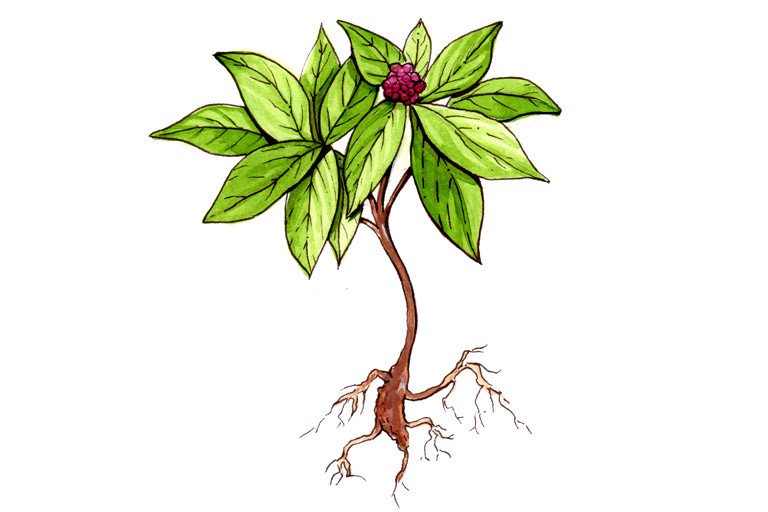
Common Names
- Xi yang shen
- Western ginseng
- Five-fingers
For Patients & Caregivers
Tell your healthcare providers about any dietary supplements you’re taking, such as herbs, vitamins, minerals, and natural or home remedies. This will help them manage your care and keep you safe.
American ginseng is an herb used in traditional Chinese medicine. It also comes as capsules, pills, powder, and tablets.
American ginseng is used to:
- Improve your strength
- Boost your immune system
- Treat the common cold
- Improve your memory
- Treat diabetes
- Reduce fatigue (feeling weaker than usual) due to cancer
American ginseng also has other uses that haven’t been studied by doctors to see if they work.
Talk with your healthcare providers before taking American ginseng supplements. They can interact with some medications and affect how they work. For more information, read the “What else do I need to know?” section below.
There aren’t any reports of side effects from taking American ginseng
- Talk with your healthcare provider if you’re taking blood thinners such as warfarin (Coumadin®, Jantoven®). American ginseng may increase your risk of bleeding.
For Healthcare Professionals
A popular herb often confused with Asian or Panax ginseng, American ginseng has unique medicinal properties. It is frequently used in Chinese medicine to nourish “Yin” (1). American ginseng is also used in supplemental form to improve athletic performance, strength, and stamina, and to treat diabetes and cancer. Saponin glycosides, also known as ginsenosides or panaxosides, are thought responsible for its biological effects. In lab studies, ginsenosides have both stimulatory and inhibitory CNS effects (4), can alter cardiovascular tone, enhance humoral and cellular-dependent immunity, and exert anticancer effects (15) (16) (28). Other preclinical studies suggest enhanced anticancer activities when combined with antioxidants (14), synergistic effects with 5-fluorouracil (17), and protection against oxidative stress in irradiated human lymphocytes (18).
Studies in humans are limited. Current data suggest that American ginseng may help improve glucose control in diabetics (2) (6) (29) (30) and that it is safe for long-term use (25). It has a modest effect in reducing number and severity of colds (12), and may enhance working memory (21) (24) (27).
A large multisite trial reported benefits of American ginseng in improving cancer-related fatigue (23), and a systematic review/meta analysis reported efficacy of ginseng-containing formulas in reducing fatigue, but not ginseng alone (33). Current oncology guidelines recommend American ginseng for reducing fatigue in cancer patients undergoing treatment (34). Epidemiological data suggest it may improve survival and quality of life in breast cancer patients (13), but more studies are needed.
- Improve strength
- Immunostimulation
- Common cold
- Improve memory
- Diabetes
- Cancer-related fatigue
Ginsenosides are thought responsible for American ginseng’s activity, although the exact mechanism of action is unknown. Related species, such as Panax ginseng, have been the focus of most laboratory and clinical research. Experiments using extracts from these species indicate that ginsenosides stimulate and inhibit the central nervous system (4). The extracts also stimulate TNF alpha production by alveolar macrophages (10).
The Rg1 ginsenoside present in American ginseng is associated with improvements in humoral and cell-mediated immune response and increases in T helper cells, T lymphocytes, and NK cells in mice (5). American ginseng was also shown to lower serum glucose and may affect carbohydrate metabolism (2) (6).
Several ginsenosides have demonstrated anticancer properties in vitro (3). Current data suggest that antiproliferative effects of American ginseng are due to compound K, a metabolite of the ginsenoside Rb1, but not Rb1 as previously thought (22). In a rodent study, the herb significantly attenuated colon carcinogenesis by reducing tumor number and load, and was associated with suppression of proinflammatory cytokine activation (26).
- American ginseng was shown to stimulate the growth of breast cancer cells in vitro. However, it is impossible to achieve the dose that was used in this study via oral intake. Additionally, there were no significant differences in uterine weight among the mice treated with American ginseng compared to untreated controls. Therefore, these findings have no clinical relevance (9).