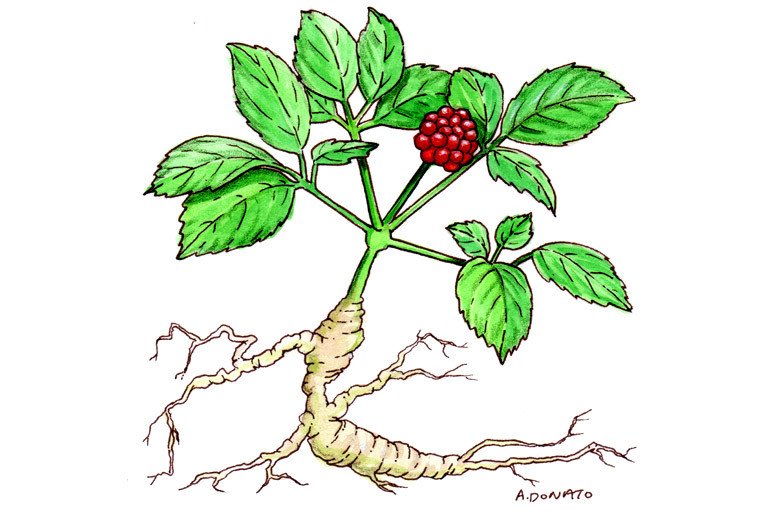
Common Names
- Chinese ginseng
- Ren shen
- Korean ginseng
- Red ginseng
For Patients & Caregivers
Tell your healthcare providers about any dietary supplements you’re taking, such as herbs, vitamins, minerals, and natural or home remedies. This will help them manage your care and keep you safe.
Asian ginseng is an herb used in traditional Chinese medicine. It also comes as capsules, softgels, tablets, and liquid extracts.
Asian ginseng is used to:
- Boost the immune system.
- Increase strength and stamina.
- Treat diabetes.
- Treat erectile dysfunction (ED, trouble getting or keeping an erection).
Asian ginseng has other uses, but doctors have not studied them to see if they work.
Talk with your healthcare providers before taking Asian ginseng supplements. They can interact with some medications and affect how they work. For more information, read the “What else do I need to know?” section below.
Side effects of using Asian ginseng may include:
- Dry mouth
- Fast heart rate
- Nausea (feeling like you’re going to throw up)
- Vomiting (throwing up)
- Diarrhea (loose or watery bowel movements)
- Insomnia (trouble falling asleep, staying asleep, or waking up too early)
- Nervousness
- Talk with your healthcare provider if you’re taking blood thinners such as warfarin (Coumadin®, Jantoven®). Asian ginseng may increase your risk of bleeding.
- Talk with your healthcare provider if you’re taking imatinib (Gleevec®). Asian ginseng may increase the risk of liver damage.
- Talk with your healthcare provider if you’re taking raltegravir (Isentress®, Isentress® HD). Asian ginseng may increase the risk of liver damage.
- Talk with your healthcare provider if you’re on insulin. Asian ginseng may lower your blood sugar to harmful levels.
- Asian ginseng should not be confused with herbs such as American ginseng, Siberian ginseng, or Panax notoginseng. These herbs are not the same as Asian ginseng.
For Healthcare Professionals
Panax ginseng is an herb native to East Asia and Russia. It is also cultivated for its medicinal properties and the root is widely used as a “Yang” tonic in traditional medicine (1). Patients take ginseng to improve athletic performance, strength, and stamina, and as an immunostimulant. Some use it to treat diabetes, cancer, HIV/AIDS, and a variety of other conditions. Ginsenosides, the saponin glycosides, are thought responsible for medicinal effects of P. ginseng. They have both stimulatory and inhibitory effects on the CNS, alter cardiovascular tone, and increase humoral and cellular-dependent immunity (2).
Studies in humans are limited. Although ginseng has been used in the treatment of erectile dysfunction (4), the effect may be trivial and the quality of evidence for most studies is low (46). Other preliminary data suggest it can be helpful for type II diabetic patients (5), but more studies are needed.
Small studies indicate ginseng may enhance immune functioning in various populations (19) (21) (47) or benefit patients with prehypertension or hypertension (42). It may also improve menopausal symptoms and markers for cardiovascular disease (30). Other data suggest ginseng helps improve quality of life after ischemic stroke (54), alleviates idiopathic chronic fatigue (33) and cold hypersensitivity of hands and feet in women (39).
Ginseng has also been investigated for potential anticancer properties. Ginsenosides exhibit antiproliferative effects in vitro (25) (26). Epidemiological data in breast cancer patients show improved survival and quality of life with ginseng use (3), and reduced risk of endometrial cancer in breast cancer survivors (38). In addition, two case-controlled studies indicate a positive association between consumption and reduction in the incidence of all cancers (11) (12). In small randomized studies, ginseng protected against chemo-induced cardiotoxicity along with improving QOL in breast cancer patients (55) (56), and reduced genotoxicity in patients with epithelial ovarian cancer (43) but did not relieve surgical menopause symptoms in those with gynecologic cancers (48). Also, whether or not ginseng helps alleviate cancer-related fatigue is not clear (57) (44) (58) although a systematic review/meta analysis reported efficacy of ginseng-containing formulas in reducing fatigue, but not ginseng alone (53).
Panax ginseng should not be confused with American ginseng (Panax quinquefolius) or Siberian ginseng (Eleutherococcus senticosus), which have different medicinal properties. It should also not be confused with Panax notoginseng which also has different properties (52), and is a key ingredient in the TCM formula Yunnan baiyao.
- Immunostimulation
- Strength and stamina
- Diabetes
- Erectile dysfunction
Animal studies suggest ginsenosides prolong drug-induced sleeping time in mice and exhibit additional depressant effects on the CNS (2). In addition, the ginsenoside Rb1 improves acetylcholine release and enhances postsynaptic uptake of choline (2). In other animal studies, ginseng saponins lowered total plasma cholesterol and triglyceride levels (15). Ginseng may improve NO synthesis in endothelium of the heart, lung, kidneys, and in the corpus cavernosum (13).
In humans, oral intake of ginseng reduced post-exercise muscle injury and inflammation marked by reduced creatine kinase, beta-glucuronidase, and glucose-6-phosphate dehydrogenase (14).
Anticancer activity has been observed in vitro with several ginsenosides. Differentiation of HL-60 promyelocytic cells was induced in ginsenosides Rh2- and Rh3-treated cells (2). Rg3 exerted effects in part by blocking the nuclear translocation of the protein ß-catenin in colon cancer cells, most of which turned cancerous via activation of the Wnt/ß-catenin signaling pathway (25). Rp1 reduced breast cancer cell proliferation by decreasing stability of the insulin like growth factor 1 receptor protein in breast cancer cells (26).
- P. ginseng was shown to activate the estrogen receptor in human breast carcinoma MCF-7 cells. However, the human blood level of 50 microM of ginsenoside-Rh1 was not investigated and therefore, the clinical relevance of this finding is not known (23).
Dry mouth, tachycardia, nausea, vomiting, diarrhea, insomnia, and nervousness (1)
Case reports
Mania: In a 26-year-old male with no history of mental illness following chronic consumption of 250 mg Panax ginseng capsules 3 times a day. His symptoms, including irritability, insomnia, flight of ideas, and rapid speech, were resolved following supplement discontinuation (17). Two other cases of ginseng-associated manic psychosis were also reported (35).
Gynecomastia: In a 12-year-old boy after ingesting ginseng extract for body building (31).
Uncontrolled facial movements: In a 46-year-old woman who developed speech and eating difficulties as well as tongue-biting, following consumption of a formula containing black cohosh and ginseng. Symptoms resolved after discontinuing use of the formula (34).
Pulmonary embolism: In a 41-year-old woman after taking panax pills (40).
Perioperative bleeding: In a 72-year-old woman following cardiac surgery due to severe coagulopathy induced by high oral intake of ginseng before surgery (45).
Liver toxicity: In a 26-year-old man with chronic myelogenous leukemia who was on long-term imatinib. He had no complications with this medication until daily ingestion of Panax ginseng via energy drinks for 3 months, after which he experienced right upper quadrant pain. It is thought the interaction of ginseng with this drug played some role (24).
Spontaneous esophageal submucosal hematoma: In a 57-year-old woman after taking Panax ginseng capsules. Her symptoms resolved after appropriate treatment (59).
Pityriasis Rosea-Like Eruption: In a 26-year-old woman after taking several herbs including Panax ginseng for fatigue. Her symptoms improved after treatment and discontinuing P. ginseng and another herb Aconitum carmichaelii Debx (60).
Insulin and sulfonylureas: In humans, P. ginseng may increase the hypoglycemic effect of insulin and sulfonylureas (5).
Antiplatelets: P. ginseng may increase aspirin bioavailability (49).
Anticoagulants: Studies on whether P. ginseng can antagonize the effects of anticoagulants are mixed (6) (7) (8) (50) (51). Clinical relevance needs further assessment.
MAOIs: In humans, P. ginseng may cause manic-like symptoms when combined with MAOIs (9).
Imatinib: A case report indicates that P. ginseng may increase risk of hepatotoxicity (24).
CYP3A4 substrates: Certain ginsenosides can induce CYP3A4 and may increase the clearance of substrate drugs (28) (29). However, effects in humans may not be clinically significant (41).
Raltegravir: Elevated plasma levels of raltegravir, an antiretroviral drug, were reported in a patient following concurrent use of raltegravir and ginseng (32).