Tell your healthcare providers about any dietary supplements you’re taking, such as herbs, vitamins, minerals, and natural or home remedies. This will help them manage your care and keep you safe.
There is no scientific evidence to support the traditional uses of glehnia.
Scientists do not know how glehnia works. Very little research has been done with this herb, which is often used in traditional Chinese medicine. A few lab studies in mice show that glehnia has anti-inflammatory properties. It is not known if these effects occur in the human body.
To treat bronchitis and relieve chest congestion
Glehnia is used to treat bronchitis and chest congestion in traditional Chinese medicine, but these uses have not been tested in clinical trials.
Although no adverse reactions have been reported, there are also no studies in humans.
Do Not Take if:
You are taking CYP3A4 substrate drugs: Theoretically, glehnia root may increase side effects of these drugs, although clinical relevance is not known.
You are undergoing radiation therapy: In theory, a compound in glehnia may cause increased skin sensitivity to light.
For Healthcare Professionals
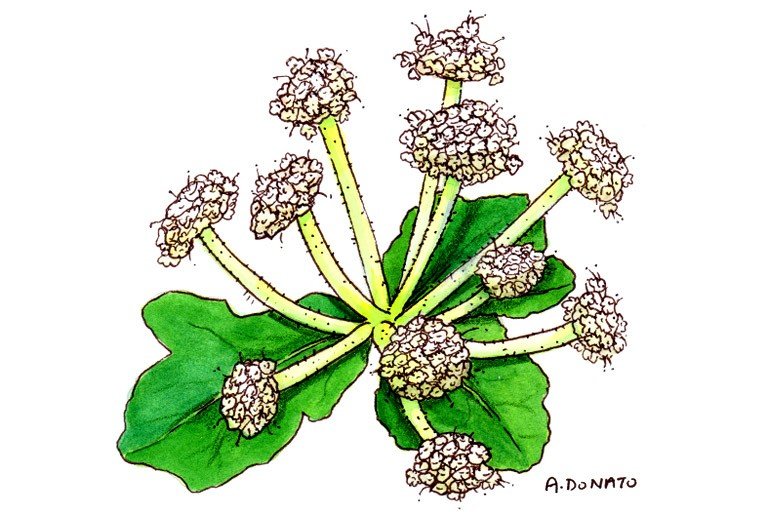
Glehnia littoralis, Radix Glehniae
Derived from the root of the plant, glehnia is used in traditional medicine to treat bronchitis and fevers. It is also used in Asia to treat immune-related diseases. Lab studies suggest anti-inflammatory (1)(11) and antitumor properties (3)(12)(13). However, studies in humans have not been conducted.
Both pyranocoumarins as well as furanocoumarins such as imperatorin, psoralen, and bergapten have been indentified in glehnia (11)(14)(15). Theoretically, glehnia may have phototoxic effects or CYP3A4 interactions due to furanocoumarin components. Additional research is necessary to determine the safety and efficacy of this botanical.
Bronchitis
Chest congestion
Reports suggest that glehnia root can hemolyze blood cells, stimulate myocardial contractility, and exert antibacterial effects (8). Studies in mice demonstrated analgesic effects with glehnia root extracts (2). An intraperitoneal injection of a glehnia extract inhibited topical edema and reduced inflammation, vascular permeability, cytokine production, and neutrophil-mediated myeloperoxidase activity (1). Anti-inflammatory effects may be due to inhibition of proinflammatory mediators such as NO, prostaglandin E2, TNF, and IL1-beta via suppression of NF-kappaB- and mitogen-activated protein kinase-dependent pathways (9). Imperatorin, a compound isolated from glehnia root, blocks protein expression of inducible NO synthase and COX-2 in LPS-stimulated RAW264.7 macrophages (11).
Polyacetylenic compounds extracted from glehnia fruit may have antiproliferative activity against human gastric adenocarcinoma, human uterine carcinoma, and murine malignant melanoma cancer cell lines (3).
Due to potential for photosensitivity (15)(16), patients receiving radiation therapy should not consume this herb.
Although no adverse reactions have been reported, there are also no studies in humans.
CYP3A4 substrates: Theoretically, glehnia root may inhibit CYP3A4 in a dose-dependent manner due to furanocoumarins (11)(14)(15). Clinical relevance is not known.