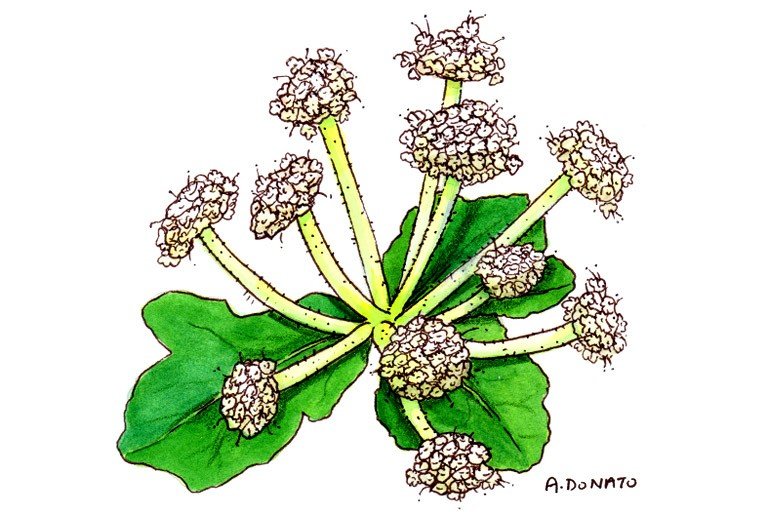
Health Care Professional Information
Common Name
Radix Glehniae, Adenophora tetraphylla, sha shen, hamabofu, American silvertop root
Clinical Summary
Derived from the root of the plant, glehnia is used in traditional medicine to treat bronchitis and whooping cough. It is also used in Asia to treat immune-related diseases. Studies indicate anti-inflammatory (1) (11) and antitumor properties (3). Clinical trials have not been conducted.
Theoretically, glehnia may have additive effects with anticoagulant and antiplatelet agents due to the coumarin component. Additional research is necessary to determine the safety and efficacy of this botanical.
Purported Uses
- Bronchitis
- Chest congestion
- Whooping cough
Constituents
- Coumarins, psoralens, umbelliferone, ostenol, monoterpenoids, chorchionoside A
- Volatile oils: Alpha-pinene, beta-phellandrene, germacrene B
- Lignan glycoside [glehlinoside G (1)] and neolignan glycosides [glehlinosides H (2), I (3) and J (4)]
- Imperatorin
(1) (2) (3) (4) (10) (11)
Mechanism of Action
It has been reported that glehnia root can hemolyze blood cells, stimulate myocardial contractility, and exert antibacterial effects (8). Studies in mice demonstrated analgesic effects of glehnia root extracts (2); and intraperitoneal injection of a glehnia extract was found to inhibit topical edema and substantially reduced inflammatory damage, vascular permeability, cytokine production, and neutrophil-mediated myeloperoxidase activity (1). The anti-inflammatory properties of glehnia may be due to the inhibition of proinflammatory mediators, such as nitric oxide, prostaglandin E2, tumor necrosis factor, and interleukin 1-beta, via suppression of NF-kappaB- and mitogen-activated protein kinases-dependent pathways (9). Imperatorin, a compound isolated from glehnia roots, blocks the protein expression of inducible nitric oxide synthase and cyclooxygenase-2 (COX-2) in LPS-stimulated RAW264.7 macrophages significantly (11).
Polyacetylenic compounds extracted from glehnia fruit may have antiproliferative activity against human gastric adenocarcinoma, (MK-1), human uterine carcinoma (HeLa), and murine malignant melanoma (B16F10) cancer cell lines (3).
Pharmacokinetics
No formal pharmacokinetic studies have been performed.
Adverse Reactions
No adverse reactions have been reported, but photosensitivity may occur due to psoralens.
Herb-Drug Interactions
Anticoagulants / Antiplatelets: Theoretically, glehnia root may have additive effects with anticoagulants and antiplatelets due to the coumarin content.
Dosage (Inside MSKCC Only)
This field is only visible to only Inside MSKCC users.
References
- Yoon T, Lee do Y, Lee AY, et al. Anti- inflammatory effects of Glehnia littoralis extract in acute and chronic cutaneous inflammation. Immunopharmacol Immunotoxicol. 2010 Dec;32(4):663-70.
- Okuyama E, et al. Analgesic components of glehnia root (glehnia littoralis). Natural Med 1998;52:491-501.
- Nakano Y, Matsunaga H, Saita T, et al. Antiproliferative constituents in Umbelliferae plants II. Screening for polyacetylenes in some Umbelliferae plants, and isolation of panaxynol and falcarindiol from the root of Heracleum moellendorffii. Biol Pharm Bull. 1998 Mar;21(3):257-61.
- Miyazawa M, et al. Components of the essential oil from glehnia littoralis. Flavour Frangrance J 2001;16:215-8.
- Kitajima J, et al. Coumarin glycosides of glehnia littoralis root and rhizoma. Chem Pharm Bull 1998:46:1404-7.
- Ishikawa T, Sega Y, Kitajima J. Water-soluble constituents of glehnia littoralis fruit. Chem Pharm Bull 2001;49:584-8.
- Kitajima J, et al. New glycosides and furocoumarin from the glehnia littoralis root and rhizoma. Chem Pharm Bull 1998;46:1939-40.
- Huang KC. The Pharmacology of Chinese Herbs, 2nd ed. New York: CRC Press; 1999.
- Yoon T, Cheon MS, Lee AY, et al. Anti-inflammatory activity of methylene chloride fraction from Glehnia littoralis extract via suppression of NF-kappa B and mitogen-activated protein kinase activity. J Pharmacol Sci. 2010 Jan;112(1):46-55.
- Xu Y, Gu X, Yuan Z. Lignan and neolignan glycosides from the roots of Glehnia littoralis. Planta Med. 2010 Oct;76(15):1706-9.
- Huang GJ, Deng JS, Liao JC, et al. Inducible nitric oxide synthase and cyclooxygenase-2 participate in anti-inflammatory activity of imperatorin from Glehnia littoralis.J Agric Food Chem. 2012 Feb 22;60(7):1673-81.
Consumer Information
How It Works
Bottom Line: There is no scientific evidence to support the traditional uses of Glehnia.
Scientists do not know how glehnia works. Very little laboratory research has been done with this herb, which is often used in traditional Chinese medicine. Some lab studies show that glehnia stimulates the heart's ability to contract, has antibacterial effects, and works as a topical pain killer in mice. It is not known if these effects occur in the human body.
Purported Uses
- To treat bronchitis and relieve chest congestion
Glehnia is used to treat bronchitis and chest congestion in traditional Chinese medicine, but these uses have not been tested in clinical trials.
- To treat whooping cough
Glehnia is used to treat whooping cough in traditional Chinese medicine, but this use has not been tested in clinical trials.
Do Not Take If
- You are taking warfarin or other blood thinners (Glehnia may increase the risk of bleeding).
- You are undergoing radiation therapy (Glehnia can cause increased skin sensitivity to light).
Last updated: October 9, 2012
adenocarcinoma (A-deh-noh-KAR-sih-NOH-muh)
Cancer that begins in cells that line certain internal organs and that have gland-like (secretory) properties.
Source: The National Cancer Institute's Dictionary of Cancer Terms
(http://www.cancer.gov/dictionary)
analgesic (A-nul-JEE-zik)
A drug that reduces pain. Analgesics include aspirin, acetaminophen, and ibuprofen.
Source: The National Cancer Institute's Dictionary of Cancer Terms
(http://www.cancer.gov/dictionary)
anti-inflammatory (AN-tee-in-FLA-muh-TOR-ee)
Having to do with reducing inflammation.
Source: The National Cancer Institute's Dictionary of Cancer Terms
(http://www.cancer.gov/dictionary)
antibacterial (AN-tee-bak-TEER-ee-ul)
A substance that kills bacteria or stops them from growing and causing disease.
Source: The National Cancer Institute's Dictionary of Cancer Terms
(http://www.cancer.gov/dictionary)
anticoagulant (AN-tee-koh-A-gyuh-lunt)
A substance that is used to prevent and treat blood clots in blood vessels and the heart. Also called blood thinner.
Source: The National Cancer Institute's Dictionary of Cancer Terms
(http://www.cancer.gov/dictionary)
antitumor (AN-tee-TOO-mer)
Having to do with stopping abnormal cell growth.
Source: The National Cancer Institute's Dictionary of Cancer Terms
(http://www.cancer.gov/dictionary)
botanical (buh-TA-nih-kul)
Having to do with, or derived from, plants.
Source: The National Cancer Institute's Dictionary of Cancer Terms
(http://www.cancer.gov/dictionary)
bronchitis (bron-KY-tis)
Inflammation (swelling and reddening) of the bronchi.
Source: The National Cancer Institute's Dictionary of Cancer Terms
(http://www.cancer.gov/dictionary)
cancer (KAN-ser)
A term for diseases in which abnormal cells divide without control and can invade nearby tissues. Cancer cells can also spread to other parts of the body through the blood and lymph systems. There are several main types of cancer. Carcinoma is a cancer that begins in the skin or in tissues that line or cover internal organs. Sarcoma is a cancer that begins in bone, cartilage, fat, muscle, blood vessels, or other connective or supportive tissue. Leukemia is a cancer that starts in blood-forming tissue such as the bone marrow, and causes large numbers of abnormal blood cells to be produced and enter the blood. Lymphoma and multiple myeloma are cancers that begin in the cells of the immune system. Central nervous system cancers are cancers that begin in the tissues of the brain and spinal cord. Also called malignancy.
Source: The National Cancer Institute's Dictionary of Cancer Terms
(http://www.cancer.gov/dictionary)
carcinoma (KAR-sih-NOH-muh)
Cancer that begins in the skin or in tissues that line or cover internal organs.
Source: The National Cancer Institute's Dictionary of Cancer Terms
(http://www.cancer.gov/dictionary)
cell (sel)
The individual unit that makes up the tissues of the body. All living things are made up of one or more cells.
Source: The National Cancer Institute's Dictionary of Cancer Terms
(http://www.cancer.gov/dictionary)
clinical (KLIH-nih-kul)
Having to do with the examination and treatment of patients.
Source: The National Cancer Institute's Dictionary of Cancer Terms
(http://www.cancer.gov/dictionary)
compound (KOM-pownd)
In science, a substance that is made up of more than one ingredient.
Source: The National Cancer Institute's Dictionary of Cancer Terms
(http://www.cancer.gov/dictionary)
coumarin (KOO-muh-rin)
A substance used to make drugs that prevent and treat blood clots in blood vessels and treat certain heart conditions. Coumarin is taken from certain plants and can also be made in the laboratory. It is a type of anticoagulant.
Source: The National Cancer Institute's Dictionary of Cancer Terms
(http://www.cancer.gov/dictionary)
cyclooxygenase-2 (SY-kloh-OK-sih-jeh-NAYS-2)
An enzyme that speeds up the formation of substances that cause inflammation and pain. It may also cause tumor cells to grow. Some tumors have high levels of cyclooxygenase-2 and blocking its activity may reduce tumor growth. Also called COX-2 and prostaglandin-endoperoxide synthase 2.
Source: The National Cancer Institute's Dictionary of Cancer Terms
(http://www.cancer.gov/dictionary)
cytokine (SY-toh-kine)
A substance that is made by cells of the immune system. Some cytokines can boost the immune response and others can suppress it. Cytokines can also be made in the laboratory by recombinant DNA technology and used in the treatment of various diseases, including cancer.
Source: The National Cancer Institute's Dictionary of Cancer Terms
(http://www.cancer.gov/dictionary)
edema (eh-DEE-muh)
Swelling caused by excess fluid in body tissues.
Source: The National Cancer Institute's Dictionary of Cancer Terms
(http://www.cancer.gov/dictionary)
efficacy (EH-fih-kuh-see)
Effectiveness. In medicine, the ability of an intervention (for example, a drug or surgery) to produce the desired beneficial effect.
Source: The National Cancer Institute's Dictionary of Cancer Terms
(http://www.cancer.gov/dictionary)
extract (EK-strakt)
In medicine, a preparation of a substance obtained from plants, animals, or bacteria and used as a drug or in drugs.
Source: The National Cancer Institute's Dictionary of Cancer Terms
(http://www.cancer.gov/dictionary)
gastric (GAS-trik)
Having to do with the stomach.
Source: The National Cancer Institute's Dictionary of Cancer Terms
(http://www.cancer.gov/dictionary)
inflammatory (in-FLA-muh-TOR-ee)
Having to do with inflammation (redness, swelling, pain, and a feeling of heat that helps protect tissues affected by injury or disease).
Source: The National Cancer Institute's Dictionary of Cancer Terms
(http://www.cancer.gov/dictionary)
injection (in-JEK-shun)
Use of a syringe and needle to push fluids or drugs into the body; often called a "shot."
Source: The National Cancer Institute's Dictionary of Cancer Terms
(http://www.cancer.gov/dictionary)
interleukin (in-ter-LOO-kin)
One of a group of related proteins made by leukocytes (white blood cells) and other cells in the body. Interleukins regulate immune responses. Interleukins made in the laboratory are used as biological response modifiers to boost the immune system in cancer therapy. An interleukin is a type of cytokine. Also called IL.
Source: The National Cancer Institute's Dictionary of Cancer Terms
(http://www.cancer.gov/dictionary)
intraperitoneal (IN-truh-PAYR-ih-toh-NEE-ul)
Within the peritoneal cavity (the area that contains the abdominal organs). Also called IP.
Source: The National Cancer Institute's Dictionary of Cancer Terms
(http://www.cancer.gov/dictionary)
malignant (muh-LIG-nunt)
Cancerous. Malignant cells can invade and destroy nearby tissue and spread to other parts of the body.
Source: The National Cancer Institute's Dictionary of Cancer Terms
(http://www.cancer.gov/dictionary)
medicine (MEH-dih-sin)
Refers to the practices and procedures used for the prevention, treatment, or relief of symptoms of a diseases or abnormal conditions. This term may also refer to a legal drug used for the same purpose.
Source: The National Cancer Institute's Dictionary of Cancer Terms
(http://www.cancer.gov/dictionary)
melanoma (MEH-luh-NOH-muh)
A form of cancer that begins in melanocytes (cells that make the pigment melanin). It may begin in a mole (skin melanoma), but can also begin in other pigmented tissues, such as in the eye or in the intestines.
Source: The National Cancer Institute's Dictionary of Cancer Terms
(http://www.cancer.gov/dictionary)
necrosis (neh-KROH-sis)
Refers to the death of living tissues.
Source: The National Cancer Institute's Dictionary of Cancer Terms
(http://www.cancer.gov/dictionary)
oxide (OK-side)
A type of chemical substance that is a combination of oxygen and another substance. Oxides are found in essential oils.
Source: The National Cancer Institute's Dictionary of Cancer Terms
(http://www.cancer.gov/dictionary)
pharmacology (FAR-muh-KAH-loh-jee)
The study of the origin, chemistry, and uses of drugs and their effects on the body.
Source: The National Cancer Institute's Dictionary of Cancer Terms
(http://www.cancer.gov/dictionary)
prostaglandin (PROS-tuh-GLAN-din)
One of several hormone-like substances made by the body. Different prostaglandins control blood pressure, contraction of smooth muscles, and other processes within tissues where they are made. Certain prostaglandins are being studied as cancer biomarkers. Also called PG.
Source: The National Cancer Institute's Dictionary of Cancer Terms
(http://www.cancer.gov/dictionary)
protein (PROH-teen)
A molecule made up of amino acids that are needed for the body to function properly. Proteins are the basis of body structures such as skin and hair and of substances such as enzymes, cytokines, and antibodies.
Source: The National Cancer Institute's Dictionary of Cancer Terms
(http://www.cancer.gov/dictionary)
protein expression (PROH-teen ek-SPREH-shun)
Refers to the amount of a protein made in a cell. The study of protein expression in cancer cells may give information about a specific type of cancer, the best treatment to use, and how well a treatment works.
Source: The National Cancer Institute's Dictionary of Cancer Terms
(http://www.cancer.gov/dictionary)
psoralen (SOR-uh-len)
A substance from plants that is sensitive to light (or can be activated by light). Psoralens are used together with UV light to treat psoriasis, vitiligo, and skin nodules of cutaneous T-cell lymphoma. They are also being studied in the treatment of graft-versus-host disease. Psoralen is a type of furocoumarin. An example of a psoralen is methoxsalen.
Source: The National Cancer Institute's Dictionary of Cancer Terms
(http://www.cancer.gov/dictionary)
radiation (RAY-dee-AY-shun)
Energy released in the form of particle or electromagnetic waves. Common sources of radiation include radon gas, cosmic rays from outer space, medical x-rays, and energy given off by a radioisotope (unstable form of a chemical element that releases radiation as it breaks down and becomes more stable).
Source: The National Cancer Institute's Dictionary of Cancer Terms
(http://www.cancer.gov/dictionary)
sensitivity (SEN-sih-TIH-vih-tee)
When referring to a medical test, sensitivity refers to the percentage of people who test positive for a specific disease among a group of people who have the disease. No test has 100% sensitivity because some people who have the disease will test negative for it (false negatives).
Source: The National Cancer Institute's Dictionary of Cancer Terms
(http://www.cancer.gov/dictionary)
therapy (THAYR-uh-pee)
Treatment.
Source: The National Cancer Institute's Dictionary of Cancer Terms
(http://www.cancer.gov/dictionary)
topical (TAH-pih-kul)
On the surface of the body.
Source: The National Cancer Institute's Dictionary of Cancer Terms
(http://www.cancer.gov/dictionary)
traditional Chinese medicine (truh-DIH-shuh-nul chy-NEEZ MEH-dih-sin)
A medical system that has been used for thousands of years to prevent, diagnose, and treat disease. It is based on the belief that qi (the body's vital energy) flows along meridians (channels) in the body and keeps a person’s spiritual, emotional, mental, and physical health in balance. Traditional Chinese medicine aims to restore the body’s balance and harmony between the natural opposing forces of yin and yang, which can block qi and cause disease. Traditional Chinese medicine includes acupuncture, diet, herbal therapy, meditation, physical exercise, and massage. Also called Oriental medicine and TCM.
Source: The National Cancer Institute's Dictionary of Cancer Terms
(http://www.cancer.gov/dictionary)
tumor (TOO-mer)
An abnormal mass of tissue that results when cells divide more than they should or do not die when they should. Tumors may be benign (not cancer), or malignant (cancer). Also called neoplasm.
Source: The National Cancer Institute's Dictionary of Cancer Terms
(http://www.cancer.gov/dictionary)
whooping cough (HWOOP-ing kof)
A serious bacterial infection of the lungs and breathing tubes that spreads easily. Whooping cough begins like a cold, but develops into severe coughing and gasping for air. Long spells of coughing may cause vomiting, and broken blood vessels in the eyes and on the skin. Also called pertussis.
Source: The National Cancer Institute's Dictionary of Cancer Terms
(http://www.cancer.gov/dictionary)