Common Names
- Glucosamine sulphate
- Glucosamine hydrochloride
- Chitosamine
For Patients & Caregivers
Tell your healthcare providers about any dietary supplements you’re taking, such as herbs, vitamins, minerals, and natural or home remedies. This will help them manage your care and keep you safe.
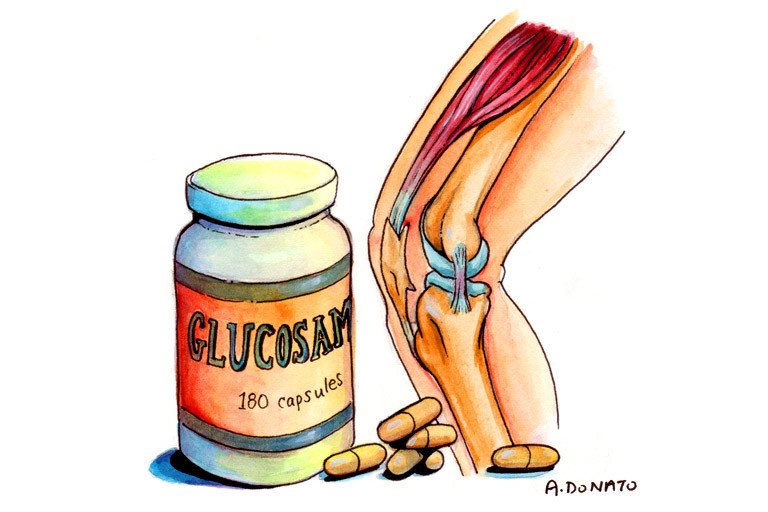
Glucosamine is a chemical found in your body that helps make cartilage (the protective tissue at the ends of bones). When cartilage breaks down in people with osteoarthritis (joint pain in your hands, neck, lower back, knees, or hips), glucosamine may help slow this down.
You can take glucosamine supplements as pills, tablets, capsules, or powder that can be made into a drink by dissolving it in water. You can also rub a glucosamine gel or lotion onto your skin.
Glucosamine is used to:
- Decrease swelling in joints
- Treat osteoarthritis
- Treat temporomandibular joint disorder (TMJ). TMJ is pain and difficulty moving the jaw joint and muscles around it.
Glucosamine also has other uses that haven’t been studied by doctors to see if they work.
Talk with your healthcare provider before taking glucosamine supplements. They can interact with some prescription medications and affect how they work.
For more information, read the “What else do I need to know?” section below.
Side effects of glucosamine may include:
- Nausea (feeling like you’re going to throw up)
- Diarrhea (loose or watery bowel movements)
- Abdominal (belly) pain
- Heartburn
- Itching
- Skin rash
- Temporary memory loss
- Low blood pressure
- Sleepiness
- Trouble breathing
- Talk with your healthcare provider before taking glucosamine supplements if you have liver disease. Glucosamine may worsen your condition.
- Talk with your healthcare provider before taking glucosamine supplements if you’re taking blood thinners such as warfarin (Coumadin®). Taking both may cause side effects.
- Talk with your healthcare provider if you have diabetes or glaucoma (an eye condition that may lead to blindness). Glucosamine may worsen your condition.
- Talk with your healthcare provider if you’re allergic to shellfish. You may have an allergic reaction to glucosamine supplements.
For Healthcare Professionals
Glucosamine is an aminomonosaccharide synthesized from glucose. It is found in the cartilage and fluid around the joints as well as in marine invertebrate exoskeletons. Glucosamine has anti-inflammatory effects, and is marketed as a dietary supplement and often paired with chondroitin sulfate for joint health.
Glucosamine has been mostly studied for osteoarthritis (OA). Although glucosamine/chondroitin supplementation was comparable to celecoxib in a large multicenter trial of patients with severe knee OA pain (2), and reduced circulating inflammatory cytokine IL-6 (47), other studies have not found benefit with glucosamine, chondroitin, or the combination for knee or hip OA (3) (4) (5) (6) (7) (8) (9) (10) (53) (63). Data on chondroitin alone also suggest no significant benefit (10) (11). In addition, no efficacy was seen with glucosamine for back pain (12) (13), degenerative lumbar OA (13), or improving glucose metabolism in type 2 diabetes (14). Any benefits with glucosamine may be limited to older patients who have arthritis that is more severe (15) or for longer periods of time (16).
Meta-analyses of glucosamine trials are also mixed (35) (36) (37) (38) (39) (54). The American College of Rheumatology conditionally recommends that patients avoid glucosamine for OA (45). In contrast, the European Society for Clinical and Economic Aspects of Osteoporosis and Osteoarthritis treatment guidelines (40) recommend a prescription glucosamine formulation as being superior to other forms, but this product is not available in the US (40). It is further suggested that these differences in availability and formulas have contributed to the lack of significant effect across studies and pooled analyses (46). Additionally, interindividual differences in the absorption and elimination of glucosamine may cause variable clinical outcomes in OA according to a study of healthy adults (48).
Clinical trials on whether glucosamine can improve temporomandibular joint symptoms are limited, providing low or no evidence of this effect (1) (41) (55) (60) although one study of oral glucosamine adjunctive to hyaluronic acid injection suggests long-term benefit (42). Preliminary studies of other combination treatments with glucosamine for various types of OA (49) (52) and lumbar osteochondrosis (64) suggest improvements in pain and function, but more studies are needed to confirm these effects.
Glucosamine has been assessed for its potential role against depression. Although preclinical studies suggested antidepressive effects, a clinical investigation failed to find any benefit (50).
Exploratory findings suggest glucosamine may benefit gut health (56). Larger studies are needed to confirm these effects.
Glucosamine/chondroitin supplementation has been correlated with reduction in cancer risk and mortality, although limitations such as bias could not be ruled out and confirmatory studies are needed (17) (18) (19) (57) (58) (59).
Glucosamine use has been associated with a higher risk for cardiovascular diseases in patients with osteoarthritis (61) along with case reports of liver injury/toxicity (20) (21). Patients on antiplatelet or anticoagulant therapies should be monitored for interactions or increased INR levels (22) (23). Patients with poorly controlled diabetes or glucose intolerance should be monitored as glucosamine could worsen insulin resistance (24) (25).
- Inflammation
- Osteoarthritis
- Temporomandibular joint disorders
Progressive degeneration of cartilage glycosaminoglycans is evident in osteoarthritis. Glucosamine is the first step in glycosaminoglycan biosynthesis. In vitro, it increased production of monomeric proteoglycans capable of assembling into high molecular weight aggregates (26). Glucosamine can protect cartilage from metabolic impairment by NSAIDs, corticosteroids, and by exerting anti-inflammatory effects (27). It may promote cartilage repair by inducing tissue TGFβ1 and CTGF expression that regulates chondrocyte proliferation (28). Long-term reductions in TMJ symptoms with adjunctive oral glucosamine may be due to TGF-beta stimulation and IL-1beta / IL-6 suppression (42). Reduced systemic inflammation and cytokine activity found in a small randomized crossover study may explain potential reductions in mortality or cancer risk (30).
Although glucosamine is slow to act (31), its effects may persist after treatment cessation (26).
The rise in intraocular pressure associated with older patients in one study may relate to exogenous glycosaminoglycans effects on accumulations of extracellular matrix and thickening of the basement membrane, thereby compromising function of the trabecular meshwork (29).
- Patients with liver disease should avoid taking glucosamine, as it is extensively metabolized in the liver and there are case reports of liver injury/toxicity (20) (21).
- Patients who are taking anticoagulants or antiplatelet drugs or who have glaucoma or diabetes should be monitored, as there is some preliminary evidence for potential side effects (22) (23) (24) (25) (29).
- Individuals should consult their doctor if allergic to shellfish (32).
Glucosamine tends to be safe and well tolerated (43), but caution should be exercised in certain populations (see Warnings and Interactions).
Rare reactions include gastrointestinal complaints (33) (41) and allergic reactions (20) (62).
Case Reports
Chronic tubulointerstitial nephropathy: In a 67-year-old patient who took glucosamine daily for 3 years for OA knee pain (44).
Increased intraocular pressure: In a randomized double-blind trial, glucosamine sulfate supplementation significantly increased intraocular pressure in older patients with OA (29). The implication of this finding needs further evaluation.
Liver injury/hepatotoxicity and elevated aminotransferase values: In patients with liver disease (20) (21). But conflicting data showed low risk of adverse liver outcomes in patients with type 2 diabetes and metabolic dysfunction associated steatotic liver disease (65).
Reduced glucose tolerance: From infusion and oral forms of glucosamine (34).
Analysis of 366 adverse drug reactions to glucosamine and chondroitin preparations showed 263 cases had hypersensitivity reactions (51):
- Mild: Pruritus, urticaria, lip edema
- Moderate: Dyspnea, nausea, abdominal pain
- Severe: Amnesia, gait disturbance, somnolence, hypotension