Common Names
- L-Glutamine
- GLN
For Patients & Caregivers
Tell your healthcare providers about any dietary supplements you’re taking, such as herbs, vitamins, minerals, and natural or home remedies. This will help them manage your care and keep you safe.
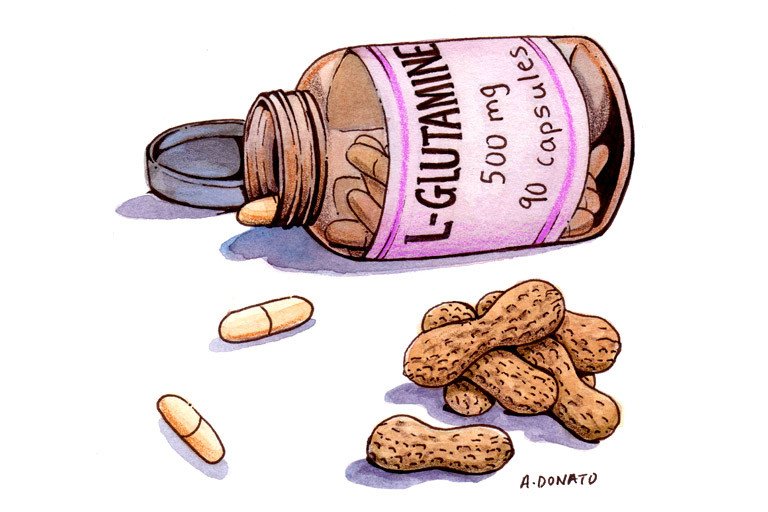
Glutamine is a chemical that your body makes to build protein. It’s also found in foods such as wheat, corn, barley, peanuts, soybeans, egg whites, and milk.
You can also take glutamine supplements as a pill or powder (which can be made into a drink by dissolving it in water).
Glutamine is used to:
- Treat weakness and loss of muscle mass caused by cancer treatment
- Treat neuropathy (numbness or tingling hands and feet) caused by chemotherapy
- Treat nausea (feeling like you’re going to throw up), vomiting (throwing up), and diarrhea (loose, watery bowel movements) due to cancer treatments
- Help recovery after surgery by reducing your risk for infection
Glutamine also has other uses that haven’t been studied by doctors to see if they work.
Glutamine that you get from food is safe. Talk with your healthcare provider before taking glutamine supplements because they have higher amounts of glutamine.
Supplements can also interact with some medications and affect how they work. For more information, read the “What else do I need to know?” section below.
Side effects of using glutamine may include:
- Swelling
- Headache
- Fever
- Nausea (feeling like you’re going to throw up)
- Vomiting (throwing up)
- Infections
Do not confuse glutamine with another chemical known as glutamate, which is important for normal brain function. Taking too much glutamate can cause seizures and kill brain cells.
For Healthcare Professionals
Glutamine is an amino acid that can be absorbed from food and synthesized and stored, mainly in the muscles and lungs. It is the building block of proteins and a major source of cellular fuel. Although abundant in the body, patients with cancer and AIDS-related cachexia or those recovering from catabolic states such as surgery, sepsis, and intense exercise may need to increase intake. Parenteral supplementation is used in hospitals and oral formulations are available as medical food products. Glutamine is also marketed as a dietary supplement to enhance muscle building, wound healing, and for intestinal and immune system health.
Despite its popularity, evidence is lacking to support the use of glutamine supplements for increasing muscle mass and strength (42).
In post-surgical or critically ill patients, glutamine may improve nitrogen balance, preserve intestinal integrity, maintain intracellular glutamine levels, and reduce hospital stay (3) (4) (12) (13) (40), but data on whether it can prevent infections (5) (40) or improve clinical outcomes (57) are mixed and it did not reduce the time to discharge alive from hospital in patients with severe burns (52). In patients with irritable bowel syndrome, supplementation reduced related symptoms (36). Among patients with sickle cell anemia, treatment with glutamine resulted in significantly fewer pain crises (35).
In oncology settings, studies suggest glutamine or its derivatives are useful against peripheral neuropathy (14) (15), mucositis (16) (17) (18) (19) (46) (58), fluorouracil-induced GI toxicity (20) and FOLFOX-induced diarrhea (48). Intravenous glutamine also reduced chemotherapy-induced nausea, vomiting, and diarrhea in patients with gastric or colorectal cancer (21), and enteral nutrition that includes arginine, glutamine, and omega-3 fatty acids may improve short-term survival in stage IV gastric cancer patients (22). Preliminary data on a supplement containing HMB, L-arginine and glutamine suggest it may help prevent sorafenib-associated hand-foot skin reactions in patients with advanced hepatocellular carcinoma (39). In addition, perioperative diet containing arginine, glutamine, and fish oil led to reductions in mucocutaneous fistula and length of hospital stay in clean-contaminated head and neck cancer surgery patients (49), and in infectious complications in those with gastrointestinal cancers (59). Glutamine alone also reduced length of hospital stay in patients with colorectal cancer (53). But findings from cachexia trials are mixed (11) (50) (58).
Other studies suggest glutamine may reduce radiation morbidity in breast cancer patients (23) and treatment-induced mucositis and dysphagia in patients with oropharynx and larynx carcinoma (37), and delay esophagitis onset in non-small cell lung cancer patients (38). Data on benefits against radiation dermatitis are conflicting (54) (60) and others report lack of strong evidence for oral mucositis (43) or for radiation-associated gastrointestinal toxicity (47), a systematic review cited the need for well-designed trials (44), and conflicting data indicate no impact on postsurgical complications or infections in cancer patients (25) (55), nor on acute radiation-induced esophagitis in patients with advanced thoracic malignancies (51). Furthermore, findings also suggest a role for glutamine in tumor cell growth and maintenance (26) (27). More research is needed to resolve these ambiguities. The meta-analysis indicate that glutamine might lead to a lower incidence of radiodermatitis, and that a glutamine dose of 20-30 g/day might decrease the incidence of moderate to severe dermatitis.
In pediatric patients with acute lymphoblastic leukemia, glutamine may have benefits against oral mucositis and chemo-induced peripheral neuropathy (56).
Wheat, corn, barley, peanuts, soybeans, egg whites, and milk
- Cachexia
- Neuropathy
- Gastrointestinal toxicity
- Infections
Glutamine is essential for the maintenance of intestinal mucosal integrity and function (1). It maintains immune function by serving as the principle metabolic fuel for cells, acts as a precursor for protein synthesis, and along with cysteine and glycine, is involved in glutathione (GSH) synthesis. Intravenous glutamine preserves liver and intestinal glutathione stores in animal models of oxidant damage. Glutamine is also involved in nitrogen exchange, as it neutralizes and eliminates excess ammonia formed during protein catabolism. As a nitrogen donor, it contributes to the synthesis of other non-essential amino acids, including the purines and pyrimidines, and is therefore essential for the proliferation of most cells (29). It also plays a supportive role during biochemical stress and sepsis. Reduced oxidative stress and sickle cell-related pain with l-glutamine is attributed to increased proportions of the reduced form of nicotinamide adenine dinucleotides in sickle cell erythrocytes (35).
Although the mechanism underlying benefits against cachexia is unclear, it is thought that glutamine, a modulator of protein turnover, enhances net protein synthesis (11). Clinical evidence suggests that total parenteral nutrition supplemented with glutamine improves nitrogen balance, maintains the intracellular glutamine pool, enhances protein synthesis, and prevents deterioration of gut permeability in post-surgery patients (12).
Glutamine prevented genotoxic and clastogenic damages caused by cisplatin in mice (30). It may also potentiate the tumoricidal effect of methotrexate (MTX) since polyglutamation of MTX impairs its efflux from tumor cells and reduces its accumulation in the gut (31). The supplemental intravenous form leads to increases of GSH in the gut, but not in tumors, in a sarcoma-bearing rat model.
However, other findings show that glutamine transporters are upregulated in tumor cells and that glutamine acts as a mitochondrial substrate and promotes protein translation. This indicates tumor cell dependence for growth and maintenance (26). In addition, glutamine helps cancer cells survive acidic stress through enzymatic deamidation rather than provide nutrition (27).
- Some studies in cancer patients suggest oral glutamine is well tolerated (14) (17) (18) (19). However, others using specific oral preparations reported peripheral edema, gastrointestinal symptoms, headache, fever, and infections (32) (33).
Case report
- Severe abdominal pain and scleral icterus: In a 35-year-old female athlete following consumption of glutamine powder for three weeks. Testing suggested hepatoxicity, but the patient recovered successfully after discontinuing glutamine (45).